Grow Your Own Food on a Budget: A UK Beginner’s Guide to Getting the Best Return
As an Amazon Associate I earn from qualifying purchases and sometimes recommend products from other sellers at no extra cost you. For more details see my disclosure policy and privacy policy.
I’ll be honest with you from the start: not everything you grow will save you money. My first year of “growing our own” probably cost me more than a season of organic veg boxes, because I bought everything new, grew the wrong crops, and treated the garden centre like a sweet shop.
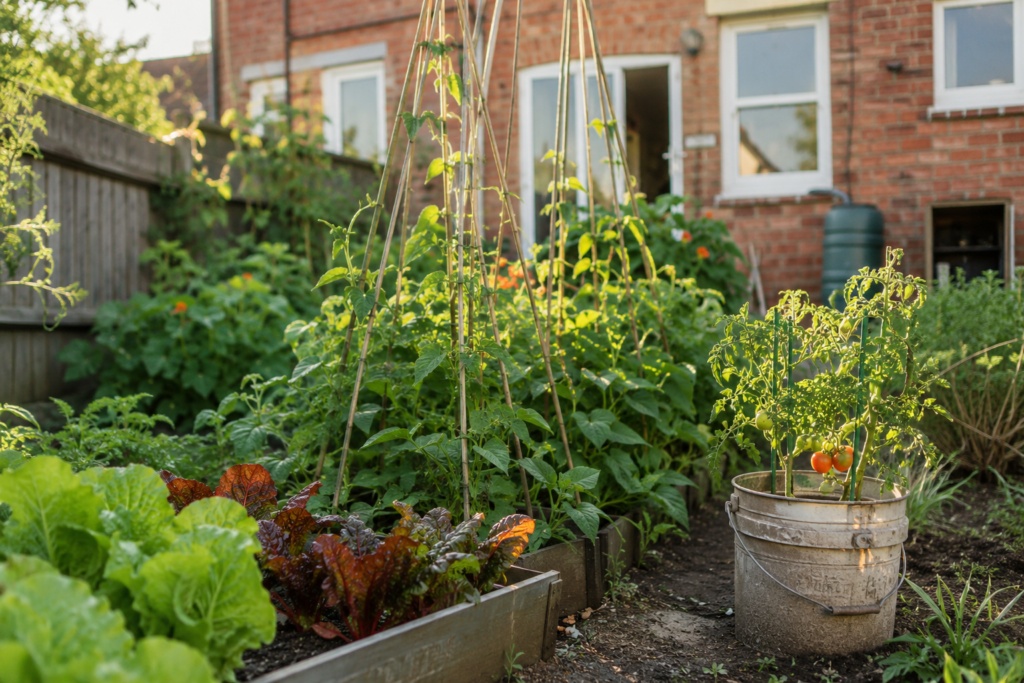
But once I worked out what actually pays back — and stopped growing maincrop potatoes in £9 grow bags to save 60p at the supermarket — the veg patch became one of the most genuinely money-saving things we do as a family. Last summer, our little patch and a collection of containers produced hundreds of pounds’ worth of salad, herbs, tomatoes and soft fruit at supermarket prices, for an outlay of under £40 in seeds and compost.
This guide is everything I wish someone had told me before I started: which crops give the best return per pound and per square foot in UK conditions, what to skip entirely, and how to get going for less than the cost of a weekly food shop.
The short version, if you only read one paragraph: growing your own food saves money when you grow things that are expensive to buy and cheap to grow — herbs, salad leaves, cherry tomatoes, courgettes, chillies and soft fruit — and it loses money when you grow things that are cheap to buy and fiddly to grow, like maincrop potatoes, onions and carrots. Start small, start from seed, and let the savings fund next year’s expansion.
Free download
Get the Non‑Toxic Home Audit Checklist
A room‑by‑room checklist to help you spot what’s worth swapping in your home — and what’s not worth worrying about. Join the fortnightly newsletter and it’s yours.
No spam, unsubscribe any time.
Does growing your own food actually save money?
Yes — but only if you’re selective, and only if you resist the garden centre’s best efforts to sell you kit you don’t need.
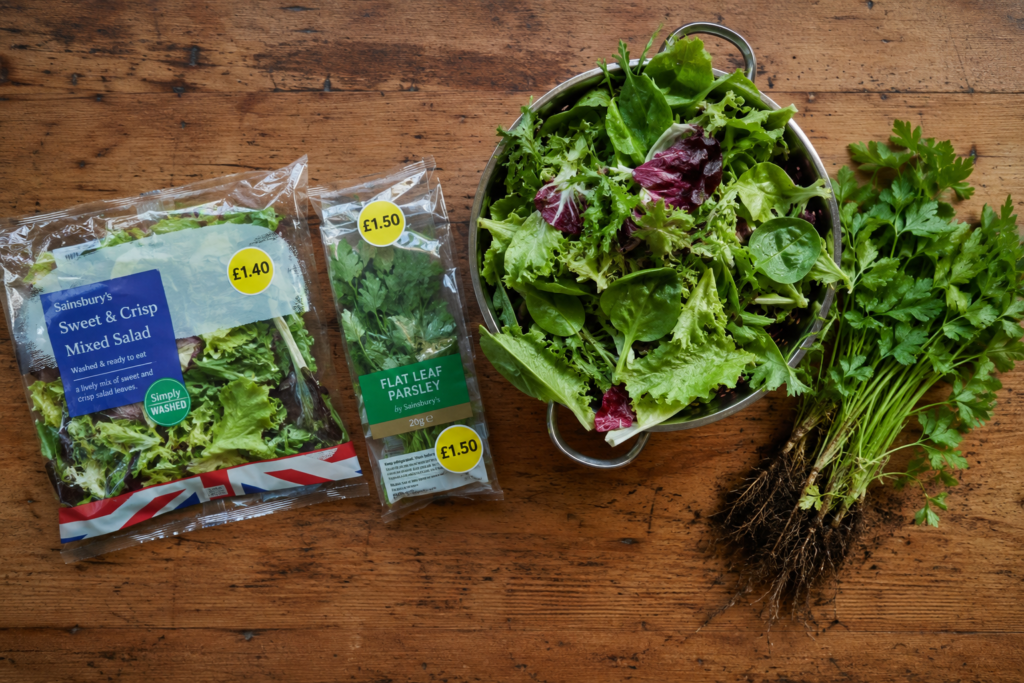
Here’s the honest arithmetic. A packet of cut-and-come-again salad seed costs around £2 and will produce the equivalent of 20 or more supermarket salad bags across a season — bags that cost £1.20–£1.60 each. That’s £25–£30 of salad from a £2 packet and a window box. Meanwhile, a bag of maincrop potatoes costs about £1.30 at the supermarket, and growing your own — seed potatoes, compost, containers — can easily cost more than that per harvest while taking up your best growing space all summer.
The difference between those two examples is the entire secret of budget food growing. The question is never “can I grow this?” It’s “is this expensive to buy and cheap to grow?”
Three rules that decide whether a crop pays:
- Price per kilo at the supermarket. Fresh herbs run to £30–£50 per kilo in those little plastic pillows. Salad leaves £8–£12 per kilo. Potatoes and onions under £1.50 per kilo. Grow the top of that list, buy the bottom.
- Harvest window. Cut-and-come-again crops (salad, chard, kale, herbs) let you harvest the same plant for months. One-shot crops (a cauliflower, a cabbage) give you a single supermarket item for months of care.
- Freshness premium. Some things — a sun-warm tomato, a handful of raspberries, basil picked minutes before dinner — are simply better than anything you can buy, at any price. That’s a return too.
Bottom line: growing your own saves real money when you treat it like a portfolio — a few high-value earners doing the heavy lifting, a few things grown purely for flavour, and nothing grown out of stubbornness.
The best-return crops for a UK garden
These are the crops I’d hand any UK beginner, ranked by how hard they work for the money. All of them are realistic in our climate without a greenhouse (though a sunny windowsill helps a few of them get started).
1. Cut-and-come-again salad leaves
The undisputed champion. Sow a £2 packet of mixed leaves in a trough or window box, and you can be cutting salad within four to five weeks, then again every fortnight from the same plants. Sow a fresh batch every three weeks from March to September and you’ll barely buy a bag of salad all year. Salad is also the crop where homegrown quality most embarrasses the supermarket version — no slime, no plastic, no air-freighted rocket.
Season: sow March–September outdoors; year-round on a bright windowsill. Realistic saving: £25–£40 per year from a couple of containers.
2. Fresh herbs
Those £1.50 plastic pillows of herbs are the single worst-value item in the supermarket. A £2 packet of parsley, coriander or basil seed will keep you supplied from spring to autumn, and perennial herbs — rosemary, thyme, sage, mint, chives, oregano — are a one-off purchase that crops for years. One tip: split a supermarket “living herb” pot into four clumps and plant them out; those pots are actually dozens of seedlings crammed together, and separated out they’ll thrive.
Season: perennials year-round; annuals April–October. Realistic saving: £30–£60 per year, more if you cook a lot.
3. Cherry tomatoes
Cherry and baby plum tomatoes are among the priciest everyday veg per kilo, and homegrown ones taste like a different food entirely. Two or three plants of a reliable outdoor variety — ‘Gardener’s Delight’ and ‘Tumbling Tom’ have never let me down in the Midlands — will produce kilos of fruit from July into October. Start from seed on a windowsill in March for pennies per plant, or buy plug plants in May for about £1 each if you’d rather skip that stage.
Season: sow indoors March; plant out late May after frost; harvest July–October. Realistic saving: £40–£70 per year from three plants. (Full guide: growing tomatoes in the UK — cluster post link.)
4. Courgettes
The vegetable that becomes a running joke by August. Two plants will feed a family and their neighbours; three is a cry for help. Each plant costs pennies from seed, needs about a square metre, and produces for months. When the glut hits, courgettes fry, roast, grate into cakes and freeze — which is where the preserving habit starts paying you back too.
Season: sow indoors April, plant out late May; harvest July–September. Realistic saving: £20–£30 per year from two plants.
5. Chillies (windowsill crop)
No garden required. A couple of chilli plants on a sunny windowsill will out-produce anything you’d sensibly buy, and surplus chillies dry or freeze beautifully — I haven’t bought a chilli in three years. Fresh chillies are absurdly priced per kilo for what they are.
Season: sow indoors January–March (they’re slow starters); harvest August onwards. Realistic saving: £10–£20 per year, plus dried chillies as free storecupboard stock and Christmas gifts.
6. Runner and French beans
A £2.50 packet of beans, a wigwam of canes, and a couple of square feet of soil will give you more beans than you can eat from July to the first frosts. They freeze well, and — a genuine budget bonus — beans are the easiest crop of all to save your own seed from. Let a few pods dry on the plant in autumn and next year’s crop is free, forever.
Season: sow May directly outdoors; harvest July–October. Realistic saving: £20–£35 per year.
7. Rhubarb, raspberries and other soft fruit
Fruit is the long game. A £6 raspberry cane or rhubarb crown feels like an extravagance next to a £2 seed packet, but these are one-off purchases that crop for a decade or more. Soft fruit is expensive in the shops precisely because it doesn’t travel or keep — which is exactly why it’s the best thing to grow at home. Autumn-fruiting raspberries are the easiest starting point: plant once, cut everything to the ground each February, pick from August to October.
Season: plant bare-root November–March (the cheap way to buy); harvests from year one or two. Realistic saving: £30–£80 per year once established, for essentially no annual cost.
Bottom line: a beginner growing just salad leaves, herbs, three tomato plants, two courgettes and a wigwam of beans — total seed cost under £12 — can realistically grow £150–£250 worth of food at UK supermarket prices in their first season.
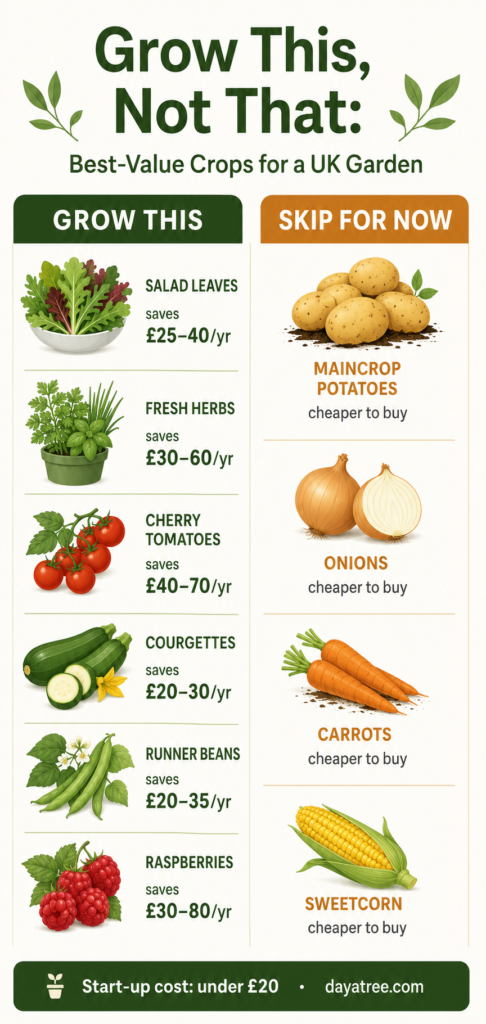
What NOT to grow (yet)
This section saves you more money than any other. These crops aren’t bad — they’re just poor value for a beginner with limited space and budget:
- Maincrop potatoes. Cheap to buy, hungry for space, and the compost to fill containers costs more than the crop is worth. Exception: a container of first-early “new” potatoes for the flavour, if you have spare compost.
- Onions and carrots. Both cost pennies in the shops. Carrots also sulk in stony or heavy soil and attract carrot fly. Grow them later for fun, not now for savings.
- Sweetcorn. Needs a block of plants, a long warm summer, and gives you one or two cobs per plant — cobs that cost about 60p at the supermarket.
- Cauliflower and heading cabbage. Months of care, netting against pigeons and butterflies, one harvest, widely available for £1. The hardest common crop for the smallest reward.
- Anything in a “grow your own kit” gift box. Charming, wildly overpriced per seed. Buy ordinary seed packets instead.
Bottom line: if it costs less than £1.50 per kilo at the supermarket and takes more than three months to grow, it doesn’t belong in a beginner’s budget plot.
Starting for under £20: the no-kit method
The garden centre will happily sell you £200 of raised beds, tools and gadgets before you’ve grown a single leaf. You need almost none of it. Here’s a genuine first-season shopping list:
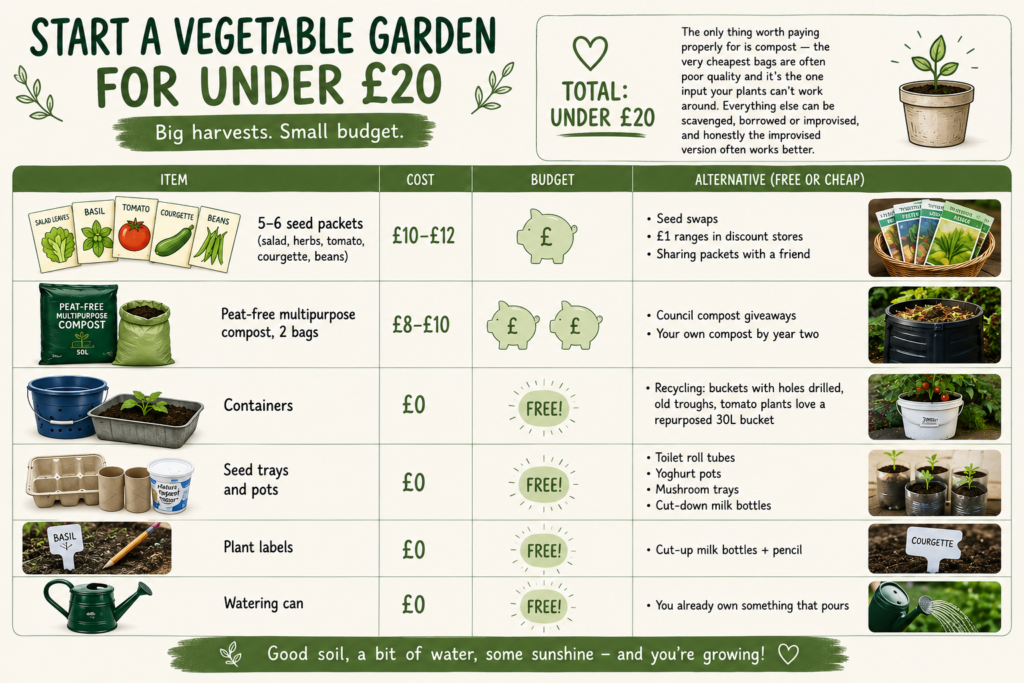
Two free accelerators worth setting up in month one: a compost bin (many UK councils sell subsidised ones for £10–£15, or build one from pallets for nothing — see my composting for beginners guide) and a water butt on a downpipe, which pays for itself if you’re on a water meter.
Seeds vs plug plants: where your money actually goes
The single biggest budget decision you’ll make is whether to grow from seed or buy young plants.
From seed: a £2.50 packet of tomato seed contains 20+ seeds — that’s about 12p per plant, and the packet keeps for several years in a cool drawer. The trade-off is time (start in March) and a sunny windowsill.
Plug plants: £1–£4 per plant in May. Thirty times the cost per plant — but zero risk, no windowsill required, and for a beginner growing three tomato plants, the £6 difference may be worth the certainty.
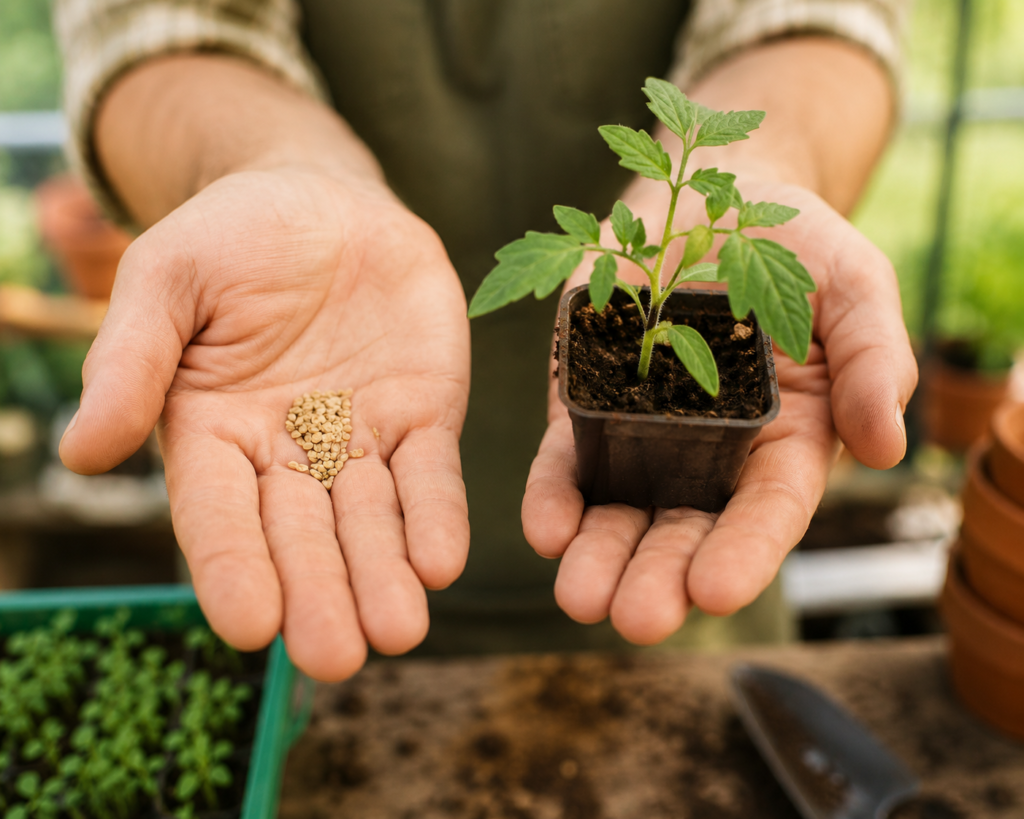
My honest recommendation for year one: grow the easy things from seed (salad, beans, courgettes — they’re nearly foolproof sown directly or in pots), and allow yourself a few bought plants for the fiddlier crops if the seed-starting stage feels daunting. By year two you’ll have the confidence to sow everything, and by year three you’ll be saving your own seed and spending almost nothing.
One more budget habit: buy seed in the January sales and end-of-season clearances, when UK seed companies like Thompson & Morgan and Suttons discount heavily. Most vegetable seed stays viable for two to four years, so a half-price packet is genuine money in the bank.
No garden? Containers, windowsills and rented space
Everything in the best-return list except raspberries will grow in containers, which makes this whole approach renter-friendly:
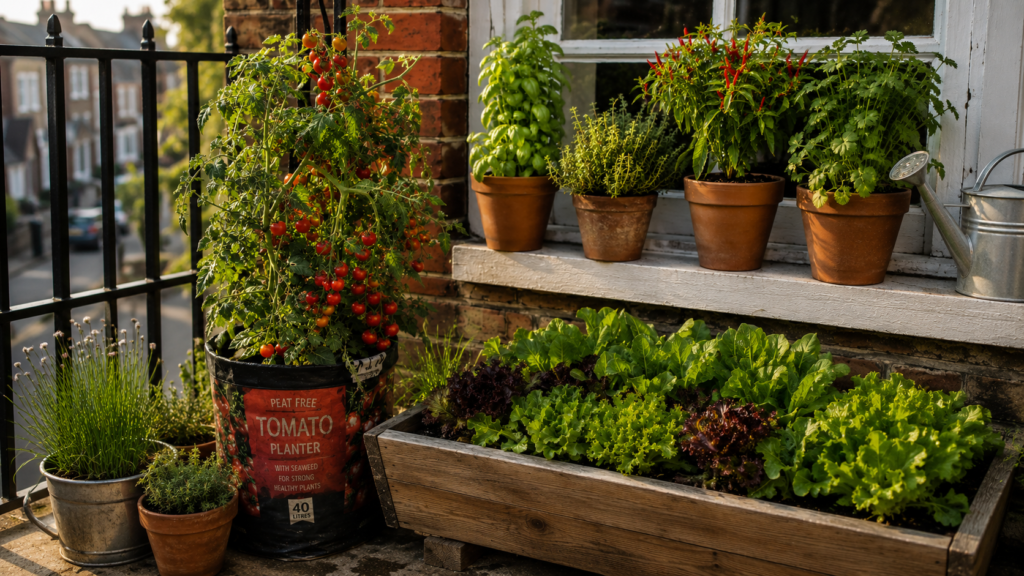
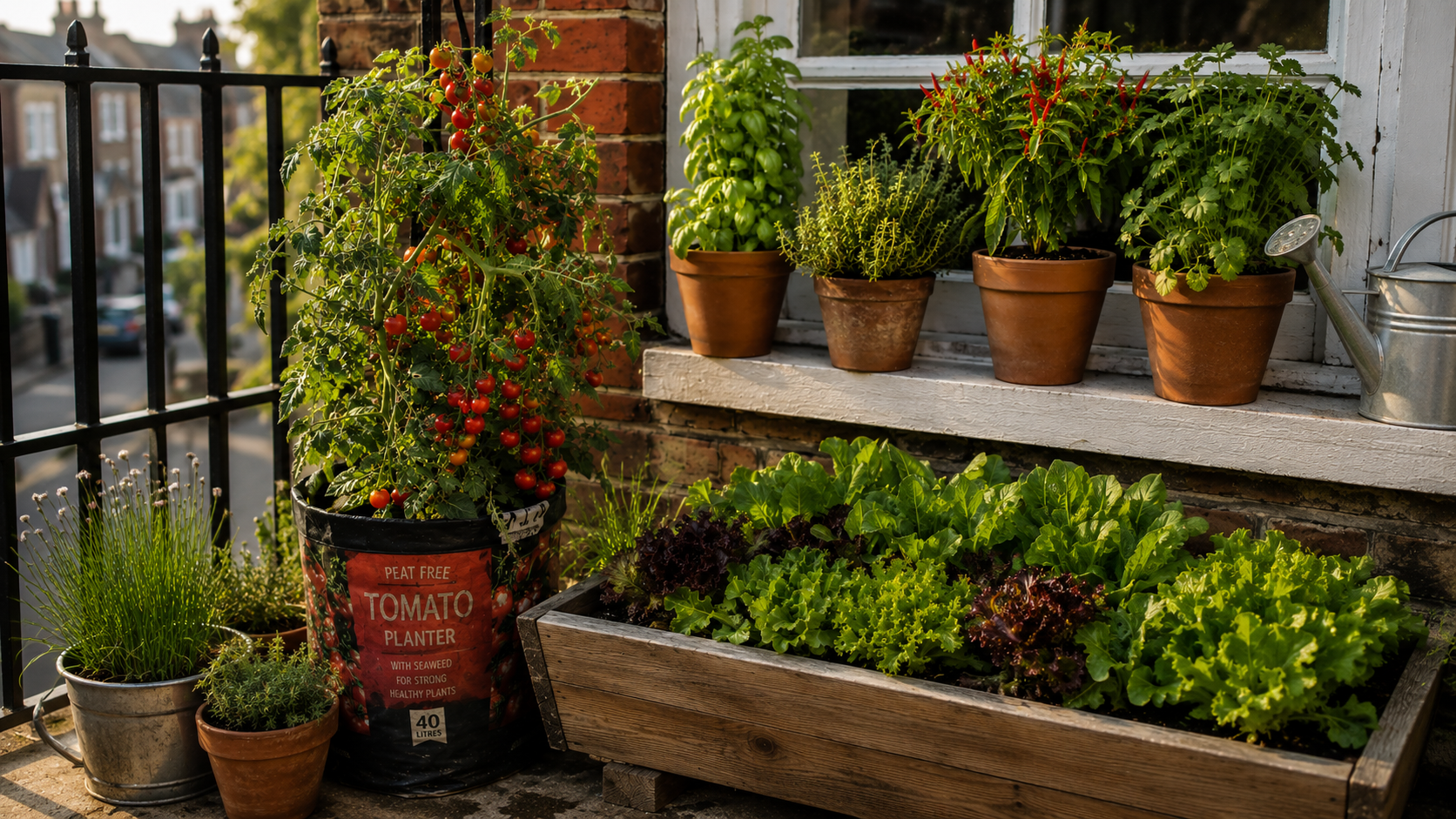
- A sunny windowsill grows herbs, chillies and salad year-round. This is the true zero-budget entry point.
- A balcony or doorstep takes a trough of salad, a bucket-grown tomato and a pot of herbs. My best-yielding tomato plant one year lived in a repurposed builder’s bucket by the back door.
- Grow bags (£2–£3) are the cheap route for tomatoes and courgettes — stand them on end and cut the top off to make a deep pot, which holds water far better than the traditional flat sack.
- Containers dry out fast — this is the one real catch. A saucer under each pot and a mulch of grass clippings on top halves the watering.
If you catch the bug and run out of space, an allotment is the endgame: UK council plots typically rent for £25–£125 a year depending on where you live, and a half plot grows more food than most families can eat. Waiting lists vary hugely, so it costs nothing to put your name down now.
Make the savings stick: the UK season at a glance
Budget growing is mostly about doing a small number of things at the right moment. Here’s the year in one list — UK timings, adjust a fortnight later for Scotland and the far north:
- January–February: plan, order seed in the sales, sow chillies indoors. Chit nothing, buy nothing else.
- March: sow tomatoes indoors; first salad sowings under cover or on windowsills.
- April: sow courgettes indoors; direct-sow salad outdoors; plant perennial herbs.
- May: direct-sow beans after mid-month; plant out tomatoes and courgettes after the last frost (late May for most of England and Wales, early June further north).
- June–August: the harvest engine room. Keep sowing salad every three weeks; water containers daily; pick courgettes small and often.
- September–October: final harvests; let bean pods dry for next year’s seed; sow winter salad under cover.
- November: plant bare-root fruit — the cheapest way to buy raspberries and rhubarb. Collect fallen leaves for free leafmould.
- December: rest. Eat the freezer. Read the seed catalogues with a cup of tea and a firm budget.
And when the summer glut arrives — because it will — preserving turns surplus into savings rather than waste. Freezing beans, roasting and freezing tomatoes, and a first attempt at pickling will carry your harvest into winter.
The honest conclusion
Growing your own food on a budget isn’t about self-sufficiency, and anyone who tells you a small UK garden will replace your food shop is selling something — usually raised beds. It’s about picking the dozen crops where homegrown genuinely beats bought, on price or flavour or both, and letting everything else stay the supermarket’s problem.
Start with under £20, grow the high-value list, skip the potato trap, and reinvest what you learn (and save) into next year. By your second season you’ll have your own compost, your own saved seed, and a very smug expression every time you walk past the bagged salad aisle.
If you want the crop-by-crop numbers, my next post breaks down the ten most cost-effective vegetables for a UK garden in detail — including the exact varieties I grow and what each one returned last season.
What’s the best-value thing you’ve ever grown — or the biggest waste of money? Tell me in the comments; I read every one.