How to Grow Root Vegetables in a UK Garden: Carrots, Beetroot and Radishes That Actually Work
As an Amazon Associate I earn from qualifying purchases and sometimes recommend products from other sellers at no extra cost you. For more details see my disclosure policy and privacy policy.
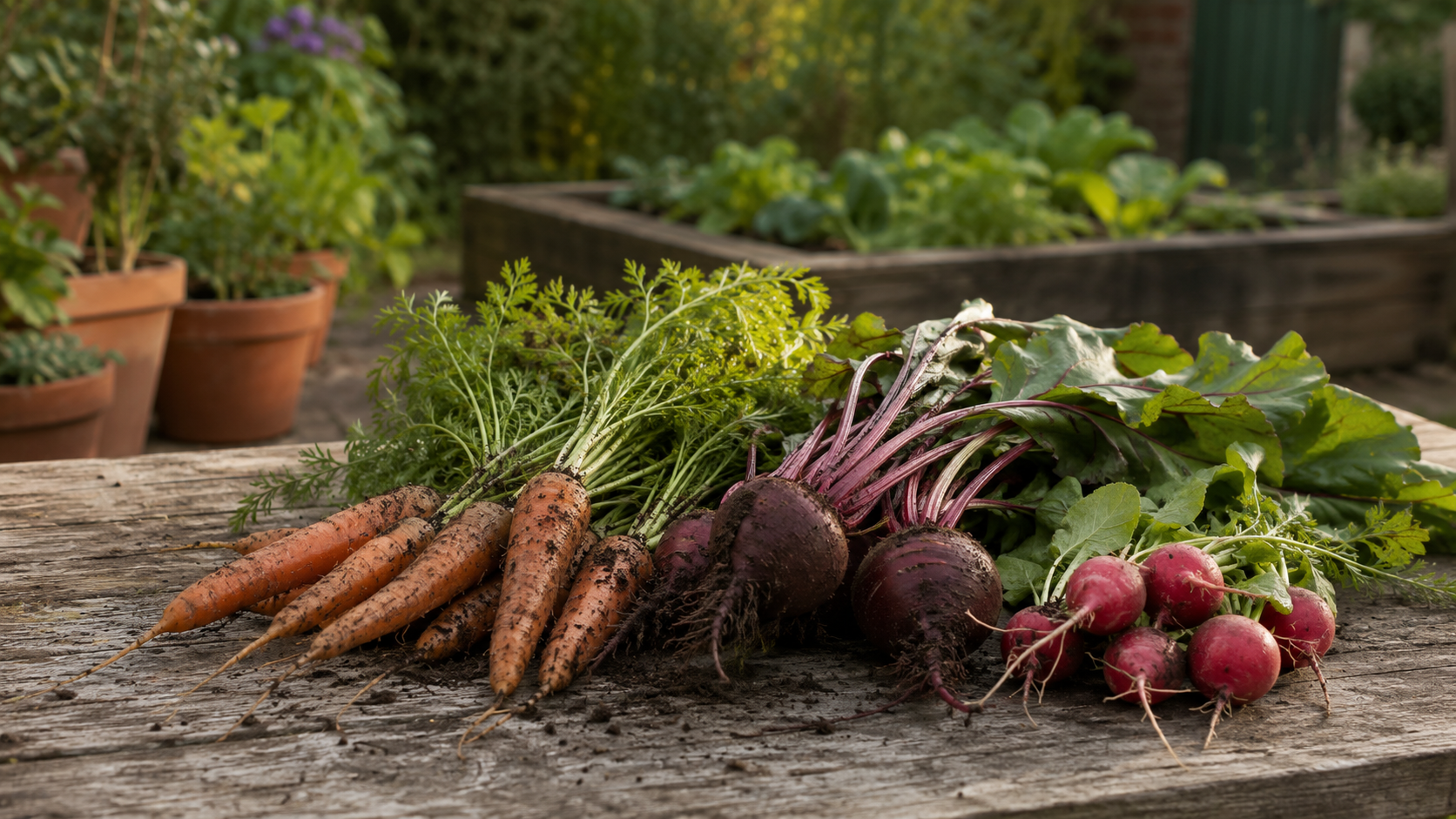
Root vegetables get overlooked in favour of flashier crops, but in my own UK garden, carrots, beetroot and radishes are some of the most reliable things I grow. They’re hardy, forgiving of our unpredictable spring weather, and genuinely rewarding once you understand what they need. Whether you’re working with raised beds or a patch of open ground, getting the basics right — soil prep, spacing, and timing — is the difference between stunted, forked roots and a harvest worth bragging about.
Getting the Soil Right for Straight, Plump Roots
Root vegetables need loose, well-draining soil to develop properly. Before sowing, dig down at least 30cm and remove any stones or compacted clumps that could cause forking, especially for carrots. A sandy loam is ideal, but most UK gardens can be improved simply by working in plenty of well-rotted compost. Avoid fresh manure — it pushes leafy growth at the expense of the root itself. Aim for a soil pH of around 6.0–6.8, which you can check cheaply with a home testing kit.
Quick takeaway: loose, stone-free soil dug to at least spade-depth is the single biggest factor in straight, unforked carrots and beetroot.
When to Sow Carrots, Beetroot and Radishes in the UK
Carrots, beetroot and radishes are cool-season crops, so timing matters more than in warmer climates. For most of the UK, sow directly outdoors from March once the soil is workable, continuing through to July for a later crop. Radishes are the quickest — often ready within a month — while carrots typically take 70–80 days and beetroot sits in between. Sow little and often, every two to three weeks, rather than one big batch, so you get a steady harvest instead of a glut all at once.
Free download
Get the Non‑Toxic Home Audit Checklist
A room‑by‑room checklist to help you spot what’s worth swapping in your home — and what’s not worth worrying about. Join the fortnightly newsletter and it’s yours.
No spam, unsubscribe any time.
Pairing your root veg with the right neighbours also makes a real difference to yield — I go into this properly in my companion planting guide, which covers which combinations genuinely help carrots and beetroot and which are just garden folklore.
[IMAGE 2 — sowing depth/spacing illustration here]
Thinning: The Step Most Gardeners Skip
It’s tempting to leave seedlings be once they’ve come up, but thinning is non-negotiable if you want proper-sized roots. For carrots, thin to 3–5cm apart once seedlings are a couple of centimetres tall. Beetroot needs a bit more room — thin to around 8–10cm. Radishes grow fast but still need roughly 5cm of space to bulb out properly. Don’t waste the thinnings: beetroot seedlings in particular are good in salads.
If you’re growing in containers or a small courtyard rather than open ground, spacing becomes even more important — I’ve written a separate guide on container veg growing for renters and flat dwellers if that’s more your situation.
[IMAGE 3 — thinning seedlings close-up here]
Watering and Patience
Keep soil consistently moist but never waterlogged. Uneven watering is the main cause of split roots in carrots and beetroot. A layer of mulch helps retain moisture and keeps weeds down — root crops don’t compete well with weeds for space or nutrients. Resist the urge to check progress by pulling roots early: radishes turn woody if left too long, but carrots and beetroot actually sweeten with more time in the ground, especially after a light autumn frost.
Good soil biology makes this whole stage easier, which is really just an extension of good composting — if you haven’t got a system going yet, my composting for beginners post covers how to set one up from scratch.
How to Tell When to Harvest — Read the Tops, Not the Calendar
You can usually tell roots are ready by what’s happening above the soil. Carrots and beetroot will push their shoulders up above ground level, and radishes announce themselves with rapid leaf growth. Lift gently with a hand fork rather than pulling by the leaves, to avoid snapping the root. In loose, well-prepared soil, they should come up clean with minimal effort.
If you end up with more than you can eat fresh — which happens fast with a good beetroot row — it’s worth getting ahead of it before anything goes to waste. My preserving the harvest guide covers freezing, pickling and fermenting, all UK-kitchen-tested.
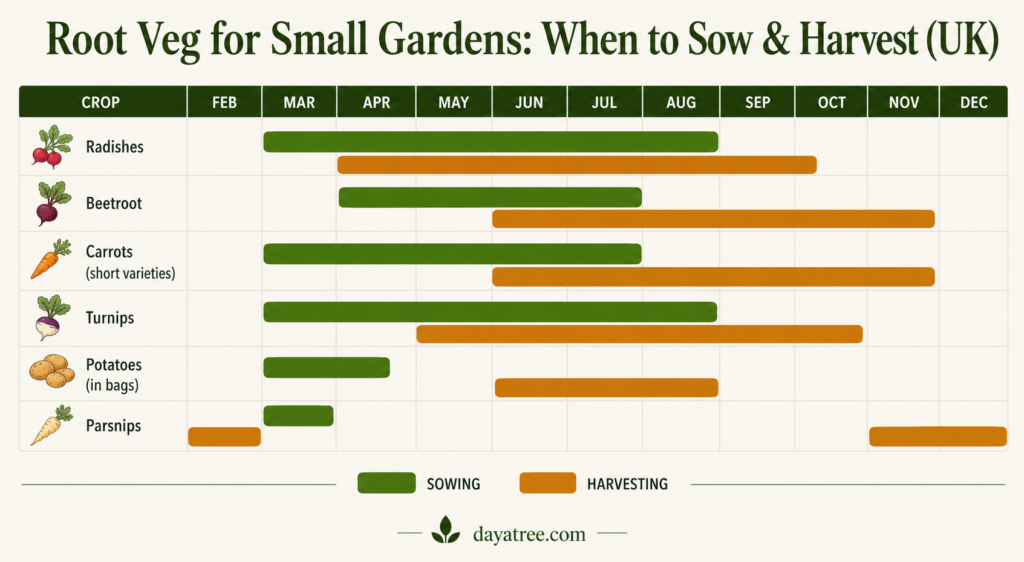
The Short Version
Loosen the soil properly, sow in succession from March, thin without guilt, water evenly, and judge harvest by the tops rather than the calendar. Get those five things right and root vegetables are one of the most forgiving crops you can grow in a UK garden — flashy or not.
For more on soil pH testing and cool-season sowing windows, the RHS vegetable growing advice is a solid reference point alongside your own trial and error.