Air Quality at Home: Indoor Plants, Ventilation, and Avoiding Hidden Toxins
As an Amazon Associate I earn from qualifying purchases and sometimes recommend products from other sellers at no extra cost you. For more details see my disclosure policy and privacy policy.
We spend a lot of energy worrying about outdoor air pollution — and rightly so — but here’s the thing that surprised me when I started digging into this properly: the air inside our homes is often more polluted than the air outside them. Between cleaning sprays, scented candles, new furniture, gas hobs, and our national habit of keeping every window shut from October to April, the average UK home is quietly working against us.
The good news is that improving your indoor air quality doesn’t require an expensive gadget or a jungle of houseplants (more on that myth shortly). Most of it comes down to what you stop bringing into the house, and how you move air through it. Here’s what I’ve learned — including a few things I got wrong for years.
First, the honest bit: houseplants won’t purify your air
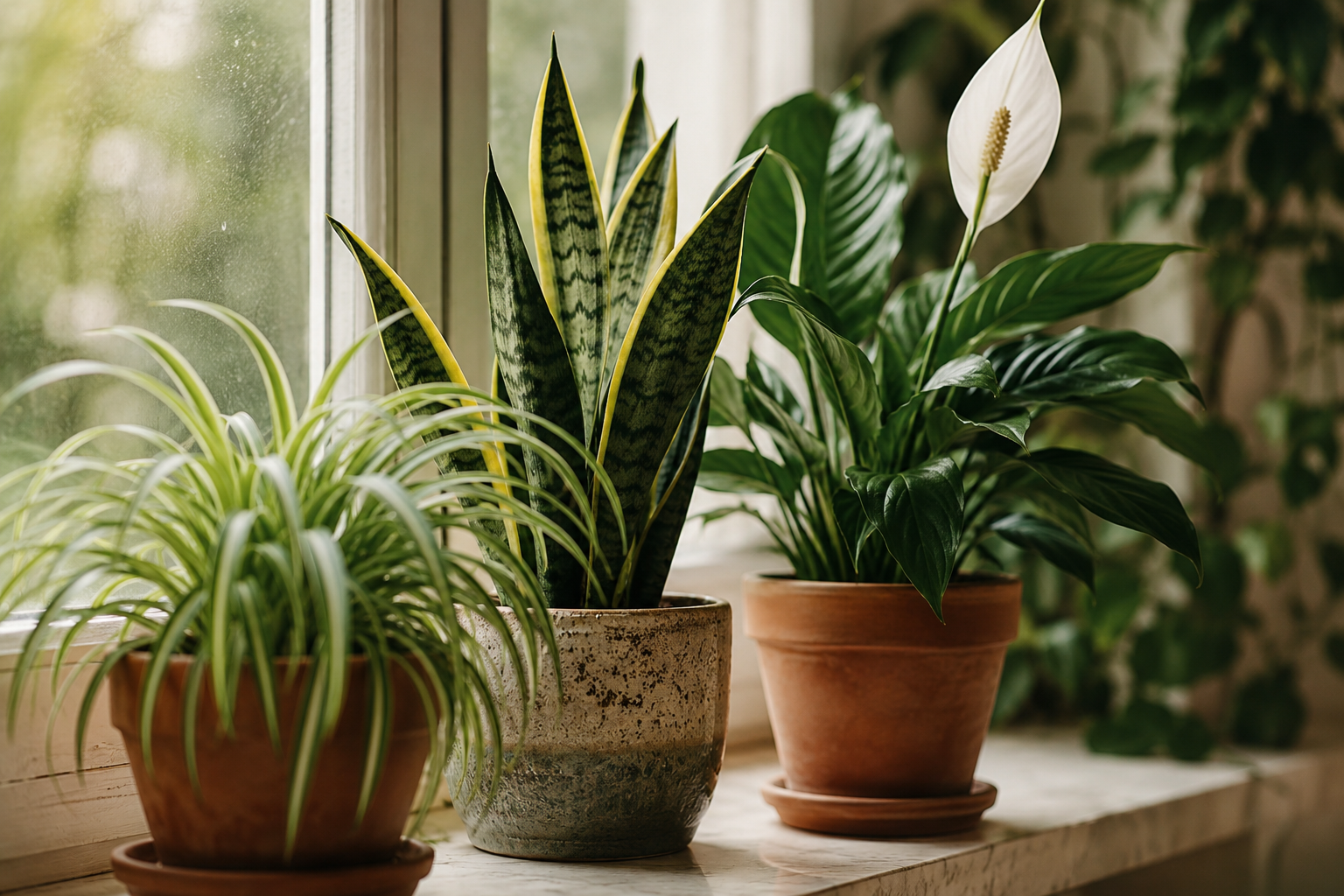
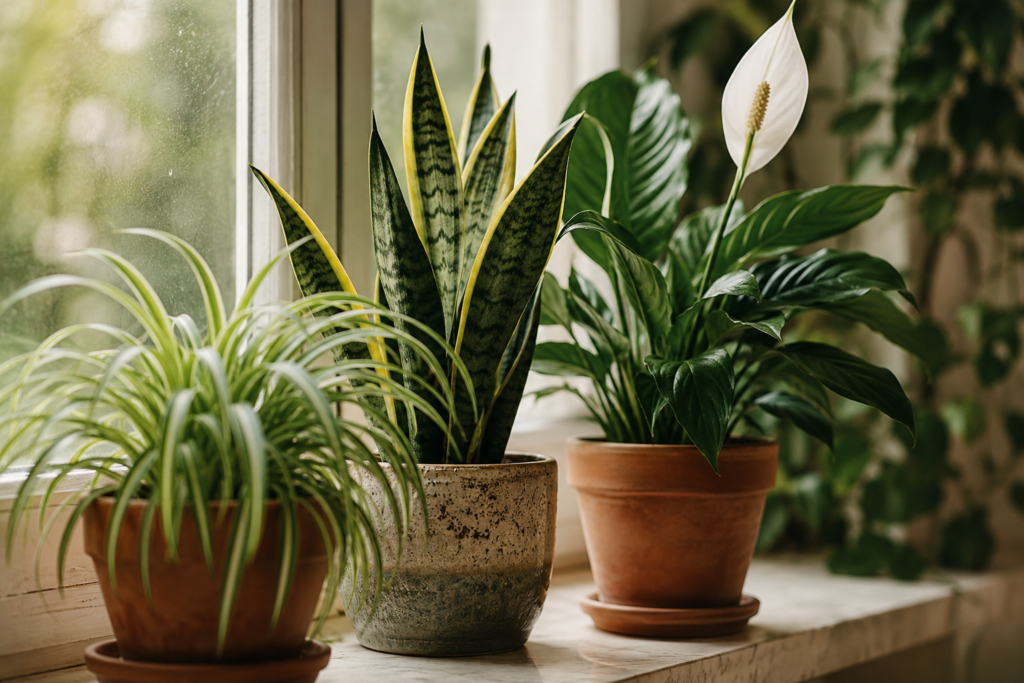
Let’s deal with the internet’s favourite air quality claim head on, because I believed it too. You’ve probably seen lists of “NASA-approved air-purifying plants” — spider plants, peace lilies, snake plants — promising to scrub toxins from your rooms.
The original NASA research was real, but it was done in small sealed chambers in the late 1980s, and the results simply don’t scale to a real home. Later reviews of the science worked out that you’d need something in the region of ten to a hundred plants per square metre to make a measurable difference to the air in an ordinary room. That’s not a living room; that’s a greenhouse you happen to sleep in.
Free download
Get the Non‑Toxic Home Audit Checklist
A room‑by‑room checklist to help you spot what’s worth swapping in your home — and what’s not worth worrying about. Join the fortnightly newsletter and it’s yours.
No spam, unsubscribe any time.
So why do I still have a windowsill full of plants? Because they do plenty of other genuinely good things: they raise humidity slightly (helpful in centrally heated winter rooms), they’re proven to lower stress, and caring for them is one of the small daily rhythms that makes a house feel like a home. I just don’t ask them to do a ventilation system’s job.
The takeaway: keep the plants for your wellbeing, not your air quality. If a room smells stale or feels stuffy, the answer is airflow, not another peace lily.
The Non-Toxic Home Guide: Room-by-Room Swaps for UK Households
Ventilation: the unglamorous fix that actually works
If there’s one change that outperforms everything else in this post, it’s this: move more air through your home, every day, even in winter. UK homes are increasingly airtight — great for energy bills, less great for the cocktail of moisture, carbon dioxide, and chemical off-gassing that builds up indoors.
Here’s the routine that works in our house:
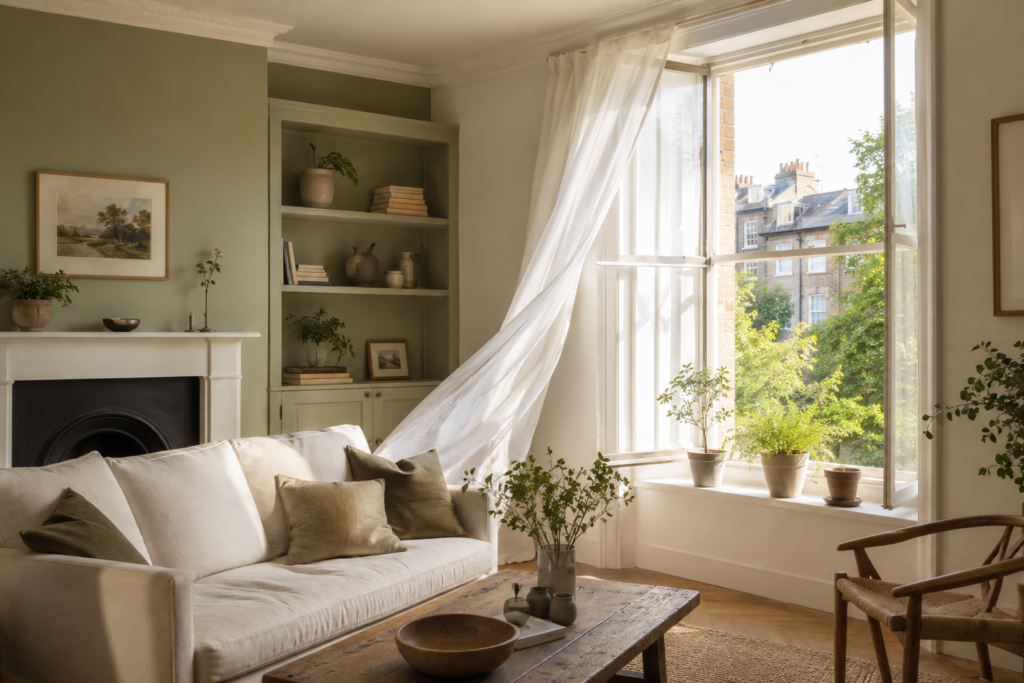
Purge ventilation, morning and evening. Ten minutes with windows open on opposite sides of the house creates a cross-breeze that swaps out stale air far faster than one cracked window all day — and because it’s brief, the walls and furniture don’t lose their heat, so the room warms back up quickly. This is the single habit I’d recommend to anyone.
Use your extractor fans properly. Run the bathroom fan during showers and for 15 minutes after. Use the cooker hood every time you cook — especially on a gas hob, which releases nitrogen dioxide and fine particles directly into your kitchen. If your hood recirculates rather than venting outside, open the kitchen window while you cook.
Don’t block your trickle vents. Those little slots at the top of modern window frames exist for a reason. I know it’s tempting to tape them up in January. Don’t.
Dry laundry with a plan. A single load of washing releases around two litres of water into your home as it dries. If you can’t dry outside, dry in one room with the door closed and the window cracked, or use a dehumidifier. This matters because damp is the gateway to the biggest indoor air problem in UK housing: mould.
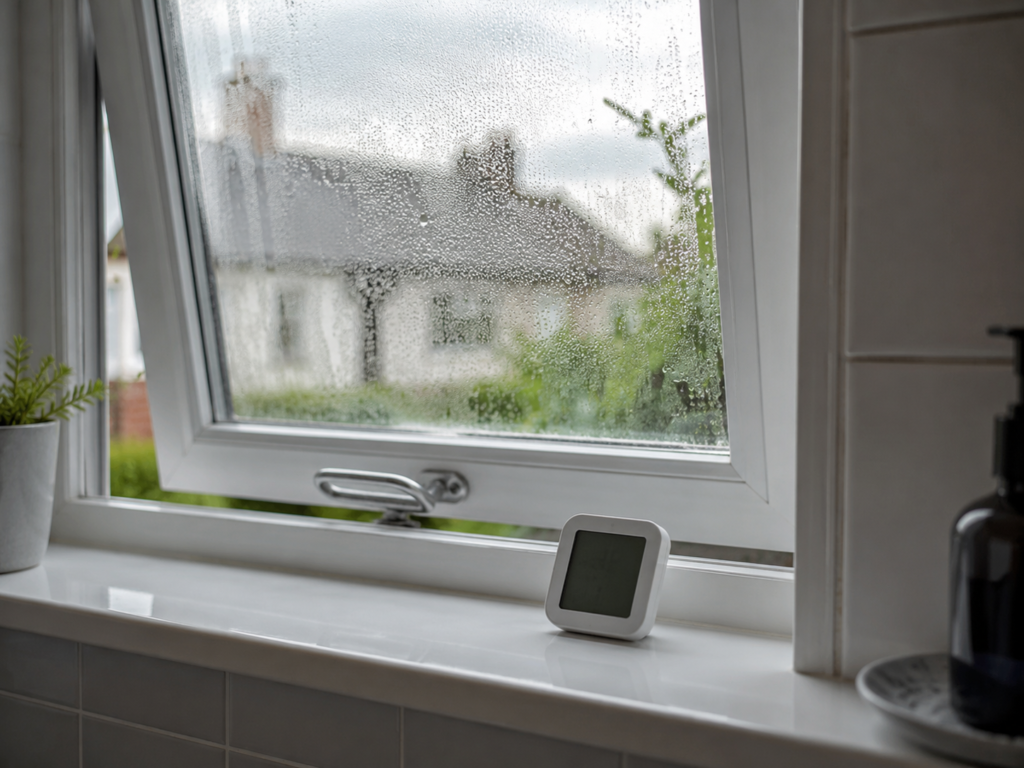
Watch your humidity. A cheap hygrometer (a few pounds) tells you your relative humidity at a glance. Aim for 40–60%. Above that, condensation and mould become likely; the NHS is clear that damp and mould are linked to respiratory problems, particularly for children, older people, and anyone with asthma.
The takeaway: ten minutes of cross-ventilation twice a day, extractor fans used every time, and laundry dried thoughtfully will do more for your indoor air than any product you can buy.
The hidden toxins: what to stop bringing home
This is where indoor air quality connects to everything else in our non-toxic home series. Most indoor air pollution doesn’t seep in from outside — we buy it, unwrap it, and spray it around ourselves.
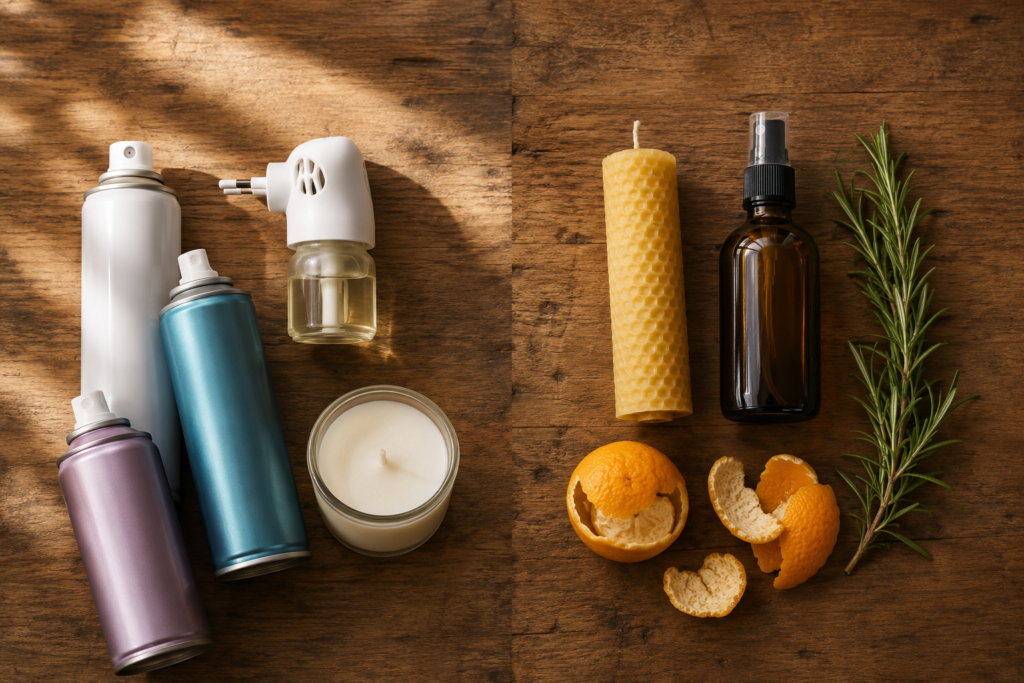
Air fresheners and plug-ins. These are top of my “quietly ditched” list. They don’t remove odours; they add a blend of synthetic fragrance chemicals and VOCs (volatile organic compounds) on top of them. If a room smells, ventilate it. If you want it to smell nice, simmer some citrus peel or use a few drops of essential oil sparingly — or just open a window onto the garden.
Scented candles. I love candlelight as much as anyone, and I haven’t given it up — but I’ve switched from cheap paraffin candles to beeswax or plant-wax candles with unscented or lightly scented cotton wicks, and I burn them in ventilated rooms. Paraffin candles with heavy synthetic fragrance are essentially tiny, pleasant-smelling pollution sources.
Conventional cleaning sprays. Anything that says “fragrance” or “parfum” on the label is a sealed box of undisclosed chemicals, and aerosols in particular fill your breathing space with fine droplets. This is exactly why we moved to simpler alternatives — I’ve covered what’s actually in mainstream cleaning products, and the DIY recipes that genuinely work, in separate posts in this series.
New furniture, paint, and anything that smells “new”. That new-sofa or fresh-paint smell is off-gassing — mostly VOCs like formaldehyde from adhesives, foams, and finishes. You can’t always avoid buying new, but you can: choose low-VOC or water-based paints (widely available in the UK now, often labelled clearly), air new furniture in a ventilated room or garage for a few days if possible, and — my favourite option — buy second-hand, where the off-gassing happened years ago in someone else’s house. Better for your air and dramatically better for the planet.
Wood burners. This one’s uncomfortable for a lot of eco-minded households, mine included, because a log fire feels natural. But wood burning is a major source of fine particulate pollution (PM2.5), both inside the room and in the neighbourhood. If you use one, burn only dry, seasoned wood (look for the UK “Ready to Burn” certification), keep the stove well maintained, and be honest with yourself about how often you really need it lit.
The takeaway: the cheapest air purifier is the decision not to buy the air freshener, the paraffin candle, or the aerosol spray in the first place.
Do you need an air purifier?
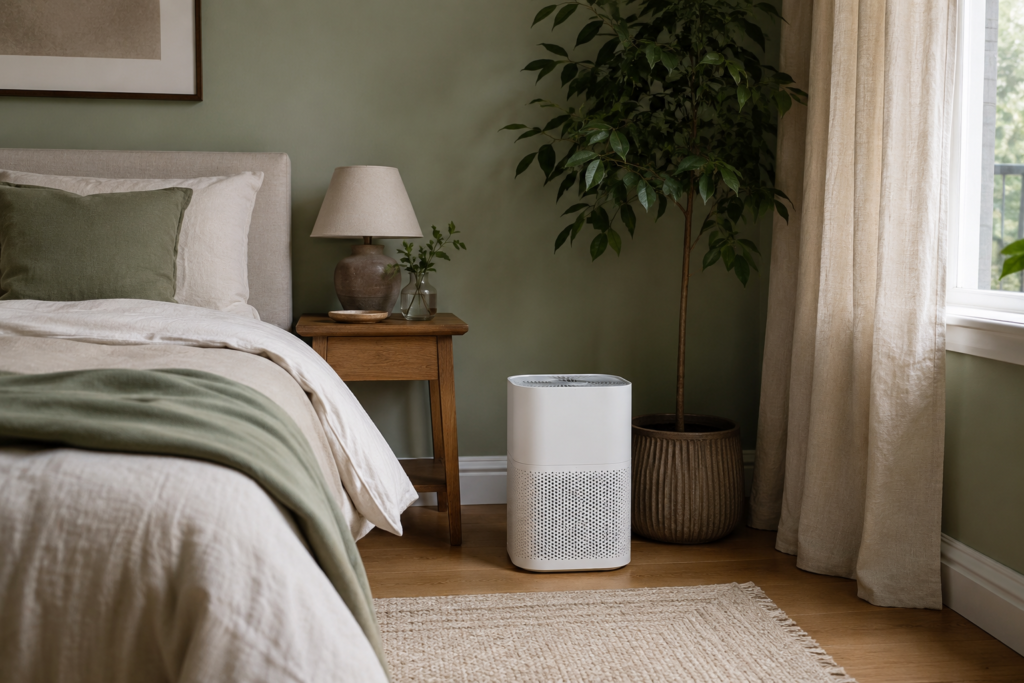
Probably not — but sometimes, honestly, yes. For most homes, ventilation plus removing pollution sources gets you 90% of the way there for free. But a HEPA air purifier earns its place in a few situations: if someone in the house has asthma or serious allergies, if you live on a busy road or in an area affected by wood smoke, during hay fever season, or if you’re stuck with a damp problem you’re still fixing.
If you do buy one, look for a true HEPA filter, check the recommended room size against your actual room, and factor in the cost of replacement filters — that’s where the real expense hides. Skip anything that markets itself primarily on “ionising” or ozone; you want filtration, not chemistry experiments.
Where to start this week
If this all feels like a lot, it isn’t — because most of it is subtraction, not addition. Here’s the order I’d tackle it in:
- Start the ten-minute cross-ventilation habit, morning and evening.
- Finish (or bin) your plug-in air fresheners and aerosol sprays as they run out — replace them with nothing.
- Buy a hygrometer and check your humidity sits between 40–60%.
- Run extractor fans every time you cook or shower, and rethink where laundry dries.
- Next time you buy paint or furniture, check for low-VOC labels — or go second-hand.
None of this requires perfection, and none of it requires spending much at all. Like everything else in this series, it’s progress over perfection: a home with slightly fresher air, a few less mystery chemicals, and windows that actually get opened.
Have you noticed a difference after ditching air fresheners or changing how you ventilate? I’d genuinely love to hear — reply to the newsletter or leave a comment below.