
How to Travel Sustainably Without Sacrificing Adventure
As an Amazon Associate I earn from qualifying purchases and sometimes recommend products from other sellers at no extra cost you. For more details see my disclosure policy and privacy policy.

Planning a holiday is exciting—but it can also leave you wondering how to do it without leaving a trail of plastic bottles, fuel emissions, and over-touristed spots behind. The good news? You don’t have to choose between seeing the world and protecting it. Whether you’re booking a weekend break or a long-haul escape, a few simple choices can make your trip more eco-friendly without giving up comfort or fun. Here’s how to travel sustainably, tread lighter, and feel good about every step of the journey.
Rethink Your Destination Choices
One of the biggest environmental impacts of travel is how far you go to get there. While jetting off to a tropical paradise may sound appealing, choosing a destination closer to home is often far more sustainable. Domestic travel or destinations you can reach by train or bus can significantly reduce your carbon footprint. If you’re set on an international escape, consider visiting countries with strong environmental policies and a commitment to sustainable tourism. These destinations often have eco-certifications for hotels and tours, which helps ensure your trip contributes positively to local conservation efforts.
Pack With Purpose

Every item you bring on your trip matters, both for convenience and environmental impact. Start by packing reusable essentials like a stainless steel water bottle, bamboo cutlery, a travel coffee mug, and reusable bags for groceries or souvenirs. Solid toiletries—like shampoo, conditioner, and deodorant bars—eliminate the need for plastic bottles and are great for avoiding airport liquid restrictions. Packing light is another overlooked but powerful tip. Lighter luggage means planes, buses, and cars use less fuel to transport you, and it makes your travels easier, too.
Support Local, Skip the Chains

Where you spend your money makes a big difference. Supporting local businesses—whether it’s eating in a neighbourhood café, buying crafts from street vendors, or choosing a locally owned guesthouse—helps sustain the local economy. Avoid large multinational chains that funnel profits out of the country. Many destinations also have eco-lodges or community-run accommodation that not only provide a unique experience but are built with sustainability in mind. You’re more likely to learn about the culture and connect with locals when you support these kinds of places.
Free download
Get the Non‑Toxic Home Audit Checklist
A room‑by‑room checklist to help you spot what’s worth swapping in your home — and what’s not worth worrying about. Join the fortnightly newsletter and it’s yours.
No spam, unsubscribe any time.
Choose Greener Ways to Get Around
Transportation during your trip is a major factor in your travel footprint. Try walking or cycling whenever possible—not just for the environment, but because it’s the best way to truly take in a place. For longer distances, use buses, trains, or shared transport rather than renting a private car. Some cities have excellent public transit systems and apps to make navigation simple. If you must drive, consider renting a hybrid or electric vehicle, or carpooling with others. Every small shift away from individual car use makes a difference.
Be Mindful with Activities

Tourist activities can either protect or damage local ecosystems and wildlife. Avoid attractions that involve animals performing or being handled, like elephant rides, dolphin swims, or petting tiger cubs. These experiences often involve unethical practices behind the scenes. Instead, look for ethical wildlife tours led by trained guides who prioritize animal welfare and conservation. Visit national parks, go birdwatching, or snorkel in protected marine reserves—just be sure to follow local guidelines, use reef-safe sunscreen, and avoid touching corals or wildlife.
Offset What You Can’t Avoid
Let’s be honest—sometimes flights are the only viable option. If you’re flying, consider purchasing carbon offsets through reputable organizations. These funds go toward environmental projects like reforestation, renewable energy development, or community clean cooking initiatives. While offsets aren’t a magic fix, they’re one way to take responsibility for unavoidable emissions. Many airlines now offer offset options at checkout, or you can use independent platforms like Gold Standard or MyClimate to choose projects yourself.
Respect the Place Like It’s Home
This part is simple but easy to overlook. Be a considerate visitor. Stick to designated paths when hiking to avoid trampling native plants. Don’t leave rubbish behind, even in areas where litter bins are scarce. Conserve water and electricity in your accommodation—turn off lights and air conditioning when you leave the room. Learn a few basic words in the local language, respect cultural norms, and dress appropriately. Sustainability isn’t just environmental—it’s about cultural respect and leaving a positive impression behind.
Travel Can Be a Force for Good
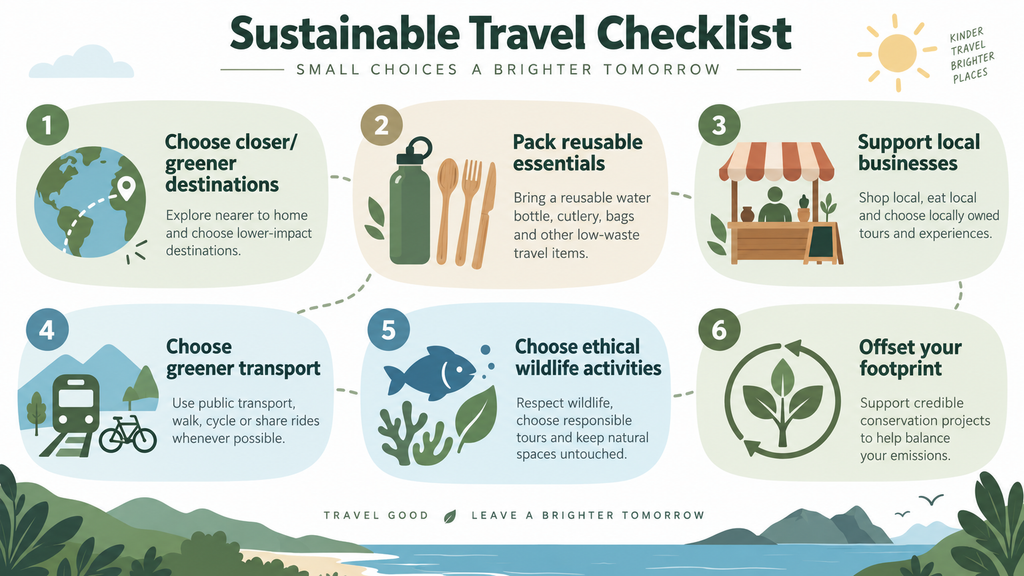
Sustainable travel isn’t about being perfect—it’s about being aware. Every small decision, from what you pack to where you eat, adds up. You don’t have to give up comfort or adventure to travel responsibly. In fact, sustainable travel often leads to more memorable, meaningful experiences. You’re more likely to connect with locals, explore places off the tourist trail, and leave feeling like you’ve contributed something positive. That’s a win for you—and for the places you visit.
More from DAyaTree: