Non-Toxic Laundry: Detergent Swaps, Dryer Sheets, and Fabric Softener Alternatives
As an Amazon Associate I earn from qualifying purchases and sometimes recommend products from other sellers at no extra cost you. For more details see my disclosure policy and privacy policy.
Laundry was the last room of the house I sorted out — long after the kitchen cupboards and the cleaning caddy. It felt harmless: the clothes come out smelling “fresh”, the machine does the work, job done. But once I started reading labels the way I’d learned to with cleaning sprays, the laundry shelf turned out to be one of the most chemically loaded corners of the home. Synthetic fragrance, optical brighteners, and softening agents sit against your skin all day, every day, in every item you wear and sleep in.
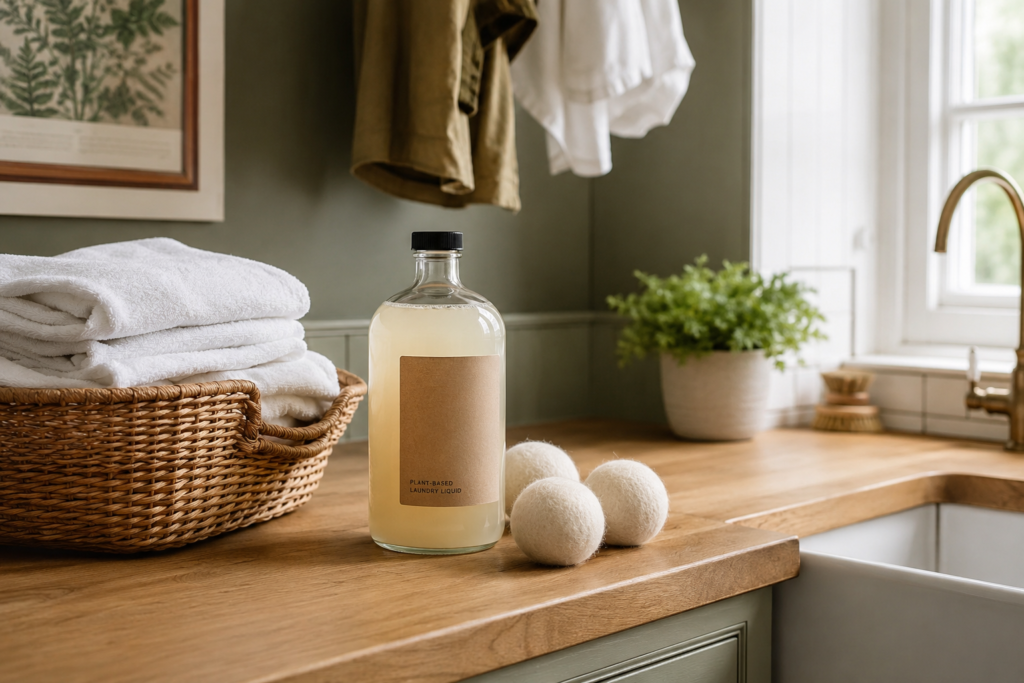
The good news is that laundry is also one of the easiest non-toxic swaps to make. You don’t need a cupboard full of specialist products — you arguably need fewer products than you have now. Here’s what I’ve changed over the past year in our own household, what worked, what didn’t, and what it actually costs.
In short: non-toxic laundry in the UK comes down to three moves — switch to a fragrance-free or plant-based detergent, drop fabric softener entirely, and replace dryer sheets with wool dryer balls.
What’s actually in conventional laundry products?
Most mainstream UK detergents and softeners contain some combination of:
Free download
Get the Non‑Toxic Home Audit Checklist
A room‑by‑room checklist to help you spot what’s worth swapping in your home — and what’s not worth worrying about. Join the fortnightly newsletter and it’s yours.
No spam, unsubscribe any time.
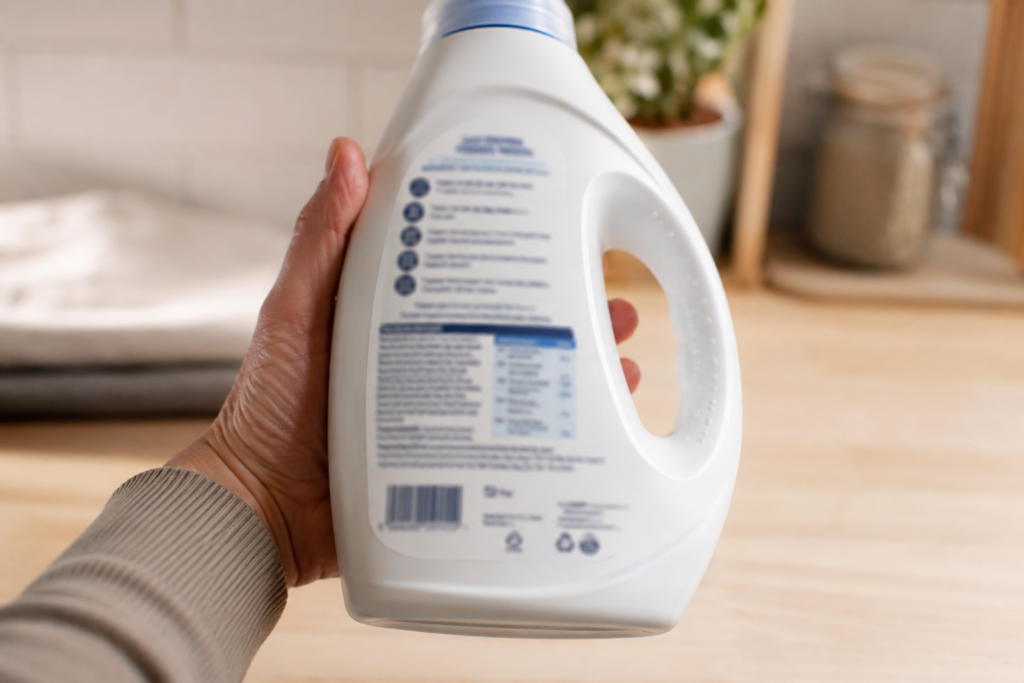
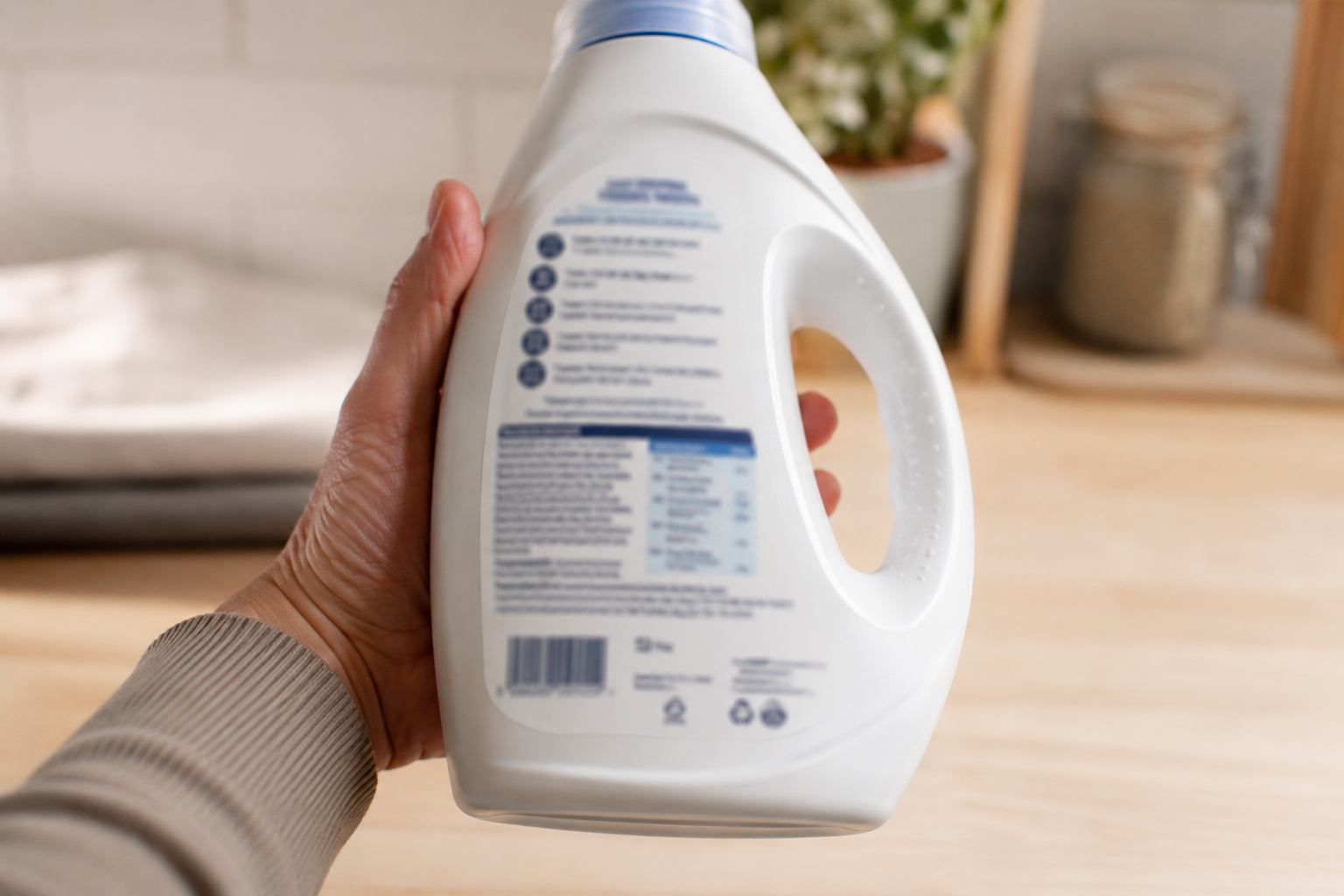
Synthetic fragrance (“parfum”). This single word on a label can cover dozens of undisclosed compounds, some of which are known allergens or suspected endocrine disruptors. Fragrance is the number one cause of laundry-related skin irritation — and because it’s designed to linger on fabric, you’re exposed to it continuously. (If you’ve read my cleaning product label guide, the parfum problem will be familiar.)
Optical brighteners. These don’t clean anything. They’re chemicals that cling to fabric and reflect blue light so whites look whiter. They stay on your clothes by design and are a common irritant for sensitive skin.
Quaternary ammonium compounds (“quats”). The active softening agents in most fabric softeners. They coat fibres in a waxy film, are linked to skin and respiratory irritation, and are slow to break down in waterways.
Dryer sheet coatings. Dryer sheets work by melting a layer of softening chemicals and fragrance onto your laundry with heat. That coating transfers to your clothes, your dryer, and your skin.
None of this means your current detergent is dangerous in a single wash. But laundry is a repeated, whole-body, all-day exposure — which is exactly the kind of exposure worth reducing where it’s cheap and easy to do. And it is.
Swap 1: The detergent
This is the swap that matters most, and the UK is genuinely well served here.
What to look for: plant-based surfactants, fragrance-free or naturally fragranced options, full ingredient disclosure, and no optical brighteners. Bonus points for refillable or plastic-free packaging.
What I’ve tested:
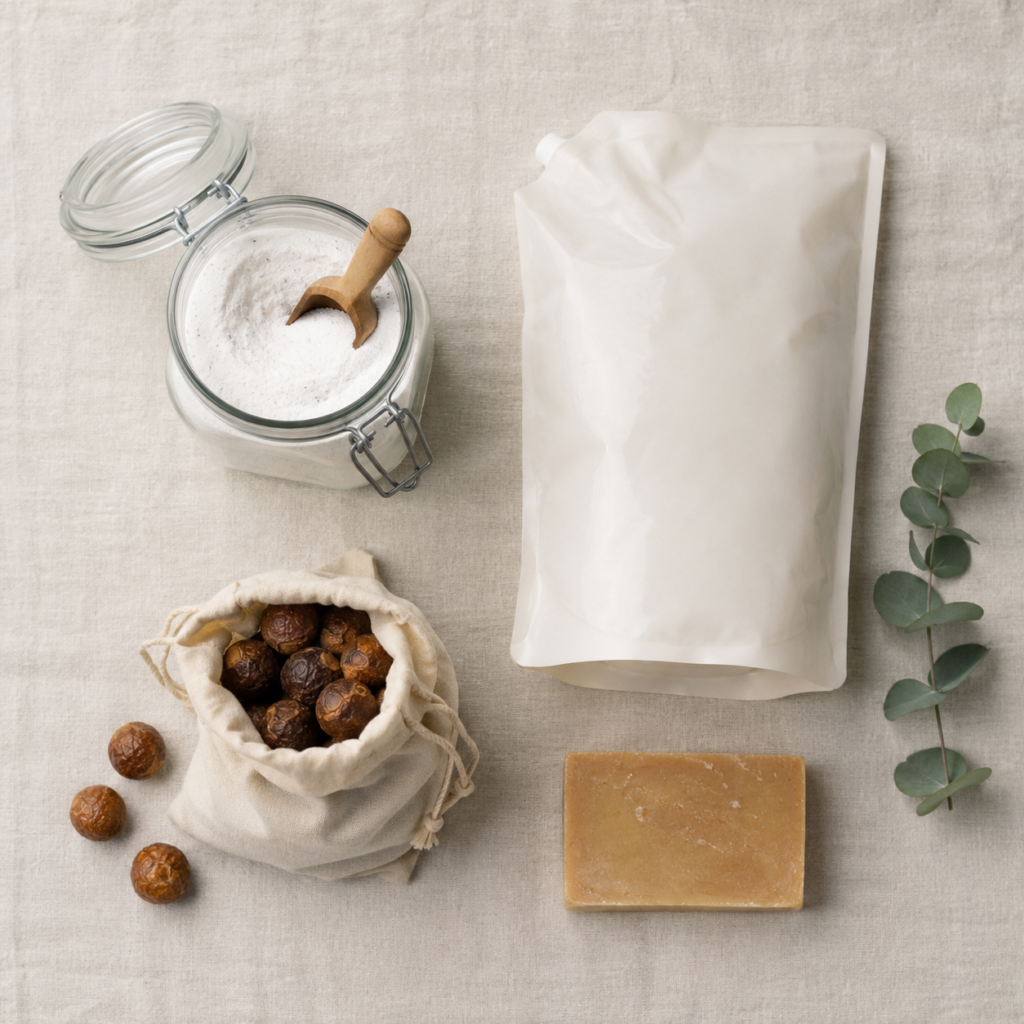
- Bio-D (fragrance-free liquid). My current daily driver. Made in Hull, fully disclosed ingredients, widely available in refill shops. Handles everyday loads well; heavily soiled gardening clothes sometimes need a pre-soak.
- Miniml. Yorkshire-based, refill-focused, and one of the cheapest per-wash options once you buy in bulk. Their fragranced options use essential oils rather than synthetic parfum.
- Smol (fragrance-free capsules). The convenient option — posted through your letterbox, and their fragrance-free line is genuinely fragrance-free. Slightly pricier per wash than refills.
- Ecover Zero. The easiest to find in supermarkets. A solid transition product if you want to swap without changing where you shop.
- Soap nuts. I wanted to love these. In our hard Welsh water they simply didn’t clean well enough for family laundry, though friends in soft-water areas swear by them. Try a small bag before committing.
A note on “sensitive” ranges from mainstream brands: these are usually a step in the right direction (less fragrance, fewer dyes) but often still contain optical brighteners and don’t disclose full ingredients. Fine as a stopgap; not the destination.
Cost reality check: a Miniml or Bio-D refill works out at roughly 15–25p per wash — comparable to or cheaper than premium mainstream detergents. Non-toxic laundry is not a premium lifestyle purchase; done via refills, it’s often the budget option.
The takeaway: a fragrance-free, plant-based detergent from a UK refill brand cleans just as well as mainstream detergent for most loads, and usually costs less per wash.
Swap 2: Drop the fabric softener (yes, entirely)
Here’s the thing nobody tells you: fabric softener isn’t just an unnecessary chemical exposure — it’s actively bad at its job.
Softener coats fibres in a hydrophobic film. Over time that film makes towels less absorbent, reduces the wicking of sportswear, degrades the water resistance of outdoor gear, and builds up gunk in your machine (if your washing machine drawer has a grey slime problem, softener is usually the culprit).
What to use instead:
- White vinegar. 50–100ml in the softener drawer. It softens by removing detergent residue rather than adding a coating, helps with limescale in hard water areas, and — I promise — your clothes do not come out smelling of chips. This is what I use for towels and bedding.
- Nothing at all. Genuinely a valid option. Modern detergents don’t leave fabrics stiff the way old powders did. We stopped using softener on everyday clothes and no one in the house noticed.
- Line drying. The British weather permitting, sunshine and moving air soften fabric naturally and the smell beats any bottled “spring meadow”.
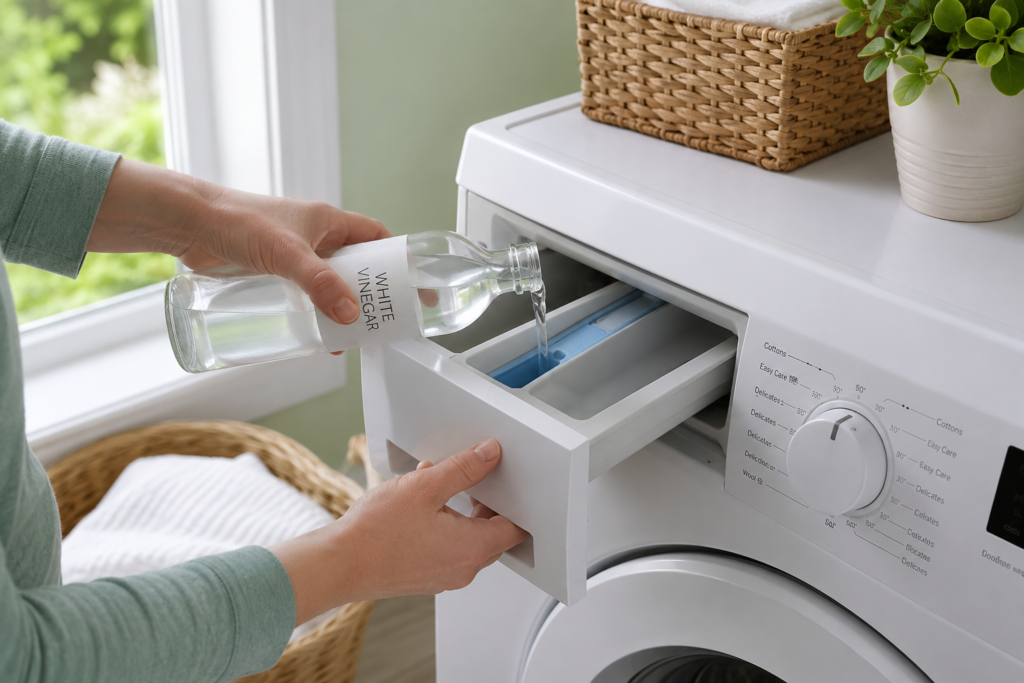
The takeaway: fabric softener is the rare product you can simply stop buying. Vinegar or nothing at all leaves clothes softer over time, not stiffer.
Swap 3: Dryer sheets → wool dryer balls
Dryer sheets barely exist as a category in some UK households, but if you tumble dry regularly and use them, this is a one-time swap that pays for itself within months.
Wool dryer balls (usually sold in sets of three to six) tumble between clothes, separating layers so air circulates better. In my testing they cut drying time by roughly 10–20% — which matters, because the tumble dryer is one of the most energy-hungry appliances in the house. They reduce static, they last for years, and they add nothing to your clothes at all.
If you miss scent, add a drop of essential oil to a ball before the cycle — though honestly, clean laundry that smells of nothing is something you come to appreciate.
For static without a dryer: static is mostly a synthetic-fabric problem. Line dry synthetics, or add the vinegar rinse above.
The takeaway: wool dryer balls replace dryer sheets permanently, cut drying time and energy use, and cost under £10 for a set that lasts years.
The stain question
The most common worry about switching: “will natural products handle real stains?” Mostly yes, with two additions to your arsenal:
- A bar of household soap ( Dr. Bronner’s make one) rubbed directly into collars, cuffs, and food stains before washing. This outperforms most spray pre-treatments.
- Oxygen bleach (sodium percarbonate) for whites, tea towels, and anything that needs serious lifting. It breaks down into oxygen and washing soda — a world away from chlorine bleach — and a tub lasts most of a year.
Grass stains, mud, tomato sauce, and small-child-related mysteries have all come out fine with this combination in our house.
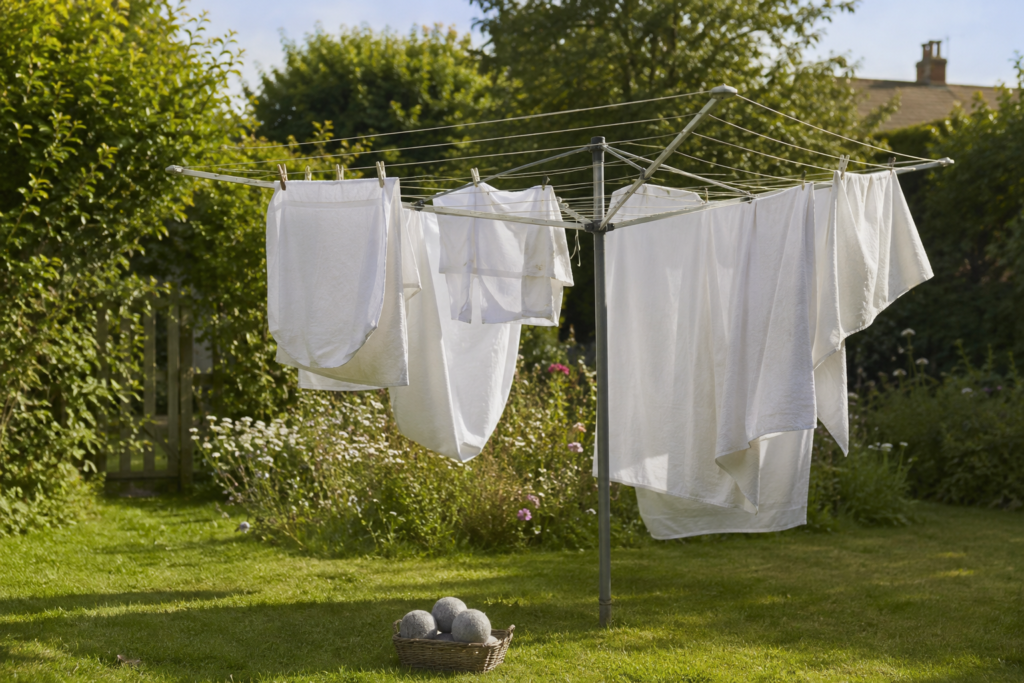
Your non-toxic laundry starter list
If you change nothing else, do these three things, in this order:
- Use up your current detergent, then replace it with a fragrance-free plant-based one (Bio-D, Miniml, Smol fragrance-free, or Ecover Zero).
- Stop buying fabric softener today. Use white vinegar for towels and bedding; nothing for everything else.
- If you tumble dry: replace dryer sheets with a set of wool dryer balls.
Total additional cost: under £15, most of which you recoup by no longer buying softener and sheets. Total time investment: one different decision at the supermarket.
The bottom line: non-toxic laundry is the cheapest, easiest room-by-room swap in the whole non-toxic home project — three changes, under £15, and your laundry routine gets simpler, not more complicated.
This post is part of our Non-Toxic Home series. Start with the room-by-room Non-Toxic Home Guide, or read next: What’s actually in your household cleaning products.