The One Habit That Cuts Waste, Saves Money, Feels Good
As an Amazon Associate I earn from qualifying purchases and sometimes recommend products from other sellers at no extra cost you. For more details see my disclosure policy and privacy policy.
I used to think being eco-friendly meant spending a fortune on bamboo everything or giving up the little comforts I liked—convenient packaging, fast deliveries, the odd takeaway in plastic tubs. The whole idea felt overwhelming. Where do you even start?
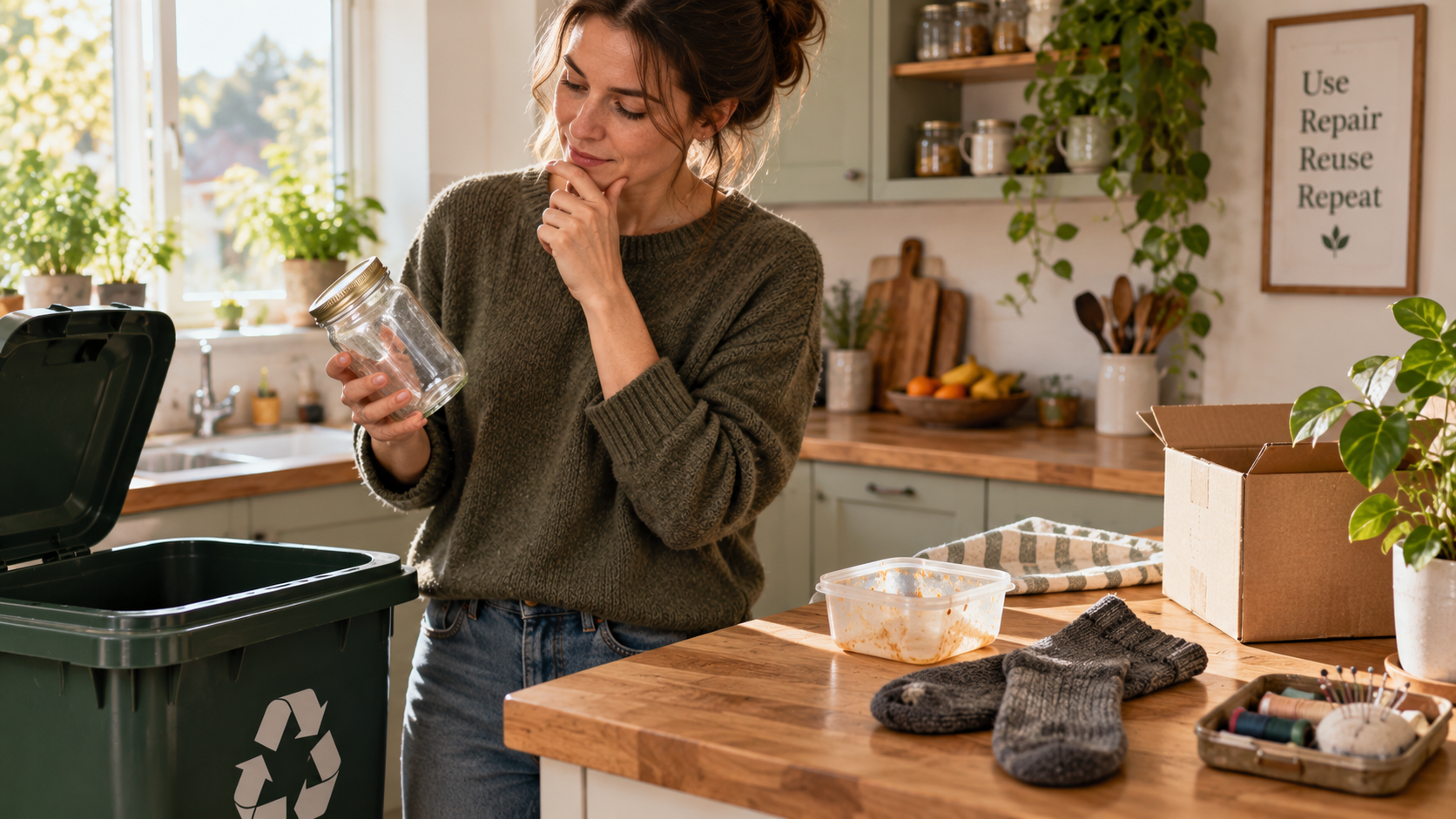
Turns out, I didn’t need to overhaul my life. I just needed to pause before chucking things in the bin.
That one habit—refusing to throw things away too quickly—has completely changed the way I live. It’s small, it’s simple, and it’s weirdly satisfying.
What changed for me
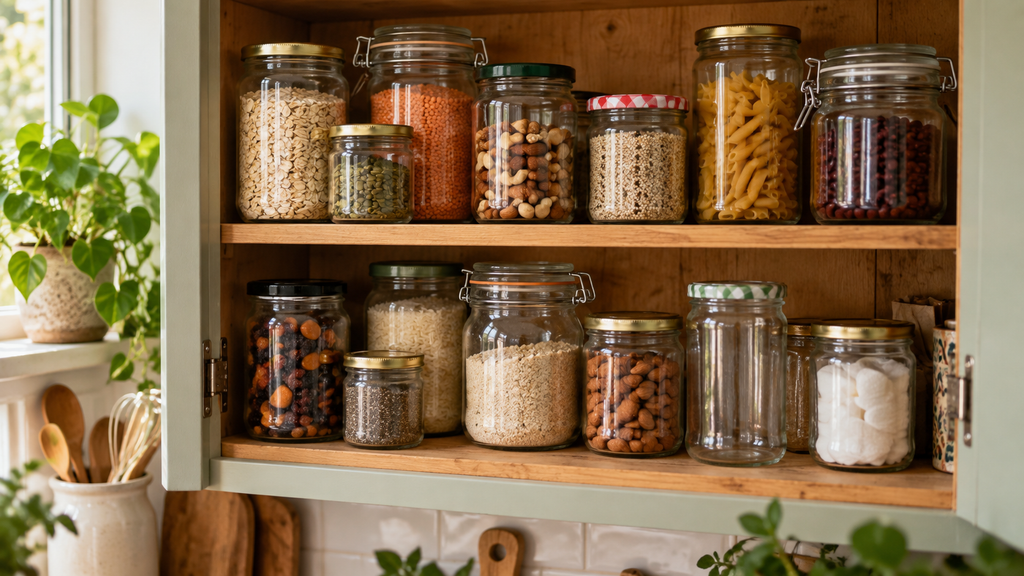
It started with a cupboard full of empty jars. The “recycling” pile was building up every week, but it suddenly hit me: these jars were perfectly good. Strong, airtight, easy to clean. Why was I treating them as waste?
Free download
Get the Non‑Toxic Home Audit Checklist
A room‑by‑room checklist to help you spot what’s worth swapping in your home — and what’s not worth worrying about. Join the fortnightly newsletter and it’s yours.
No spam, unsubscribe any time.
So I started using them. First for leftovers, then for storing dried fruit and nuts, even cotton pads in the bathroom. Now I haven’t bought a plastic food tub in over a year. The cupboard looks a bit mismatched—but I love it. Every reused jar is one less item I had to buy new.
That mindset started spreading.
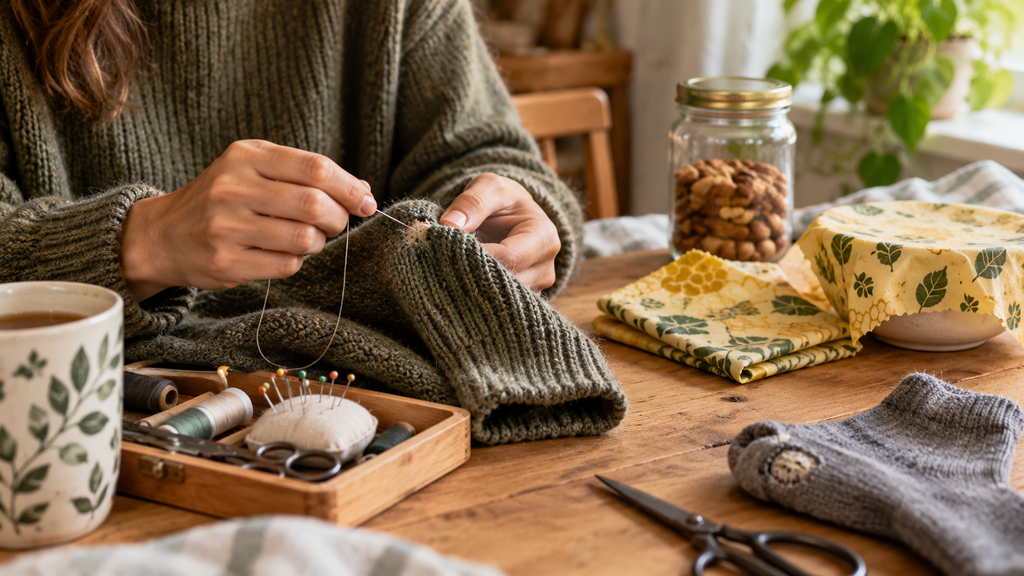
- When a jumper got a hole in the sleeve, I didn’t bin it—I looked up a five-minute sewing hack on YouTube and actually fixed it.
- I finally gave up clingfilm and switched to beeswax wraps (still going strong).
- I stopped replacing things out of habit and started asking, “Do I really need a new one, or can this be fixed or reused?”
And I know I’m not the only one. Ask around and you’ll hear stories of people turning old ladders into bookshelves, reusing delivery boxes for storage, even composting kitchen scraps in old ice cream tubs. It’s not fancy. It’s just sensible.
Why this One Habit matters more than you think
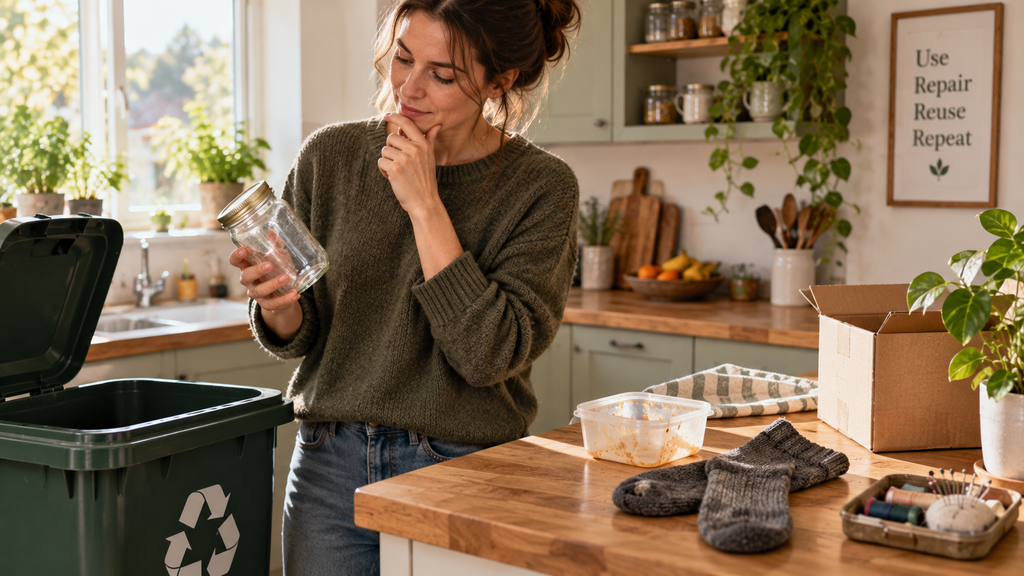
The average UK household throws away over a tonne of waste each year. A good portion of that? Still perfectly usable. Clothes with tiny rips. Containers that could be washed and reused. Gadgets that just need a new charger or battery.
The less we throw away, the less pressure there is on landfills, energy use, and manufacturing. Every reused item saves water, carbon, raw materials, and money. And we don’t need to be perfect to make a difference. If millions of us waste just a little bit less, it adds up in a big way.
It’s not about guilt—it’s about value
I’m not here to guilt-trip anyone. Sometimes stuff needs to go. But a lot of the time, it doesn’t. We’ve just been trained to think “used” equals “useless.”
There’s something weirdly joyful about giving things a second life. It’s not just about saving the planet—it’s about slowing down, using what we have, and valuing things properly. That includes our money and time, too.
Want to try this One Habit? Start here:
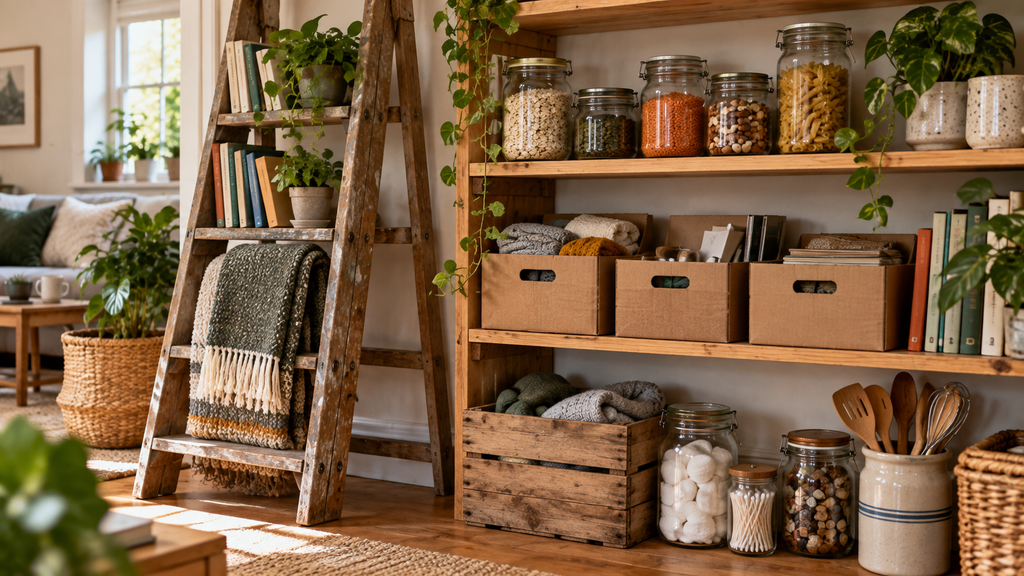
- Pick one thing you usually toss out without thinking. Clingfilm, takeaway containers, worn-out socks, whatever it is.
- Ask yourself: Can this be reused, fixed, or repurposed?
- Try keeping it for one more round. Wash it out, stitch it up, or Google a DIY use.
You don’t have to change everything overnight. Just start noticing what you throw away. That’s where the shift begins.
Final thought
There’s a lot we can’t control right now. But we can control this: how quickly we give up on the stuff we own.
If you start seeing your “rubbish” as potential, you might be surprised how much less you need—and how good it feels to waste less.
You don’t need to be perfect. Just a little more stubborn with the bin.
More from DayaTree: