Foraging in spring: what to look for in March, April, and May
As an Amazon Associate I earn from qualifying purchases and sometimes recommend products from other sellers at no extra cost you. For more details see my disclosure policy and privacy policy.
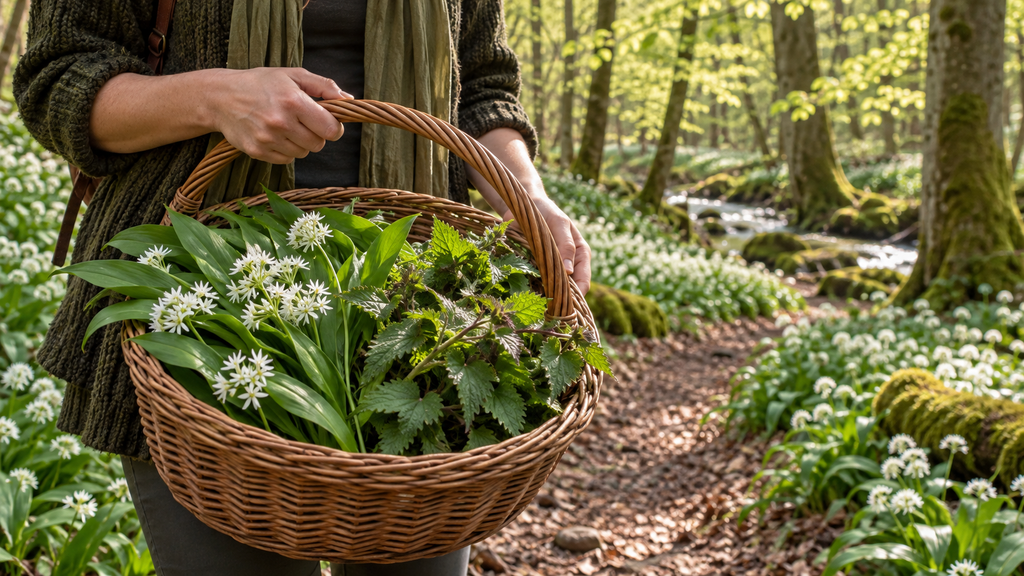
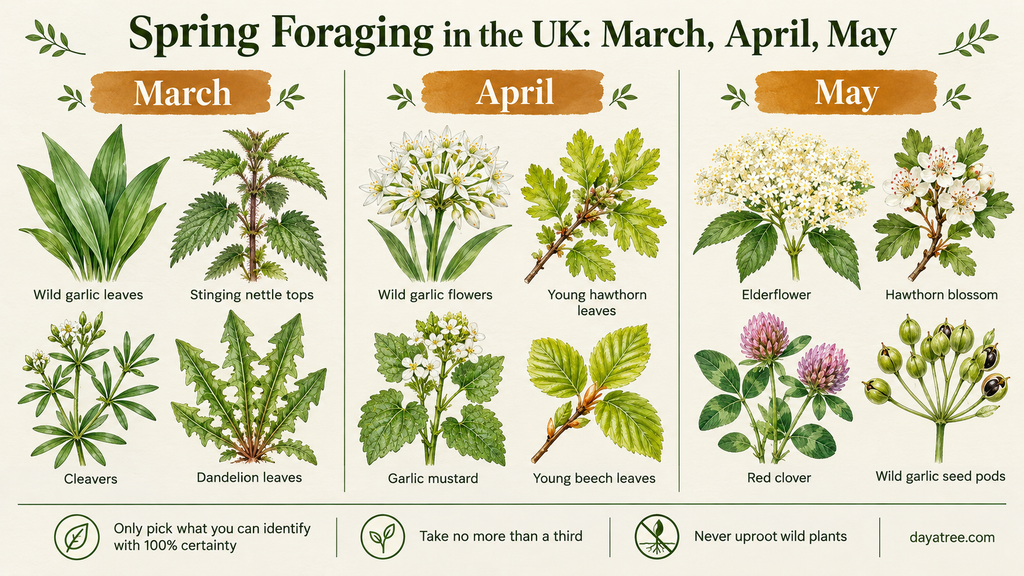
Spring foraging in the UK starts earlier than most people think. By early March, while the garden still looks bare, the hedgerows and woodland edges are already offering fresh greens: wild garlic, nettle tops, cleavers and hairy bittercress. By May, the elder bushes are frothing with cream flowers and the hawthorn is in full blossom.
This guide walks through what to look for in March, April and May, how to identify each plant safely, and what to do with it once you get it home. It is written for beginners in Britain, so the timings follow UK seasons and the advice follows UK law.
If you are completely new to picking wild food, start with our beginner’s guide to foraging in the UK, which covers the basics of kit, ethics and identification. This post zooms in on the spring months, when foraging is at its most generous and, honestly, its most forgiving for beginners.
Before you go: spring foraging safety and the law
The golden rule never changes: if you are not 100% sure what a plant is, do not eat it. Spring is the season when deadly plants look most like edible ones, because everything is young, green and leafy.
Free download
Get the Non‑Toxic Home Audit Checklist
A room‑by‑room checklist to help you spot what’s worth swapping in your home — and what’s not worth worrying about. Join the fortnightly newsletter and it’s yours.
No spam, unsubscribe any time.
Know the basic UK rules
In England and Wales, you can generally pick the leaves, flowers, fruit and fungi of wild plants for personal use on land you have legal access to. You cannot uproot any wild plant without the landowner’s permission, and some species are protected outright, including wild bluebells. Nature reserves and Sites of Special Scientific Interest often have their own byelaws, and Scotland has a different legal framework.
For the full picture, read what you can legally forage in the UK, which explains rights of way, access land and permissions in plain English.
Spring safety checklist
- Cross-check every plant against at least two reliable sources, such as a UK field guide and the Woodland Trust’s species pages.
- Check every single leaf. Lookalikes often grow in the same patch as the plant you want.
- Pick above dog height and away from busy roads and sprayed field margins.
- Take no more than a third of any patch, so the plant and the wildlife that depends on it can recover.
- Try a small amount first. Even safe wild foods can disagree with some people.
- Avoid the carrot family (umbellifers) as a beginner. Cow parsley, hemlock and hemlock water dropwort look alike and the last two can kill.
The bottom line: spring foraging is safe when you stick to a few easy, distinctive plants and learn them properly before branching out.
What to forage in March
March is the month of fresh, tender greens. Growth is slow but everything you find is at its mildest and most nutritious.
Wild garlic (ramsons)
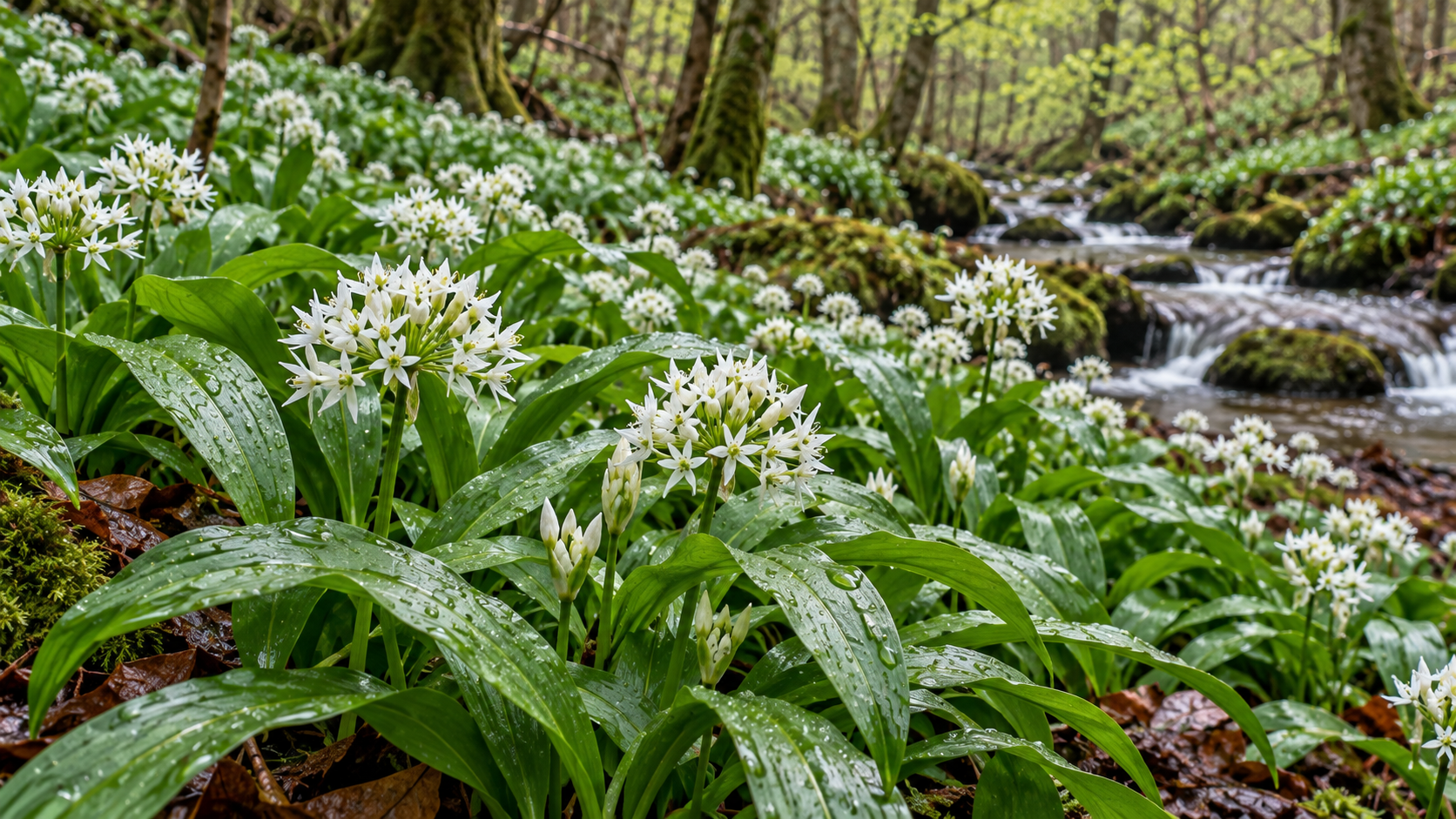
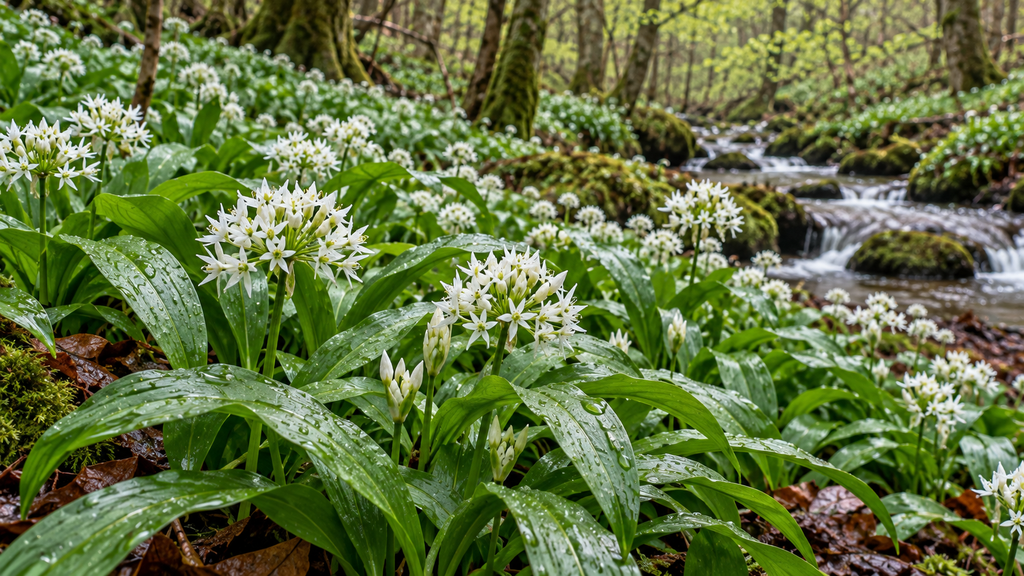
Wild garlic is the plant most people start with, and for good reason. Look in damp, shady broadleaf woodland and along stream banks, often carpeting the ground in huge drifts. The leaves are broad, bright green and smell strongly of garlic when crushed.
Watch out for: lords-and-ladies (arum), lily of the valley and young bluebell leaves, which can grow right among the ramsons. The smell test only works if you crush each leaf individually, because garlic scent quickly lingers on your fingers. Lords-and-ladies leaves are arrow-shaped with veins that branch out like a net; wild garlic veins run in parallel lines from the base.
How to use it: pesto, wild garlic butter, soups, or wilted into risotto in place of spinach.
Stinging nettles
Nettles are everywhere in March and the young tops are at their best. Wear gloves and pick only the top four to six leaves of each stem. Cooking or blanching removes the sting completely.
How to use it: nettle soup, nettle tea, or blanched and used like spinach in pies and pasta.
Hairy bittercress and cleavers
Hairy bittercress is a small rosette weed with a peppery, cress-like flavour, often found in garden borders and plant pots. Cleavers (sticky willy) scramble through hedgerows and stick to your clothes. Young cleavers tips can be juiced, steeped in water, or lightly cooked.
Dandelion leaves
Young dandelion leaves are pleasantly bitter in March before the plant flowers. Pick from the centre of the rosette and add a few to salads.
In short, March foraging is all about leafy greens: wild garlic and nettles are the two to learn first.
What to forage in April
April is peak wild garlic season and the hedgerows wake up properly. It is the best month for variety, with new leaves appearing almost weekly.
Young hawthorn leaves
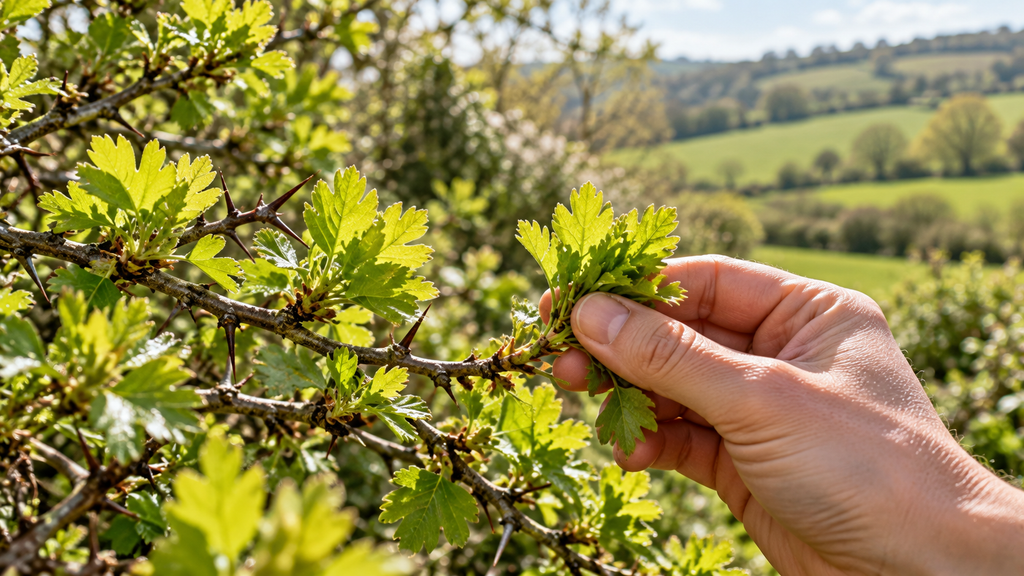
Hawthorn is one of the most common hedgerow shrubs in Britain, and its fresh spring leaves were once nicknamed “bread and cheese” by country children. The leaves are small and deeply lobed, and the branches carry sharp thorns. Pick the softest new growth; it has a mild, nutty taste. If you have a hedge at home, native hedging like hawthorn gives you a forageable crop as well as a wildlife corridor.
Wild garlic flowers
By mid-April, wild garlic sends up starry white flower heads. They are milder than the leaves and look beautiful scattered over salads or new potatoes.
Garlic mustard (jack-by-the-hedge)
Garlic mustard grows along shady verges and hedge bottoms, with heart-shaped, toothed leaves and small white four-petalled flowers. It tastes gently of both garlic and mustard. Use the young leaves in salads, sandwiches or sauces.
Young beech and lime leaves
For a short window in April, fresh beech leaves are soft, translucent and lemony. Young lime (linden) leaves are tender and mild, and make a good salad base. Both toughen within a few weeks, so pick only the newest growth.
Common sorrel
Sorrel grows in grassland and has arrow-shaped leaves with a sharp, lemony bite. It contains oxalic acid, so enjoy it in modest amounts rather than as a main ingredient.
The takeaway for April: it is the most varied month of spring foraging, and the best time to build confidence with hedgerow leaves.
What to forage in May
May is the month leaves give way to flowers. The headline act is elderflower, which usually appears in the second half of the month in southern England and a little later further north.
Elderflower
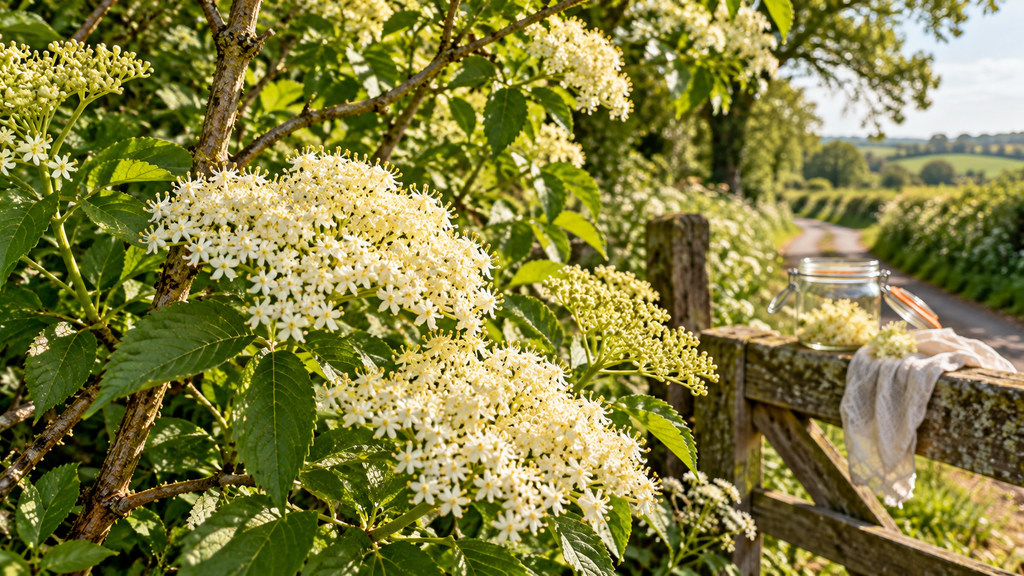
Elder is a small tree or shrub with flat, creamy-white flower heads and a sweet, musky scent. Pick heads on a dry, sunny morning when the flowers are fully open and fragrant, and shake off any insects before taking them home.
Watch out for: umbellifers such as cow parsley and hemlock also have flat white flower heads, but they grow on soft, hollow stems at ground level. Elder grows on a woody shrub with bark. If the flowers are not on a woody plant, it is not elder. Raw elder leaves, stems and unripe berries are toxic, so use only the flowers.
How to use it: elderflower cordial, fritters, or infused into vinegar or gooseberry jam.
Hawthorn blossom
Hawthorn (also called the may tree) blossoms in May. The white flowers have a heady scent and can be used for syrups, teas and infusions.
Red clover and dandelion flowers
Red clover flowers are sweet and can be scattered over salads or dried for tea. Dandelion flowers make fritters, syrup or the classic dandelion “honey”. If you are leaving parts of your lawn uncut for No-Mow May, you may find both growing right outside your back door. Leave plenty behind for the bees.
Wild garlic seed pods
As the wild garlic flowers fade, they form green seed pods. These have a punchy garlic flavour and pickle beautifully.
Last of the nettles
Keep picking nettle tops until the plants start to flower in early summer. After that, the leaves become tough and less pleasant to eat.
To sum up May: it is flower season, and elderflower is the prize, but only if you are certain it is growing on a woody shrub.
Spring foraging calendar at a glance
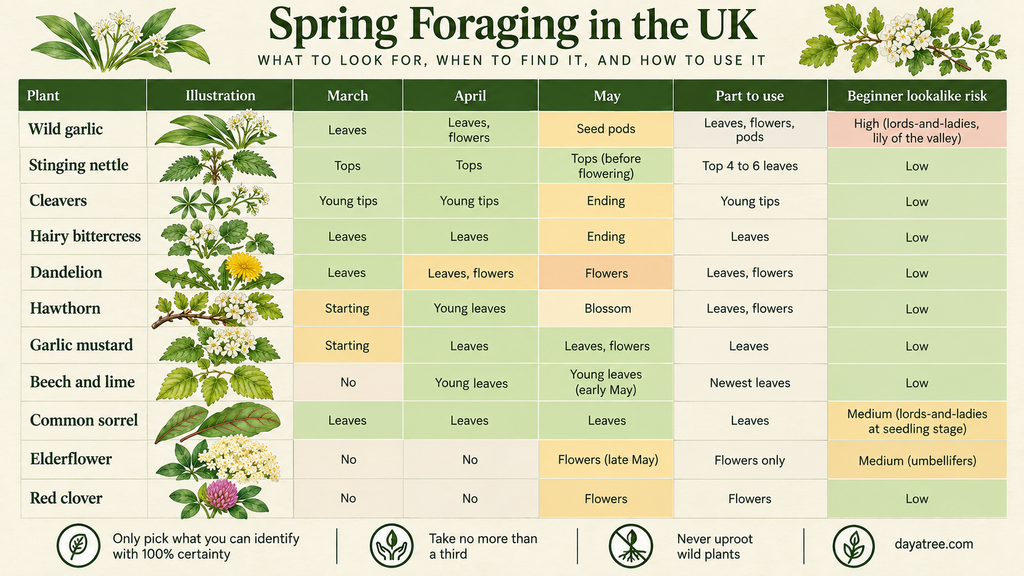
[INFOGRAPHIC: Spring foraging calendar. Place here, directly under this H2, as a full-width horizontal image.]
Use this quick reference to see what is in season each month. Timings shift by a week or two depending on how far north you are and how mild the spring has been.
Simple spring foraging recipes to try
You do not need special kit to cook with spring finds. These three are easy, quick and very forgiving.
Wild garlic pesto
Blitz a large handful of washed wild garlic leaves with a small handful of toasted nuts or seeds, a good grating of hard cheese, a squeeze of lemon and enough olive oil to loosen. Stir through pasta or spoon over roasted vegetables. Pesto freezes well in ice-cube trays, so you can enjoy wild garlic long after the season ends. For more ways to keep a glut, see our guide to freezing, pickling and fermentation basics.
Nettle soup
Soften an onion and a diced potato in butter or oil, add stock and simmer until the potato is tender. Add a colander of blanched nettle tops for the last few minutes, blend, then season. It is cheap, filling and bright green.
Elderflower cordial
Steep around 20 elderflower heads in a sugar syrup with sliced lemons for 24 to 48 hours, then strain through muslin and bottle. Many UK recipes add citric acid to help it keep. Store in the fridge, or freeze in plastic bottles for summer.
Want a steadier supply without walking miles? You can plant some of these species at home: see growing a foraging garden for what to plant for a harvest you can eat.
Spring foraging FAQs
What is the easiest thing to forage in spring in the UK?
Stinging nettles are the easiest. They are everywhere, have no dangerous lookalikes, and are at their best from March to May. Wild garlic is a close second, as long as you check every leaf for lookalikes.
When does wild garlic season start and end?
Wild garlic leaves usually appear from late February or March, peak in April, and fade by early June. Flowers come in April and May, followed by green seed pods.
Is it legal to pick wild garlic in the UK?
In England and Wales, you can usually pick wild garlic leaves and flowers for personal use where you have legal access. Do not dig up the bulbs, which is illegal without the landowner’s permission, and check local byelaws on nature reserves.
When is elderflower season in the UK?
Elderflower usually blooms from late May to mid-June, starting earlier in the south and later in northern England and Scotland.
Can I forage with children in spring?
Yes. Nettles (with gloves), dandelions, cleavers and clover are good starter plants for children. Set a firm rule that nothing goes in their mouth until an adult has checked it.
Start small this spring
Spring foraging in the UK rewards patience more than expertise. Learn two or three plants properly this year, wild garlic, nettles and elderflower are a perfect trio, and add a few more each season. Pick lightly, check every leaf, and leave plenty for the wildlife that relies on these plants too.
Foraging also makes you notice the land around you in a new way. If that sparks an interest in giving nature more room at home, our complete guide to rewilding is a great next step.