Non-Toxic Cookware UK: What to Look For, What to Avoid, and the Best Options at Each Price Point
As an Amazon Associate I earn from qualifying purchases and sometimes recommend products from other sellers at no extra cost you. For more details see my disclosure policy and privacy policy.
I used to think a pan was a pan. Then I started looking more closely at what I was cooking in, and it turned out my kitchen was a patchwork of compromises: a scratched non-stick pan I’d had for years, a cheap aluminium stockpot, and a stainless steel wok I’d bought without really knowing whether it was a good choice.
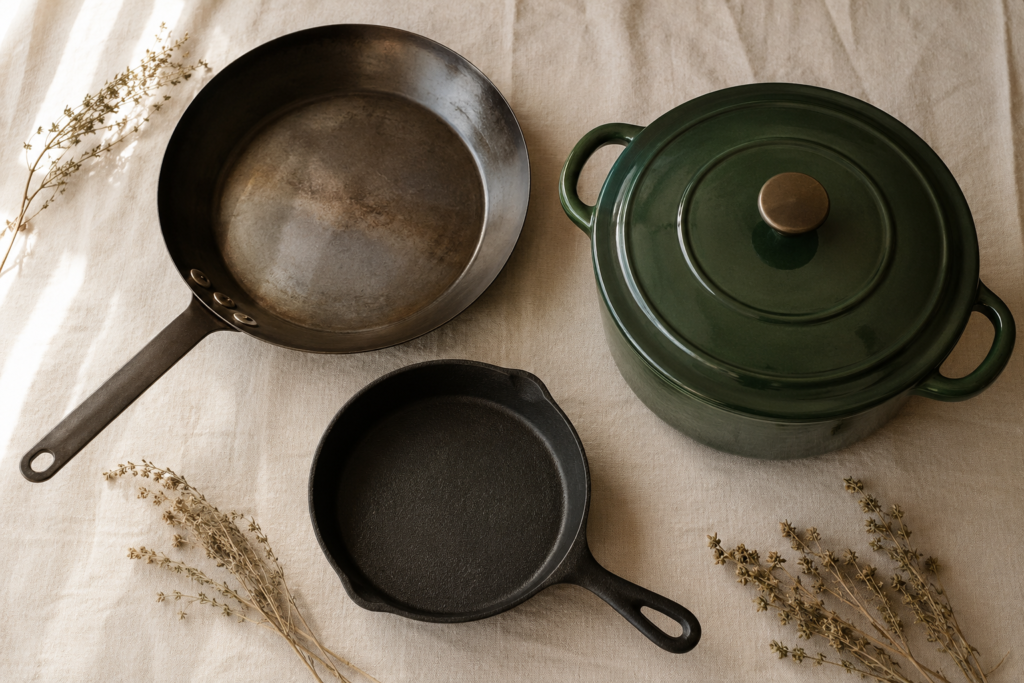
The honest answer to “is your cookware safe?” is: it depends entirely on the material, the condition, and how you use it. This guide breaks it down clearly, without the fearmongering that tends to follow this topic around. I’ve tested and researched the options available to UK buyers, and I’ll give you straightforward recommendations across different budgets.
| Quick summary The safest cookware materials for everyday UK cooking are: cast iron, carbon steel, stainless steel (18/10), and uncoated ceramic. PTFE-coated non-stick pans are controversial but largely safe if undamaged and used below 260°C. The materials to avoid are: scratched or flaking non-stick coatings, uncoated aluminium for acidic foods, and cheap pans with unclear coatings. |
Why Does Cookware Material Matter?
When you heat a pan, the material interacts with your food. Most of the time, that interaction is minimal and harmless. But certain materials — particularly synthetic coatings, reactive metals, and cheaper alloys — can leach small amounts of compounds into food, especially when pans are scratched, overheated, or used with acidic ingredients like tomatoes or citrus.
This isn’t a call to panic. Context matters: the quantities involved are usually tiny, and switching to safer cookware is a low-cost, one-time change that pays off over a decade of cooking. It’s the kind of practical swap that makes sense whether you’re trying to reduce your toxic load or just replace a worn-out pan thoughtfully.
Free download
Get the Non‑Toxic Home Audit Checklist
A room‑by‑room checklist to help you spot what’s worth swapping in your home — and what’s not worth worrying about. Join the fortnightly newsletter and it’s yours.
No spam, unsubscribe any time.
What to Avoid: The Materials Worth Swapping Out
Scratched or Flaking PTFE Non-Stick
PTFE (polytetrafluoroethylene), sold under the brand name Teflon among others, is the coating on most conventional non-stick pans. In good condition and used below around 260°C, it is considered stable by most food safety agencies, including the UK’s Food Standards Agency. The concern arises when:
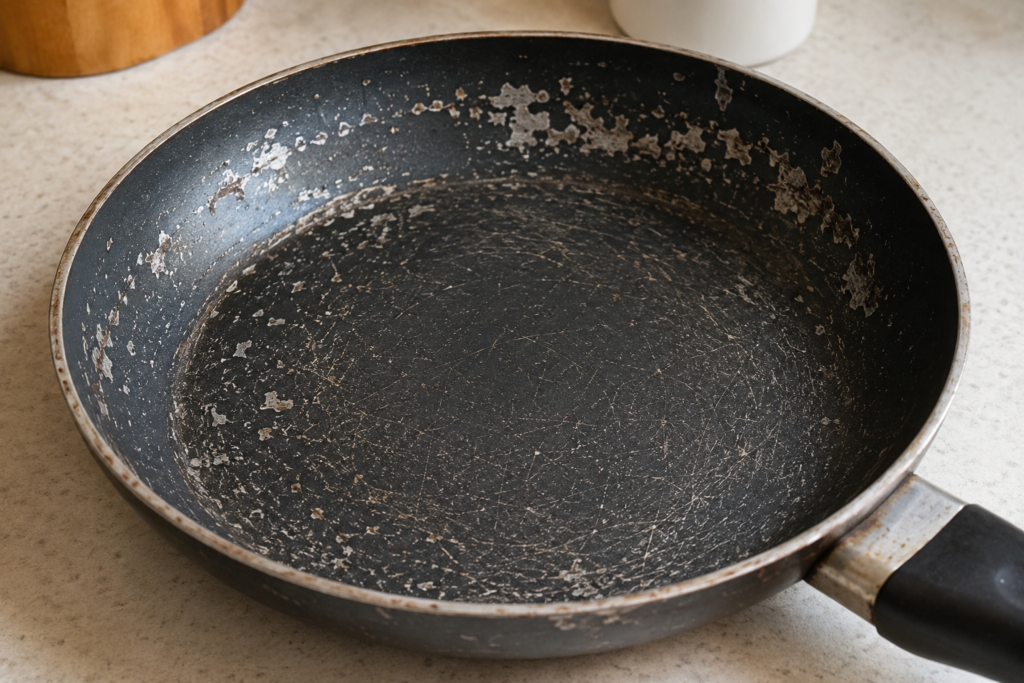
- The coating is visibly scratched, flaking, or peeling
- The pan is overheated — PTFE begins to break down above 260°C and releases fumes that are genuinely harmful to pet birds and unpleasant for humans at high temperatures
- Older pans manufactured before 2013 may contain PFOA (perfluorooctanoic acid), a more concerning compound that has since been phased out
Bottom line: If your non-stick pan is scratched, replace it. If it’s in good condition, keep temperatures moderate and don’t leave it unattended on a high heat.
Uncoated Aluminium
Aluminium is reactive with acidic foods. Cooking tomato sauce or a lemon-based dish in an uncoated aluminium pan can leach small amounts of aluminium into food. Hard-anodised aluminium (where the surface is electrochemically hardened) is significantly more stable and widely used in professional kitchens without concern. Plain uncoated aluminium, however, is worth avoiding for anything acidic.
Non-Stick Pans With Unclear Coatings
Some cheap non-stick pans — particularly those from unrecognised brands with no clear labelling about their coating chemistry — are best avoided. If a pan doesn’t state what its coating is made of, that’s a reason to be cautious. Reputable brands will tell you clearly whether a coating is PTFE-based, ceramic, or enamel.
What to Look For: The Safest Cookware Materials
Cast Iron
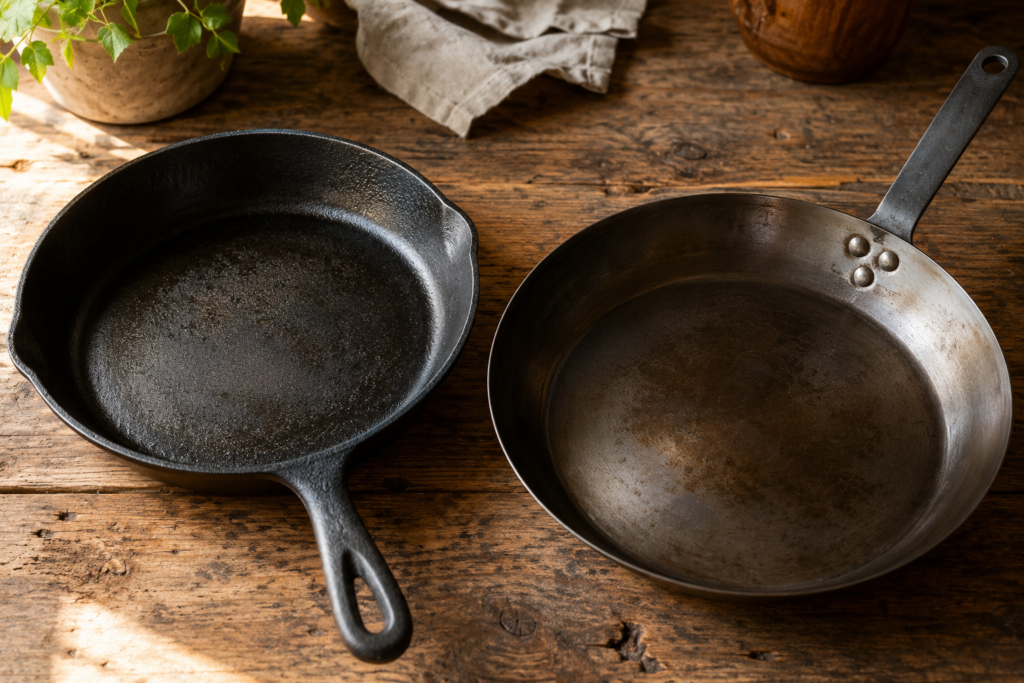
Cast iron is the original non-toxic cookware. It has no synthetic coatings, lasts essentially forever with basic care, and is as inert as cookware gets. Well-seasoned cast iron also develops a naturally non-stick surface over time. The minor caveat: cast iron does leach small amounts of iron into food — which is harmless for most people and may actually be beneficial if you’re iron-deficient.
Cast iron is heavy and requires a little maintenance (drying thoroughly, occasional re-seasoning), but it’s genuinely the most durable and cost-effective option over the long term. A quality cast iron skillet bought once lasts a lifetime.
Best for: Frying, searing, oven baking. Less suitable for delicate fish or highly acidic dishes.
Carbon Steel
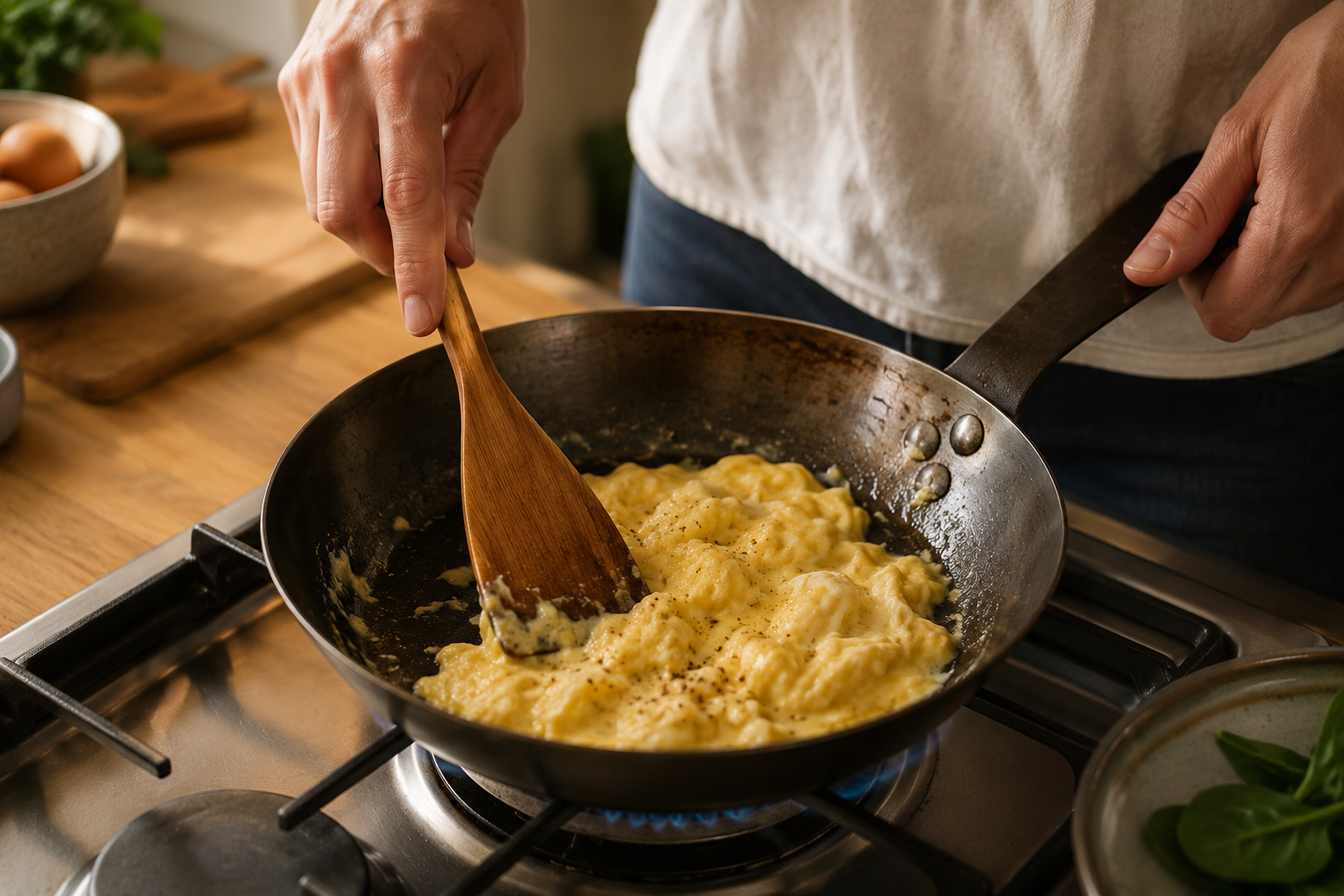
Carbon steel is cast iron’s lighter sibling. It seasons in the same way, develops a natural non-stick surface with use, and is significantly lighter and more responsive to temperature changes. Most professional woks are carbon steel. It requires the same care as cast iron but is much easier to handle day-to-day.
Best for: Woks, frying pans, high-heat cooking. The best all-rounder for non-toxic cooking in a UK home kitchen.
Stainless Steel (18/10)
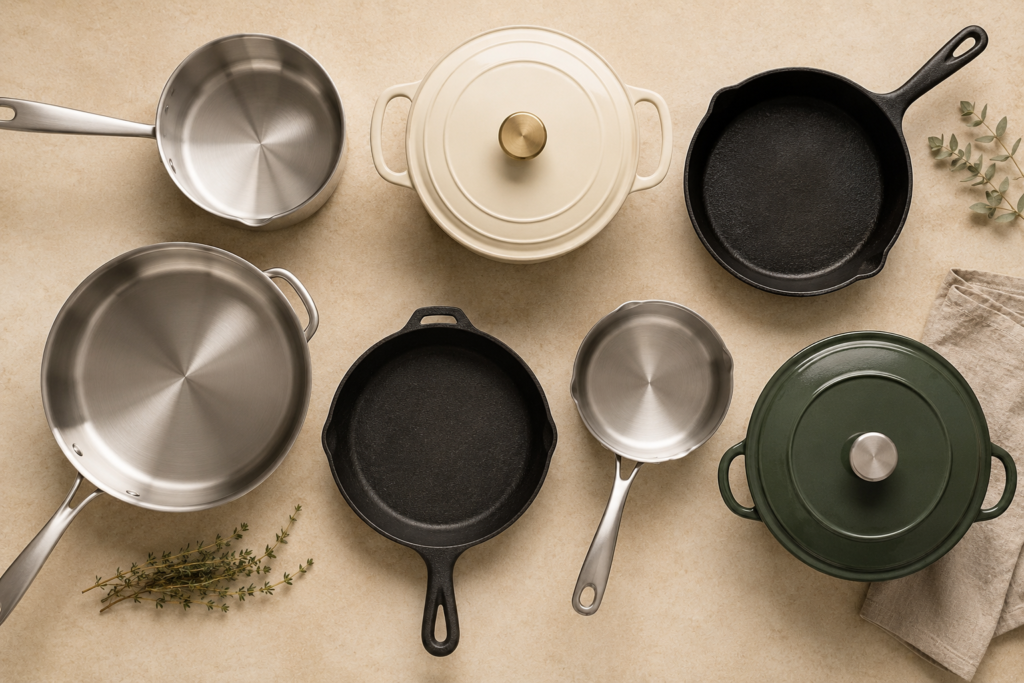
18/10 stainless steel (18% chromium, 10% nickel) is the standard for professional cookware and is highly stable under normal cooking conditions. It doesn’t react with acidic foods, doesn’t leach detectable amounts into food, and is dishwasher-safe. It’s not naturally non-stick, so requires a little more oil and attention — but it’s a workhorse material that performs consistently.
Check the base: a thick, clad base (tri-ply or five-ply) ensures even heat distribution and prevents hot spots. Cheap thin stainless steel is less effective for cooking and more prone to warping.
Best for: Saucepans, stockpots, sauté pans. Works well for most everyday cooking.
Enamel-Coated Cast Iron
Enamel-coated cast iron (Le Creuset is the most well-known example, but there are excellent budget alternatives) combines the mass and heat retention of cast iron with a smooth enamel surface that requires no seasoning and is safe for acidic cooking. It’s the most versatile non-toxic option for slow cooking, braises, and soups.
Best for: Casseroles, soups, stews. Heavy and expensive at the premium end, but excellent mid-range options exist.
Uncoated Ceramic and Stoneware
Plain ceramic and stoneware bakeware — the kind used for casseroles, baking dishes, and roasting — is generally very safe. The only caveat is older glazed ceramics that may contain lead in the glaze: this is essentially a non-issue for any cookware manufactured and sold in the UK in the last 20 years, where lead-free glazes are standard. Don’t use vintage or imported ceramics of unknown origin for cooking.
The Best Non-Toxic Cookware in the UK: By Price Point
Budget (Under £30 per piece)
At this price point, your best options are uncoated carbon steel and basic cast iron. Both are widely available from UK retailers and represent genuinely excellent value for money.
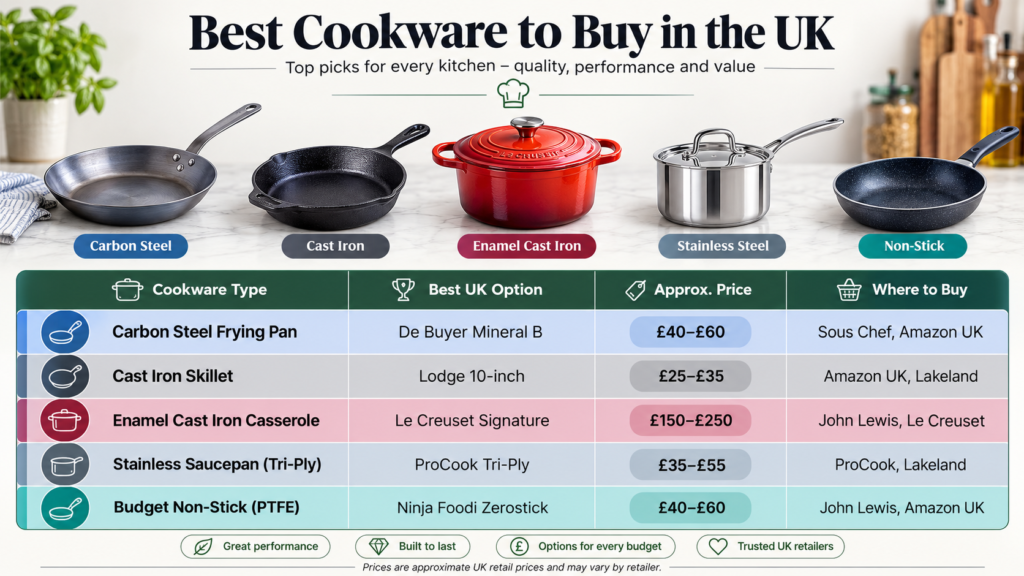
- Lodge Cast Iron Skillet — available in the UK from around £25–30, the most consistent budget cast iron option
- Ikea 365+ Stainless Steel Pans — 18/8 stainless, not as thick as premium options, but honest and safe for everyday use
Avoid: budget non-stick pans from supermarkets without clear coating information, particularly anything under £15 that doesn’t state what its surface is made of.
Mid-Range (£30–£80 per piece)
This is where the best value sits for most UK households. You can get a genuinely good pan that will last 10–20+ years with normal use.
- De Buyer Mineral B Carbon Steel Pan — the gold standard for carbon steel in the UK, around £40–60 for a frying pan. Widely available from Sous Chef, Amazon UK, and kitchen specialists
- ProCook Tri-Ply Stainless Steel Range — solid UK brand, good three-layer construction, around £35–75 per pan
- Ninja Foodi Zerostick — if you want a non-stick option, Ninja’s PTFE pans are well-reviewed in UK consumer tests for durability and heat performance. Around £40–60
At this price, I’d prioritise a good carbon steel frying pan and a stainless steel saucepan over one expensive all-purpose pan.
Investment (£80+)
If you’re buying once and keeping for life, these are the options worth the outlay:
- Le Creuset Signature Cast Iron Casserole — the benchmark for enamel cast iron, widely available in UK department stores. Comes with a limited lifetime guarantee. Around £150–£250 depending on size
- Mauviel M’Steel Carbon Steel Pan — professional-grade French carbon steel, around £100–£130. A serious pan for serious cooking
- All-Clad D3 Stainless Steel — tri-ply construction, consistently rated among the best performing stainless steel cookware available in the UK. Around £120–£200 per pan
- Solidteknics AUS-ION (carbon steel frying pan) — around £70-£90 per pan, made without synthetic coatings, food-safe from day one
The honest answer is you don’t need to spend this much to cook safely. But if you’re replacing your whole kitchen kit and want to buy once, these will outlast everything else.
UK price comparison at a glance
Practical Tips for Switching
You don’t need to replace everything at once. Here’s a sensible sequence:
- Start with your most-used pan. Replace a scratched non-stick frying pan with a carbon steel equivalent first — that’s the highest-use item in most kitchens.
- Don’t throw away functional stainless or enamel. If your existing pans are in good condition and made from safe materials, there’s no need to replace them.
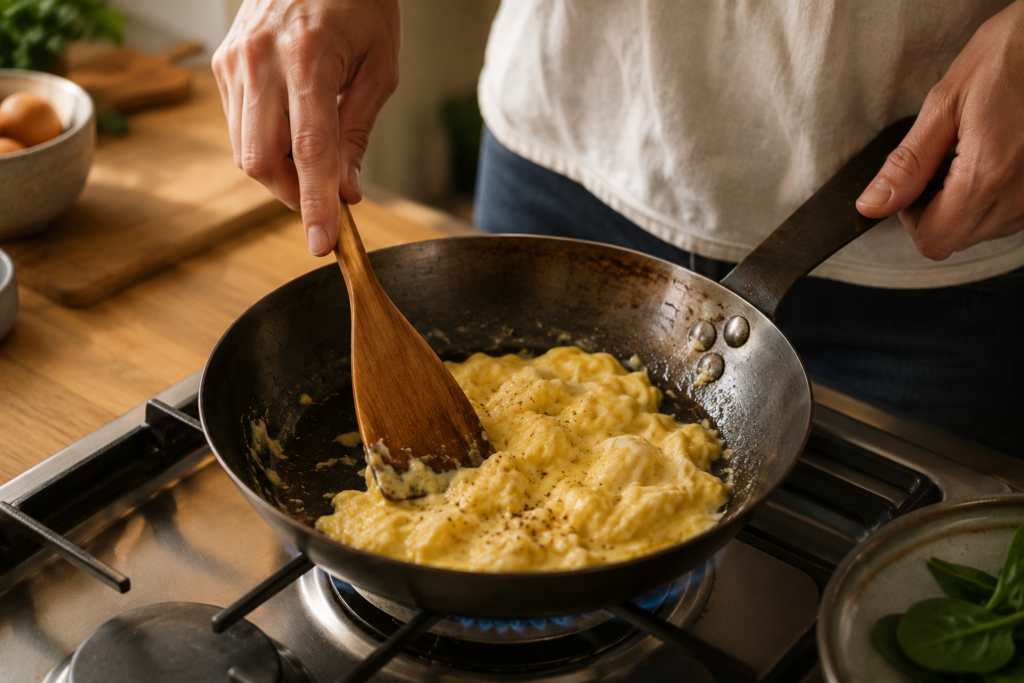
- Season your carbon steel properly. It takes three or four uses to build up a non-stick surface — cook fatty foods first (bacon, fried eggs) and don’t panic if early meals stick slightly.
- Avoid metal utensils on PTFE. If you keep any non-stick pans, use silicone or wooden utensils and never stack them bare in a drawer.
- Check your oven dish while you’re at it. Plain glass, ceramic, or enamel bakeware is the safest choice for roasting and baking.
The Short Answer
The safest everyday cookware for a UK kitchen, in order of versatility and value: carbon steel frying pan, stainless steel saucepans, and enamel cast iron for slow cooking. If you cook at moderate temperatures and replace non-stick pans when they scratch, a quality PTFE pan is not a significant risk.
The goal isn’t a perfect kitchen — it’s a better one. Replacing one worn-out pan at a time is a straightforward swap that doesn’t require a complete overhaul.
| Next in this series What’s actually in your household cleaning products: a UK label-reading guide / DIY natural cleaning recipes that actually work: surfaces, glass, and bathrooms / Safer food storage: moving away from plastic (UK-friendly options) |
About the author
Nikki writes about sustainable and non-toxic living from the Welsh countryside. Daya Tree is her practical guide to eco-friendly life in the UK — no perfection required.