Companion Planting: Grow More by Spending Less
As an Amazon Associate I earn from qualifying purchases and sometimes recommend products from other sellers at no extra cost you. For more details see my disclosure policy and privacy policy.
I used to think companion planting was a bit of garden folklore — the sort of thing you nod along to in an allotment conversation without really believing it. Then I spent two growing seasons testing it properly in my own UK back garden, tracking what worked and what was just an old wives’ tale with good marketing. The short version: some of it is genuinely useful, some of it is nonsense, and knowing the difference can save you real money.
Companion planting, done well, is one of the cheapest upgrades you can make to a vegetable patch. It doesn’t cost anything beyond a bit of planning — you’re just being smarter about where you put the seeds you were already going to buy. Done badly, it’s just superstition dressed up as gardening advice. This guide separates the two.
What Companion Planting Actually Is
Companion planting means growing two or more crops near each other because they benefit one another — through pest deterrence, better use of space, improved pollination, or soil health. It’s not magic. The combinations that hold up under scrutiny work because of real, explainable mechanisms: strong-scented herbs masking a crop’s smell from pests, tall plants offering shade to plants that bolt in full sun, or nitrogen-fixing legumes feeding hungrier neighbours.
The combinations that don’t hold up tend to be inherited folklore repeated from gardening book to gardening book without much evidence behind them. If you’re growing on a budget, it’s worth knowing which is which before you plan your beds.
Free download
Get the Non‑Toxic Home Audit Checklist
A room‑by‑room checklist to help you spot what’s worth swapping in your home — and what’s not worth worrying about. Join the fortnightly newsletter and it’s yours.
No spam, unsubscribe any time.
Why This Matters for Cost, Not Just Yield
Most companion planting guides focus purely on pest control or flavour. For anyone gardening with a spending-less mindset, there’s a second benefit that gets overlooked: space efficiency. A small UK garden or allotment plot has a fixed footprint. Pairing a fast-growing crop with a slow one in the same bed — radishes with parsnips, for example — means you get two harvests from the space and time you’d otherwise use for one.
That’s the same principle behind the 10 most cost-effective vegetables to grow in a UK garden — it’s not just about what you grow, it’s about squeezing the most value out of every square foot of soil you’ve got.
Combinations That Genuinely Work
Tomatoes and Basil
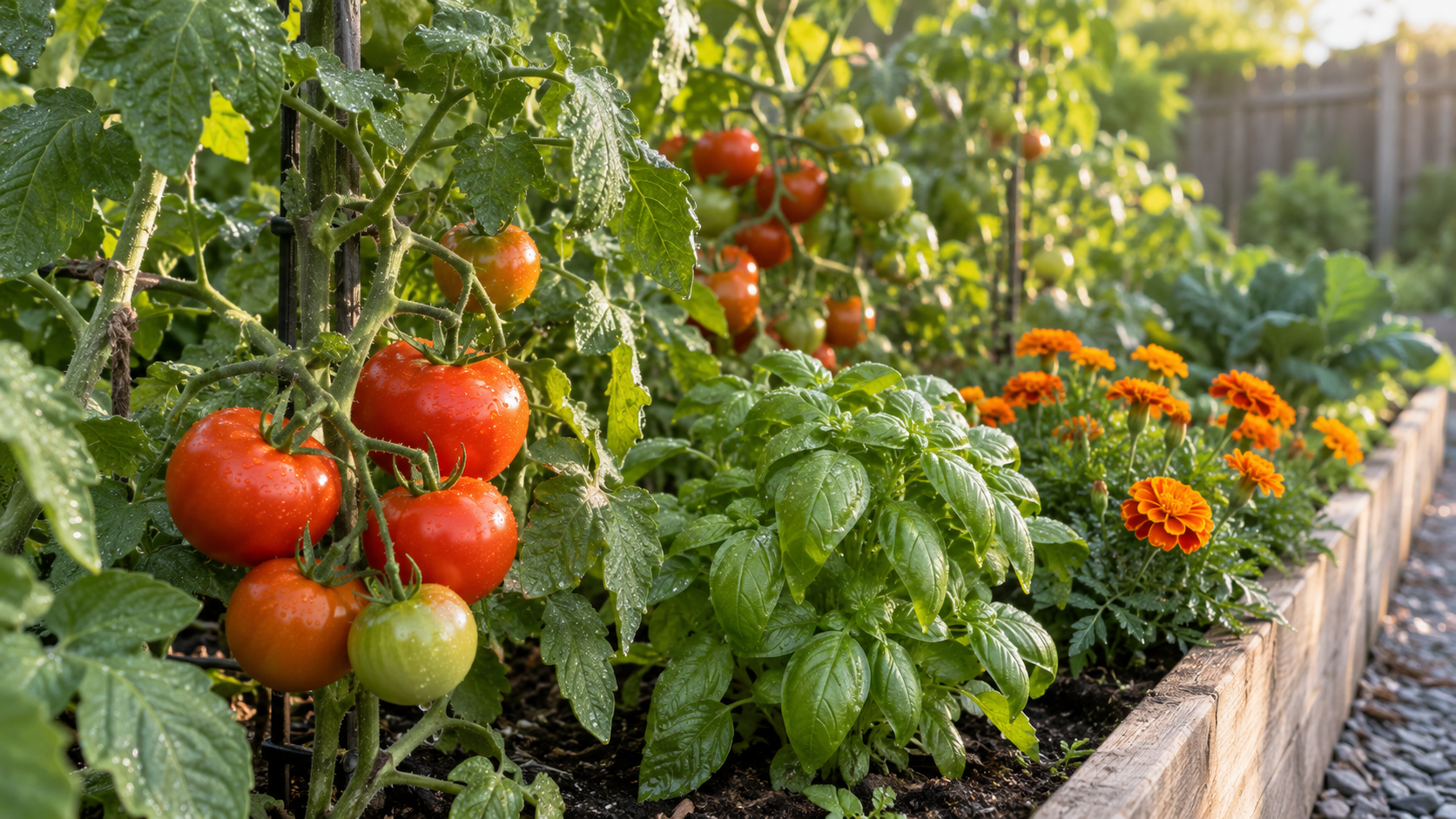
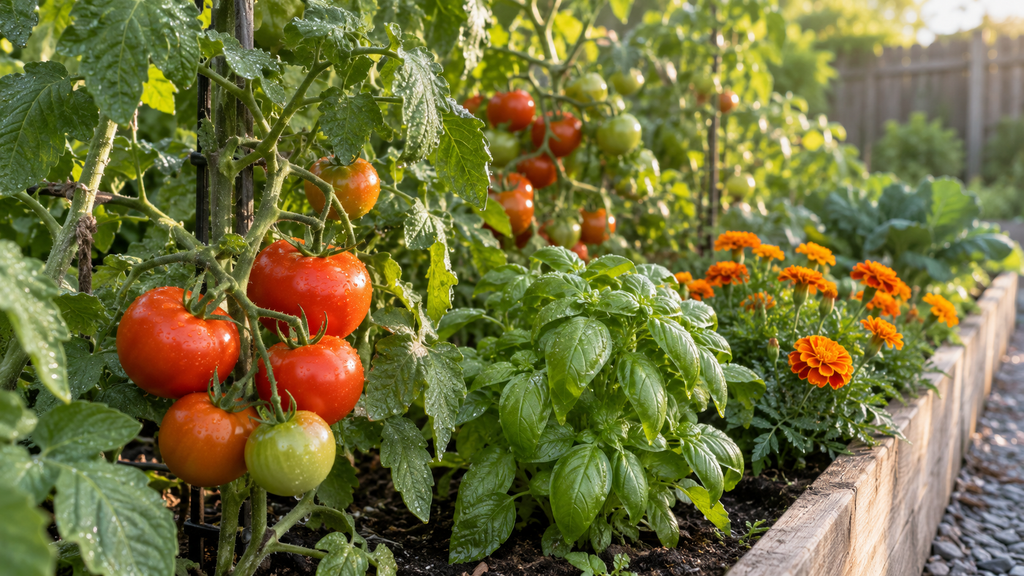
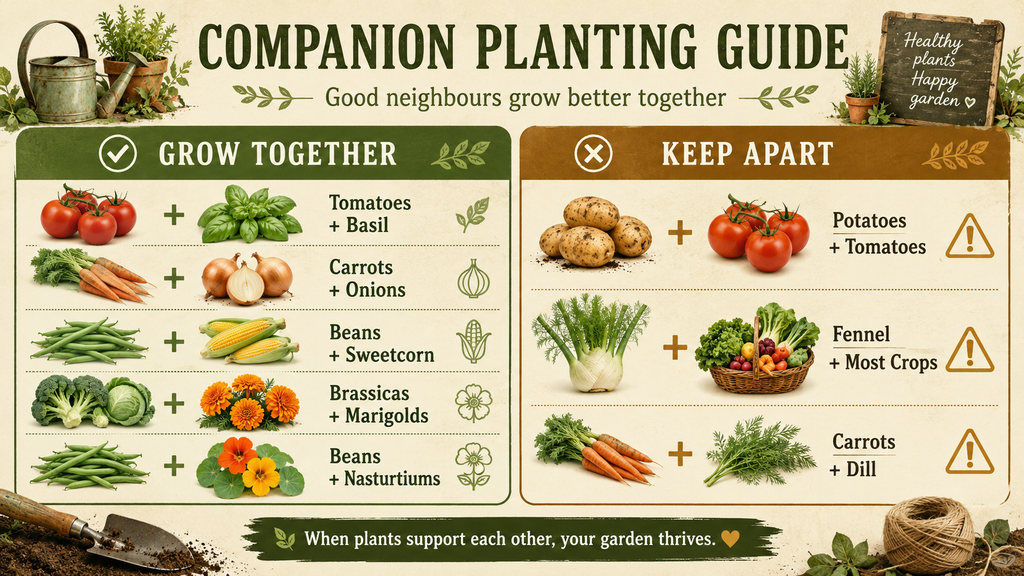
This is the pairing most people have heard of, and it’s one of the few with decent evidence behind it. Basil is thought to help repel whitefly and aphids around tomato plants, and practically speaking, they want the same growing conditions — full sun, similar watering. If you’re already following a guide on growing tomatoes in the UK, tucking basil in around the base costs you a packet of seeds and gives you a second crop from the same bed.
Carrots and Onions (or Leeks)
Carrot fly is drawn to the scent of carrot foliage; onion and leek scent is thought to help mask it. Whether or not the science is fully settled, gardeners have used this pairing for generations with good results, and it costs nothing beyond planning your rows next to each other rather than in separate beds.
Beans and Sweetcorn
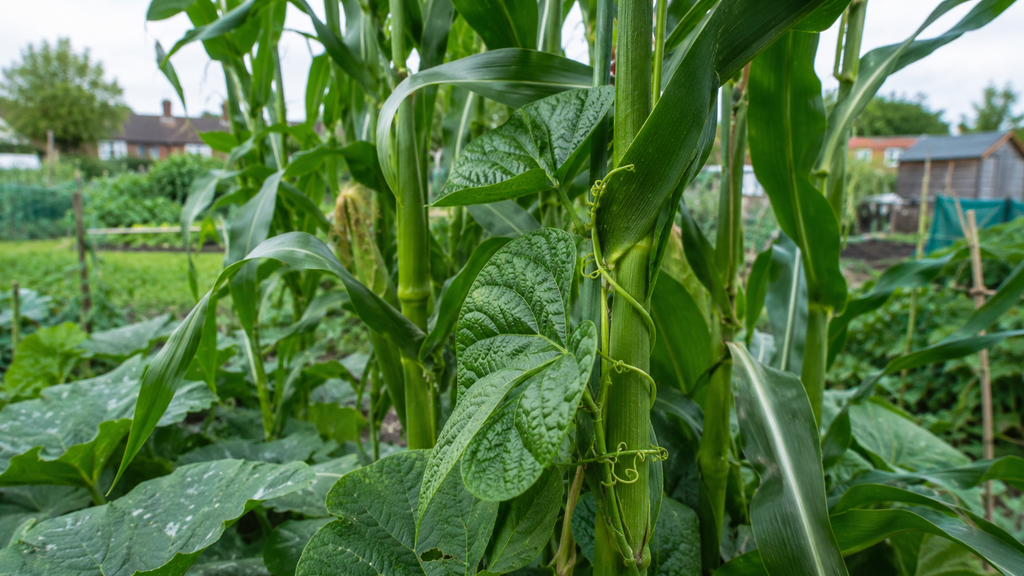
An adaptation of the “Three Sisters” method used by Indigenous American growers for centuries. Beans fix nitrogen in the soil, feeding the hungry sweetcorn; sweetcorn provides a natural climbing frame for the beans, saving you the cost of canes or a trellis. Add squash as the third element and its broad leaves suppress weeds at ground level, cutting down on your hoeing time too.
Nasturtiums as a Sacrificial Crop
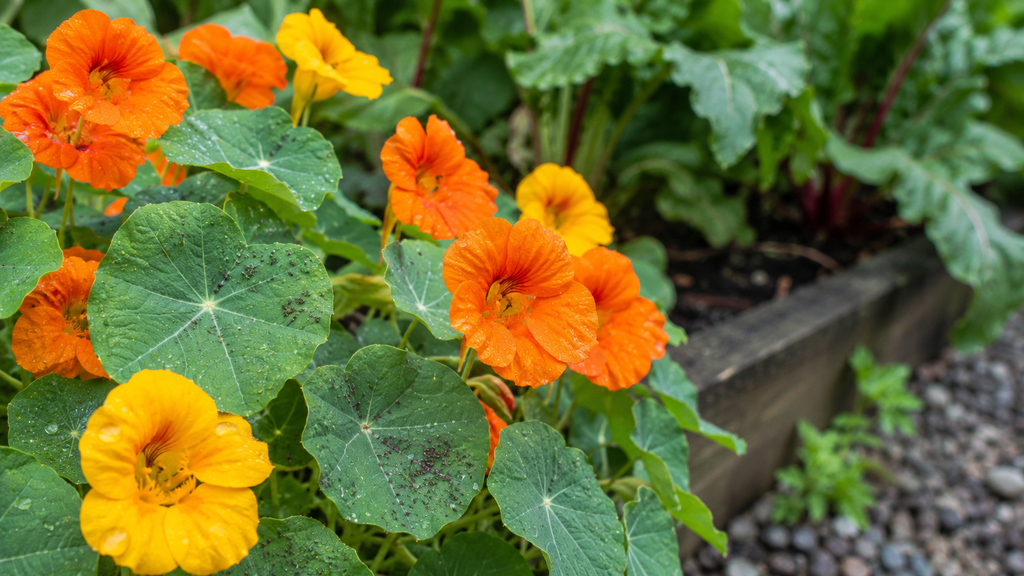
Nasturtiums are cheap, cheerful, and brilliant at luring blackfly and aphids away from beans and brassicas. Plant them at the edge of a bed as a “trap crop” — pests head there instead of your main harvest. A packet of nasturtium seeds costs under £2 and can save you from an aphid infestation that would otherwise mean buying pest control.
Marigolds Among Brassicas and Tomatoes
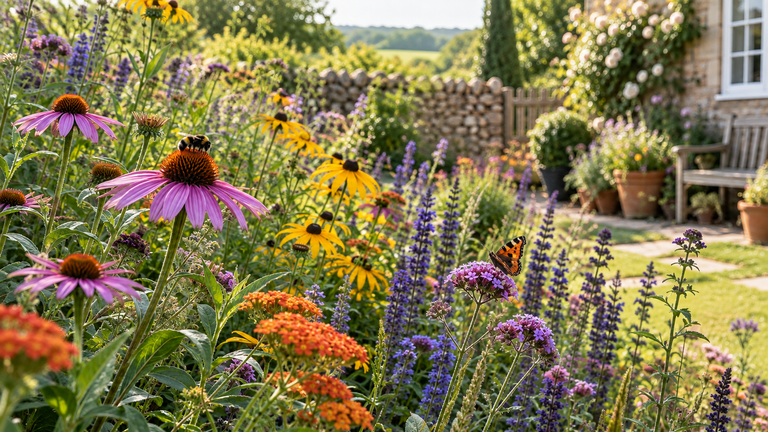
French marigolds are widely used to deter whitefly and some soil nematodes. They’re inexpensive, self-seed readily, and double as a pretty border. If you’re building out a wildlife-friendly bed as part of a wildlife-friendly garden approach, marigolds also bring in pollinators — a genuine two-for-one.
Combinations to Be Sceptical Of
Not every “classic” pairing deserves the shelf space it gets in gardening books.
- Carrots and tomatoes — commonly recommended, but the evidence for any real benefit is thin. They also compete for similar nutrients, so it’s not an efficient use of bed space.
- Fennel near almost anything — fennel is largely believed to inhibit the growth of many other plants nearby. It’s better grown on its own, away from the main vegetable beds.
- Potatoes and tomatoes together — both are members of the nightshade family and share the same diseases, particularly blight. Growing them side by side increases your risk rather than reducing it.
If a combination sounds appealing but you can’t find a clear reason why it works, it’s worth treating as folklore rather than fact until you’ve tried it yourself on a small scale.
A Simple Bed Plan to Start With
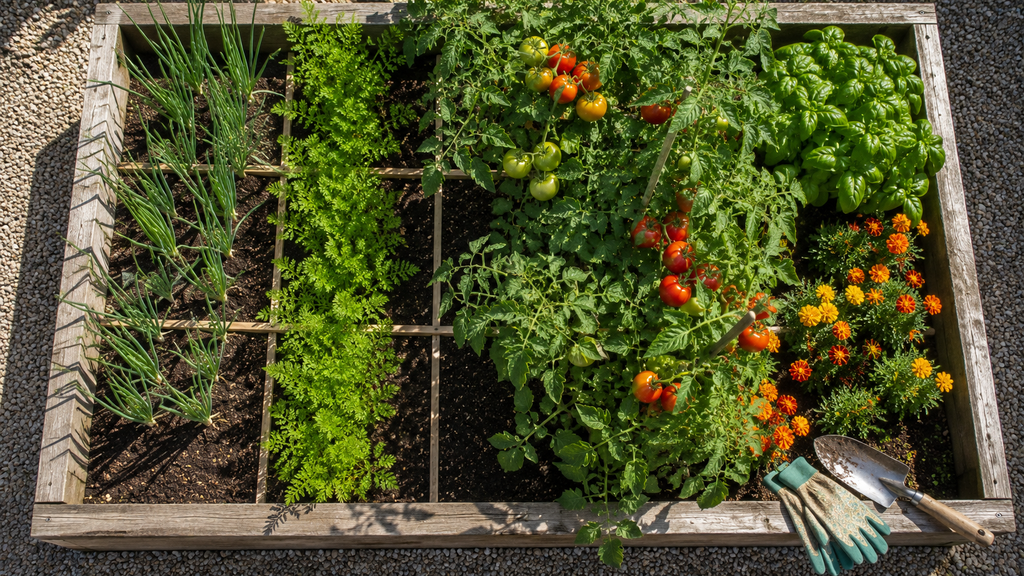
For a first attempt, keep it manageable. A single raised bed or allotment row using tomatoes, basil, and marigolds along one edge, with carrots and onions interplanted along another, gives you a low-risk way to test the method without overhauling your whole plot. Track what happens — pest levels, harvest size, how much space you actually saved — the same way you would when preserving the harvest and deciding what’s worth growing again next year.
The Honest Verdict
Companion planting won’t transform a struggling garden overnight, and some of the claims made for it are overstated. But used selectively — tomatoes with basil, beans with sweetcorn, marigolds and nasturtiums as pest deterrents — it’s a genuinely low-cost way to get more from the space and seeds you’re already paying for. No extra kit, no ongoing spend, just smarter planning.
Combine it with good composting for beginners habits and a bit of non-toxic pest control know-how, and you’ve got a growing setup that costs less at every stage — not just at the seed packet.