The Non-Toxic Home Guide: Room-by-Room Swaps for UK Households
As an Amazon Associate I earn from qualifying purchases and sometimes recommend products from other sellers at no extra cost you. For more details see my disclosure policy and privacy policy.
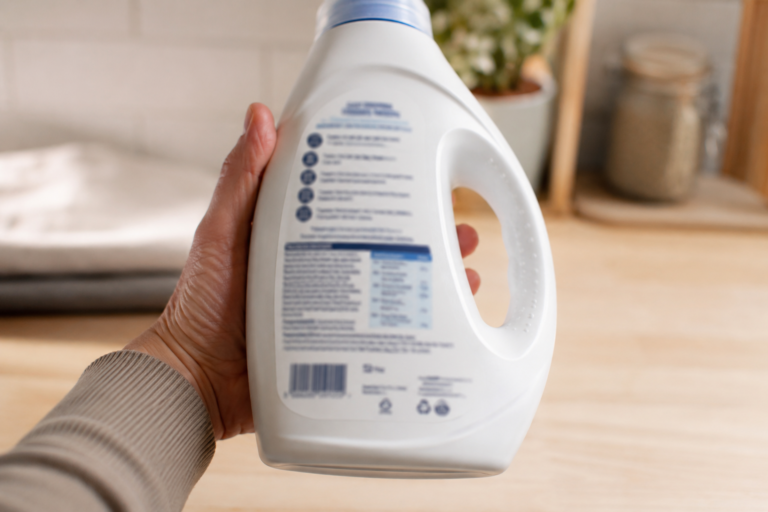
A few years ago, I did something that surprised me: I stood in my kitchen and read the back of the washing-up liquid I’d used for years. I knew it would have a list of ingredients. What I hadn’t expected was that I wouldn’t recognise a single one.

That moment started a slow, sometimes confusing, occasionally expensive, and eventually genuinely life-changing process of replacing the products in my home — one room at a time — with things that felt safer, cleaner, and better aligned with what I actually wanted to put into the world.
This guide is what I wish had existed when I started. It’s not a manifesto. It’s not a scare piece. It’s a practical, room-by-room walkthrough of the swaps I’ve made, the UK brands I’ve actually tested, and the things that genuinely made a difference — plus the ones that didn’t, so you can skip them.
I want to be clear from the start: I’m not a toxicologist. I’m a UK-based writer and parent who got curious and started paying attention. Everything in this guide is based on my own experience and publicly available research. If you have specific health concerns, please speak to your GP.
Free download
Get the Non‑Toxic Home Audit Checklist
A room‑by‑room checklist to help you spot what’s worth swapping in your home — and what’s not worth worrying about. Join the fortnightly newsletter and it’s yours.
No spam, unsubscribe any time.
The average UK home contains over 60 different synthetic chemical compounds. Most of us have no idea what most of them are — or whether they need to be there at all.
Why This Matters (Without the Scaremongering)
There’s a version of this conversation that leads with words like ‘endocrine disruption’ and ‘carcinogenic’ and leaves you paralysed or defensive. That’s not useful. So let me frame it differently.
The question isn’t whether your washing powder will harm you. The question is: is it necessary? Are there better, simpler options that do the same job — or better — without synthetic fragrance, surfactants derived from petrochemicals, or plastic packaging?
In most cases, the answer is yes. And once you know that, it’s hard to unknow it.
Consumer concern about microplastics, hormone-disrupting chemicals, and synthetic fragrances has moved firmly into the mainstream in 2026. The UK market has responded — there are now excellent British brands making genuinely effective non-toxic alternatives at accessible price points. This guide focuses almost entirely on products that are available in the UK, at UK retailers, at prices that don’t require a second mortgage.
Going non-toxic doesn’t have to mean going broke. Most of the swaps in this guide are cost-neutral or cheaper than what they replace.
The Kitchen: Where Non-Toxic Living Starts
The Cookware Problem
Let me start with the thing that surprised me most: non-stick pans.
I had a full set of non-stick frying pans that I’d been using for years. Perfectly functional. Slightly scratched, because I’d used metal utensils on them despite the little sticker that said not to. I didn’t think much about it until I started reading about PTFE (polytetrafluoroethylene) — the coating that makes non-stick pans non-stick.
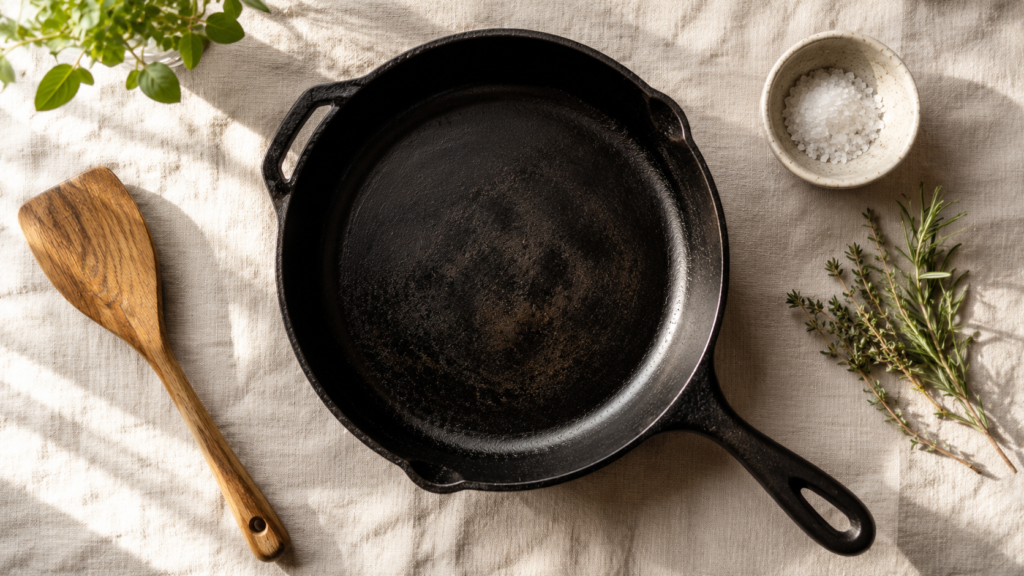
When PTFE coatings are scratched or overheated above around 260°C, they can release particles and fumes. At very high temperatures — empty pan left on the hob — there are documented cases of ‘Teflon flu’ causing flu-like symptoms in humans, and it’s been fatal to pet birds. Everyday cooking in a well-maintained pan is generally considered low-risk. But ‘generally considered low-risk’ and ‘definitely fine’ are different things, and scratched pans fall outside even that framing.
I switched to a cast iron skillet and a stainless steel sauté pan. It took about two months to get used to them properly (cast iron requires seasoning; stainless needs more fat and lower heat). Now I wouldn’t go back.
What I use now: A Lodge cast iron skillet (available from Amazon UK, around £25–30) for most cooking, and a Solidteknics stainless pan for sauces and anything acidic. The Solidteknics is a UK-friendly Australian brand with no coatings whatsoever — just one piece of steel. They’re expensive upfront, but last indefinitely.
If cast iron isn’t for you, ceramic-coated cookware is a reasonable middle ground. GreenPan is widely available at John Lewis and Amazon UK; the ceramic coating contains no PTFE or PFAS compounds. Note: ceramic coatings do degrade over time, so treat them gently and replace when scratched.
The safest non-stick pan is one that doesn’t have a coating at all. Cast iron and carbon steel have been used for centuries for exactly this reason.
Food Storage: The Plastic Swap
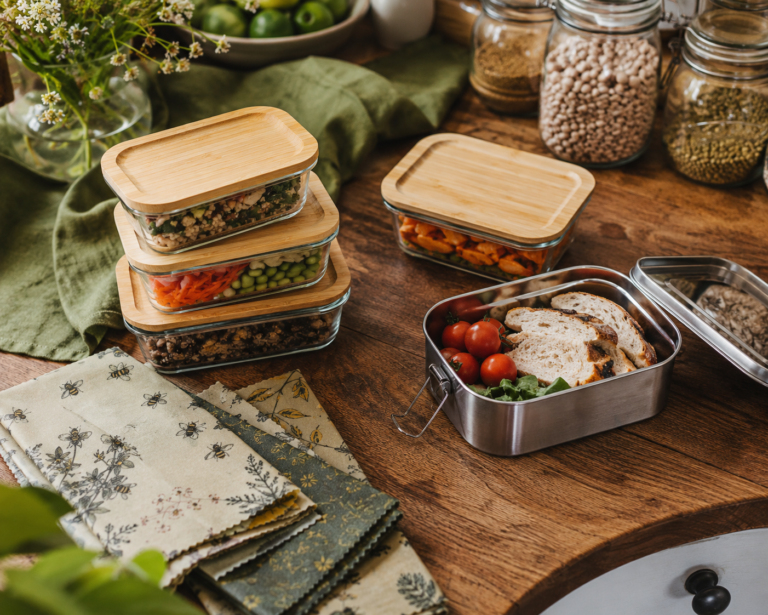
I used to have a drawer that was essentially a graveyard of mismatched Tupperware lids. Replacing it with non-plastic alternatives was one of the most satisfying home changes I’ve made — not just for health reasons, but because glass containers stack neatly and you can see what’s in them without opening them.
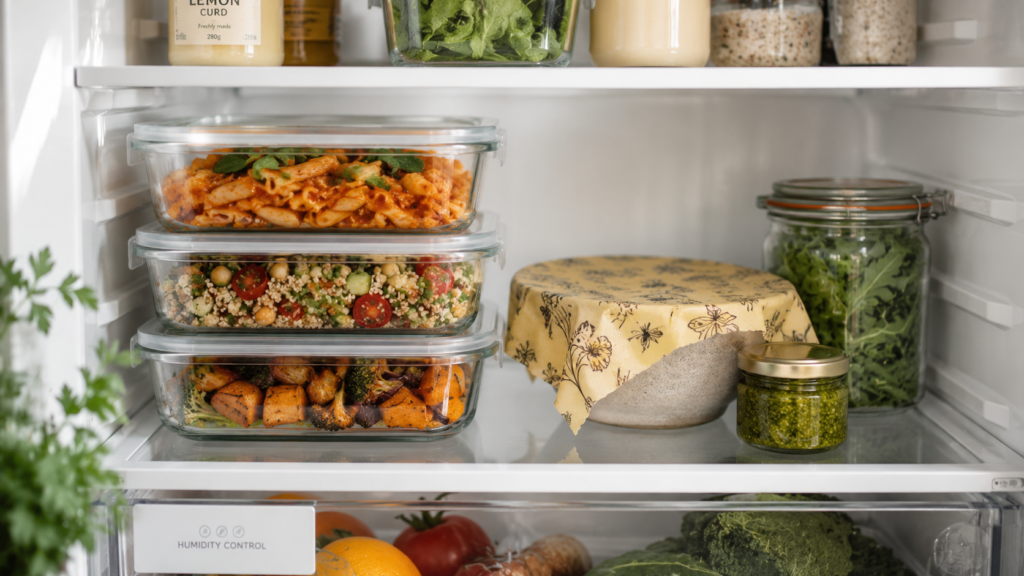
The concern with plastic food storage centres on a few things: BPA (now largely phased out of food-grade plastics, but replaced with BPS and BPF, which have similar properties and less research behind them); phthalates (softening agents); and the general problem of microplastics shedding into food, especially when heated.
The practical swap: glass containers with wooden or stainless lids for fridge storage, beeswax wraps for covering bowls and wrapping sandwiches, and stainless steel lunch boxes for packed lunches.
- Wean Green make good glass containers with colourful silicone lids — widely available from Ocado and Amazon UK
- Beeswax Wrap Co. are a UK brand making excellent beeswax wraps in various sizes — available from their own site and Ethical Superstore
- For lunchboxes: Elephant Box make UK-manufactured stainless steel containers with good seals and no plastic contact with food
Washing Up
This is the easy win. Conventional washing-up liquids contain synthetic fragrances, preservatives like methylisothiazolinone (a known skin sensitiser), and surfactants derived from petrochemicals. There are excellent alternatives.
I’ve tried several. My current favourite is Faith in Nature’s fragrance-free washing-up liquid — effective, very affordable (around £2.50 for a large bottle at most supermarkets including Sainsbury’s and Tesco), and made with plant-derived surfactants. Ecover is also widely available and performs well. Both brands have committed to packaging recyclability.
Quick tip: both Ecover and Faith in Nature offer refill pouches, which significantly reduce plastic waste and cost slightly less per wash than buying new bottles. Ethical Superstore stocks both.
Cleaning Products: The Biggest Opportunity Room
What’s Actually in Your Cleaning Products
Most conventional household cleaners contain a combination of synthetic surfactants (to lift grease), builders (to soften water), preservatives (to extend shelf life), synthetic fragrances (for scent), and optical brighteners in laundry products. None of these are necessarily catastrophic in isolation. The concern is cumulative exposure — we use these products daily, in enclosed spaces, on surfaces we eat from and touch constantly.
The fragrance issue deserves its own paragraph. ‘Fragrance’ or ‘parfum’ on a cleaning product label is a catch-all term that can legally cover thousands of different chemical compounds, none of which need to be individually disclosed. Some are innocuous. Some are known allergens. Some are synthetic musks that accumulate in human tissue and have been found in breast milk. The simplest approach is to avoid synthetic fragrance entirely in cleaning products, especially in the kitchen.
‘Fragrance-free’ and ‘unscented’ are not the same thing. Unscented products may still contain masking fragrances to neutralise the smell of other ingredients. Look for fragrance-free.
DIY Cleaning That Actually Works
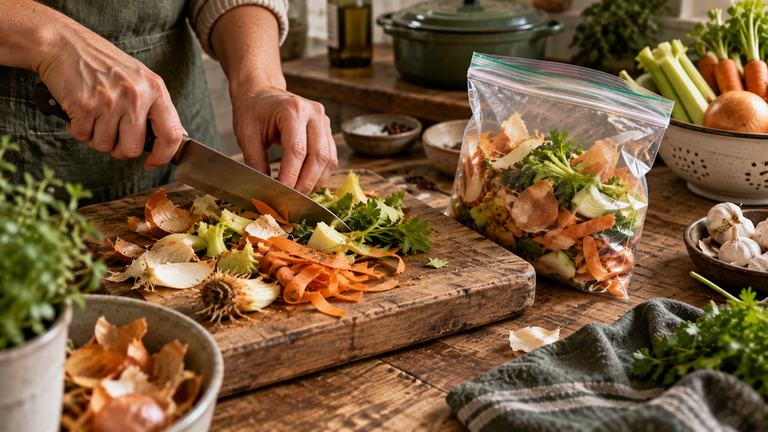
Before we get to bought alternatives, I want to make the case for DIY — not because it’s necessary, but because it’s cheap, genuinely effective, and satisfying in the same way that baking your own bread is satisfying.
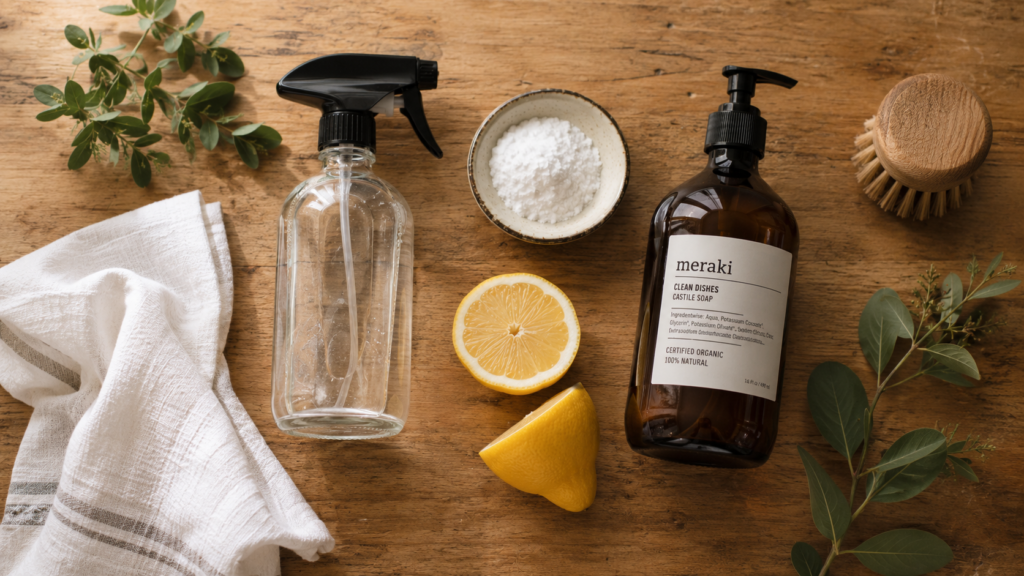
Three ingredients cover most household cleaning needs:
- White wine vinegar — cuts through limescale, grease, and soap scum; excellent for glass, taps, and bathroom surfaces
- Bicarbonate of soda — gentle abrasive, deodoriser; brilliant for sinks, ovens, and drains
- Castile soap (Dr. Bronner’s, widely available in Holland & Barrett and Amazon UK) — genuine plant-based soap that works as a surfactant for mopping floors, general surface cleaning, and washing up in a pinch
My go-to all-purpose spray: 250ml water, 250ml white wine vinegar, 10 drops of tea tree essential oil. It genuinely cleans kitchen surfaces and leaves no residue. One note: do not use vinegar on natural stone surfaces like marble or granite — it will etch them. For those, use a dilute castile soap solution instead.
Cost comparison: My DIY all-purpose spray costs approximately 8p per bottle to make. The supermarket equivalent I replaced cost around £2.20 per bottle. At two bottles a month, that’s a saving of over £50 per year — before accounting for packaging waste avoided.
Bought Alternatives Worth the Money
When I don’t want to make my own, these are the UK brands I trust:
- Method — widely available at Waitrose, Ocado, and Amazon UK; well-formulated, effective, decent fragrance transparency. Their Daily Shower Spray and All-Purpose Cleaner are particular favourites.
- Ecover — the longest-established eco cleaning brand in the UK; available at most supermarkets. Their toilet cleaner and washing-up liquid are excellent. The spray cleaners are good but need a bit more elbow grease than conventional alternatives on heavy grease.
- Smol — a subscription-based UK brand delivering concentrated tablets and pods with no unnecessary packaging. Their bathroom cleaner tablet is genuinely impressive. Available direct from smolproducts.com.
- miniml — a Scarborough-based brand offering refillable, bulk options for cleaning concentrates. Probably the most cost-effective per wash of any UK brand I’ve tried.
Laundry: Detergent, Fabric Softener, and the Microplastics Question
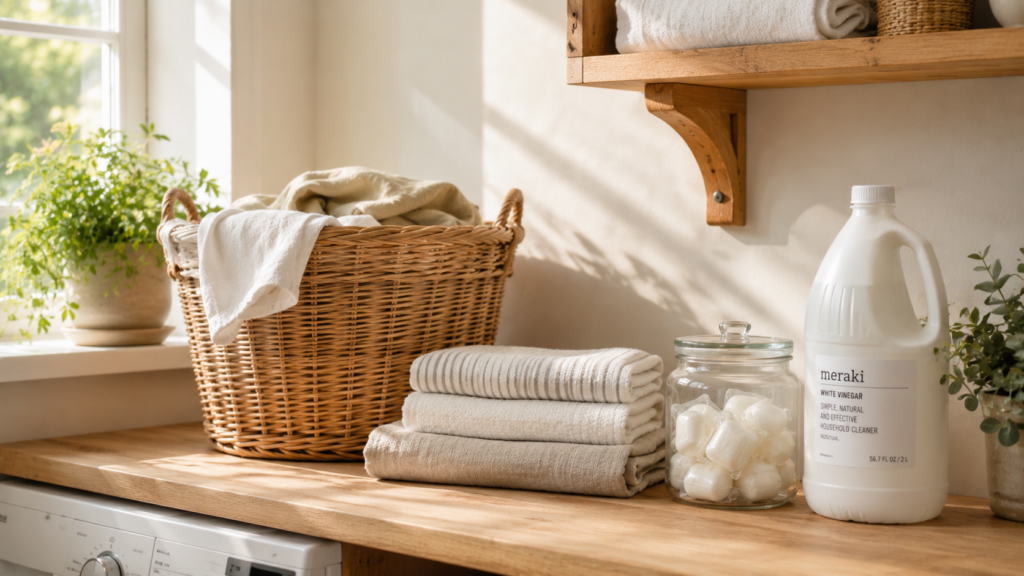
Laundry Detergent
Conventional laundry detergents contain optical brighteners (synthetic chemicals that make white clothes look whiter under UV light — they sit on fabric fibres and are not rinsed out), synthetic fragrances, and often phosphates (now largely banned in the EU but worth checking). They’re not terrible, but there are better options that are equally effective.
What I switched to: Smol laundry capsules. Concentrated, minimal packaging, delivered by post, and genuinely as effective as Ariel or Persil on everyday washes. For a household of four, I spend about £12 every two months. The equivalent in name-brand capsules from a supermarket was around £18–20 for the same number of washes.
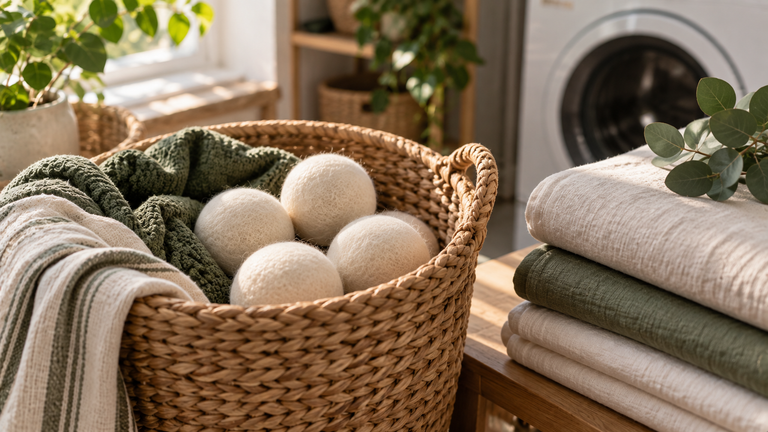
Alternative: Ecoegg laundry egg — a reusable egg-shaped device filled with mineral pellets that clean clothes without detergent. I’ve used one. It works well on lightly soiled clothes and everyday washes; for heavily soiled items or sports kit, I top up with a small amount of Smol. The egg lasts 720 washes; replacement pellets cost about £8.
The average UK household does around 270 washes per year. Switching to a concentrate or laundry egg can cut laundry product spend by 30–50% while eliminating much of the synthetic chemical load.
Fabric Softener: The One to Drop First
If you’re going to change one laundry product, make it fabric softener.
Fabric softeners work by coating fibres in a waxy residue — traditionally quats (quaternary ammonium compounds), which are synthetic, don’t break down easily in water systems, and are the reason fabric softener instructions say not to use it on sportswear, towels, or flame-retardant clothing (it reduces their performance). They smell lovely. They make fabric feel soft. They don’t actually clean anything.
The replacement: white wine vinegar in the fabric softener drawer. I know this sounds implausible. I was sceptical too. But it works — clothes come out soft (especially towels), no vinegar smell remains after drying (the smell evaporates entirely), and the limescale in my washing machine drum has visibly reduced. Use about 100ml per wash.
Use plain white wine vinegar from the cooking aisle, not the distilled malt vinegar variety. Both work, but white wine vinegar is gentler on rubber seals and has no colour. Do not use fabric softener and vinegar in the same wash — they neutralise each other.
The Microplastics Problem in Laundry
Synthetic fabrics — polyester, nylon, acrylic — shed microplastic fibres when washed. These pass through most filtration systems and end up in waterways. It’s a genuine problem and one that’s hard to solve perfectly.
Practical steps: wash synthetic items less frequently, use a Guppyfriend wash bag (available from Patagonia’s UK site and Ethical Superstore — a microfibre-catching bag you put clothes in before washing), wash at lower temperatures (30°C releases fewer fibres), and use a full load rather than half-loads where possible.
Longer-term: when replacing clothing, prioritise natural fibres — wool, linen, organic cotton. These are not without environmental cost, but they don’t shed microplastics.
The Bathroom: Personal Care and Hidden Toxins
Reading Labels: The Ingredients to Know
Personal care products are not regulated in the UK in the same way as food or medicine. Manufacturers can use thousands of ingredients with limited disclosure requirements, and the word ‘natural’ on a label has no legal definition. This is not cause for panic, but it is cause for reading labels.
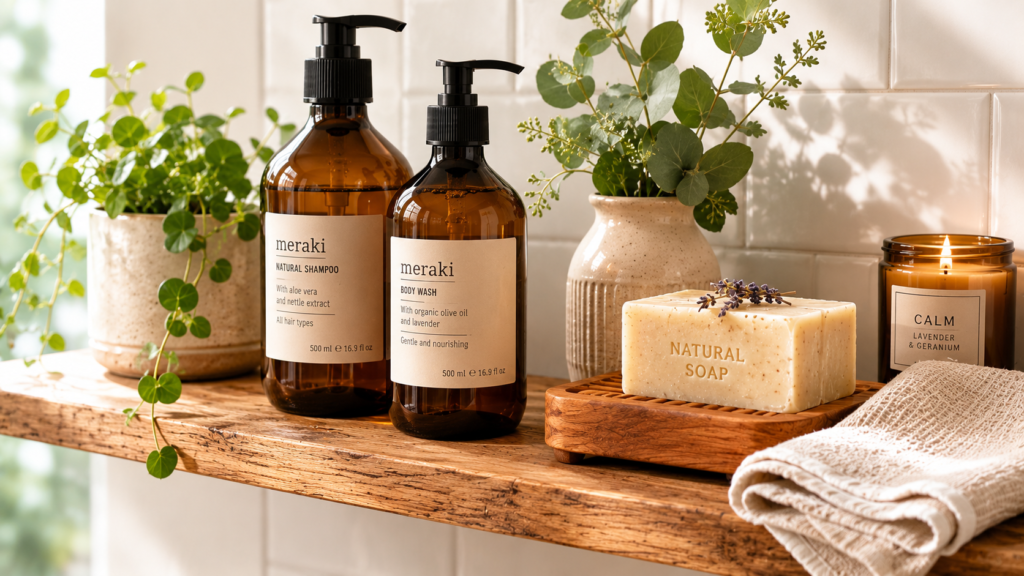
A short list of ingredients I now avoid in personal care products:
- Sodium Lauryl Sulphate (SLS) — a foaming agent and known skin irritant; swap for Sodium Lauryl Sulfoacetate (SLSA), which is gentler, or avoid sulphates entirely
- Parabens (methylparaben, propylparaben, butylparaben) — preservatives with oestrogen-mimicking properties; paraben-free alternatives are now widely available
- Synthetic fragrance / parfum — same issue as cleaning products; look for fragrance-free or naturally-scented with disclosed essential oils
- PEGs (polyethylene glycols) — derived from petrochemicals; used as emulsifiers and penetration enhancers; can be contaminated with carcinogenic impurities
- Triclosan — an antibacterial agent banned in the EU and UK for certain uses but still appearing in some products; look for it on labels and avoid
A useful shortcut: the Think Dirty app (iOS and Android, free) lets you scan UK product barcodes and see ingredient breakdowns. It’s not perfect — some UK products aren’t in the database — but it’s a good starting point for auditing your bathroom cabinet.
What to Swap First
I didn’t overhaul everything at once. I did it as products ran out, which kept the cost manageable. The order I’d recommend, from easiest to hardest:
- Shampoo and conditioner — Noughty (available at Boots) and Faith in Nature (available at Holland & Barrett and most supermarkets) are both accessible and effective. Shampoo bars from Lush are a good plastic-free option.
- Deodorant — this one took me longest. I tried four alternatives before I found one that worked. I now use Fussy (a UK subscription brand with a refillable case and natural formula) and it works genuinely well. Wild is another UK brand worth trying.
- Body wash / shower gel — Faith in Nature’s body wash range is widely available, affordable, and fragrance-free options exist. Dr. Bronner’s castile soap (peppermint or unscented) works excellently as a body wash.
- Toothpaste — Nelson’s natural toothpaste and Truthpaste are UK brands without SLS or fluoride concerns; if you prefer mainstream fluoride toothpaste (dentists recommend fluoride), look for SLS-free versions — Sensodyne True White is SLS-free and widely available.
You don’t need to throw everything out at once. Replace products as they run out. Six months of gradual swapping will transform your bathroom cabinet without the cost or guilt of binning perfectly good products.
Cleaning the Bathroom
The bathroom is where DIY cleaning really earns its place. Limescale — especially hard in many parts of the UK — responds brilliantly to white wine vinegar. A spray of neat white wine vinegar, left for 10 minutes, removes limescale from taps, showerheads, and tiles without any scrubbing.
For the toilet: bicarbonate of soda and white wine vinegar, used separately (never together in a confined space — they react and produce gas). Bicarbonate down the bowl, leave, then flush. For more stubborn marks, a pumice stone (kept dry between uses) does the job without chemicals.
For tiles and mould: tea tree oil diluted in water (about 20 drops per 500ml) is genuinely antifungal. It’s slow — you may need to leave it overnight — but it works on bathroom mould without bleach fumes.
Indoor Air Quality: The Overlooked Part
We spend around 90% of our time indoors. UK homes, particularly older ones, can have indoor air quality worse than outdoor air — a combination of poor ventilation, synthetic materials off-gassing VOCs (volatile organic compounds), and products like air fresheners, scented candles, and cleaning sprays adding chemical compounds to the air.

The simplest interventions:
- Ventilate — open windows when cleaning, cooking, and after showering. It sounds obvious but it makes a significant difference.
- Ditch the plug-in air fresheners and synthetic reed diffusers — the fragrance compounds used in most are a concentrated form of exactly what we’re trying to avoid. Use a diffuser with certified pure essential oils if you want fragrance, or simply simmer orange peel and cinnamon on the hob.
- Beeswax candles — these are genuinely different from paraffin candles, which release petroleum-derived compounds when burned. Beeswax candles emit negative ions (which bind to and remove airborne particulates) and no synthetic compounds. Price premium is real but they burn much longer. UK supplier: The Beeswax Co.
- Plants — I want to be accurate here: the NASA clean air study that attributed dramatic air-purifying qualities to houseplants has been substantially revised. Plants do improve air quality, but you’d need hundreds in a small room to achieve meaningful VOC reduction. The benefit is real but modest. Grow them because they’re lovely.
Where to Start: The Non-Toxic Home Audit
If you’re new to all of this, the most useful thing you can do is walk through your home with fresh eyes and a pen. Room by room, list every product you use regularly. Then start asking the question: is there a better alternative? Not perfect — better.
The Non-Toxic Home Audit Checklist — which I’ve put together as a downloadable PDF — takes you through this process room by room, with a red/amber/green rating system for common household products and categories. It’s designed to be printed and worked through over time, not tackled in a weekend.
[Digital product placement: Non-Toxic Home Audit Checklist PDF — available to download. Price: £3.99. Free to newsletter subscribers.]
You don’t need to do everything at once. The most important thing is to start noticing — to move from the automatic reach for the product you’ve always used to a moment’s thought about whether it needs to be there. That shift in attention, over time, is what actually changes things.
The goal isn’t a perfectly non-toxic home. It’s a home where you’ve thought about what you’re using, made the easy swaps, and feel good about the direction you’re heading. Progress over perfection, every time.
Quick Reference: UK Non-Toxic Swaps at a Glance
| Product | Conventional issue | Recommended swap | Where to buy (UK) |
|---|---|---|---|
| Non-stick pans | PTFE coating, fumes when scratched/overheated | Cast iron (Lodge), ceramic (GreenPan), stainless (Solidteknics) | Amazon UK, John Lewis |
| Food wrap | Microplastics, BPA/BPS leaching | Beeswax wraps, glass containers | Beeswax Wrap Co., Ethical Superstore |
| Washing-up liquid | Synthetic fragrance, petrochemical surfactants | Faith in Nature, Ecover (refill) | Sainsbury’s, Tesco, Ethical Superstore |
| All-purpose cleaner | Synthetic fragrance, preservatives | DIY (vinegar + water), Method, Smol | Home / Waitrose / smolproducts.com |
| Fabric softener | Quats, synthetic fragrance, coating fibres | White wine vinegar in softener drawer | Any supermarket |
| Laundry detergent | Optical brighteners, synthetic fragrance | Smol capsules, Ecoegg | smolproducts.com / Ocado |
| Shampoo | SLS, synthetic fragrance, parabens | Noughty, Faith in Nature, Lush bars | Boots, Holland & Barrett |
| Deodorant | Synthetic fragrance, aluminium compounds | Fussy, Wild (refillable UK brands) | fussy.co / wearewild.com |
| Air freshener | VOCs, synthetic fragrance concentrate | Beeswax candles, essential oil diffuser | The Beeswax Co., Neal’s Yard |
A Note on Cost
I want to address the elephant in the room: doesn’t this all cost more?
Some things cost more upfront. A cast iron skillet is £25–30. A set of glass containers is £30–40. But these are one-time purchases that last indefinitely and replace items you’d have been replacing anyway. Amortised over their lifetime, they’re almost always cheaper.
The cleaning and laundry swaps — DIY sprays, vinegar as fabric softener, concentrate detergents — are consistently cheaper than conventional equivalents, often significantly so.
The personal care swaps are variable. Faith in Nature is cheaper than most conventional equivalents at supermarkets. Good natural deodorant costs more. Solid shampoo bars cost more per product but last longer per wash.
The honest summary: a non-toxic home probably costs about the same as a conventionally-stocked home, once you’ve made the upfront investments in durable products. Some areas are cheaper. Very few are consistently more expensive.
Going non-toxic at home is not a luxury lifestyle choice. Most of the most important swaps — from fabric softener to washing-up liquid to DIY cleaning sprays — are cheaper than what they replace.
Further Reading and Resources
- Environmental Working Group (EWG) — for US-focused ingredient research; useful for understanding ingredient concerns even if UK market focus
- Ethical Consumer Magazine — for in-depth UK brand assessments
- Think Dirty app — iOS and Android; barcode scanner for UK personal care products
- The Chemical Maze (book) — Bill Statham’s guide to additives and cosmetic ingredients; useful reference
This post contains affiliate links. If you buy through them, I may earn a small commission at no extra cost to you. I only recommend products I’ve personally used and genuinely rate.
Nikki Piggott writes about eco-friendly and sustainable living for families at dayatree.com. All views are her own.
More articles about non-toxic home swaps for UK Households: Non-toxic cookware UK / What’s actually in your household cleaning products (label-reading guide) / Air quality at home: indoor plants, ventilation, and avoiding hidden toxins