
Non-Toxic Pest Control for the Garden
As an Amazon Associate I earn from qualifying purchases and sometimes recommend products from other sellers at no extra cost you. For more details see my disclosure policy and privacy policy.
You’ve spent weeks building a wildlife-friendly garden — native plants, a bug hotel, a wildflower patch. The last thing you want is to reach for a bottle of pesticide and undo all of it. The good news: you don’t have to.
By Nikki · 10 min read
Most garden pests are opportunists. They move in when a plant is stressed, when soil health is poor, or when the predators that would normally keep them in check aren’t there. Conventional pesticides interrupt that system — they kill the aphids, yes, but they also kill the ladybirds, lacewings, and ground beetles that were already working on the problem for free.
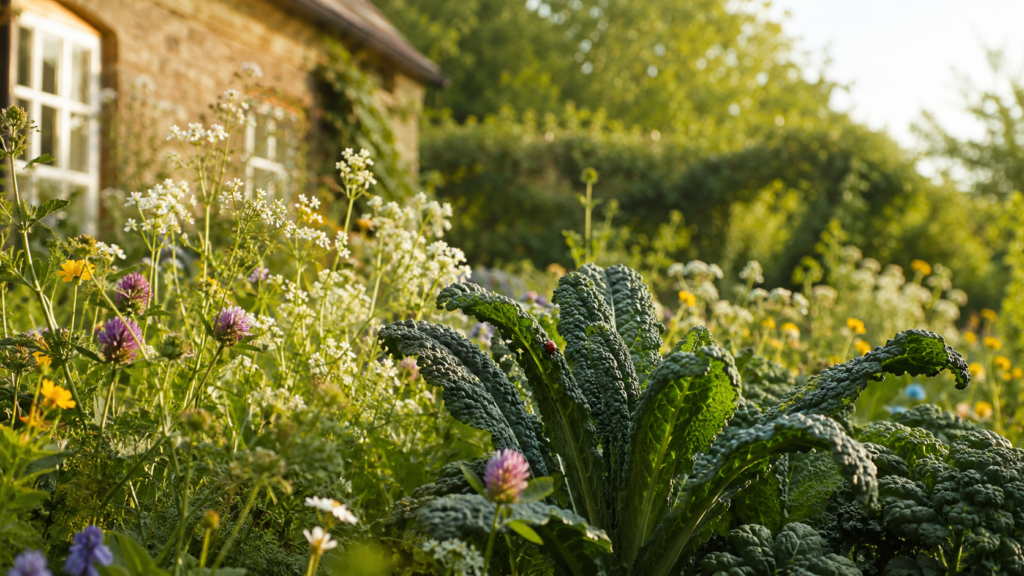
I’ve been gardening without synthetic chemicals for several years now, and what I’ve found is that the goal isn’t to eliminate pests entirely — it’s to create a garden that’s resilient enough not to be overwhelmed by them. This guide covers the approaches that have actually worked for me, along with a few product swaps for when you do need a little extra help.
Free download
Get the Non‑Toxic Home Audit Checklist
A room‑by‑room checklist to help you spot what’s worth swapping in your home — and what’s not worth worrying about. Join the fortnightly newsletter and it’s yours.
No spam, unsubscribe any time.
If you’ve been building a wildlife-friendly garden, many of these methods work hand-in-hand with the rewilding principles covered in our Complete Guide to Rewilding Your UK Garden — particularly around encouraging natural predators and avoiding bare soil.
Why synthetic pesticides are counterproductive
It’s worth understanding why chemical pest control tends to make the problem worse over time, not better. Broad-spectrum insecticides — whether synthetic pyrethroids, organophosphates, or neonicotinoids — don’t distinguish between pest and predator. Aphids reproduce far faster than ladybirds. So after a spray, the pests bounce back first, and now their natural enemies are gone.
There’s also the soil to consider. Many pesticides harm the mycorrhizal fungi and beneficial bacteria that make healthy soil possible, and residues can persist far longer than the label suggests. The Pesticide Action Network UK (PAN UK) publishes clear guidance on pesticide risks to pollinators and soil life if you want to read further.
Prevention first: the cultural controls
The most effective pest management happens before pests arrive. These ‘cultural controls’ sound unglamorous, but they are genuinely the foundation of a low-pest garden.

Right plant, right place
A stressed plant is a pest magnet. Brassicas planted too close together in humid conditions invite cabbage white butterflies. Tomatoes without adequate support and airflow get blight and whitefly. Matching plants to the right conditions — sun, drainage, spacing — removes stress before it creates vulnerability.
Healthy soil, healthy plants
Plants grown in genuinely healthy, organic-rich soil have stronger cell walls and better immune responses. Regular compost additions — even a thin mulch each autumn — make a measurable difference to pest and disease resistance. Gardeners who switch to no-dig methods often notice pest problems easing within a season or two.
Crop rotation for vegetable growers
Moving plant families around the veg patch each year prevents pest and disease cycles from establishing in the soil. The classic four-year rotation (brassicas, legumes, roots, potatoes) works well, but even a simple two-year approach — don’t grow the same thing in the same spot twice running — makes a significant difference.
Physical barriers and traps
Sometimes the simplest solution is also the best. Physical barriers stop pests reaching plants in the first place, with no chemical residue and no collateral damage to beneficial insects.
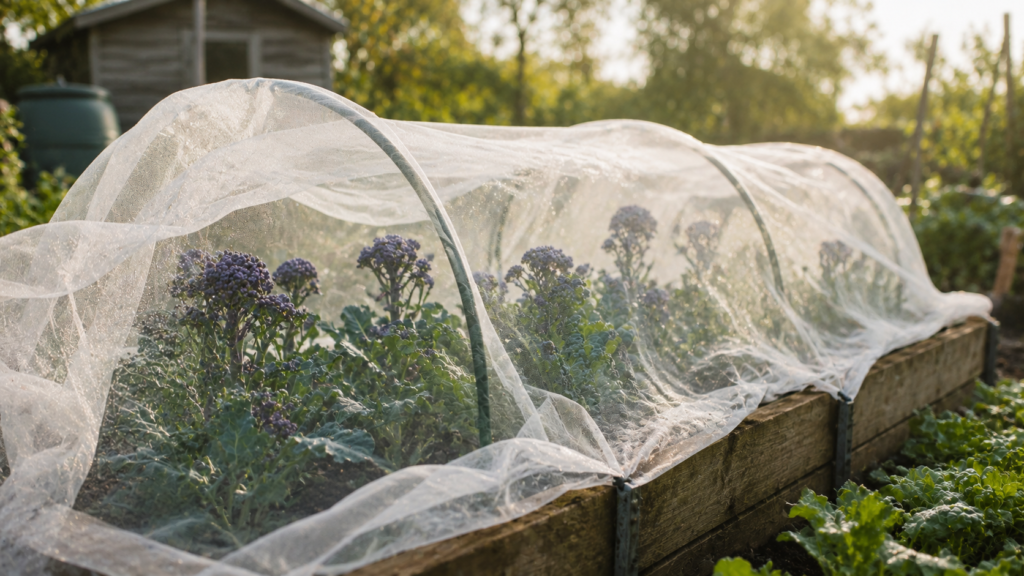
- Fine mesh netting (enviromesh): Butterfly-proof mesh keeps cabbage whites off kale and broccoli without affecting airflow. Lay it over hoops immediately after planting and peg the edges down. Carrot fly — which travels low to the ground — is also effectively blocked.
- Copper tape: Useful around raised beds and containers as a slug deterrent. The copper reacts with the slug’s mucus. Effectiveness is best when kept clean and continuous around the entire edge.
- Fleece: Lightweight horticultural fleece protects young seedlings from both pest damage and late frosts. Worth having a roll to hand from March to May.
- Yellow sticky traps: For greenhouse whitefly and fungus gnats. Useful for monitoring populations and slowing their spread.
- Beer traps for slugs: A shallow container sunk to ground level, filled with cheap beer. Slugs are attracted by the yeast. Empty and refill every few days. More targeted than pellets and kinder to soil life than salt.
Encouraging natural predators
This is where pest control and wildlife gardening become the same thing. A garden that supports a diverse food web has built-in pest regulation — often more effective than anything you can spray.
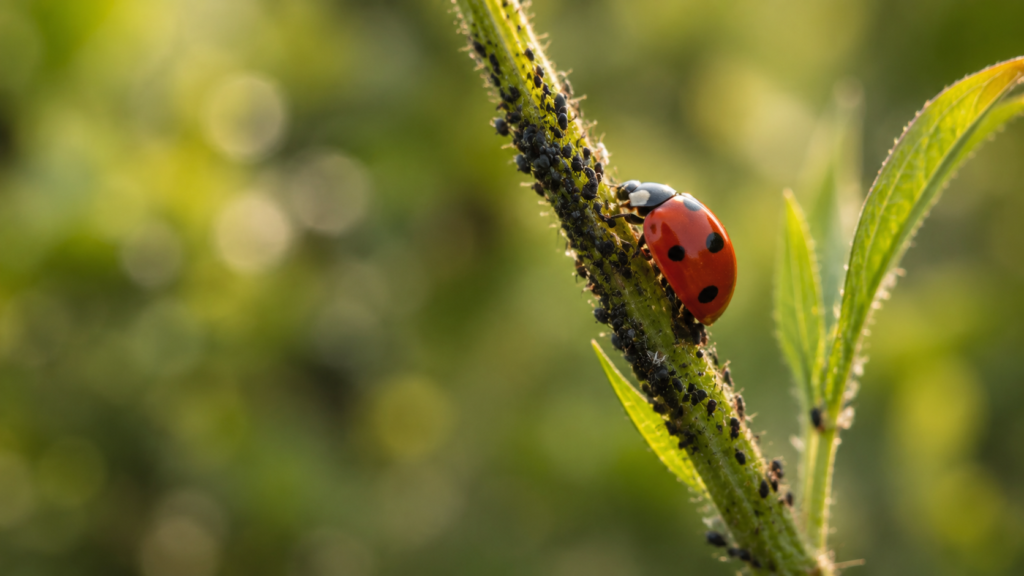
- Ladybirds and lacewings: Both are voracious aphid predators. Lacewing larvae can consume hundreds of aphids in a day. Encourage them with insect hotels, native hedging, and avoiding pesticides. If you build a bug hotel as part of a rewilding project, lacewings are among the first to move in.
- Ground beetles: Fast-moving predators that are among the most effective slug and vine weevil controllers in UK gardens. They need undisturbed soil and leaf litter to shelter in — another reason log piles are worth keeping.
- Birds: Blue tits eat aphids by the hundred. Thrushes tackle snails. Robins follow the spade and pick off wireworms and leatherjackets. A garden with nesting sites, water, and undisturbed corners will have birds working as pest control throughout the season.
- Frogs and hedgehogs: Both eat slugs and snails in significant numbers. A small wildlife pond brings frogs within a season. A 13cm hedgehog gap at the base of fencing is all it takes to invite them in.
Companion planting as pest deterrence
Some plants deter specific pests through scent; others attract beneficial insects that then predate the pests you’re worried about. A few tried and tested combinations for UK gardens:
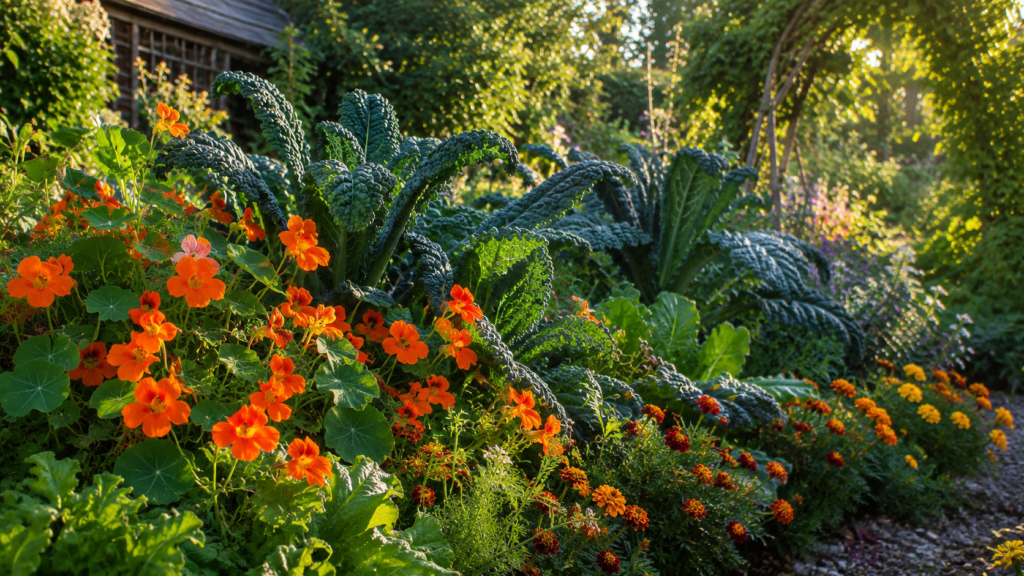
- Nasturtiums near brassicas — acts as a trap crop, drawing aphids away from kale and cabbage.
- French marigolds (Tagetes patula) near tomatoes — scent deters whitefly; roots produce a chemical that suppresses some soil nematodes.
- Alliums (garlic, chives, onions) among roses and soft fruit — sulphur compounds repel aphids and reduce black spot.
- Dill and fennel in the veg patch — attract hoverflies and parasitic wasps whose larvae feed on aphids and caterpillars.
- Mint as a ground cover between brassicas — deters cabbage white butterflies; grow it in sunken containers to prevent spreading.
Natural sprays: what works and what doesn’t
When prevention isn’t enough and you need something to act quickly, there are a handful of natural sprays that are genuinely effective — and a few that circulate endlessly online despite limited evidence.
Soft soap spray (genuinely effective)
A dilute solution of pure soft soap directly on aphid colonies blocks their breathing. Two to three applications over a week will knock back a significant infestation. Mix roughly 1 teaspoon of soft soap per litre of water. Apply in the evening to reduce the risk of leaf scorch, and avoid contact with flowers where bees might forage.
Neem oil (effective, use carefully)
Neem oil disrupts the life cycle of many soft-bodied insects and acts as a fungicide against powdery mildew and black spot. It is approved for organic use. Apply in the evening, away from flowers, and avoid use during peak pollinator activity. Dilute according to the product instructions; undiluted neem can cause leaf scorch.
Pyrethrin sprays (use sparingly)
Pyrethrin is derived from chrysanthemum flowers and is the most potent of the natural options — but also the least selective. Reserve it for serious infestations where other methods have failed, apply only at dusk, and avoid areas near water (it is toxic to aquatic invertebrates).
What doesn’t work
Garlic sprays, chilli sprays, and vinegar-based repellents have persistent online followings but limited evidence of effectiveness in UK conditions. Garlic washes off quickly and needs constant reapplication. Vinegar is too acidic for most plants and causes leaf damage at concentrations strong enough to deter pests.
Biological controls: nature’s pest management
Biological controls use living organisms to manage pest populations. Once a niche area, they are now widely available to UK home gardeners and represent one of the most targeted and non-toxic approaches available.

- Nematodes for slugs: Phasmarhabditis hermaphrodita parasitises and kills slugs underground. Applied as a soil drench in spring and early autumn (soil must be above 5°C), it is highly effective and completely harmless to birds, mammals, and soil life. Available from Nemasys and other UK garden suppliers.
- Nematodes for vine weevil: Steinernema kraussei targets vine weevil larvae in the soil — the stage that does real damage by eating roots. Essential for container gardeners. Apply in August–September when larvae are active.
- Nematodes for leatherjackets: Steinernema feltiae targets crane fly larvae. Apply in autumn after rain, when larvae are near the surface.
- Lacewing larvae sachets: Some suppliers sell lacewing larvae for release directly onto aphid-infested plants. Most useful for greenhouse aphid problems where natural populations are limited.
🌿 Related reading
Many of the approaches above work best as part of a wider wildlife-friendly garden strategy. Building a log pile, adding a small wildlife pond, and planting native species all help establish the predator populations that keep pests in check naturally. See our Complete Guide to Rewilding Your UK Garden for the full picture on creating a biodiverse garden from scratch.
Quick reference: common UK garden pests
A summary of first-response approaches for the pests UK gardeners encounter most:
- Aphids: Encourage ladybirds and lacewings; blast off with a water jet; soft soap spray as needed. An ant barrier around vulnerable plants breaks the ant–aphid relationship that protects colonies.
- Slugs and snails: Beer traps, copper tape, nematodes, and encouraging hedgehogs and thrushes. Avoid metaldehyde pellets entirely; ferric phosphate pellets are a safer interim option if needed.
- Vine weevil: Nematode drench in August–September. For containers, refresh compost annually and check roots when repotting.
- Cabbage white caterpillars: Enviromesh from planting. Hand-pick egg clusters (pale yellow-orange, in groups on leaf undersides) weekly. Companion plant with nasturtiums as a sacrificial crop.
- Greenhouse whitefly: Introduce Encarsia formosa (parasitic wasp) from April. Yellow sticky traps for monitoring. Neem oil spray for established infestations.
- Leatherjackets: Nematode drench in autumn. Disturb affected lawn on a damp evening — larvae surface and birds feed on them.
- Blackfly on broad beans: Pinch out the growing tip when in flower — blackfly congregate at the soft new growth. Soft soap spray for established colonies.
The bigger picture
Non-toxic pest control is not about accepting a ravaged garden. It is about taking a long-term view: investing in soil health, habitat diversity, and natural predator populations so that the garden becomes increasingly self-regulating over time. In my experience, the second and third seasons after going chemical-free are noticeably more balanced than the first. The predators catch up.
Progress over perfection applies here too. If you’re dealing with a slug crisis in a new veg patch, a temporary use of ferric phosphate pellets is not a personal failure — it is a practical stopgap while you build the conditions that will make them unnecessary.
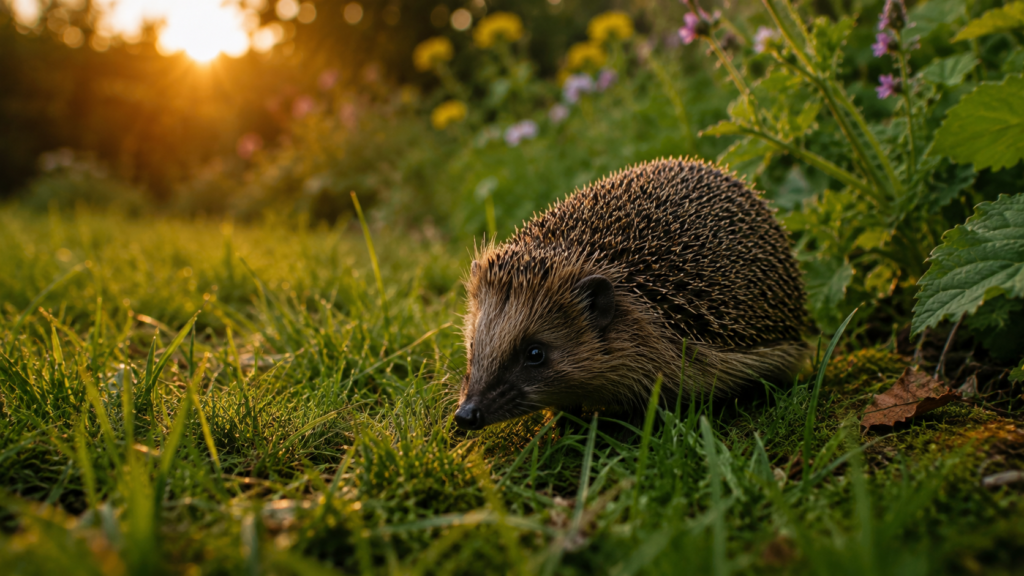
Start with the barriers, build the habitat, and let the biology catch up. Your garden — and the hedgehog you might not even know is visiting — will thank you for it.