Low-Flow Fixtures: The UK Guide to Water-Saving Taps, Showers & Toilets (2026)
As an Amazon Associate I earn from qualifying purchases and sometimes recommend products from other sellers at no extra cost you. For more details see my disclosure policy and privacy policy.
Not sure where else water goes in a British home once you start paying attention to it — until you start paying attention to it.
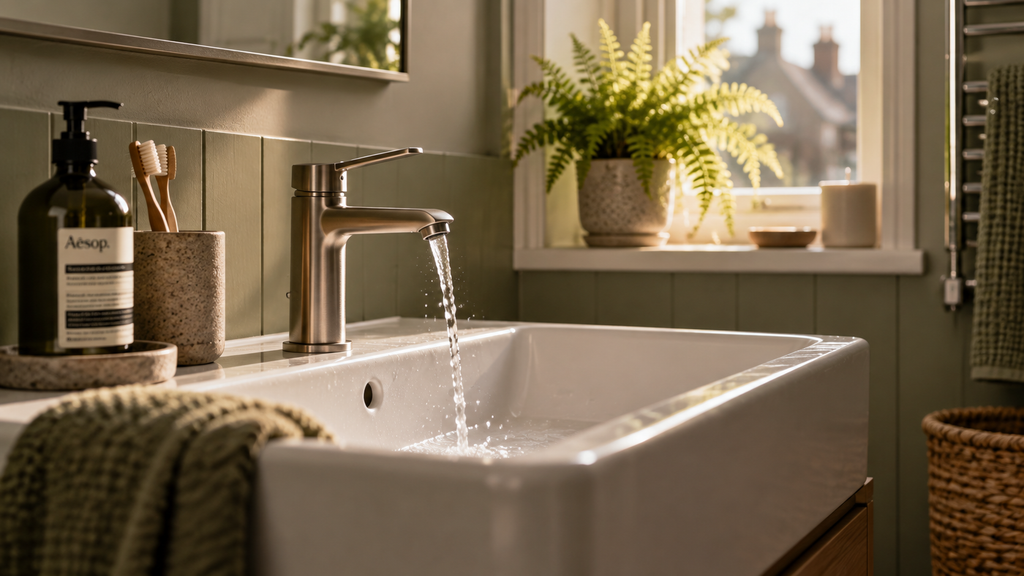
If you’re on a water meter (and most new-build UK homes now are), you’ll already have a rough sense of where your money goes each quarter. What you might not know is how much of it disappears through fixtures doing more work than they need to. Low-flow fixtures — water-saving showerheads, taps and toilets — are one of the simplest upgrades in a whole-house approach to sustainable, lower-cost living, and unlike a lot of “eco swaps,” this one pays you back in pounds, not just principle.
This guide covers what low-flow fixtures actually are, how they work, what they cost to fit, and how much they genuinely save on a typical UK water bill.
What Are Low-Flow Fixtures?
Low-flow fixtures are showerheads, taps and toilets engineered to use noticeably less water per use while keeping the pressure and performance you’d expect. The most common examples are low-flow showerheads, aerated taps, and dual-flush toilets.
Free download
Get the Non‑Toxic Home Audit Checklist
A room‑by‑room checklist to help you spot what’s worth swapping in your home — and what’s not worth worrying about. Join the fortnightly newsletter and it’s yours.
No spam, unsubscribe any time.
In short: a low-flow fixture reduces the volume of water passing through it, not the force of the water hitting you — that distinction is the whole reason these fixtures work.
How they actually work
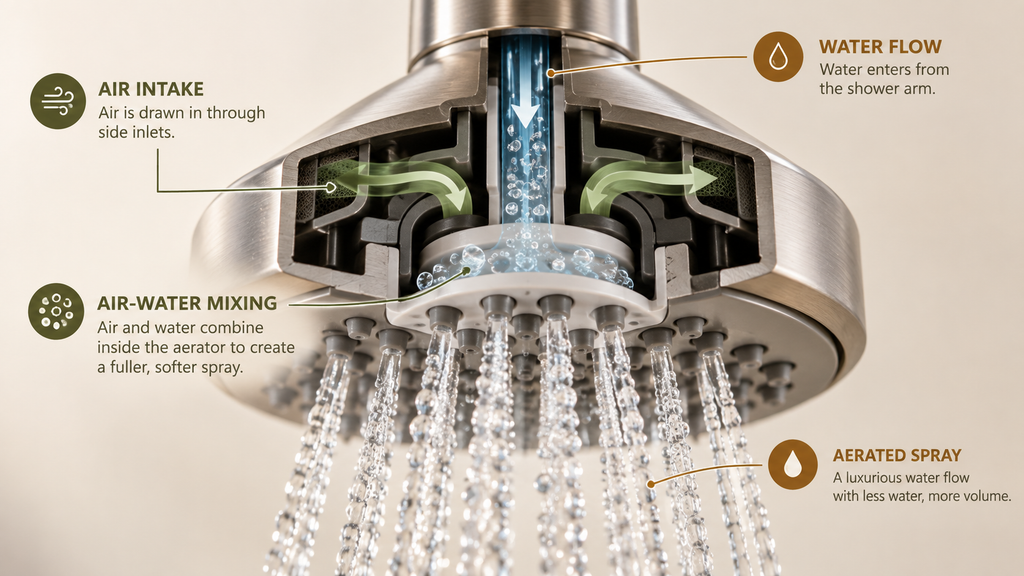
Most rely on aerators — small mesh inserts that mix air into the water stream. This keeps the flow feeling full and steady while using a fraction of the litres. Taps often add pressure-compensating valves too, which is why a well-designed low-flow tap can feel identical to a standard one, even though it’s using roughly a third less water.
Why It Matters More in the UK Than You’d Think
England is projected to face significant water shortfalls within the next 20–25 years without intervention — the South East in particular is already classed as “seriously water stressed” by the Environment Agency. That’s not a hypothetical; it’s the reason more water companies are rolling out compulsory metering and hosepipe bans have become a near-annual summer feature in parts of the country.
A typical person in England and Wales uses somewhere in the region of 140–150 litres of water a day — noticeably higher than most of Europe. Fitting low-flow fixtures is one of the few home upgrades that directly reduces that number without asking you to change your habits.
The takeaway: you don’t need to shower less or wash up less carefully — you just need fixtures that do more with the same routine.
Types of Low-Flow Fixtures
Showerheads
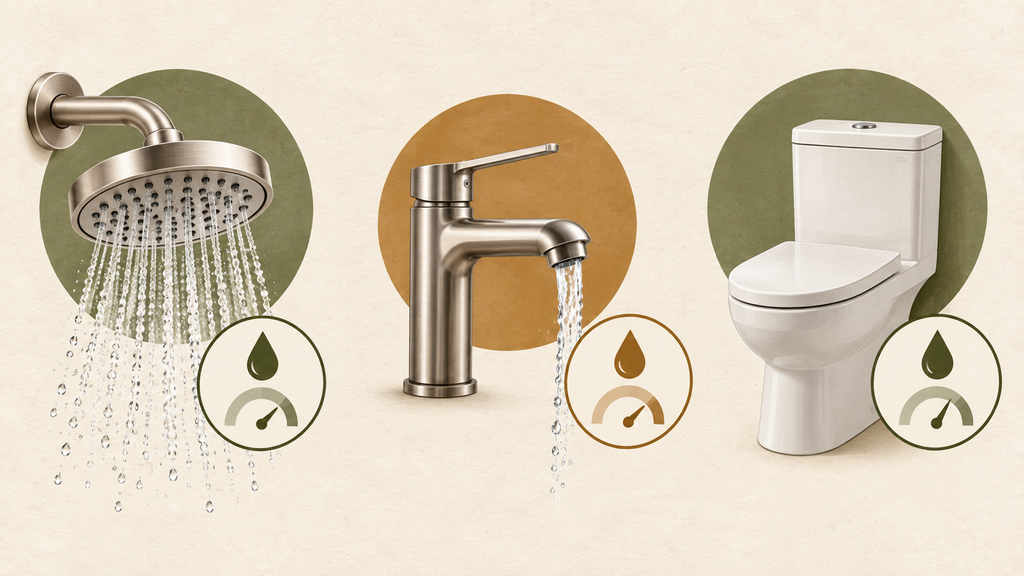
Standard showerheads run at roughly 12–15 litres per minute. A good low-flow showerhead brings that down to around 6–9 litres per minute — often close to half — while using aeration to keep the spray feeling full.
Water-efficient taps
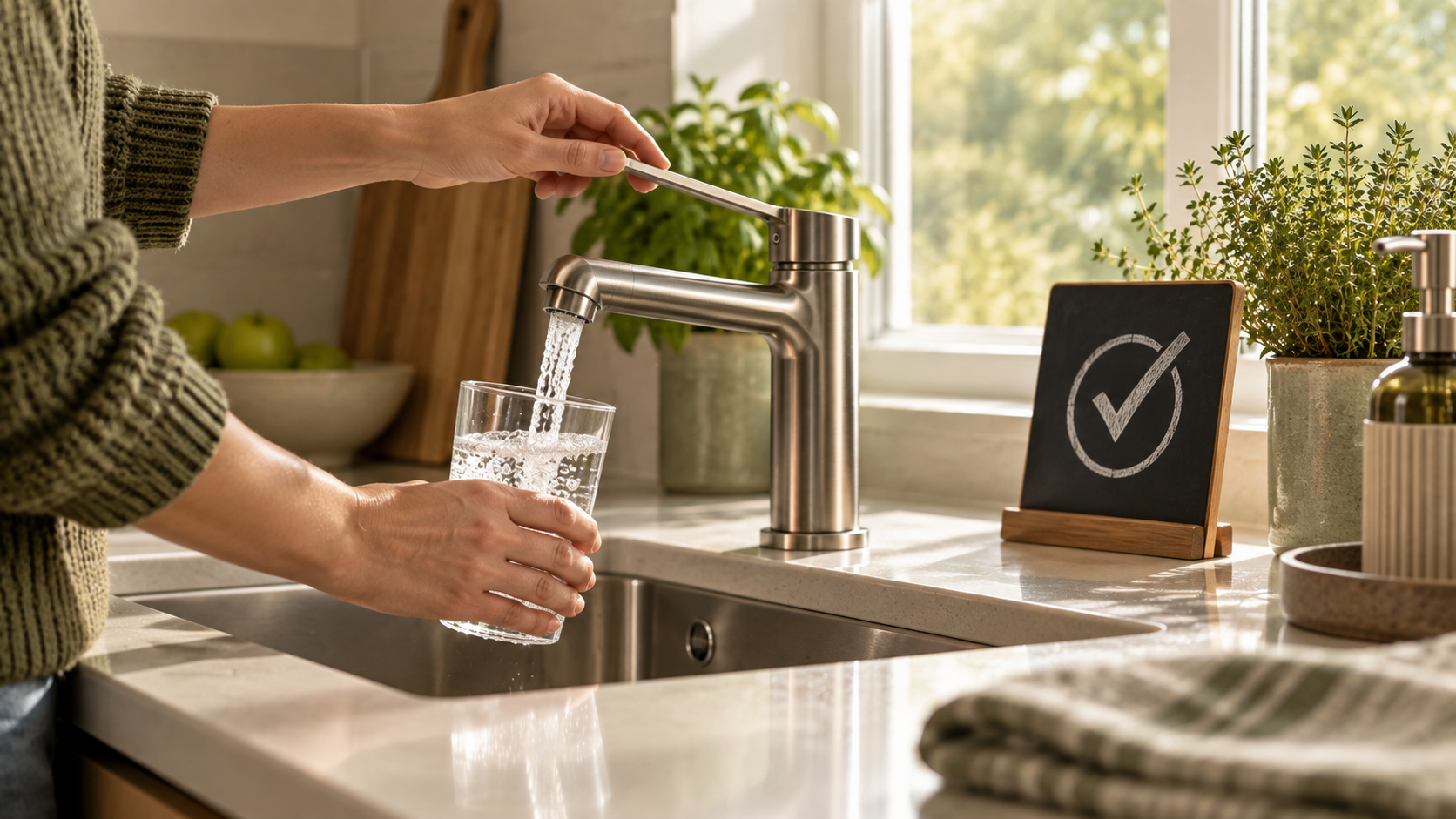
Standard taps run at around 8–10 litres per minute. Low-flow taps with flow restrictors or aerators typically bring that to 4–6 litres per minute, which barely registers day-to-day but adds up fast across a household that uses the kitchen tap dozens of times a day.
Dual-flush and low-flush toilets
Toilets are the single biggest water user in a UK home, accounting for roughly a third of household water use. Older single-flush toilets can use 9–13 litres per flush. Modern dual-flush toilets offer a 4–6 litre full flush and a 2–3 litre reduced flush — a genuinely large saving on a fixture you use several times a day. [LINK: sustainable home swaps checklist] has a printable version of this comparison if you want it on the fridge.
What It Actually Saves You
This is the bit that makes low-flow fixtures different from most “sustainable swaps” — the return is financial as well as environmental, and it shows up fast if you’re metered.
- Water bill: A family on a water meter switching showerhead, taps and toilet to low-flow versions can realistically cut water use by 25–35%, which shows up directly on the next bill.
- Energy bill: Roughly a quarter of a typical household’s hot water use goes through the shower. Using less hot water means less gas or electricity spent heating it — so the saving compounds beyond just the water charge.
- Payback time: A decent low-flow showerhead costs somewhere between £15–£40 in the UK. For most metered households, that pays for itself within a few months.
We fitted a low-flow showerhead and aerated kitchen tap here at Daya Tree over a year ago, alongside a few other non-toxic home swaps — the water bill drop was the first change we actually noticed on paper, before any of the “feel-good” swaps showed up anywhere.
Busting the Myths
“Low-flow means weak pressure.” This was true of first-generation low-flow fixtures in the 1990s, and the reputation has stuck ever since. Modern aerator and pressure-compensating designs have mostly solved it — most people can’t tell the difference in daily use.
“They’re expensive to fit.” Taps and showerheads are usually a straightforward swap you can do yourself in minutes with a spanner and some PTFE tape. Toilets need a plumber if you’re replacing the whole unit, but retrofitting a dual-flush conversion kit into an existing cistern is a low-cost, DIY-friendly option.
“They’re hard to find in the UK.” Every major UK DIY retailer stocks WRAS-approved low-flow fixtures, and most water companies now offer free or discounted water-saving devices (showerheads, tap inserts, cistern displacement bags) to customers — worth checking before you buy anything.
What’s Changing: Smart Fixtures
Sensor taps, programmable showerheads and app-connected flow monitors are becoming more mainstream and more affordable, letting households track water use room by room rather than guessing from a quarterly bill. If you’re already fitting low-flow fixtures, it’s worth checking whether the model has a smart or app-connected version at a similar price point — the usage data alone tends to change habits further.
Quick-Start Checklist
- Check whether your water company offers free water-saving devices before buying anything.
- Start with the showerhead — it’s the cheapest swap with the fastest payback.
- Swap kitchen and bathroom tap aerators next.
- If your toilet is pre-2001, look at a dual-flush retrofit kit rather than a full replacement.
- Track your next water bill against the same period last year to see the real saving.
In one line: low-flow fixtures are one of the rare sustainable upgrades that pay for themselves in months, not years — which makes them a genuinely easy first step if you’re building a lower-cost, lower-impact home. For more room-by-room swaps that work the same way, see [LINK: The Non-Toxic Home Guide].