5 Ways to Brighten Your Home with Natural Light (No Electricity Required)
As an Amazon Associate I earn from qualifying purchases and sometimes recommend products from other sellers at no extra cost you. For more details see my disclosure policy and privacy policy.
There’s a particular kind of gloom that sets into a British house between October and March — the kind no amount of scented candles quite fixes. When we moved into our current home, the back room faced north and stayed dim from breakfast to dusk, whatever the season. Rather than reaching for another lamp, I spent a few months testing what actually shifts natural light around a room. Here’s what worked.
This isn’t about spending money on skylights or knocking through walls. It’s five small, practical changes — the kind that fit a rented flat as easily as an owned house — that make a real difference to how bright a room feels, and how much you rely on electric light to get through a grey UK afternoon. Making better use of daylight is one of the simplest, lowest-cost swaps in non-toxic home swaps, and it pays you back in lower energy bills every single day it’s cloudy.
1. Use mirrors strategically
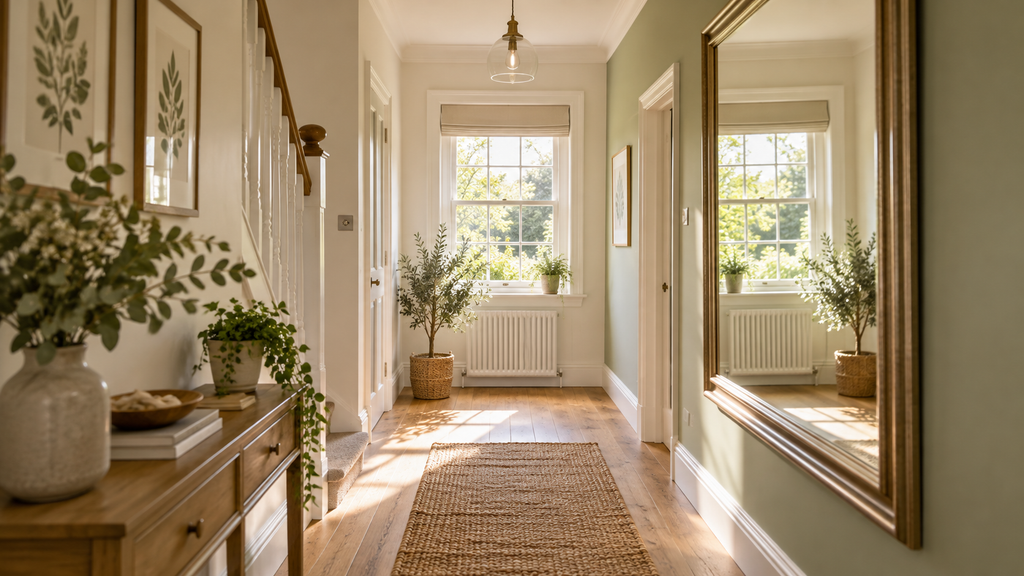
A mirror placed directly opposite or beside a window doesn’t just make a room look bigger — it genuinely bounces daylight back into the space. In our hallway, a single large mirror hung opposite the front door window changed the whole feel of the space within a day of hanging it.
What worked for us:
Free download
Get the Non‑Toxic Home Audit Checklist
A room‑by‑room checklist to help you spot what’s worth swapping in your home — and what’s not worth worrying about. Join the fortnightly newsletter and it’s yours.
No spam, unsubscribe any time.
- Position the mirror so it faces the window directly, not at an angle — you want it catching and throwing light back across the room, not just reflecting a wall.
- A tall, narrow mirror in a dim corridor does more work than a small decorative one.
- Mirrored trays, glass-fronted cabinets, and metallic picture frames all add small amounts of bounced light too, if a full mirror isn’t practical.
Quotable takeaway: a well-placed mirror is the single cheapest way to increase perceived daylight in a room, and it costs nothing to reposition one you already own.
2. Move your furniture around
Before buying anything, it’s worth spending twenty minutes seeing what happens when you simply move what you’ve already got. Heavy, dark furniture pushed against a window wall blocks light before it ever reaches the room. Pulling seating back from the window and turning pale-coloured pieces toward the light source both make a measurable difference.
A few things to try:
- Keep the area directly in front of windows clear, rather than blocking it with a sofa back or tall bookshelf.
- Angle furniture toward the window rather than away from it, so surfaces catch and reflect light rather than shadow it.
- If you’re weighing up new furniture at all, this is a good moment to think about buying less without feeling deprived — often the answer is rearranging, not replacing.
3. Install sheer curtains
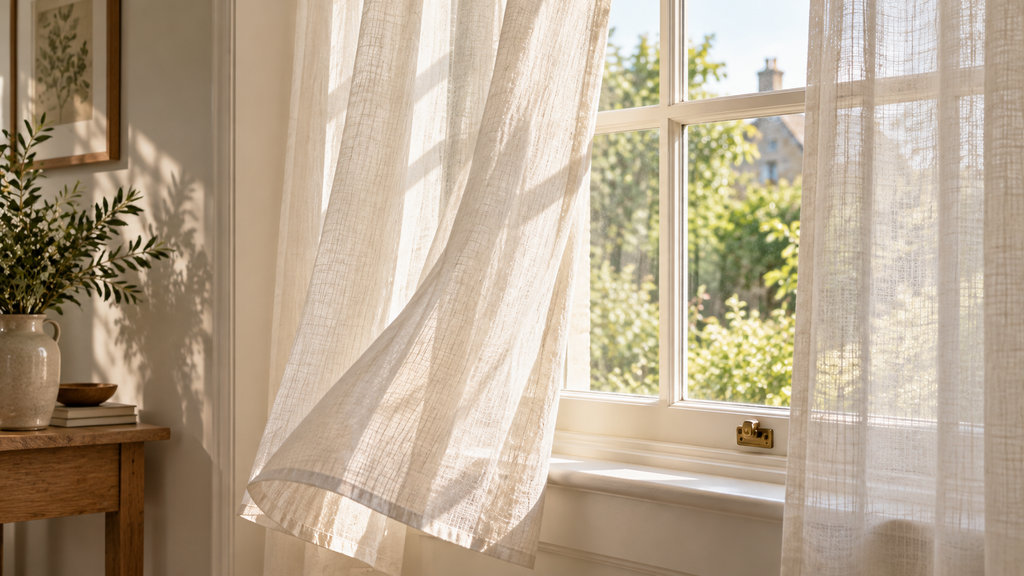
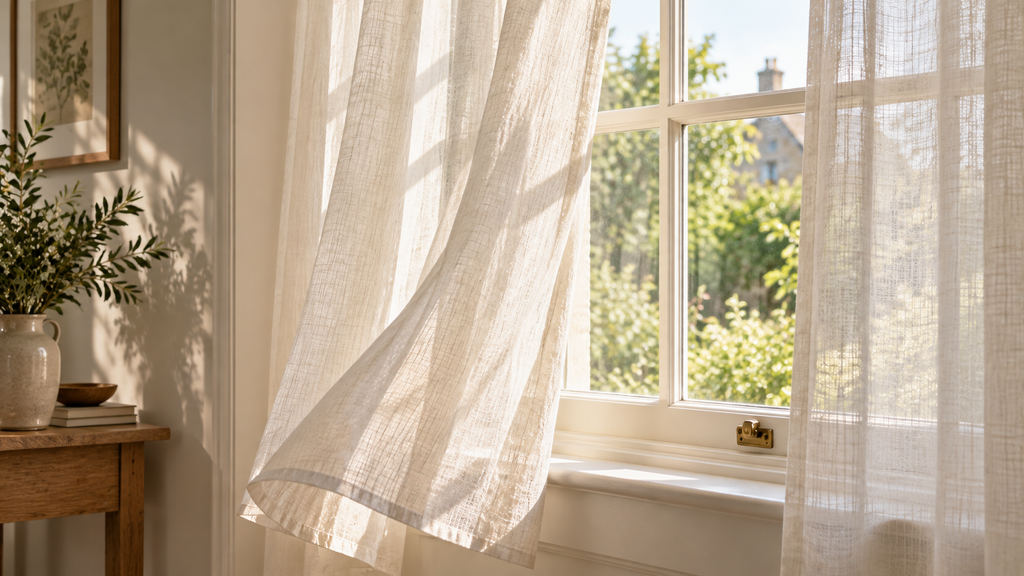
Heavy curtains are lovely in January but do the room no favours in daylight hours. Swapping thick velvet or lined curtains for sheer linen or cotton lets far more daylight filter through while still giving you privacy from the street.
What to look for:
- Linen or cotton voile in a pale, natural tone — avoid anything with a tight synthetic weave, which blocks more light than it looks like it should.
- Hang curtain poles slightly wider than the window frame, so curtains pull fully clear of the glass during the day rather than covering part of it even when “open.”
- Second-hand and charity shop curtains are often a good source for this — no need to buy new to try it.
4. Use lighter, reflective paint
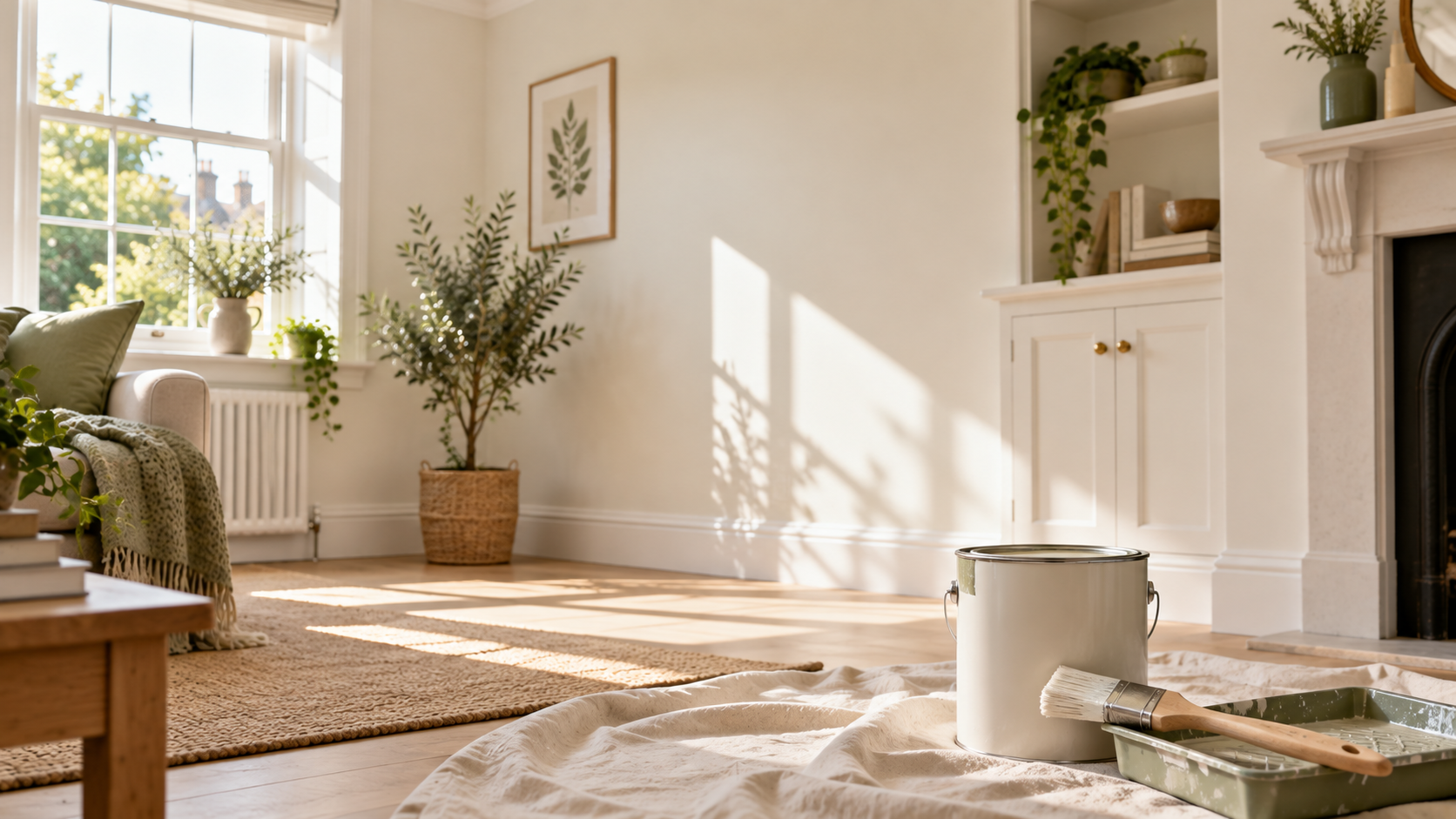
This was the change that made the most difference to our north-facing room. Swapping a mid-tone green for a soft off-white with a slight sheen — rather than flat matt — turned a room that felt permanently overcast into one that genuinely didn’t need a lamp on until late afternoon.
A few notes from doing this ourselves:
- Matt paint absorbs more light than an eggshell or soft-sheen finish, which bounces it back into the room.
- White and warm off-white shades reflect the most light, but even a pale sage or stone will do far more than a mid or dark tone.
- If you’re repainting anyway, it’s worth reading a non-toxic home swaps guide first — plenty of standard paints carry stronger VOC levels than people expect, and low-VOC alternatives are now widely available on the UK high street.
5. Add natural accents
This one is more subtle than the others, but it matters. Plants near a window — especially those with pale or variegated leaves — soften a room and draw the eye toward the light source rather than away from it. It’s a small thing, but it changes how bright a room feels, which is often what people are actually chasing when they say a room needs “more light.”
Easy additions:
- A cluster of houseplants on a windowsill, rather than one large plant blocking the glass.
- Pale or dried flowers in a clear or pale vase, positioned to catch window light.
- Natural materials — rattan, light wood, linen — reflect light more generously than dark or heavily lacquered surfaces.
Houseplants do more than brighten a room, too — they’re part of a wider conversation about improving air quality at home, which is worth a read if this is a topic you’re interested in.
The takeaway
None of these five changes cost much, and none of them require an electrician, a skylight, or a renovation budget. What they have in common is that they work with the light a room already gets, rather than trying to compensate for it after dark. If you only try one thing this week, start with the mirror — it’s free if you already own one, and you’ll notice the difference by the following morning.
This kind of small, deliberate change — working with what you’ve got rather than buying your way to a fix — is really at the heart of slow living practical guide thinking. Brighter rooms, lower energy bills, less stuff. It’s a good trade.