Upcycled Furniture Ideas: Giving Old Pieces a New Life in Your UK Home
As an Amazon Associate I earn from qualifying purchases and sometimes recommend products from other sellers at no extra cost you. For more details see my disclosure policy and privacy policy.
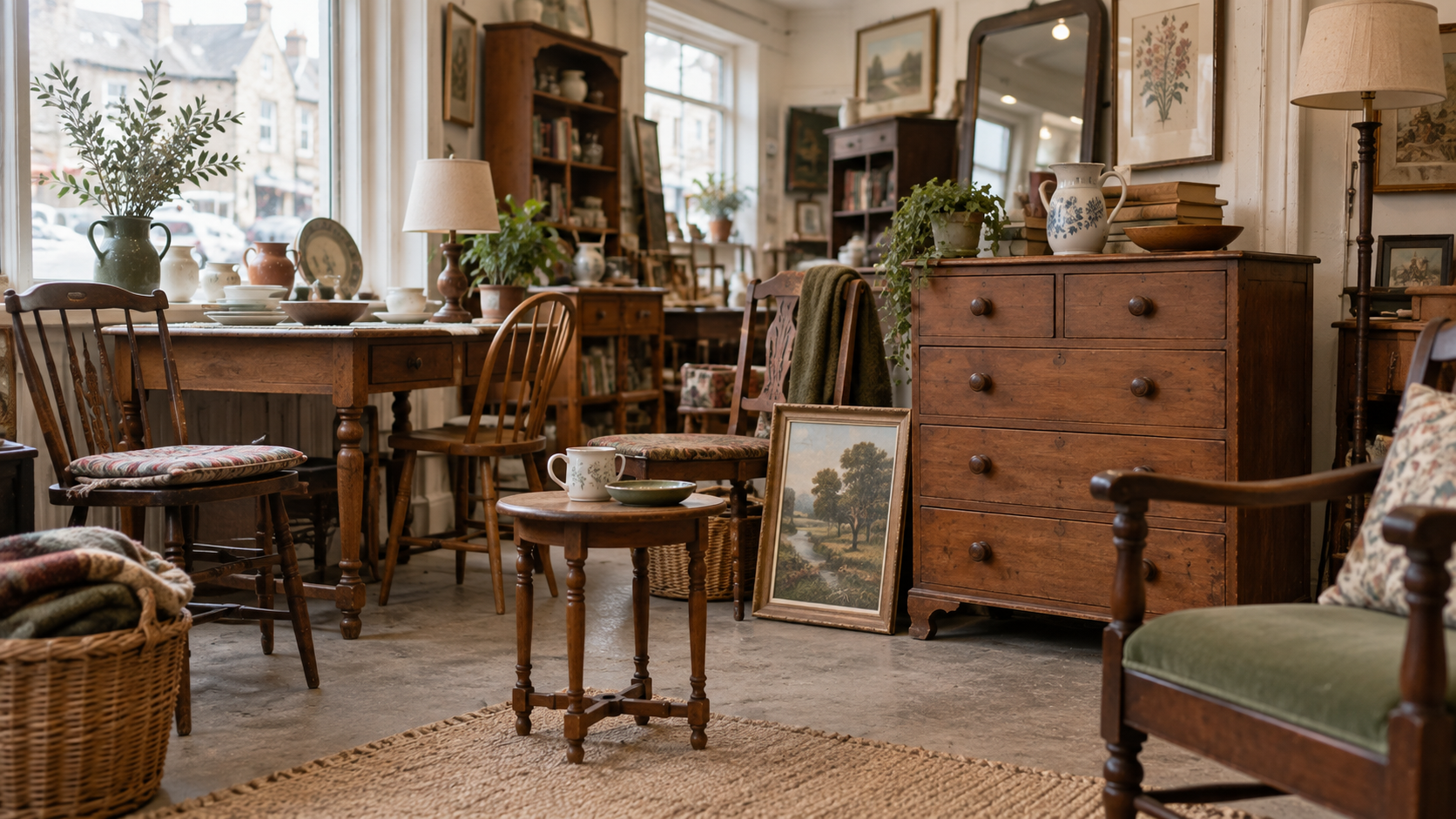
There’s a particular kind of satisfaction in looking at a piece of furniture in your home and knowing exactly where it came from — the skip it was rescued from, the charity shop in town, the grandmother it once belonged to. That’s the appeal of upcycled furniture: it’s not just about saving money or reducing waste, though it does both. It’s about living with things that have a story, rather than things that arrived flat-packed and forgettable.
If you’ve never tried it, upcycling can feel intimidating — like it requires proper carpentry skills or a garage full of tools. It doesn’t. Some of the best upcycling projects start with a tin of paint, a Saturday afternoon, and a piece of furniture nobody else wanted.
Why Upcycled Furniture Is Worth the Effort
There’s more to this than a nice-looking sideboard. A few honest reasons it’s worth trying:
It keeps furniture out of landfill. The UK throws away an enormous amount of usable furniture every year — much of it perfectly sound, just outdated or slightly damaged. Repurposing a piece, rather than replacing it, is one of the simplest ways to reduce your household’s environmental footprint without changing your lifestyle at all.
Free download
Get the Non‑Toxic Home Audit Checklist
A room‑by‑room checklist to help you spot what’s worth swapping in your home — and what’s not worth worrying about. Join the fortnightly newsletter and it’s yours.
No spam, unsubscribe any time.
It’s genuinely the cheaper option. New furniture, especially anything solid wood, is expensive. A tired old chest of drawers from a local reuse scheme can cost a fraction of a new equivalent — and with a coat of paint and new handles, you’d struggle to tell the difference.
It forces you to get creative. Once you start looking at furniture as raw material rather than a finished product, you notice potential everywhere — an old ladder becomes a towel rail, a chipped dresser becomes a bathroom vanity.
It reduces demand for new resources. Every piece of furniture you don’t buy new is one less draw on virgin timber, manufacturing energy, and shipping. Small individual choices, multiplied across households, genuinely add up.
It gives your home some actual character. Mass-produced furniture tends to look the same in every front room in the country. A reworked piece — especially one you’ve had a hand in — never does.
Where to Find Furniture Worth Upcycling
The best upcycling projects start with finding the right raw material. A few reliable UK sources:
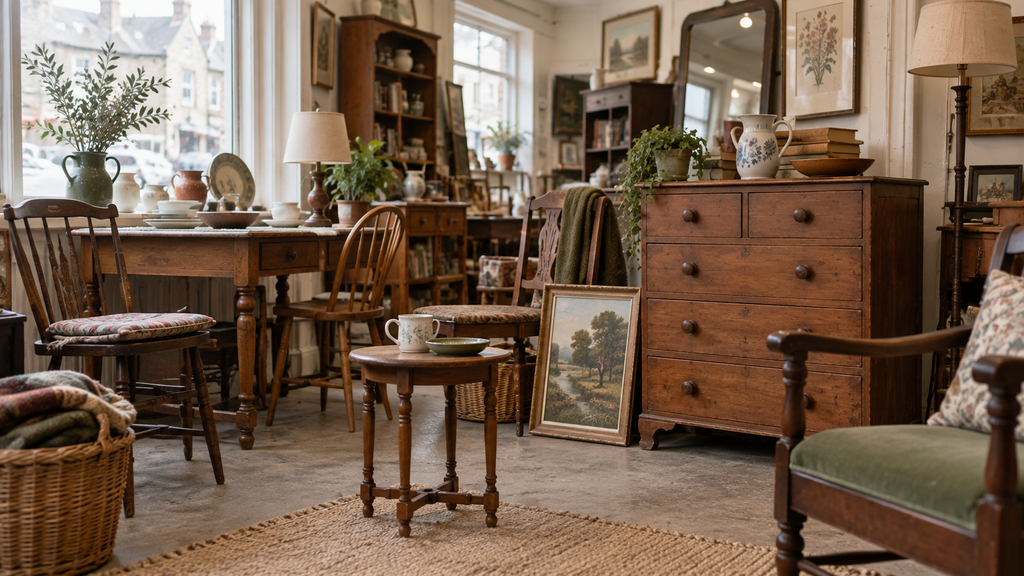
Charity shops and reuse schemes. British Heart Foundation, Emmaus, and your local council’s furniture reuse project are all worth checking regularly — good pieces move fast, so it pays to pop in often rather than once.
Facebook Marketplace and Freecycle. Search “free” alongside your area name and you’ll be amazed what people are giving away, often because they simply can’t be bothered to take it to the tip themselves.
Car boot sales and flea markets. Prices are negotiable, and sellers are often glad to see something go rather than load it back into the car.
Skips (with permission). It’s not glamorous, but asking a neighbour if you can take something from their skip before it goes to landfill is a genuinely good way to rescue solid pieces.
Online inspiration. Once you’ve got a piece home, Pinterest and Instagram are useful for working out what to actually do with it — search “upcycled furniture” for a near-endless scroll of before-and-afters.
The Benefits of Using Recycled Materials in Your Home
Simple Upcycling Projects to Try First
You don’t need to start with a full furniture restoration. These are genuinely achievable for a beginner with basic tools and a free weekend:
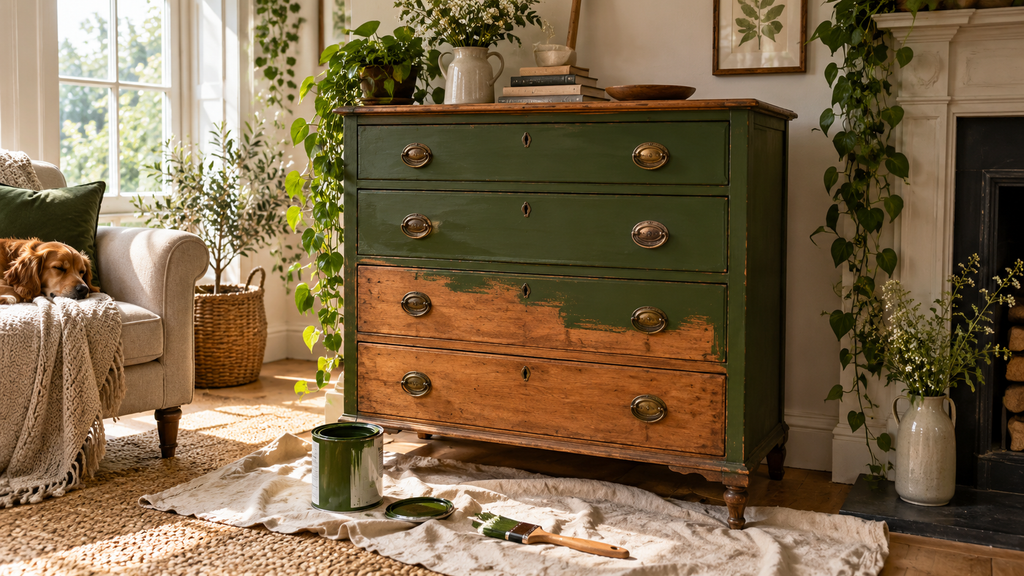
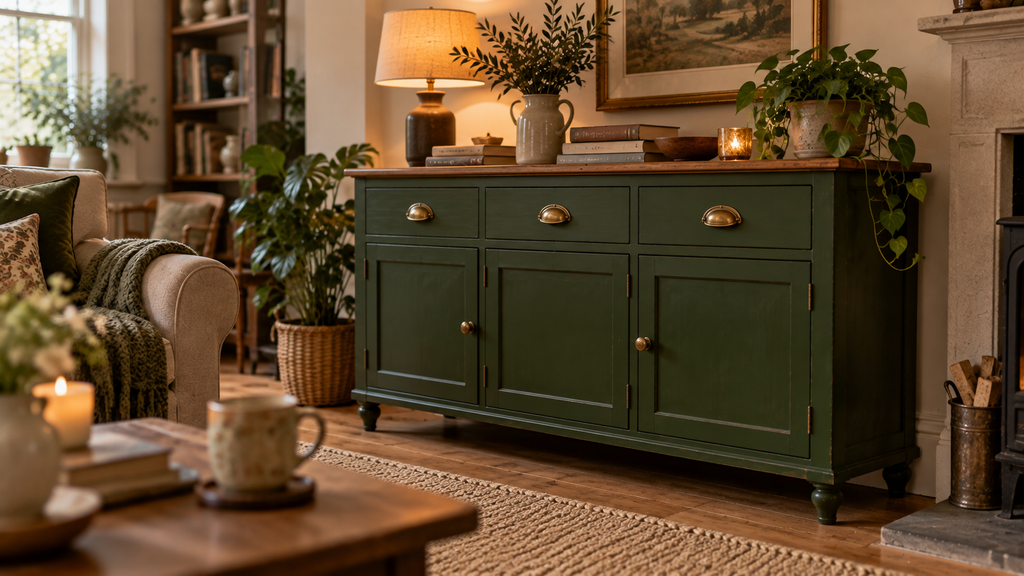
- Paint an old dresser or sideboard. A sand, a primer, and two coats of paint can transform a dated piece completely. Chalk paint is particularly forgiving for beginners since it needs minimal prep work.
- Turn an old window frame into wall decor. Old sash windows, especially with the original glass, make striking mirror frames or picture displays.
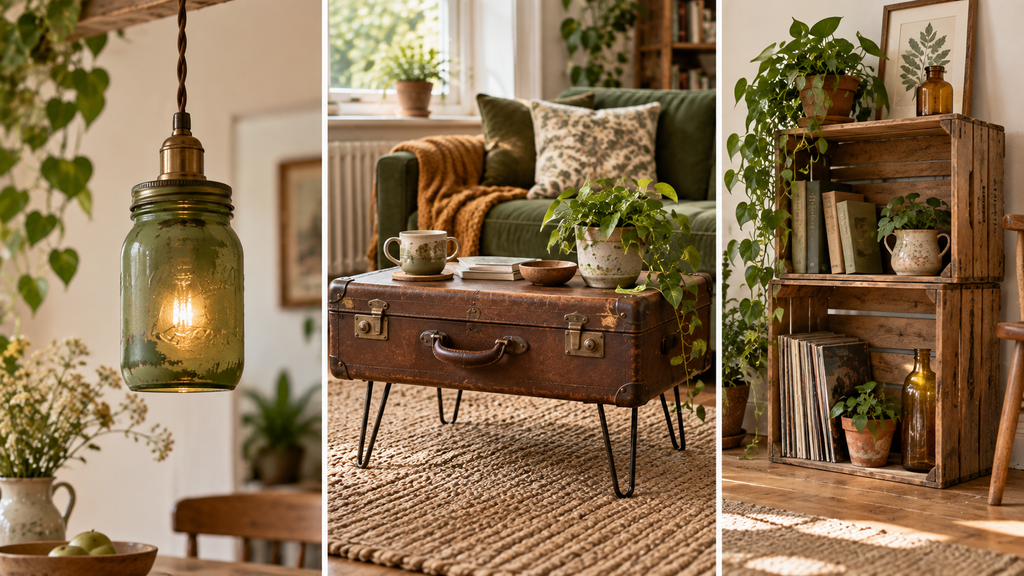
- Build a coffee table from a vintage suitcase. Add simple hairpin legs and you’ve got a genuine conversation piece — and somewhere to store blankets inside.
- Convert mason jars into pendant lighting. A cheap lighting kit and a few glass jars make surprisingly effective kitchen or hallway lights.
- Use old wine crates as open shelving. Stacked, wall-mounted, or freestanding, they’re one of the fastest wins for storage that still looks intentional.
- Rework dining chairs with new fabric. Reupholstering a seat pad is a beginner-friendly first sewing-adjacent project, and it’s a good way to bring mismatched charity-shop chairs into one cohesive set.
Getting Better at It: Where to Learn More
Once you’ve done a project or two, the learning genuinely never stops — every piece teaches you something new about materials, finishes, and what actually holds up to daily use.
Local upcycling workshops (often run through community centres or independent paint suppliers) are a good way to pick up proper technique — things like how to prep a piece so paint doesn’t chip within a month, which you won’t necessarily learn from a video.
Online communities are also worth joining. Upcycling and restoration groups on Facebook are full of people happy to troubleshoot a sticky drawer or recommend a specific wax finish, and seeing other people’s projects is genuinely motivating on the days yours isn’t going to plan.
It’s also worth thinking about upcycled furniture as one part of a broader shift toward mindful consumption — the same instinct that makes you pause before a furniture purchase tends to show up in other areas of the home too, from what’s under the kitchen sink to what’s in the wardrobe.
What Does Sustainable Living Actually Mean? (And How to Start in the UK)
Final Thoughts
Upcycled furniture isn’t a trend — it’s a genuinely practical way to furnish a home without the expense, waste, or blandness of buying everything new. Start small. Pick one piece, one weekend, one project. You’ll very likely end up doing it again.
If you’re just starting to rethink how your home is furnished and decorated more broadly, it pairs naturally with a wider look at making safer choices for the whole house — furniture is often just the first thing people notice, but it’s rarely the only thing worth changing.