
Mindful Consumption: A Practical UK Guide to Breaking the Impulse-Buying Cycle
As an Amazon Associate I earn from qualifying purchases and sometimes recommend products from other sellers at no extra cost you. For more details see my disclosure policy and privacy policy.
In today’s consumer-driven world, mindful consumption has gone from niche idea to genuine necessity. At its core, it simply means being fully aware of what you buy and why — noticing the impact each purchase has on your finances, your headspace, and the world around you. For many of us, mindful consumption starts with one honest admission: breaking free from impulse buying, a habit that quietly drains money, mental energy, and — over time — the planet’s resources.
This isn’t about giving everything up or living with less for the sake of it. It’s about buying on purpose, not on autopilot. Here in the UK, where the cost of living and the pressure of constant online sales collide daily, that shift matters more than ever.
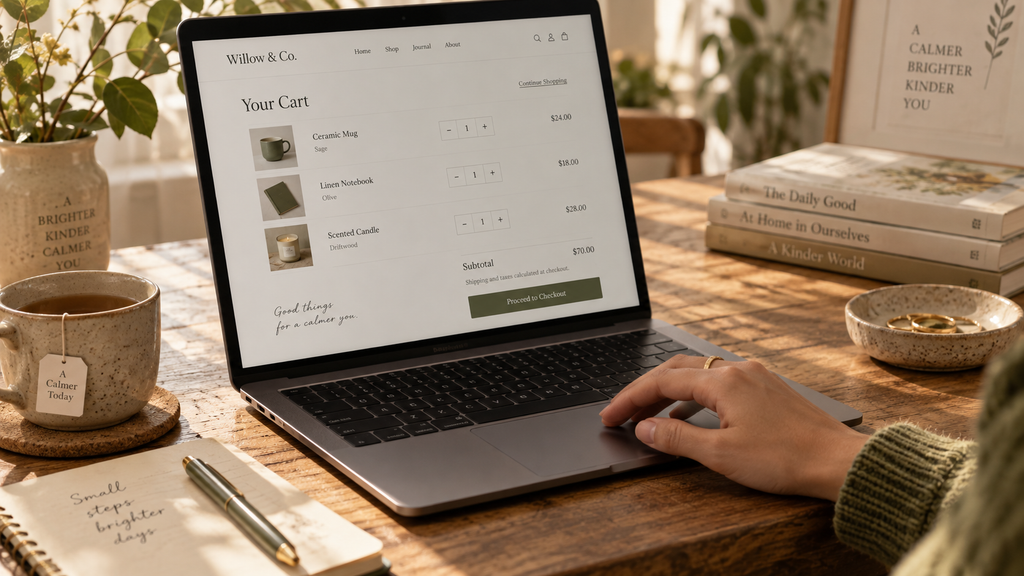
The Psychology Behind Impulse Buying
To get better at resisting impulse purchases, it helps to understand what’s actually driving them. Impulse buys are rarely about the item itself — they’re usually a response to an emotional trigger: stress after a long day, boredom on a scroll through Instagram, or a craving for the quick hit of “new thing” dopamine. Retailers know this well. Countdown timers, “only 2 left in stock” banners, and flash-sale emails are all engineered to short-circuit deliberate thinking and push you toward instant gratification.
Recognising these triggers — and the tactics designed to exploit them — is the real first step toward more mindful consumption habits. Once you can name the feeling behind the urge to click “buy now,” you’ve already taken back some control.
Free download
Get the Non‑Toxic Home Audit Checklist
A room‑by‑room checklist to help you spot what’s worth swapping in your home — and what’s not worth worrying about. Join the fortnightly newsletter and it’s yours.
No spam, unsubscribe any time.
The True Cost of Impulsive Shopping
The fallout from unchecked impulse buying reaches well beyond a dented bank balance, though that’s often where it’s felt first. Financially, frequent small purchases add up fast, chip away at savings goals, and can tip into debt. Environmentally, impulse buying fuels the overconsumption and fast-turnover waste that sustainable living is trying to push back against — a subject we dig into further in our guide to reducing everyday household waste.
On a personal level, the cost is quieter but just as real: cluttered homes, decision fatigue, and a nagging sense of “I don’t even use half of this.” Slowing down on spending is, in a very literal sense, part of building a slower, more intentional life — the same philosophy behind seasonal rhythms and everyday slow living.

How to Start Practising Mindful Consumption
Mindful consumption begins with self-awareness, not restriction. Start by simply noticing when you feel the pull to buy something you hadn’t planned for — what triggered it, and what you were actually feeling in that moment.
A few practical foundations to build on:
- Create a loose spending plan. You don’t need a rigid budget spreadsheet — a simple monthly figure for discretionary spending gives you something to check purchases against.
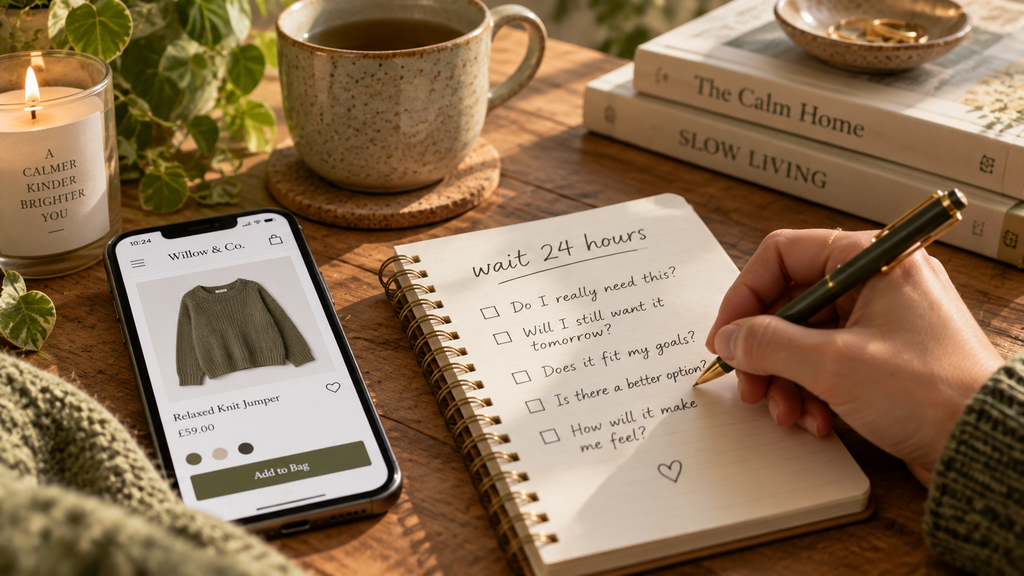
- Build in a waiting period. A 24-hour pause for smaller purchases, and a week or more for anything over £50, lets the initial excitement fade so you can make a clearer-headed decision.
- Ask one honest question before buying: would I still want this if it weren’t on sale, on my feed, or in my basket right now?
This is much the same discipline that makes budget-friendly, home-grown food so satisfying — the return comes from intention, not spontaneity.
Practical Tips for Resisting Impulse Buys
A few small, concrete habits make an outsized difference over time:
- Unsubscribe and unfollow. Marketing emails and brand social accounts exist to create desire you didn’t have five minutes ago. Cutting them out removes a huge share of daily temptation.
- Practise gratitude for what you already own. Genuinely taking stock of what’s already serving you well shifts focus from lack to abundance — and makes a new purchase feel like a choice, not a fix.
- Use cash for discretionary spending where you can. Handing over physical money makes a purchase feel real in a way that a tap-to-pay card simply doesn’t.
- Repair before you replace. UK shoppers now have stronger legal footing here too — our piece on what the Right to Repair law means for you covers what’s changed and how to use it.
The Benefits of Mindful Consumption
The upside of slowing down on spending is genuinely broad. Financially, it means better budgeting and steadier savings. Environmentally, fewer, better-considered purchases mean a smaller footprint and less demand on resources — a natural companion to a non-toxic, lower-impact home.
Perhaps the biggest shift, though, is in day-to-day satisfaction. Stepping off the treadmill of constant acquisition frees up money, time, and headspace for the things that actually build a good life — relationships, experiences, and a home that feels calm rather than cluttered.

Breaking the Cycle
Breaking the impulse-buying cycle isn’t a one-off decision — it’s a practice, and like most practices, it gets easier with repetition. Every purchase is a small chance to check in with what you actually value, rather than what an algorithm has decided you should want next.
Progress over perfection is the aim here, not a spending fast or a guilt trip. Start with one habit from this guide — unsubscribing from a few marketing lists, or building in a 24-hour pause — and let mindful consumption become less of an effort and more of a default.