A Small-Space Composting Guide
As an Amazon Associate I earn from qualifying purchases and sometimes recommend products from other sellers at no extra cost you. For more details see my disclosure policy and privacy policy.
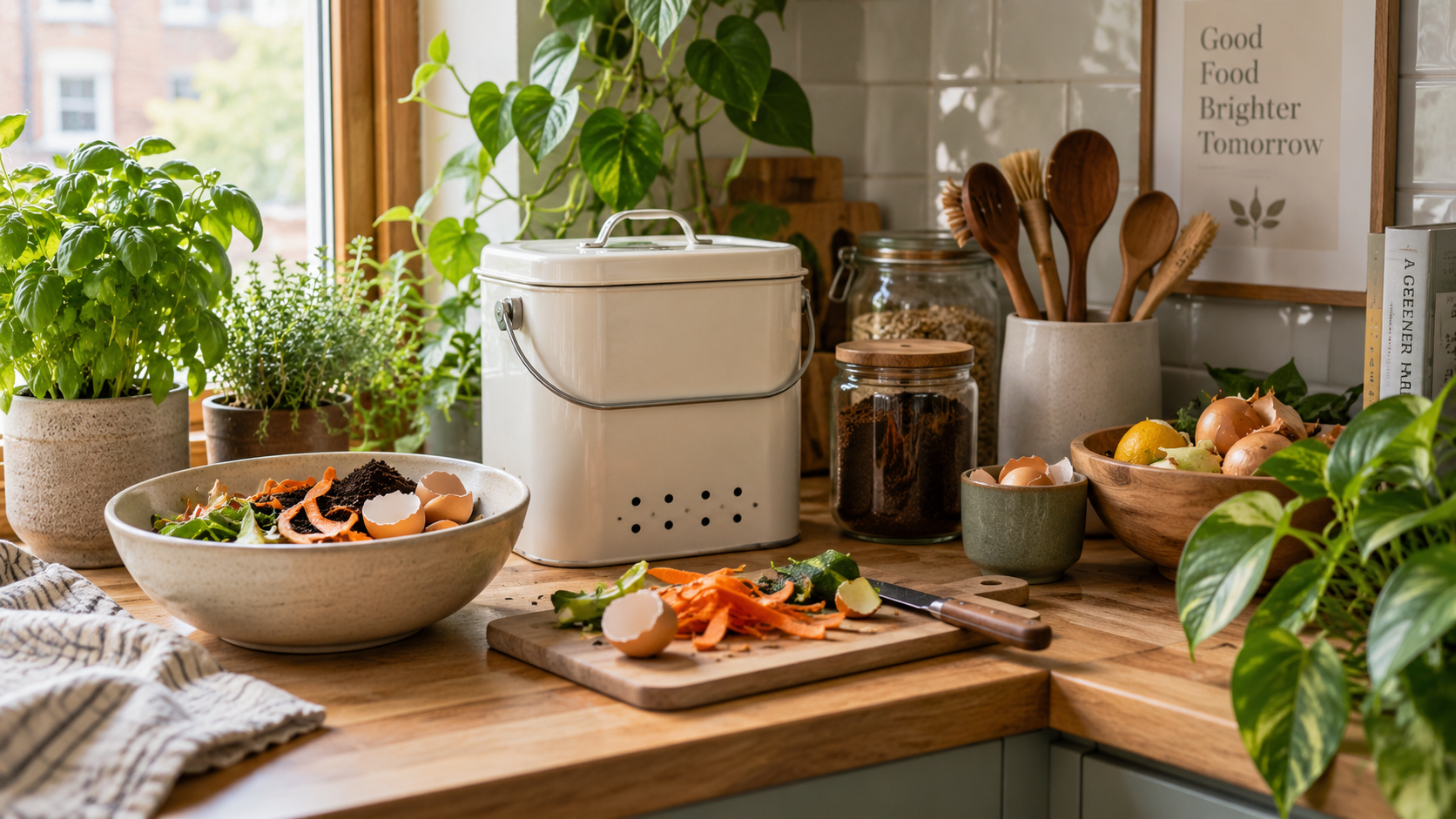
If you’ve ever wanted to try composting but thought your tiny apartment or limited outdoor space made it impossible, think again! This composting guide will show you how to transform your kitchen waste into nutrient-rich compost, no matter how small your living space may be.
Why Your Plants (and the Planet) Need You to Start Composting
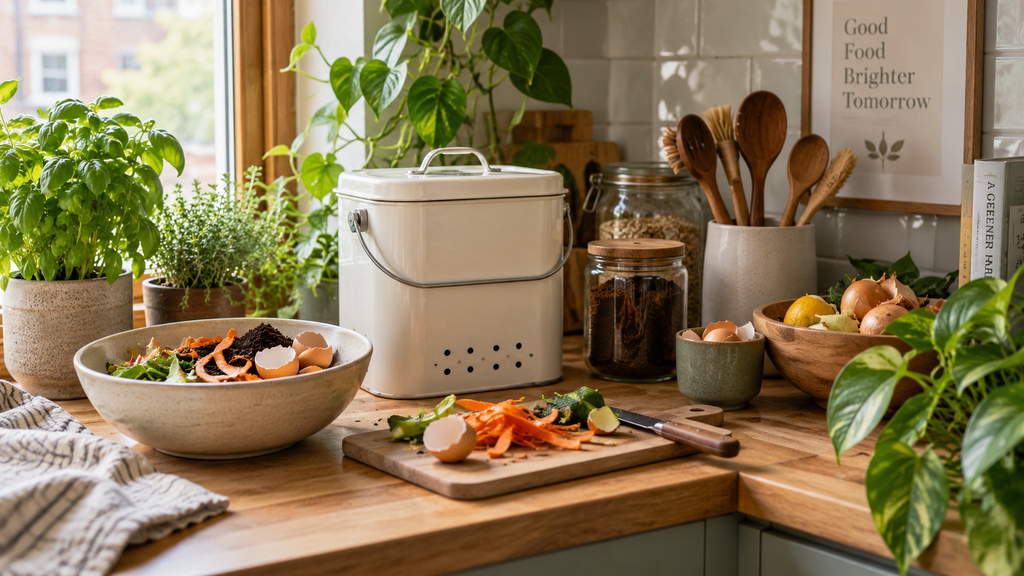
Did you know that when food waste ends up in landfills, it produces methane, a potent greenhouse gas? By composting, you’re not only reducing your carbon footprint but also creating rich, fertile soil for your houseplants or small garden. Even better, you’ll cut down your household waste by up to 30%. It’s a win-win situation for both you and the environment.
Small Space, Big Impact: Choosing Your Composting Method
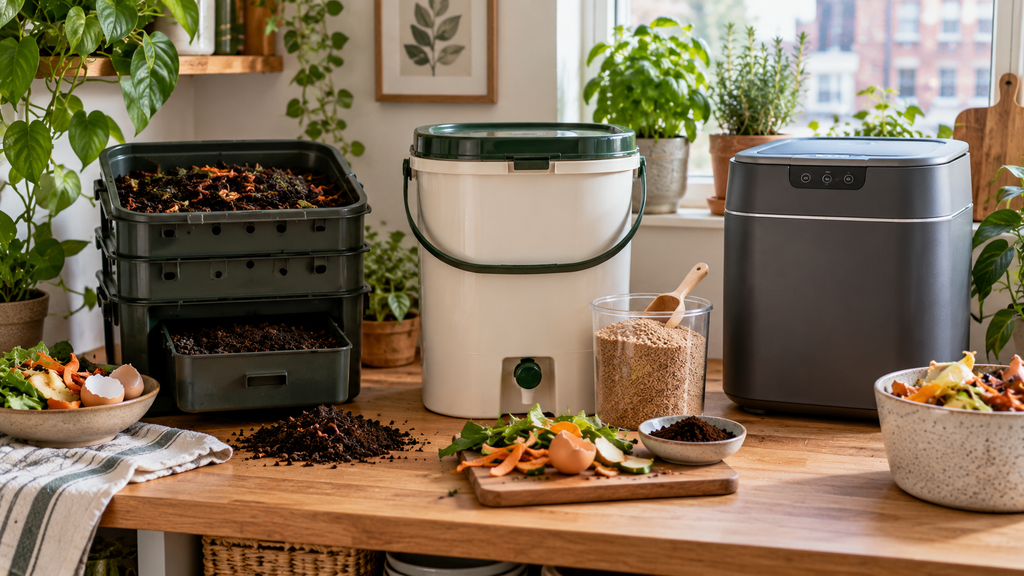
When it comes to composting in tight spaces, you have several excellent options to choose from. Vermicomposting, or worm composting, is perfect for indoor spaces and can fit snugly under your kitchen sink or in a closet. Red wiggler worms are nature’s perfect recyclers, transforming your food scraps into rich vermicompost without any unpleasant odors when properly maintained.
If worms aren’t your thing, consider Bokashi composting, a Japanese method that uses beneficial microorganisms to ferment your kitchen waste. This method is fast, can handle dairy and meat scraps, and the sealed bucket system keeps your space fresh. The resulting pre-compost can be buried in pots or donated to community gardens.
Free download
Get the Non‑Toxic Home Audit Checklist
A room‑by‑room checklist to help you spot what’s worth swapping in your home — and what’s not worth worrying about. Join the fortnightly newsletter and it’s yours.
No spam, unsubscribe any time.
For those seeking a high-tech solution, modern electric composters can break down food waste in just a few hours using heat and mechanical turning. While they require a bigger upfront investment, they’re incredibly convenient for apartment dwellers.
Getting Started: Your Essential Composting Toolkit
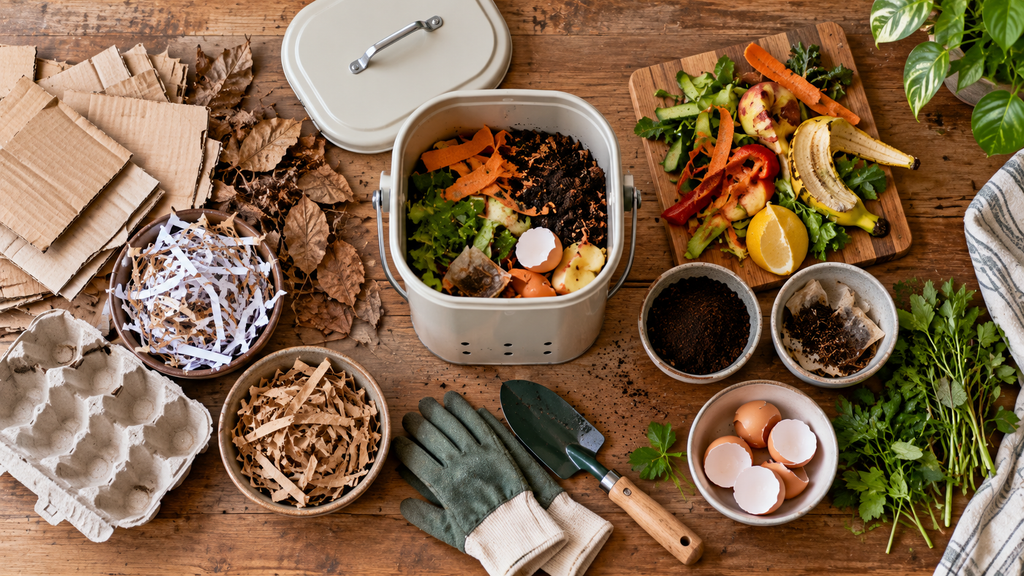
Success in small-space composting starts with the right tools. You’ll need a properly ventilated container for traditional or worm composting, or a sealed bucket for bokashi. A small collection bin for your kitchen counter makes daily composting convenient. You’ll also need to maintain a balance of carbon-rich materials (like shredded paper, cardboard, and dry leaves) and nitrogen-rich materials (such as fruit and vegetable scraps, coffee grounds, and eggshells).
The Secret Recipe: What Goes In (and What Stays Out)
Your compost will thrive on a diet of fruit and vegetable scraps, coffee grounds and filters, tea bags (minus the staples), eggshells, paper towels, napkins, shredded paper, cardboard, and plant trimmings. However, unless you’re using the bokashi method, steer clear of meat and dairy products. Also avoid oily foods, diseased plants, pet waste, chemically treated paper, and any inorganic materials.
Troubleshooting: Keeping Your Compost Happy and Healthy
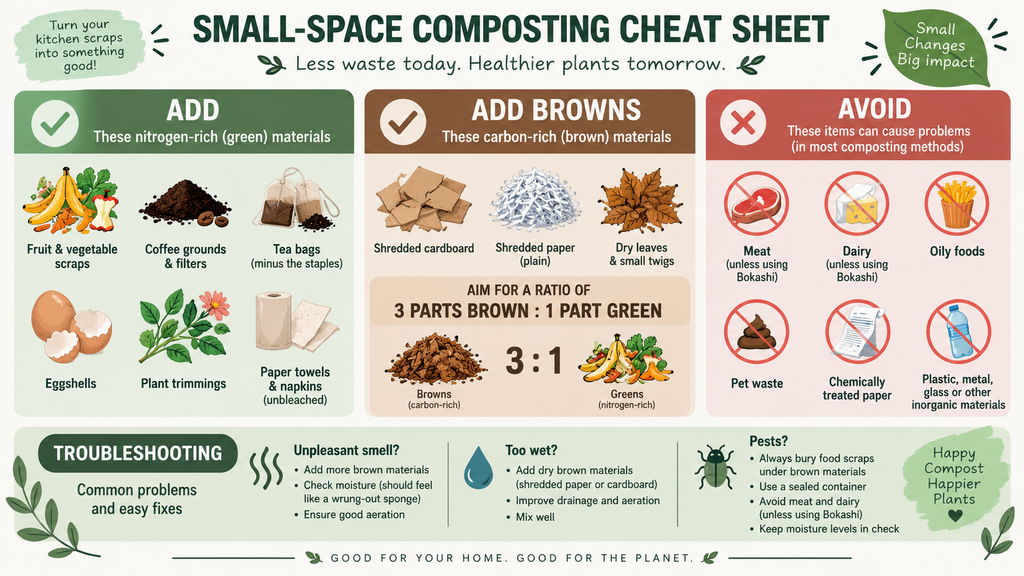
The key to odor-free composting lies in maintaining the right balance of green and brown materials. Aim for a ratio of roughly three parts brown to one part green materials. If you notice any unwanted smells, simply add more browns and ensure proper aeration.
To keep pests at bay, always bury food scraps under brown materials, avoid meat and dairy products (unless using bokashi), use a sealed container, and maintain proper moisture levels – your compost should feel like a wrung-out sponge.
Making the Most of Your Space
Don’t let square footage limit your composting dreams. Use stackable bins to maximize vertical space, and choose a bin size that matches your household’s food waste output. Consider a tumbler-style composter for balconies, or join forces with neighbors through a community composting program.
Harvesting Your Black Gold
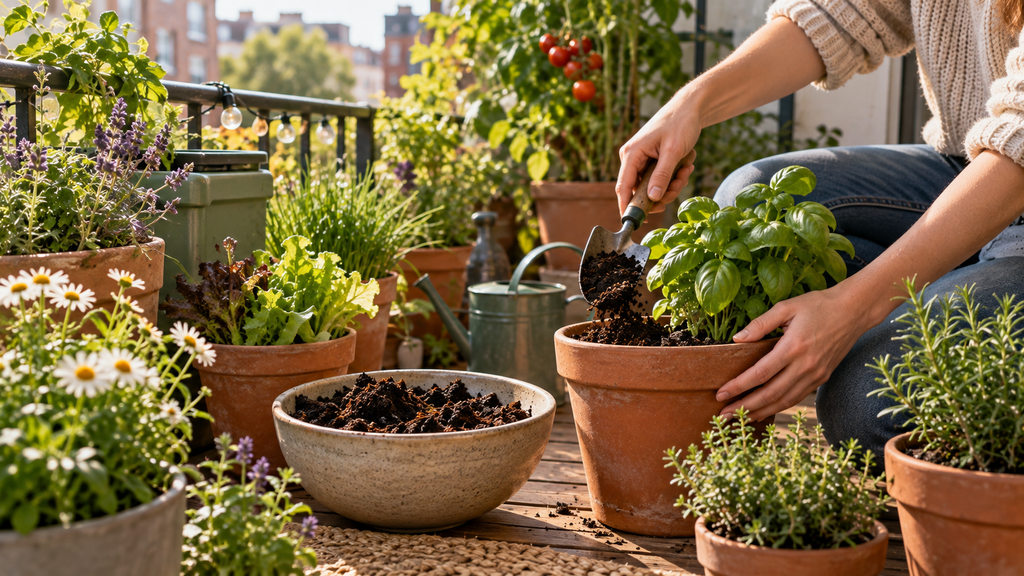
When your compost is ready – look for a dark, crumbly texture and earthy smell – you’ll have a valuable resource for your indoor garden. Use it to enrich potting soil for houseplants, feed your balcony or windowsill garden, share with community gardens, gift it to gardening friends, or nurture an indoor herb garden.
Your Journey to Composting Success
Remember, successful composting is a journey, not a race. Start small and scale up as you gain confidence. Keep track of what you add to maintain the right balance, monitor moisture levels regularly, and be patient – good compost takes time. Consider joining local composting communities for support and advice as you develop your composting skills.
With these guidelines and a bit of practice, you’ll soon discover that composting in small spaces isn’t just possible – it’s a rewarding way to reduce your environmental impact while creating something valuable from what would otherwise be waste. Your plants will thank you, and so will the planet.
More from DayaTree: