The Best Eco-Friendly Fabrics for a Sustainable Wardrobe (UK Guide)
As an Amazon Associate I earn from qualifying purchases and sometimes recommend products from other sellers at no extra cost you. For more details see my disclosure policy and privacy policy.
I used to think “sustainable fashion” meant expensive linen dresses and a guilty conscience about everything else in my wardrobe. It doesn’t. It means knowing what a handful of fabrics are actually made from, why they matter, and which ones are worth seeking out next time you need new clothes — whether that’s from a shop, a swap, or a charity rail.
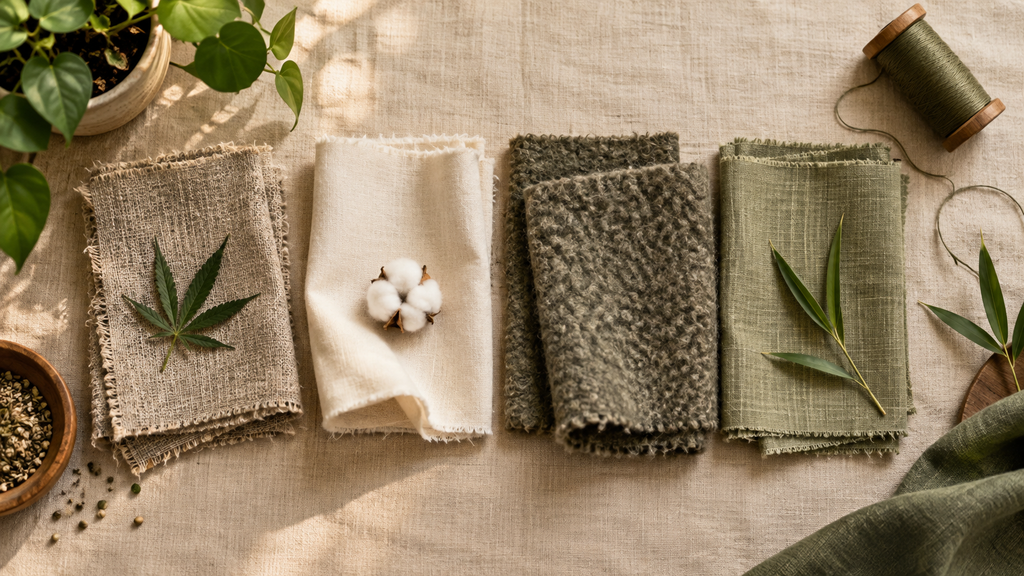
This is the practical version: six fabrics worth knowing, what makes each one genuinely better (or just marketed that way), and how to build a wardrobe that’s kinder to the planet without overhauling your entire life.
Why Fabric Choice Actually Matters
Clothing production is resource-hungry — water, energy, chemical dyes and pesticides all go into the average garment before it reaches a rail. The fabric is where most of that impact is decided. Natural and recycled fibres generally ask less of the land and less of the water table than conventional synthetics, and because many of them skip the heavy chemical processing, they’re often kinder to skin too — fewer irritants, less synthetic fragrance, less of the residue that can trigger sensitivities.
None of this means every “eco” label is worth trusting. [Internal link: guide to reading garment labels] is worth a read before you buy — greenwashing in fashion is just as common as it is in cleaning products.
Free download
Get the Non‑Toxic Home Audit Checklist
A room‑by‑room checklist to help you spot what’s worth swapping in your home — and what’s not worth worrying about. Join the fortnightly newsletter and it’s yours.
No spam, unsubscribe any time.
Six Eco-Friendly Fabrics Worth Knowing
Hemp
Hemp (Cannabis sativa) has been spun into rope, paper and cloth for centuries, and it’s having a genuine comeback. It grows fast, needs very little irrigation or pesticide, and the fibres are notably strong and hard-wearing — hemp clothing tends to outlast a lot of what sits next to it in a wardrobe. Offcuts and by-products can even be processed into bioplastics and biofuels, which is more than most fabrics can claim.
Organic Cotton
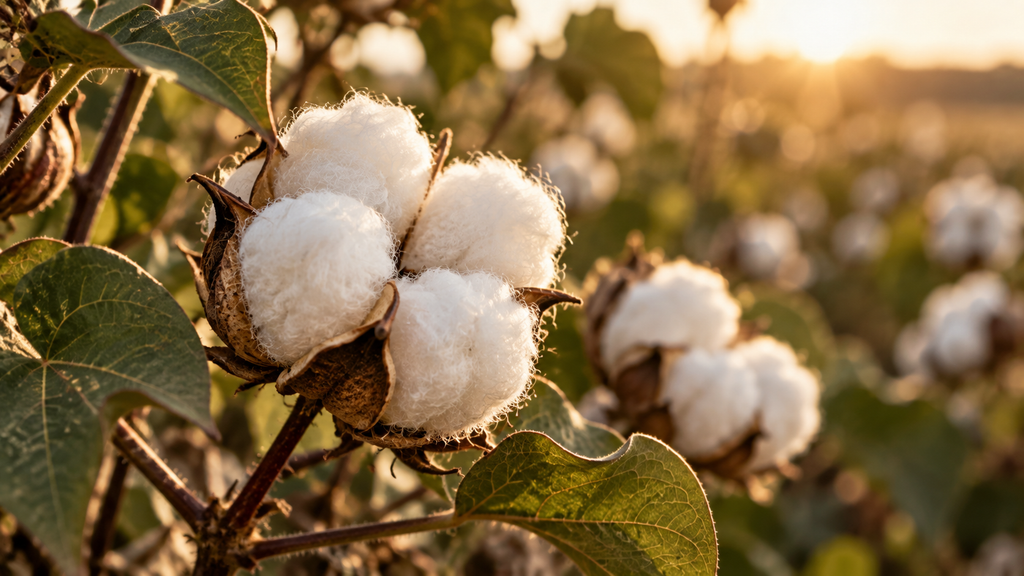
Organic cotton is grown without synthetic fertilisers or pesticides, relying instead on crop rotation, beneficial insects and hand weeding to keep the soil healthy. That lighter chemical load means less water contamination and less air pollution during growing, and no chemical dyes or bleaches in processing — which also makes it gentler against skin prone to irritation. It uses meaningfully less water than conventional cotton over its lifecycle, without giving up the softness or breathability people buy cotton for in the first place.
Tencel (Lyocell)
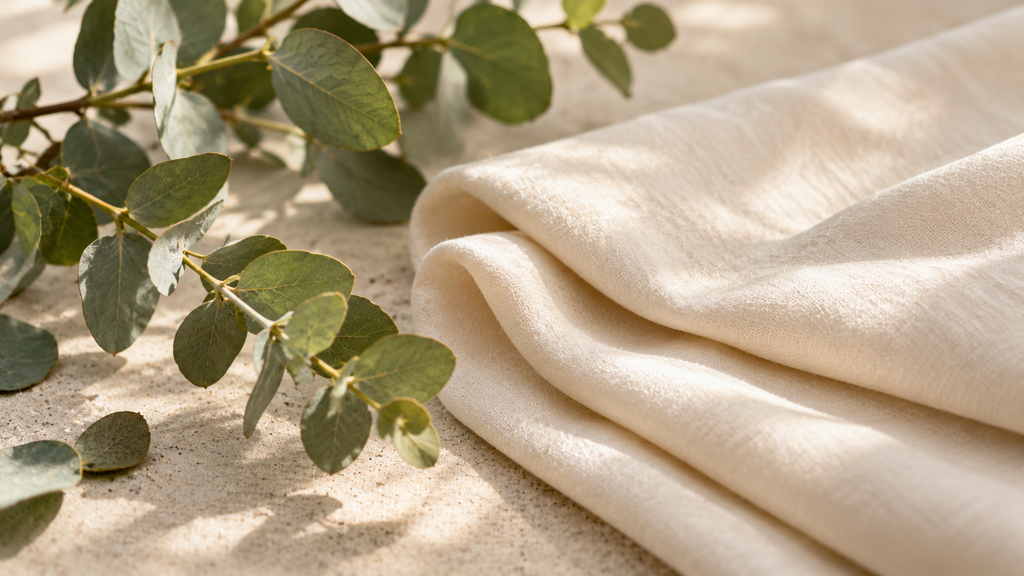
Tencel is made from eucalyptus wood pulp, spun into a fibre that’s soft, breathable and genuinely excellent at wicking moisture. The production process uses a closed-loop system that recycles most of its water and solvents, so it demands far less water and energy than cotton and releases fewer pollutants in the process. If you run warm at night, Tencel bedding or nightwear is worth trying for this reason alone.
Recycled Polyester
Recycled polyester is spun from post-consumer plastic — largely drinks bottles — rather than virgin petroleum. It takes less energy and produces less waste to manufacture than virgin polyester, while keeping the practical upsides that made polyester popular: lightweight, durable, resistant to shrinking and fading. It’s not a natural fibre and it still sheds microplastics in the wash, so it’s best thought of as the better version of a fabric you were likely buying anyway, not a perfect solution.
Bamboo
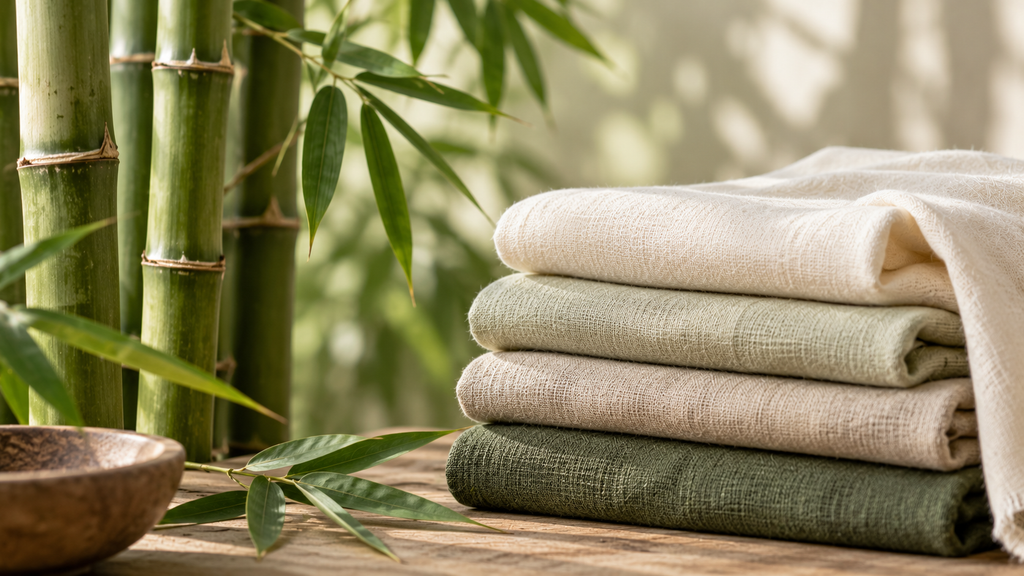
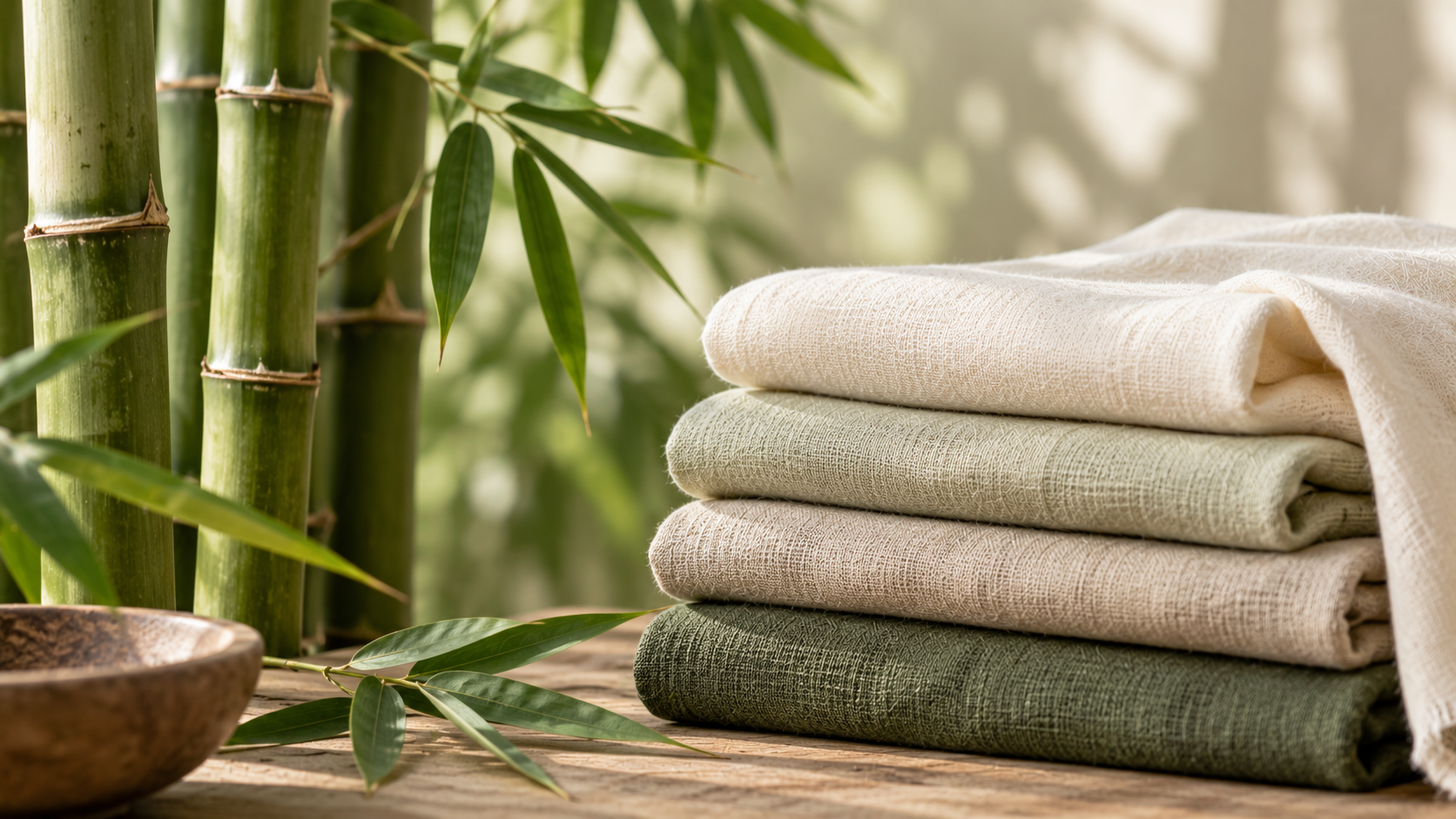
Bamboo fabric is made from pulped bamboo grass — a plant that grows remarkably quickly with minimal water and no pesticides. The resulting fibre is soft, lightweight and naturally breathable, which makes it a strong choice for summer clothing and bedding. It’s also naturally antibacterial and hypoallergenic, so it suits sensitive skin well. One caveat worth knowing: how the bamboo is processed matters enormously — mechanically processed bamboo linen is far gentler on the environment than chemically processed bamboo viscose, so it’s worth checking which you’re buying.
Wool
Wool is about as old a fabric as it gets, and it earns its place for good reason. It insulates in both directions — warm in winter, surprisingly breathable in summer — and it’s naturally fire-resistant, water-resistant, odour-resistant and slow to wrinkle. A well-made wool jumper, properly cared for, will outlast almost anything synthetic in your wardrobe. [Internal link: guide to caring for natural fibres] covers how to keep wool garments going for decades rather than years.
Building a More Sustainable Wardrobe: Practical Steps
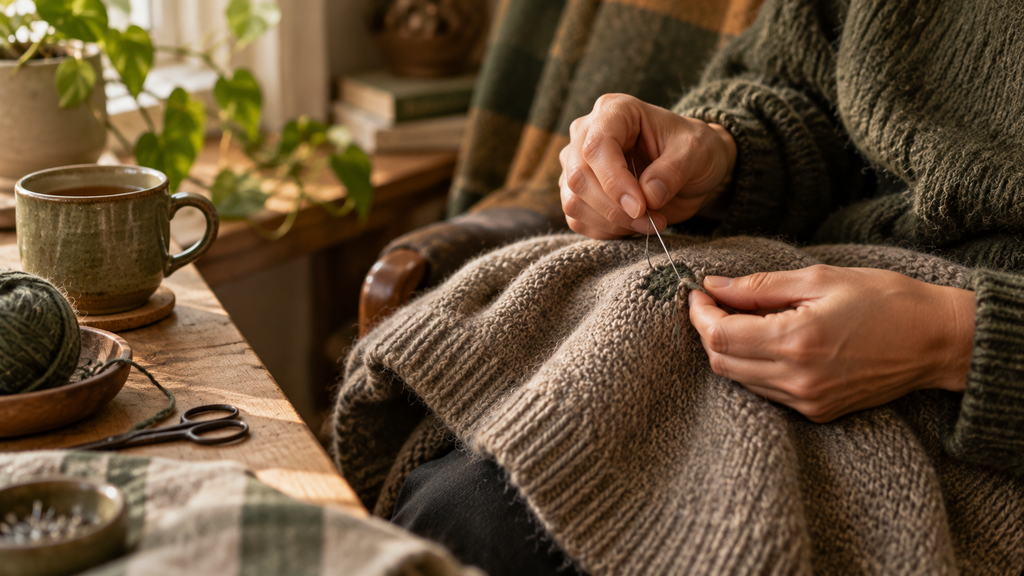
You don’t need to replace your wardrobe overnight — that would rather defeat the point. A few habits make the real difference over time:
- Buy fewer things, better. When you do need something new, favour organic cotton, hemp, wool or bamboo over synthetic blends.
- Try before buying new. Charity shops and vintage rails across the UK are full of natural-fibre pieces at a fraction of the price — and nothing you buy secondhand carries any new production footprint at all.
- Mend rather than bin. A basic sewing kit and half an hour will fix most small tears and loose buttons. [Internal link: mending and upcycling basics] is a good place to start if you’ve never picked up a needle.
- Pass it on. When something genuinely no longer fits your life, donate or recycle it through a textile bank rather than the bin — UK councils increasingly offer kerbside textile collection alongside general recycling.
The Bottom Line
Eco-friendly fabrics aren’t about perfection — they’re about making better choices more often than not. Hemp, organic cotton, Tencel, recycled polyester, bamboo and wool each solve a different problem, from water use to durability to skin sensitivity, and knowing the difference means you can actually shop with intention instead of just trusting a label. Start with what’s already in your wardrobe: mend it, wear it out properly, and let the next purchase be the better-informed one.