Upcycling Old Furniture: 30+ Creative Ways to Give Tired Pieces New Life
As an Amazon Associate I earn from qualifying purchases and sometimes recommend products from other sellers at no extra cost you. For more details see my disclosure policy and privacy policy.
I have a rule in this house now: nothing leaves for the tip until I’ve asked whether it could become something else first. It started with one chair I couldn’t bear to throw out — the one with the wobbly leg my mum used to sit in — and it’s turned into a habit that’s saved us hundreds of pounds and kept a genuinely embarrassing amount of furniture out of landfill.
Upcycling is one of those eco-friendly habits that doesn’t ask you to sacrifice anything. You end up with furniture that’s more interesting than anything you’d have bought new, for a fraction of the cost, and with a story attached. Here’s everything I’ve learned about turning old chairs, dressers, doors, crates, windows, pallets and more into pieces that actually earn their place in your home.
In short: upcycling old furniture saves money, keeps usable materials out of landfill, and gives your home character that flat-pack simply can’t.
Why Upcycling Furniture Is Worth the Effort
Before the ideas, a quick reality check: upcycling isn’t about turning your living room into a craft project. It’s mindful consumption in practice — buying less new, using what already exists, and being a bit more patient about how a room comes together.
Free download
Get the Non‑Toxic Home Audit Checklist
A room‑by‑room checklist to help you spot what’s worth swapping in your home — and what’s not worth worrying about. Join the fortnightly newsletter and it’s yours.
No spam, unsubscribe any time.
The financial case is straightforward. A secondhand dresser from a charity shop or Facebook Marketplace typically costs a tenth of a new equivalent, and a tin of paint and a free Saturday afternoon usually gets you the rest of the way there.
Transforming Old Chairs
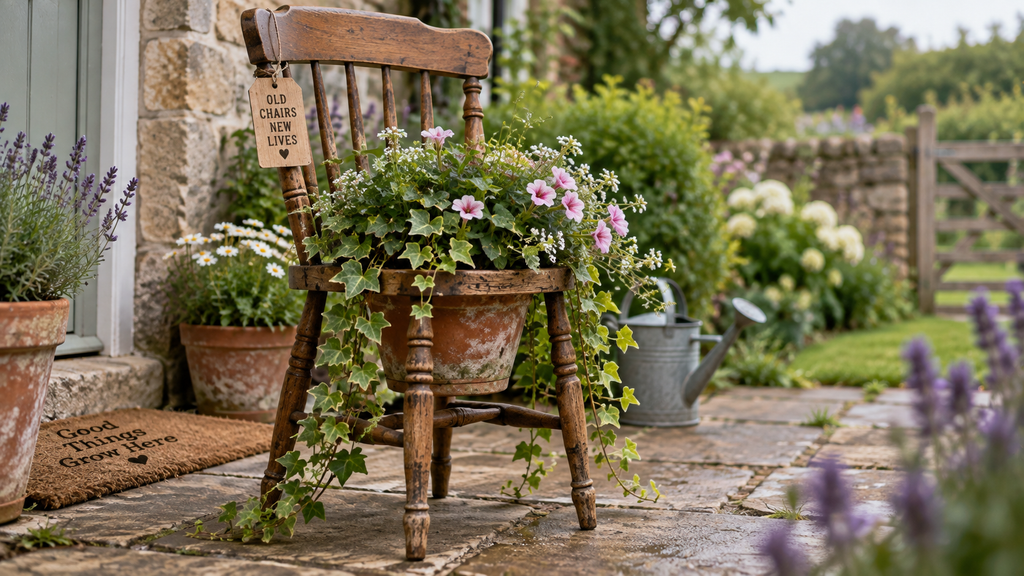
Old chairs are the easiest place to start, because even a single beaten-up dining chair has options:
- Planters — remove the seat, drop in a liner and compost, and you’ve got a genuinely charming garden feature by the front door.
- Side tables — shorten the legs, sand back, and add a fresh coat of paint to turn a spare dining chair into a quirky side table.
- Shelving units — stack two or three chairs and secure them to the wall for an unusual, talking-point shelving solution.
If you’re turning a chair into a planter, it pairs nicely with the rest of a wildlife-friendly garden— old furniture planters are a lovely way to add height and interest without buying new pots.
Repurposing Dressers and Chests
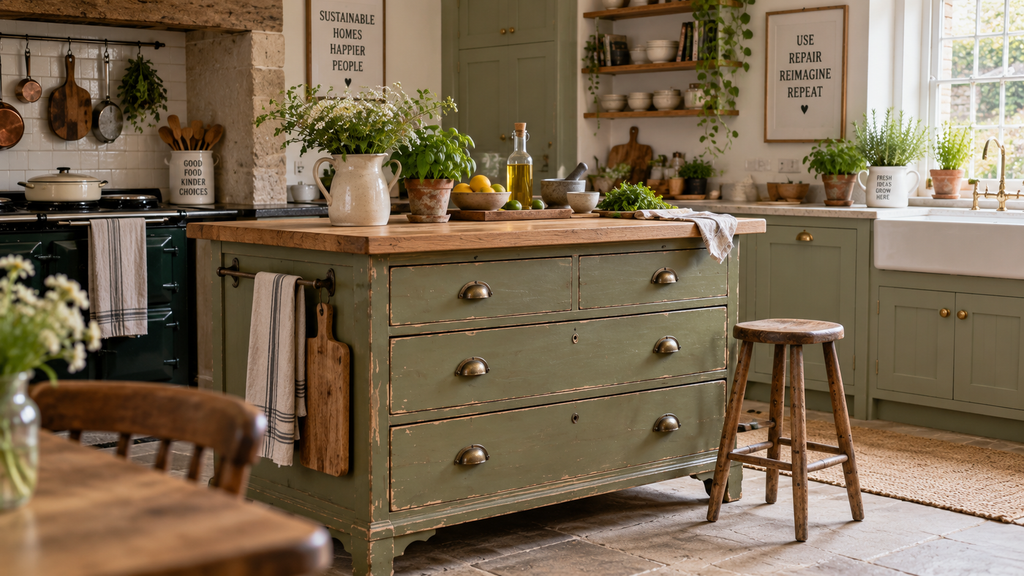
Dressers are some of the most versatile pieces to upcycle, because the bones are usually solid even when the finish isn’t:
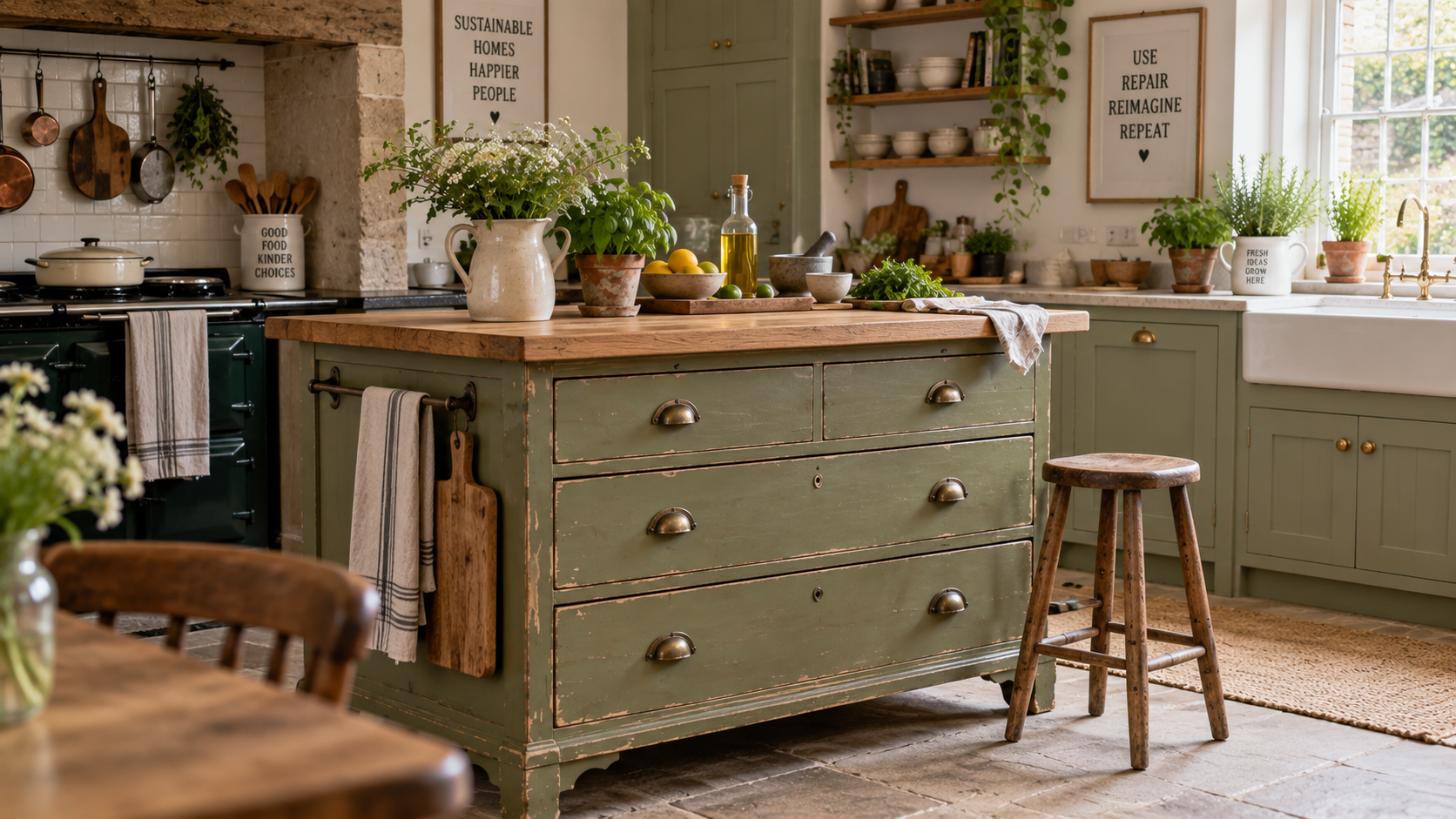
- Kitchen islands — add a butcher-block or reclaimed-wood countertop to a sturdy dresser for a one-off island with proper storage underneath.
- Bathroom vanities — swap the top drawer for a sink cut-out and you’ve got a characterful vanity unit that costs a fraction of a fitted one.
- Bookshelves — remove the drawers, paint the frame, and you’ve got an open bookshelf with more presence than anything from a flat-pack catalogue.
Revamping Old Doors
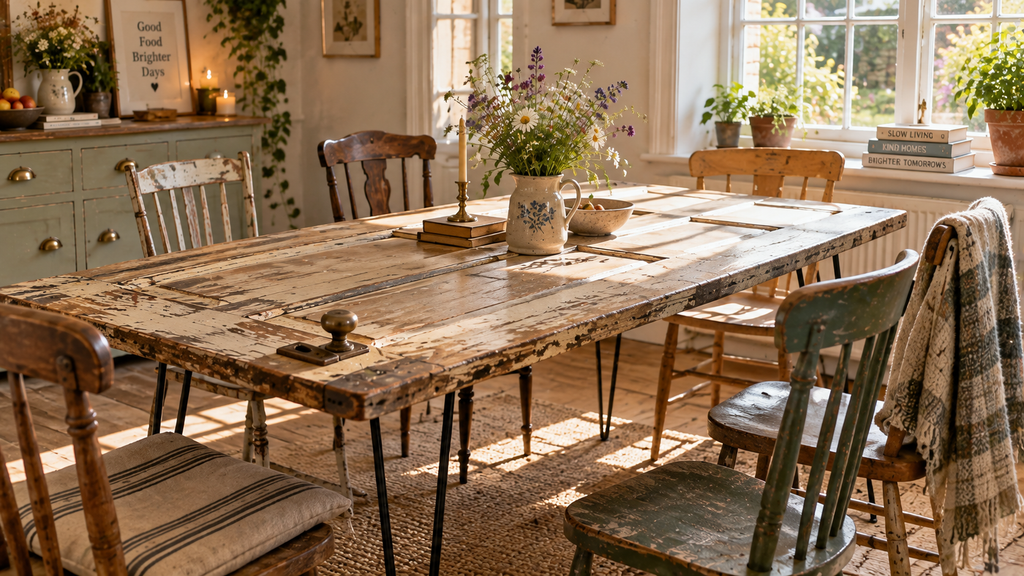
Doors are one of the most overlooked upcycling materials, and one of the most rewarding:
- Tables — lay a door flat on sawhorses or simple hairpin legs for an instant rustic dining table or desk.
- Headboards — a panelled or painted door makes a genuinely striking headboard, especially if it’s got its original hardware.
- Room dividers — two or three doors hinged together create a functional, good-looking room divider for open-plan spaces.
Reinventing Wooden Crates
Wooden crates are cheap, sturdy, and endlessly stackable:
- Storage units — stack and secure crates to form open shelving or boot-room storage.
- Seating — add a cushion on top of a sturdy crate for instant extra seating when you have people over.
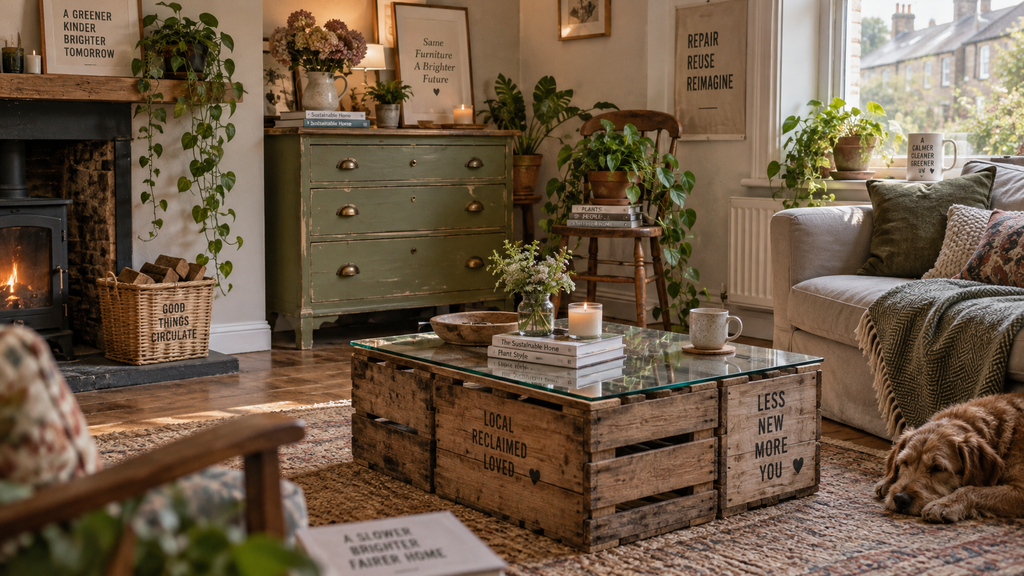
- Coffee tables — arrange four crates in a square, secure them together, and top with glass for a coffee table with real storage underneath.
Reusing Old Windows
Old windows add character that’s genuinely hard to buy:
- Wall art — clean and paint the frames, then use the panes as picture frames or display cases.
- Mirrors — replace the glass with mirrors for a vintage-feeling statement mirror.
- Mini greenhouses — a few old windows, hinged together, make a small cold frame or greenhouse for seed starting.
Crafting With Pallets
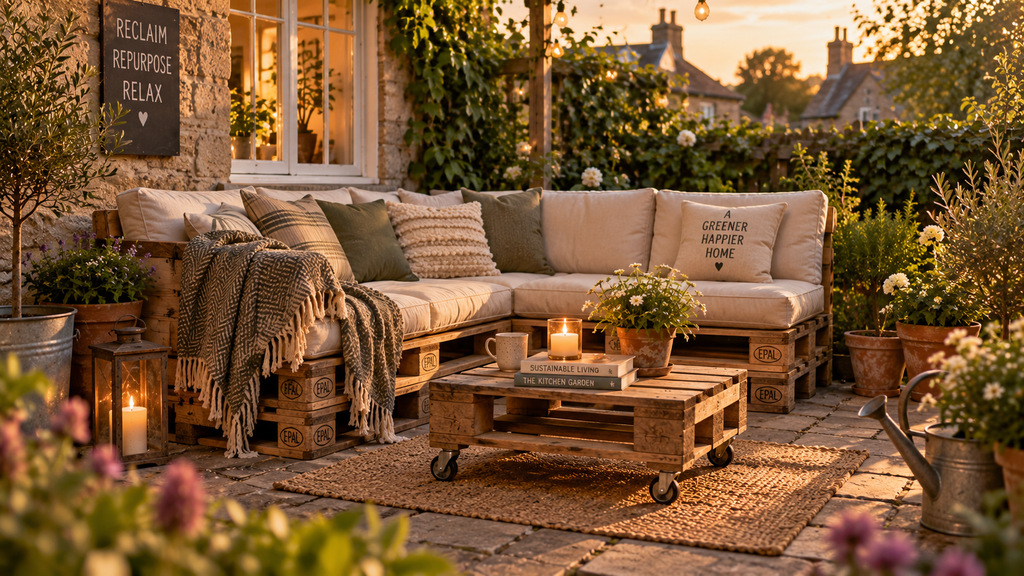
Pallets are the classic beginner upcycling project for good reason — cheap, plentiful, and forgiving:
- Outdoor furniture — build sofas, chairs and low tables for the garden or patio.
- Bed frames — sanded and painted, pallets make a sturdy, surprisingly stylish base.
- Vertical gardens — fix pallets to a wall, add planters, and you’ve got a vertical growing space that’s ideal for a small courtyard.
Updating Lamps and Light Fixtures
Small changes here make an outsized difference:
- Paint and fabric — a fresh coat of paint and a new lampshade makes an old lamp look brand new.
- Mason jar lights — mason jars strung with fairy lights or wired as pendants make a lovely rustic fitting.
- Industrial style — old pipes and fittings repurposed as light fixtures suit exposed-brick and loft-style rooms particularly well.
When you’re repainting or varnishing any of these, it’s worth being deliberate about what you’re using — a lot of standard varnishes and spray paints are worse for indoor air quality than people realise. I’ve written more about that in the non-toxic paint choices in the Non-Toxic Home Guide: Room-by-Room Swaps for UK Households, which covers what to look for on the label.
Creating Unique Decor Items
The smallest upcycles are often the most satisfying:
- Wine cork boards — glue wine corks together for a custom bulletin board or trivet.
- Jar storage — paint and label old jars for stylish kitchen or bathroom storage. If you’re already into batch cooking, this ties in nicely with preserving the harvest
- Tyre ottomans — cover an old tyre with rope or fabric for a durable, genuinely unique footstool.
Where to Find Furniture Worth Upcycling in the UK
A few of my go-to sources, roughly in order of how often I check them:
- Facebook Marketplace and Gumtree — free and low-cost “collection only” listings are gold for anyone willing to hire a van for an afternoon.
- Charity shops — British Heart Foundation and local hospice shops often have solid secondhand furniture at low prices.
- Freecycle and Olio — genuinely free items, often from people who just want the space back.
- Skips — always ask the skip’s owner before taking anything; it’s polite, and in some cases it matters legally.
Safety Notes Before You Start
A few practical things worth knowing before you dive in:
- Check older painted furniture for lead paint before sanding, particularly on pieces that look pre-1990s.
- Ventilate properly when using varnish, wood stain or spray paint indoors.
- Wear a mask when sanding old finishes — you don’t know what’s underneath the top coat.
Give Your Home a Story, Not Just a Look
Upcycling old furniture is one of the simplest ways to cut waste and put your own stamp on a room at the same time. None of it requires special skills to start — a tin of paint, a bit of patience, and a willingness to see a wobbly old chair as a planter rather than a problem is genuinely most of it.
In short: the best upcycling project is usually the piece you already own — look at what’s heading for the tip before you look at what’s for sale.
Next time you’re about to bin something, pause for five minutes and think about what it could become instead. You might be surprised.