How to Start a Zero-Waste Kitchen in the UK (Without the Guilt or the Mason Jars)
As an Amazon Associate I earn from qualifying purchases and sometimes recommend products from other sellers at no extra cost you. For more details see my disclosure policy and privacy policy.
I used to think a “zero-waste kitchen” meant fitting a year’s rubbish into a jam jar. It doesn’t — and chasing that version of it is the fastest way to give up in month two. What actually works is a handful of durable habits, built up one at a time, in a normal British kitchen with a normal British food shop.
Here’s what’s genuinely moved the needle in ours, and what I’d skip.
Start with an honest audit, not a guilt trip
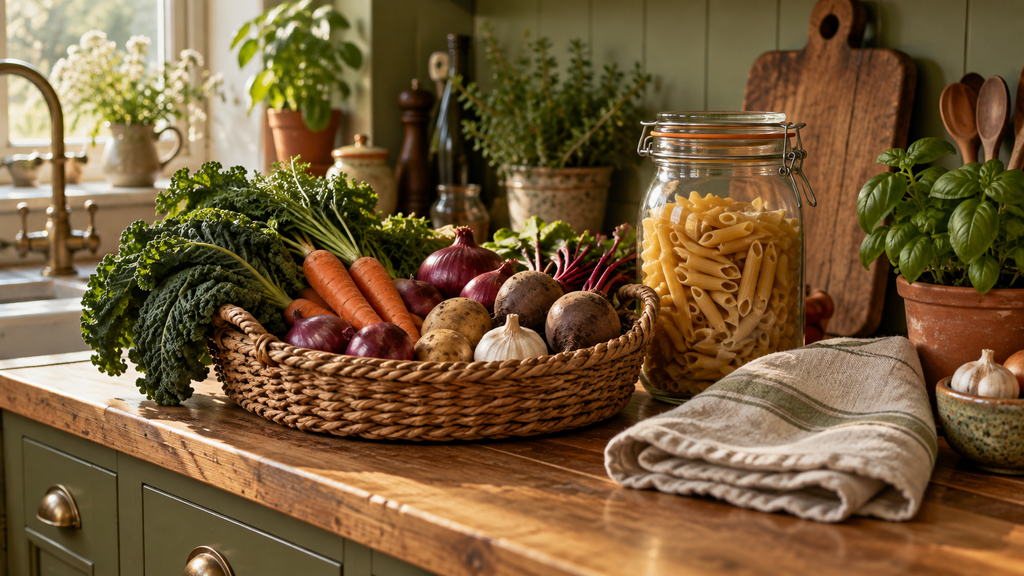
Before you buy a single reusable anything, spend a week just noticing. Keep a bowl or bin bag by the counter and don’t sort it — just watch what actually piles up: food packaging, veg peelings, the odd bit of cling film. For most UK households it’s the same three culprits: soft plastic packaging, food scraps, and single-use kitchen roll. Once you can see the pattern, you know exactly which swap to make first instead of buying ten products you don’t need.
Buy loose, buy bigger, buy less often
Bulk buying gets talked about like it needs a zero-waste shop on your doorstep. It doesn’t. Most UK supermarkets now sell loose fruit and veg, and chains like Waitrose and some independent health food shops have refill stations for pasta, grains, pulses and cleaning liquids. Bring your own containers or paper bags. For everything else, buying the largest pack size you’ll actually use before it goes off cuts packaging per portion without changing your shop much at all.
Free download
Get the Non‑Toxic Home Audit Checklist
A room‑by‑room checklist to help you spot what’s worth swapping in your home — and what’s not worth worrying about. Join the fortnightly newsletter and it’s yours.
No spam, unsubscribe any time.
Get composting working for your setup — not someone else’s
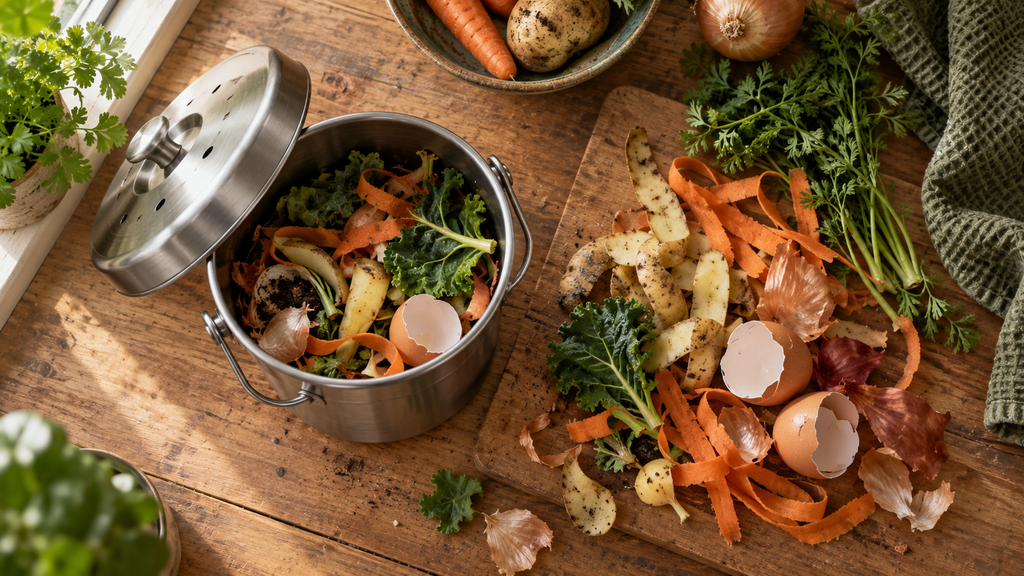
Food scraps rotting in landfill produce methane, which is why composting is one of the highest-impact swaps on this list. You don’t need a garden. Most UK councils now collect food waste separately (check your local authority’s bin schedule), and if yours doesn’t, a small countertop caddy with compostable liners bridges the gap. Got a garden, however small? worm composting is easier than it sounds and turns scraps into free plant feed.
Swap the big single-use culprits first
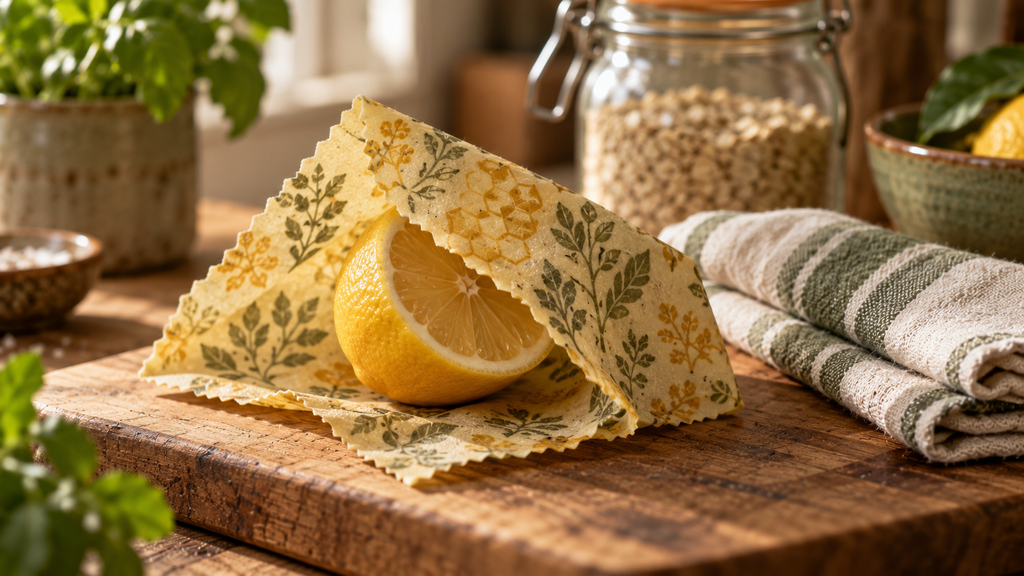
Kitchen roll, cling film and disposable cutlery are the easiest wins because the alternatives are genuinely as good, not just “more sustainable but worse.” Washable cloths instead of kitchen roll. Beeswax wraps or a silicone lid instead of cling film. A cutlery roll in your bag instead of buying plastic forks with a meal deal. Choosing safer, plastic-free food storage for the fridge and freezer solves the cling film problem for good, and it’s one swap, done once.
Store food properly and you’ll waste less of it
This is the swap nobody talks about, but it’s the one that saves the most money. Carrots and celery kept in a jar of water in the fridge stay crisp for weeks instead of going rubbery in three days. Bread freezes brilliantly if you slice it first. Herbs last twice as long stood in a glass of water on the windowsill rather than wilting in the salad drawer. None of this needs new kit — it just needs five minutes of habit.
Make a few staples yourself
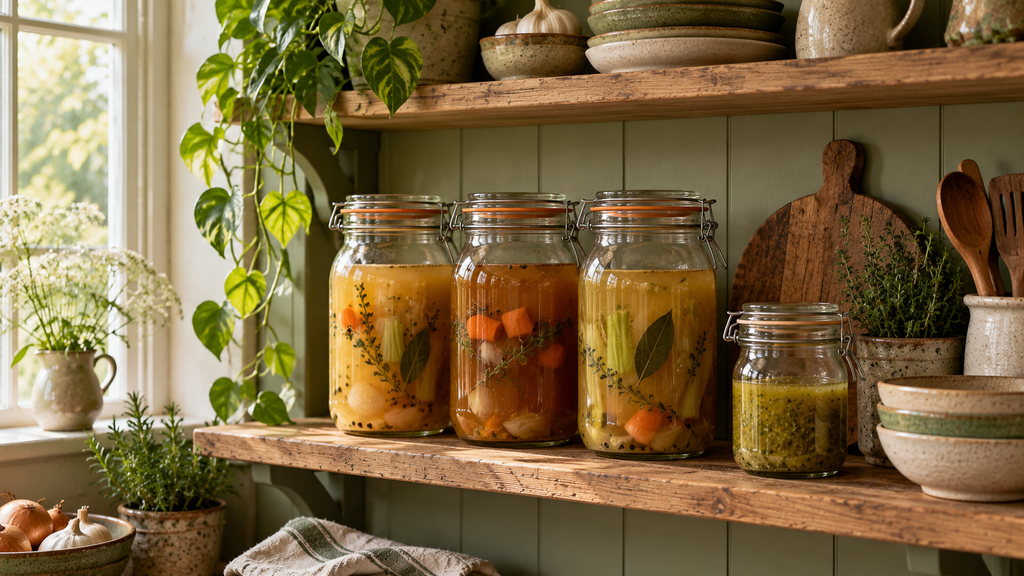
You don’t need to bake your own bread to reduce packaging waste (though it helps). Simple swaps like mixing your own natural cleaning spray from white vinegar, water and a few drops of essential oil replace a whole shelf of plastic bottles for pennies. Homemade stock from vegetable peelings, a basic yoghurt starter, or a jar of your own salad dressing all chip away at packaging without adding much time to your week.
Choose tools that last, not tools that look sustainable
When something in the kitchen actually needs replacing, that’s the moment to choose well — not before. Bamboo, stainless steel and cast iron all outlast plastic equivalents by years, and switching to non-toxic cookware means you’re solving two problems (plastic waste and questionable non-stick coatings) with one purchase. Energy-efficient appliances are worth the same “replace, don’t retrofit” approach.
Shop local where it’s easy to
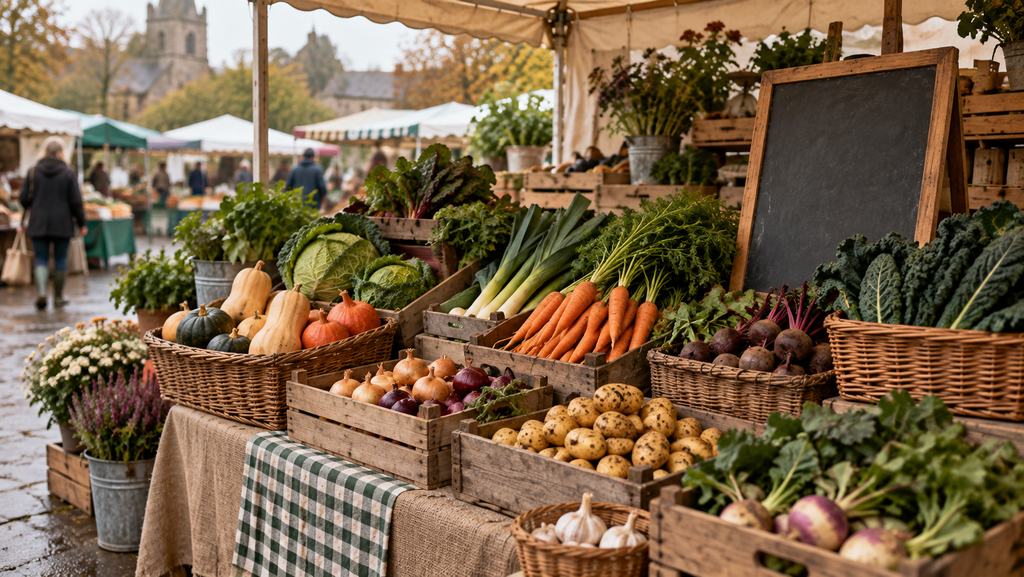
You don’t need to overhaul your weekly shop to support it. A monthly trip to a farmers’ market, a veg box from a local grower, or simply choosing UK-grown produce over air-freighted imports when the option’s sitting right next to it on the shelf — small, repeatable choices beat one dramatic lifestyle change that doesn’t stick.
Progress over perfection
None of this needs to happen at once, and it definitely doesn’t need to be perfect. Pick one swap from this list, make it a habit for a month, then pick the next one. That’s genuinely how our kitchen got here — not a single dramatic overhaul, just a year of small, unglamorous choices that added up. If you want the fuller picture of what a realistic, judgement-free version of this looks like across the rest of the house, our room-by-room non-toxic home audit is the natural next stop.