Sustainable Area Rugs: A UK Guide to Eco-Friendly Flooring That Doesn’t Cost the Earth
As an Amazon Associate I earn from qualifying purchases and sometimes recommend products from other sellers at no extra cost you. For more details see my disclosure policy and privacy policy.
Area rugs are one of the easiest ways to bring warmth, colour and comfort into a room — and they don’t have to come at the planet’s expense. The rug industry has a genuine waste problem, but a growing range of natural-fibre options means you can make a real difference without compromising on style or budget.
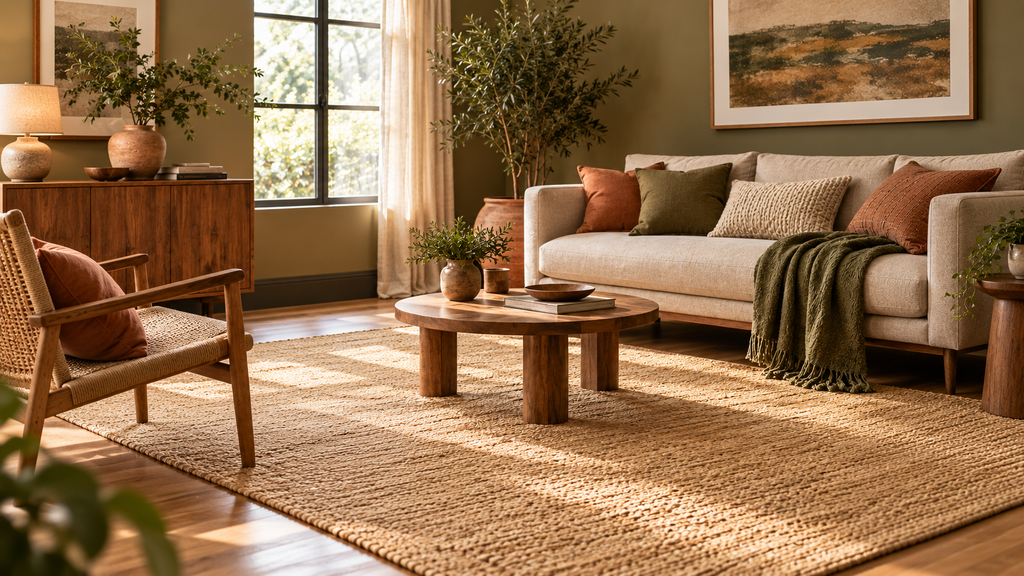
In this guide, I’ll walk through what actually makes a rug sustainable, why disposal is such a headache for conventional carpets, and which natural materials are worth your money — from budget-friendly cotton to hard-wearing jute.
The Non-Toxic Home Guide: Room-by-Room Swaps for UK Households
What Actually Makes a Rug Sustainable?
A genuinely sustainable rug isn’t just about the material — it’s about the whole supply chain. Look for:
Free download
Get the Non‑Toxic Home Audit Checklist
A room‑by‑room checklist to help you spot what’s worth swapping in your home — and what’s not worth worrying about. Join the fortnightly newsletter and it’s yours.
No spam, unsubscribe any time.
- Renewable or recycled raw materials rather than virgin synthetics
- Low-energy, low-waste production processes
- No forced or child labour, verified where possible through certification (look for GoodWeave or Fair Trade marks on rugs sold in the UK)
- Safe working conditions and fair treatment of the communities producing them
If a retailer can’t tell you where or how a rug was made, that’s usually a sign it wasn’t made with any of this in mind.
Why Rugs Are a Disposal Nightmare
Carpets and rugs are notoriously difficult to deal with at end of life. Mixed fibres, backing glues and chemical treatments mean most conventional rugs can’t be recycled through standard UK kerbside schemes, and their bulk makes them awkward for general waste collection too.
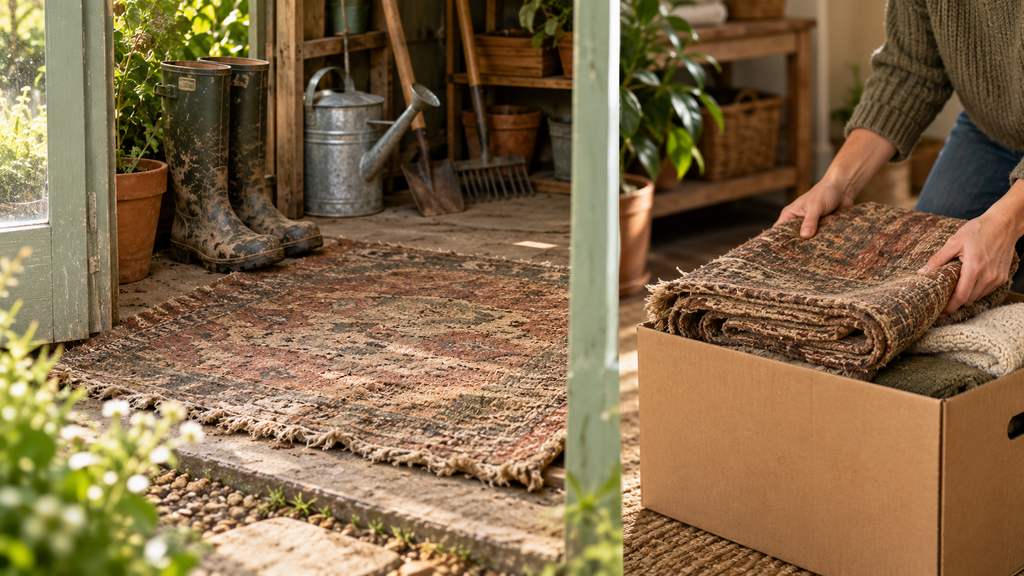
Before binning a rug, it’s worth checking:
- Local furniture reuse schemes or charity shops (many accept rugs in good condition)
- Freecycle or Facebook Marketplace for a second life elsewhere
- Repurposing options — cutting a worn rug down for a doormat, stair runner, or garden shed flooring
Eco-Friendly Rug Materials Worth Choosing
Natural fibres are, on the whole, the safer and lower-impact choice — both for the environment and for air quality inside your home. Here’s what to look for.
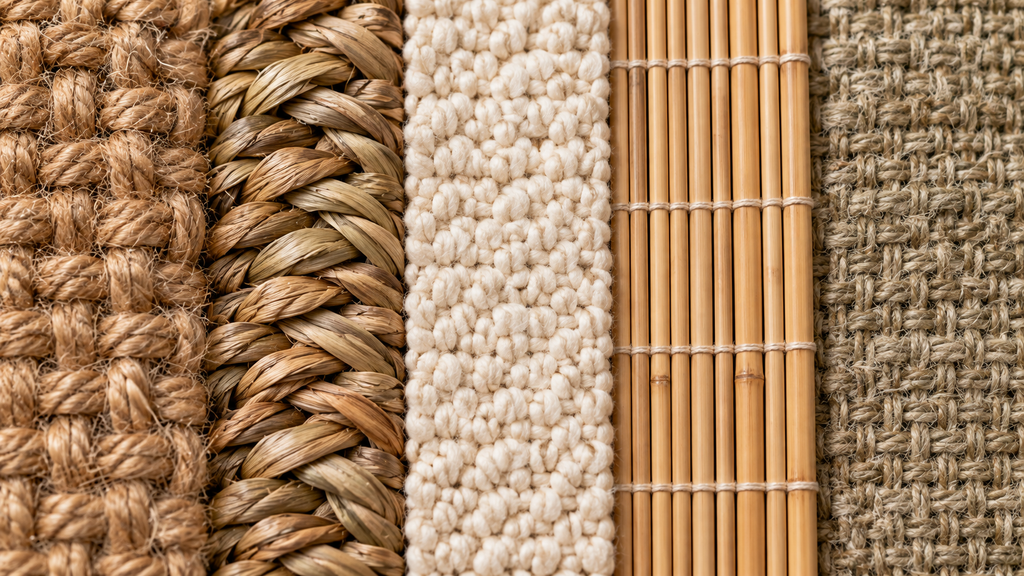
Jute
Jute is fully natural, renewable, and biodegradable at the end of its life. It suits kitchens, dining rooms, bedrooms and hallways, and brings a Scandinavian-leaning, understated look to a space. It’s low-maintenance and breathable underfoot, though it’s worth noting jute can wear faster in very high-moisture areas like bathrooms.
Seagrass
Seagrass rugs are hard-wearing, naturally resistant to dirt and allergens, and among the more affordable natural-fibre options available in the UK. They’re a solid pick for busy households or anyone redecorating on a budget who still wants a durable, low-impact floor covering.
100% Cotton
Cotton rugs are budget-friendly, machine-washable in many cases, and often reversible — genuinely useful for high-traffic hallways or kids’ rooms. Look specifically for organic or recycled cotton rather than conventional cotton, since conventional cotton farming is water- and pesticide-intensive.
Bamboo
Bamboo rugs offer good sound insulation, moisture resistance and a naturally non-slip texture. Because bamboo regulates temperature well, these rugs work year-round — cooling underfoot in summer, insulating in winter.
Hemp
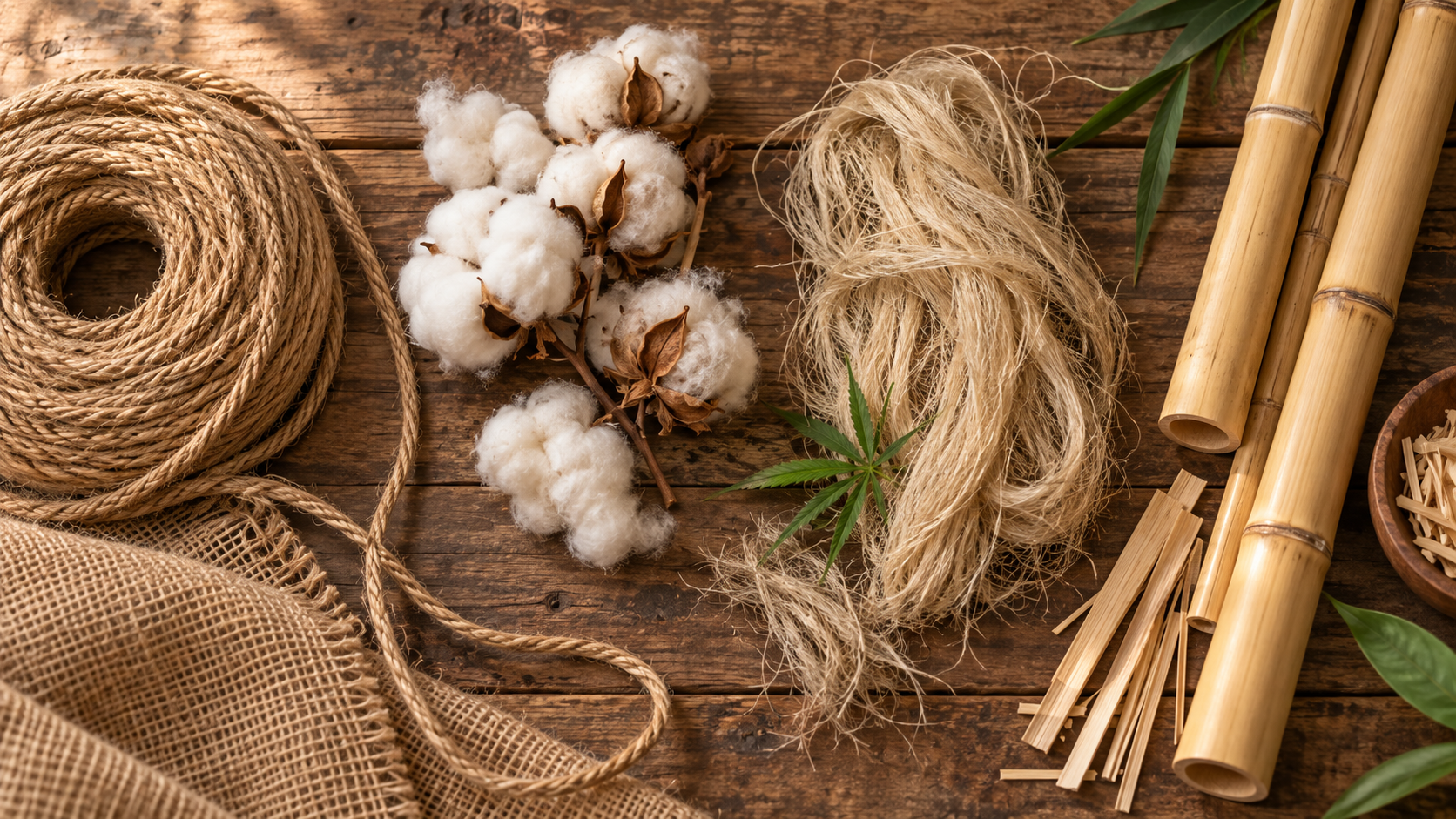
Hemp is one of the fastest-growing, lowest-input natural fibres available, needing minimal water or pesticides to cultivate. Hemp rugs (sometimes blended with leather or jute) tend to be heavyweight and genuinely built to last, making them a good long-term investment for hallways and other high-traffic spots.
The Bottom Line
You don’t need to choose between style and sustainability. Jute, seagrass, cotton, bamboo and hemp rugs all offer genuine environmental advantages — lower embodied energy, biodegradability, and often better indoor air quality than synthetic alternatives — while still looking good and standing up to daily life.
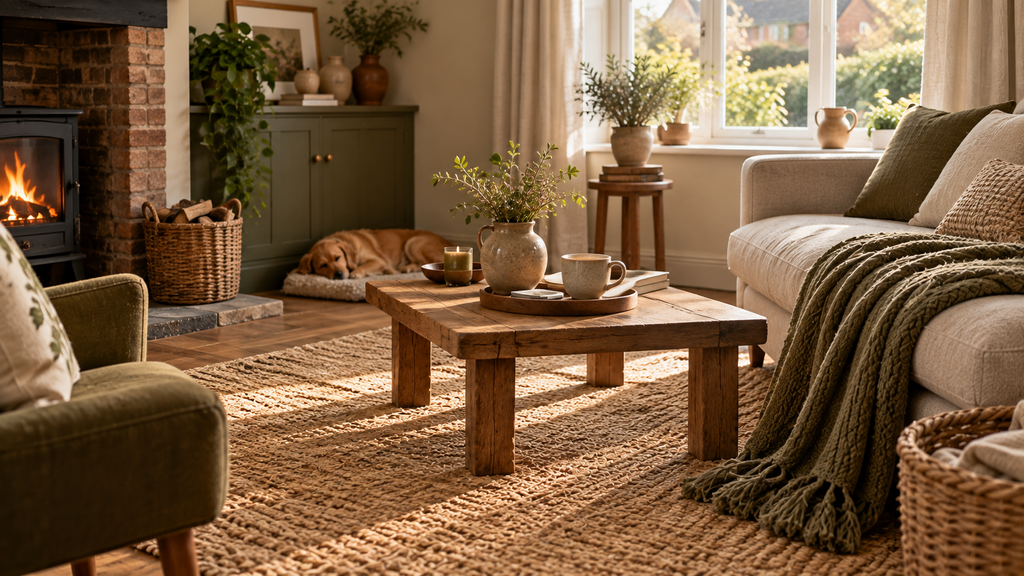
Start with one room, choose a natural fibre that suits how the space is actually used, and treat it as one small swap in a bigger shift toward a lower-impact home.