Non-Toxic Laundry Detergent: What Actually Works (A UK Test)
As an Amazon Associate I earn from qualifying purchases and sometimes recommend products from other sellers at no extra cost you. For more details see my disclosure policy and privacy policy.
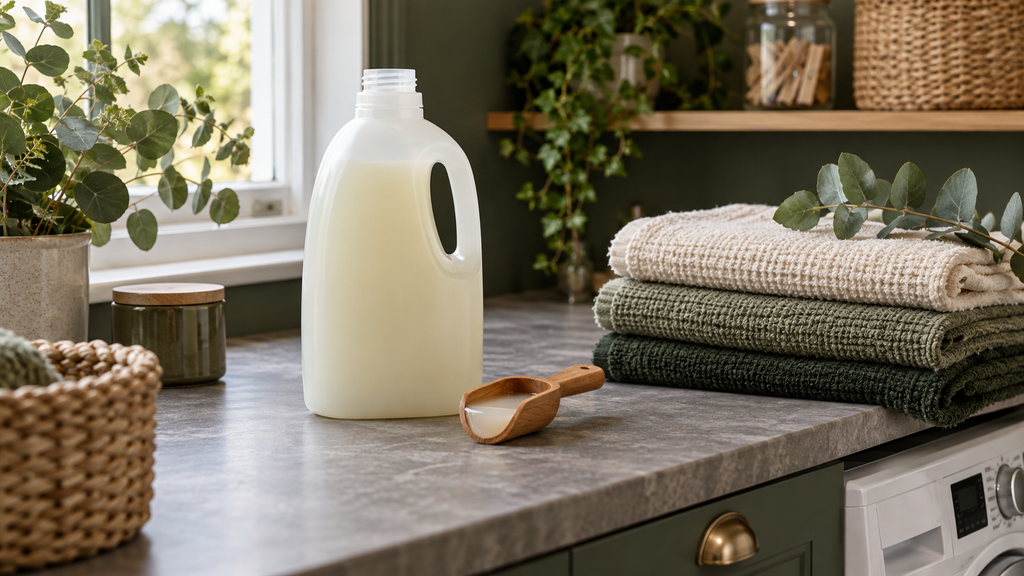
A few months ago I went through our airing cupboard and counted six half-used bottles of laundry stuff — detergent, softener, a stain spray, dryer sheets, the lot. None of them listed what was actually in them. That’s what sent me down this rabbit hole, and it’s why this isn’t a “10 eco swaps” listicle. I tried four non-toxic laundry detergents over three months in a normal UK household — two adults, one small child, a dog that rolls in everything — and this is what actually held up.
What’s actually wrong with conventional detergent
Most mainstream UK detergents rely on synthetic fragrance carriers, optical brighteners, and surfactants that don’t break down easily in UK waterways. The fragrance is usually the biggest issue: “parfum” on a label can legally hide dozens of undisclosed synthetic compounds, some of which are known skin sensitisers. None of this makes conventional detergent dangerous to have in the house — but it does mean the label tells you almost nothing about what’s actually in the bottle.
The short version: if you can’t tell what a “fragrance” is made of, you can’t judge whether it’s worth avoiding.
Non-Toxic Home Audit Checklist
Free download
Get the Non‑Toxic Home Audit Checklist
A room‑by‑room checklist to help you spot what’s worth swapping in your home — and what’s not worth worrying about. Join the fortnightly newsletter and it’s yours.
No spam, unsubscribe any time.
What “non-toxic” should actually mean on a label
Before I tested anything, I set myself three non-negotiables:
- Plant- or mineral-derived surfactants, not petrochemical-derived ones
- No synthetic musks or undisclosed “parfum” blends
- Full ingredient disclosure on the website, not just the bottle
This ruled out a surprising number of “eco” branded products — which is worth knowing before you shop, since a green leaf on the packaging isn’t a legal guarantee of anything.
The detergents I actually tested
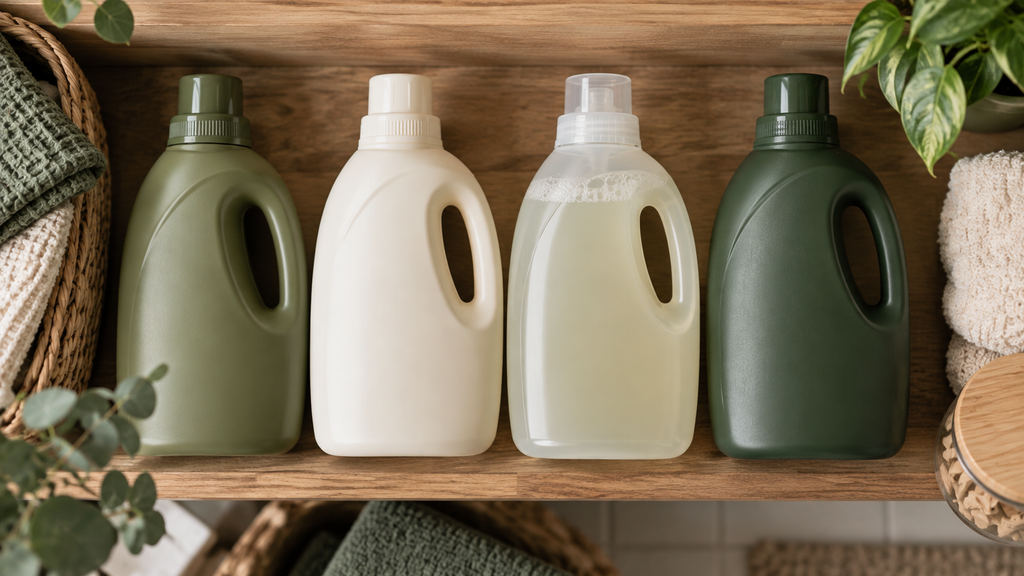
I won’t pretend every one of these was a home run.
Bio-D Non-Bio Laundry Liquid was the most consistent performer on everyday washing — no scent, no residue, and it didn’t irritate my son’s skin, which was the actual reason we started this experiment. Smol pods were the easiest to use day-to-day and worked well on my partner’s work shirts, though they cost more per wash than the others. Faith in Nature smelled the nicest but struggled on ground-in mud from the dog. A homemade soap nut and bicarbonate mix was the cheapest by far, and fine for light loads, but not something I’d trust on anything that actually needed cleaning.
If you’re starting from scratch and want one thing to try first, Bio-D was the one that earned a permanent spot under our sink.
Dryer sheets and fabric softener: what to use instead
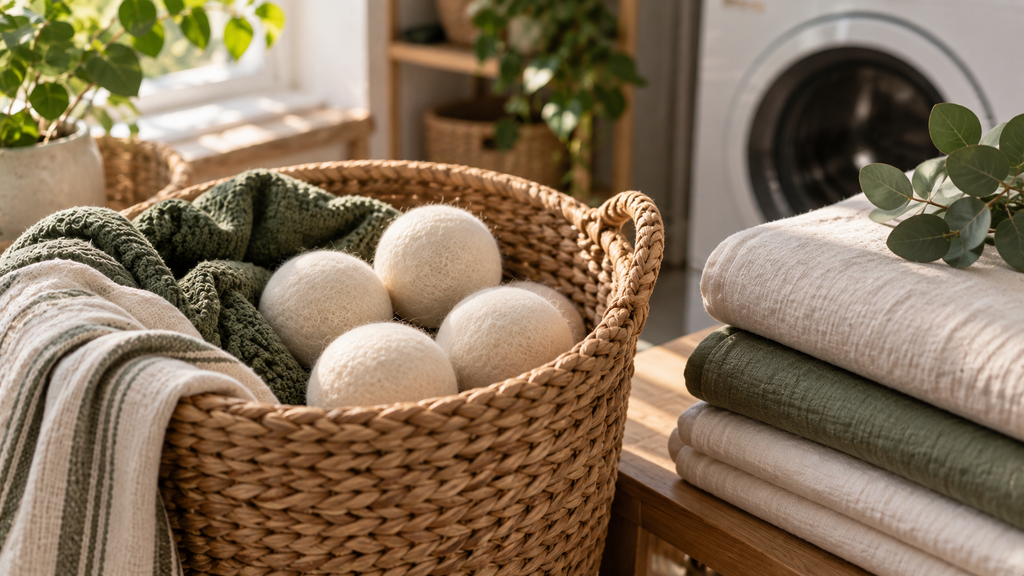
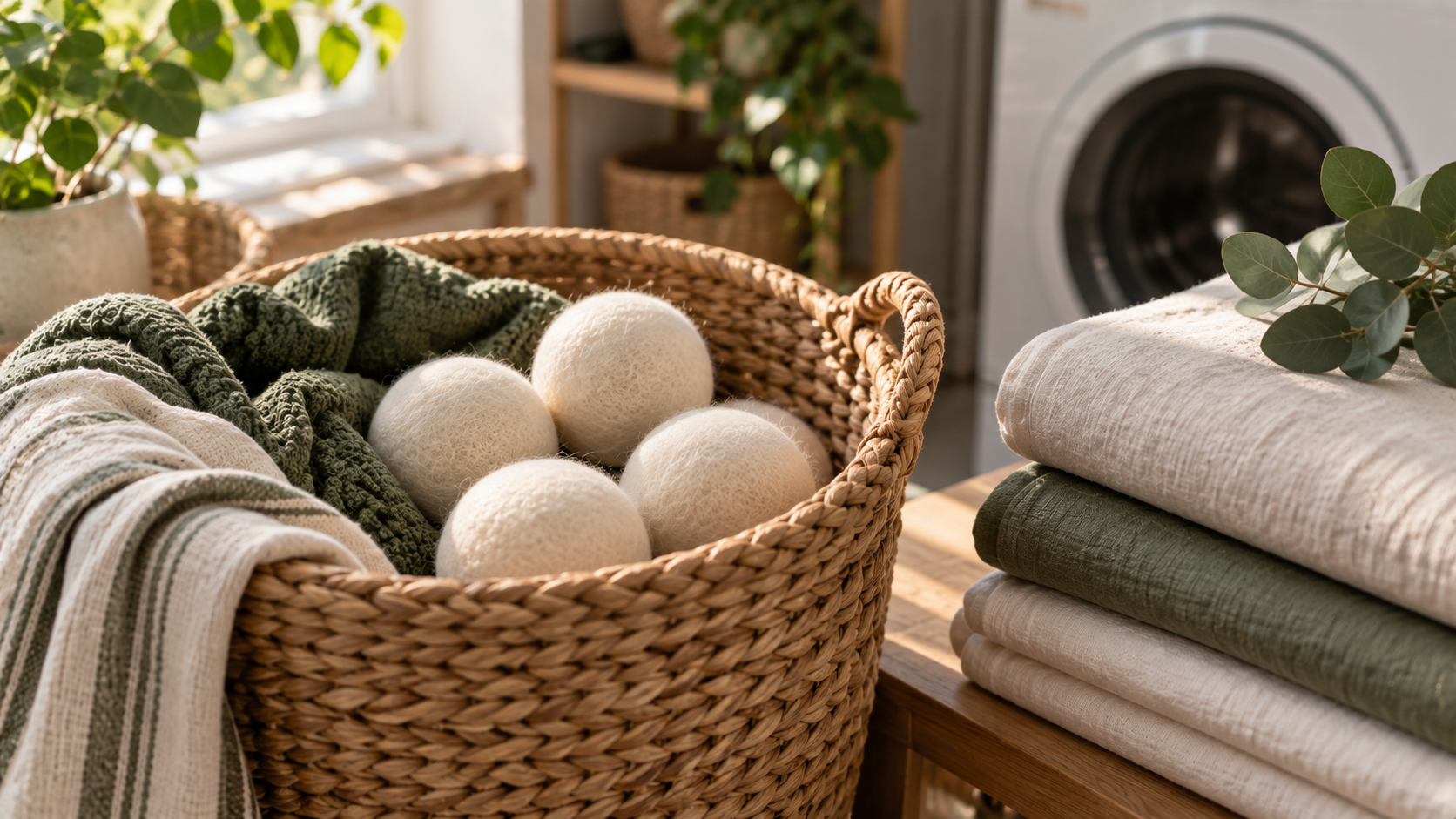
Dryer sheets are one of the easiest swaps to make, because the alternative is genuinely better, not just “greener.” Wool dryer balls cut drying time, reduce static, and last for hundreds of washes — a set of three has paid for itself several times over in our house. For softness without synthetic fragrance, a splash of white vinegar in the softener drawer does the job; it doesn’t leave clothes smelling of vinegar once dry, despite what you’d expect.
Does this actually cost more?
Not necessarily, and this matters more than the eco framing. Per wash, Bio-D and the soap nut mix worked out cheaper than the branded conventional detergent we’d been using. Smol and Faith in Nature cost slightly more per wash, but less than premium “sensitive skin” ranges from the supermarket. If budget is the deciding factor, start with the cheapest swap — wool dryer balls — before committing to a new detergent brand.
A simple non-toxic laundry routine to start with
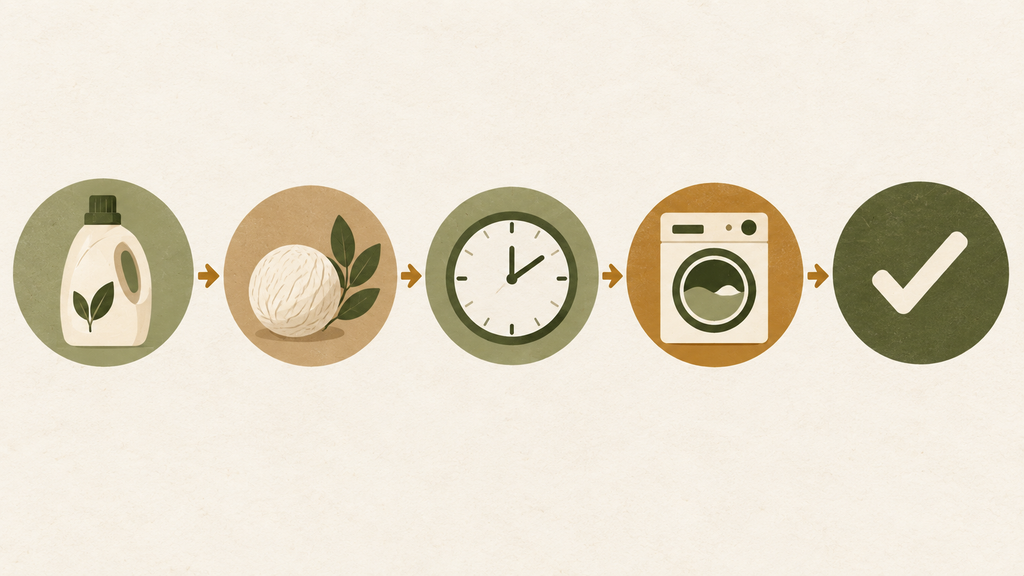
- Swap dryer sheets for wool dryer balls — the single cheapest, easiest change
- Try one detergent for a full month before switching, so you actually notice the difference
- Check the brand’s own website for a full ingredients list, not just the bottle
- Keep one small bottle of your old detergent for genuinely stubborn stains — this doesn’t need to be all-or-nothing
The one thing worth remembering: a laundry swap only counts as “non-toxic” if the brand tells you what’s actually in it — everything else is marketing.
If you’ve already started working through the rest of your household, this ties directly into our non-toxic home audit checklist and our DIY natural cleaning recipes that cover the rest of the house room by room. And if label confusion is a running theme for you (it was for us), our guide to reading cleaning product labels is worth reading alongside this one.