The Best Eco-Friendly Travel Mugs for a Plastic-Free Coffee Run (UK Guide)
As an Amazon Associate I earn from qualifying purchases and sometimes recommend products from other sellers at no extra cost you. For more details see my disclosure policy and privacy policy.
I gave up disposable coffee cups properly about two years ago, and if I’m honest, the hardest part wasn’t the habit — it was choosing a travel mug that actually stuck. I went through a leaky bamboo one, a stainless steel one that tasted faintly metallic for months, and a glass one that terrified me on the school run before I found the combination that finally worked for our house.
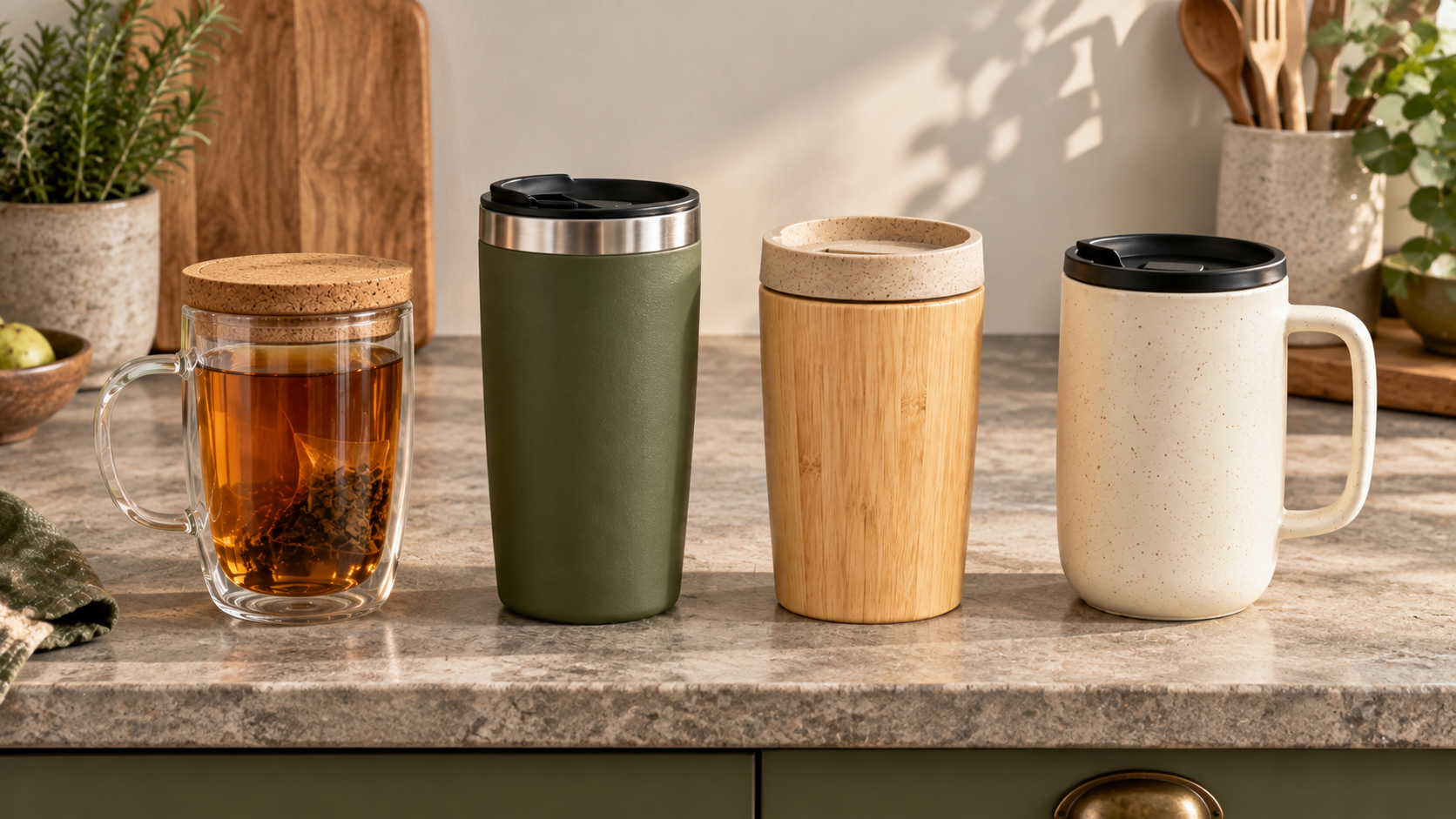
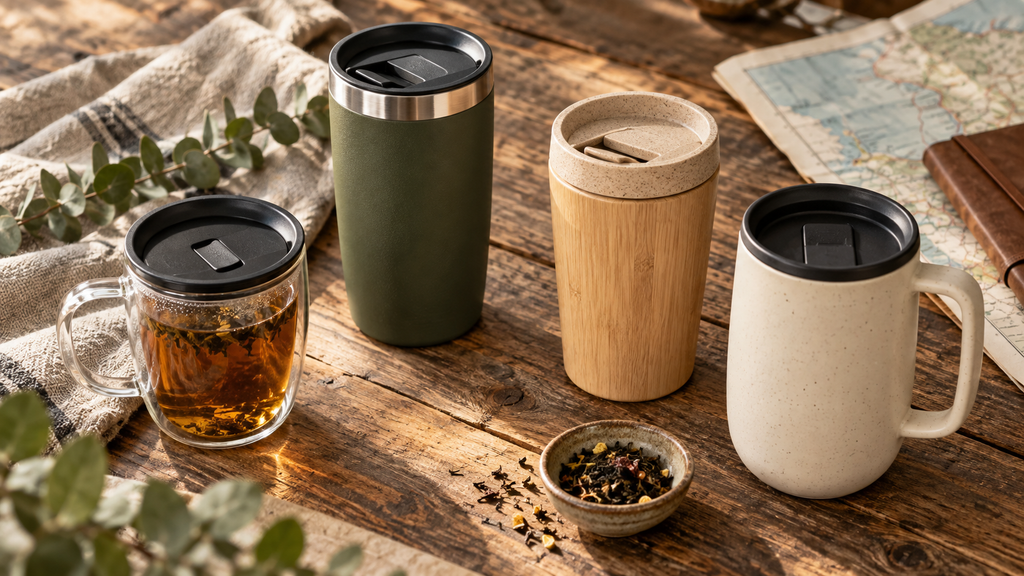
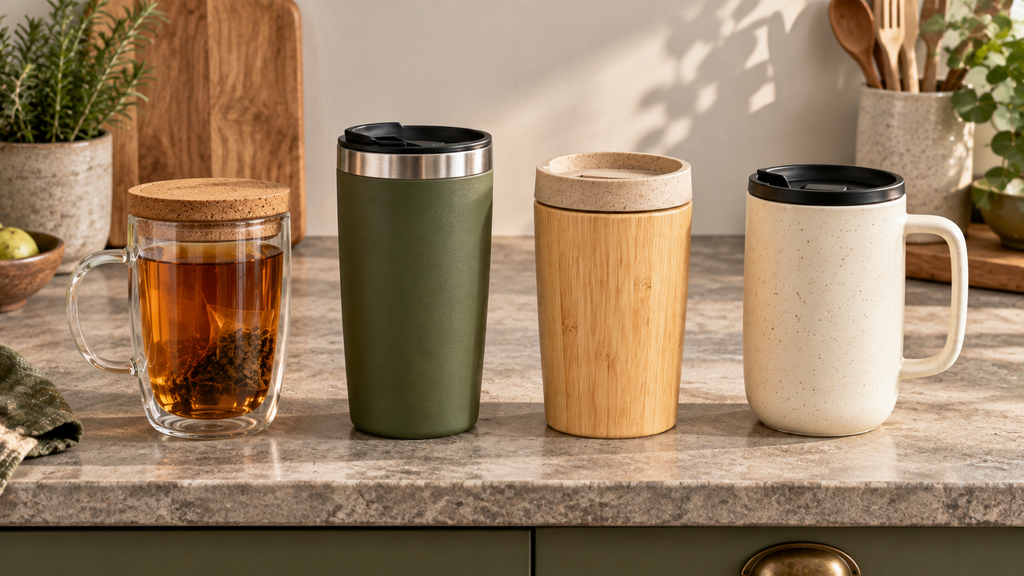
If you’re standing in the same spot, here’s what I’ve learned about the four main eco-friendly travel mug materials, what each one is genuinely good at, and how to pick one you won’t abandon in a drawer by March.
Why bother switching at all? A reusable travel mug replaces hundreds of single-use cups a year — most of which are lined with plastic and can’t be recycled through standard kerbside collection. It’s one of the simplest, cheapest swaps in a non-toxic, lower-waste kitchen.
Glass travel mugs: the most sustainable option
Glass travel mugs are as close to a “no compromises” material as this category gets. It’s 100% recyclable, it won’t leach anything into your drink, and — thanks to double-wall insulation on most modern designs — it keeps a coffee hot or an iced drink cold for hours. Reusable coffee cup and mug options worth comparing before you buy include shatter-resistant sleeved designs, which solve the one real worry people have about carrying glass around.
Free download
Get the Non‑Toxic Home Audit Checklist
A room‑by‑room checklist to help you spot what’s worth swapping in your home — and what’s not worth worrying about. Join the fortnightly newsletter and it’s yours.
No spam, unsubscribe any time.

Best for: home-to-office commuters, desk drinkers, anyone who wants zero taste transfer.
Stainless steel travel mugs: built to last
Steel mugs are the workhorse option — lightweight, genuinely durable, and easy to find in leak-proof, spill-proof designs with a proper seal. It’s the one I’d recommend without hesitation to anyone doing a commute, a school run, or a hike, because it’s the hardest of the four to break. If you’re also rethinking plastic-free food storage for lunches, steel containers from the same family of brands are usually a natural next step.
Best for: daily commuters, hikers, anyone who’s cracked a mug before and doesn’t want to again.
Plant based travel mugs: lightweight and biodegradable
Plant fibre mugs are the lightest option on this list and genuinely biodegradable at end of life, which matters if you’re trying to reduce what eventually ends up in landfill even from the “sustainable” purchases. They come in a huge range of colours and finishes, so they tend to be the ones people actually enjoy using rather than just tolerate.
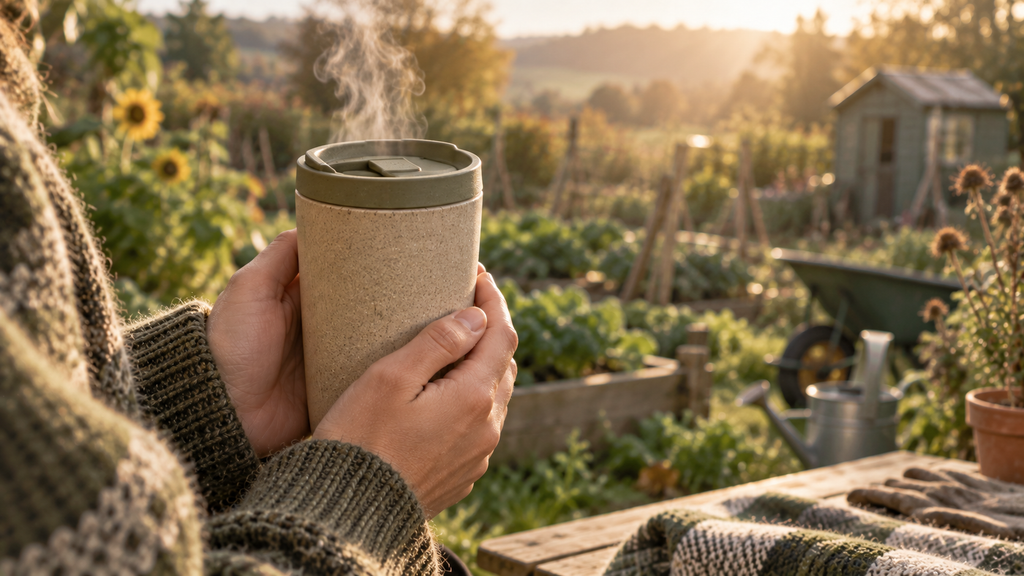
Best for: casual, everyday use where weight and looks matter more than heat retention.
Ceramic travel mugs: stylish and practical
Double-walled ceramic mugs sit somewhere between a “proper” mug and a travel one — they hold heat well, they’re dishwasher and microwave safe in most cases, and they feel less like a compromise if you’re precious about how your coffee actually tastes. They’re a good one to pair with DIY natural cleaning recipes if you want to keep them properly spotless without reaching for anything synthetic.
Best for: home workers, slow mornings, anyone who cares as much about the ritual as the recyclability.
Other eco-friendly materials worth knowing about
If none of the above quite fit your budget, there’s a growing range of mugs made from recycled plastics (often reclaimed bottles), eucalyptus fibre, coffee grounds, and rice husks. They’re a reasonable stepping stone — better than single-use, even if they’re not the top-tier choice — and worth knowing about if cost is the main barrier to switching at all.
How to choose the right one for you
Don’t overthink this one. Match the mug to how you’ll actually use it:
- Commuting or travelling daily → stainless steel
- Working from a desk or home → glass or ceramic
- Hiking, cycling, or anything active → stainless steel or bamboo
- Budget is the deciding factor → recycled plastic or eucalyptus fibre
The bottom line
The most sustainable travel mug isn’t the “best” one on paper — it’s the one you’ll actually carry every day instead of grabbing a disposable cup. Pick the material that matches your routine, not the one that looks best on a shelf, and it’ll last years rather than weeks.
You might also like: Non-toxic cookware UK: what to look for and what to avoid and Safer food storage: moving away from plastic.