Reading Beauty Product Labels: The Ingredients to Avoid in 2026
As an Amazon Associate I earn from qualifying purchases and sometimes recommend products from other sellers at no extra cost you. For more details see my disclosure policy and privacy policy.
By Nikki Piggott · May 2026 · 12 min read
I used to assume that if a product was sold in a UK supermarket or pharmacy, someone had already checked it was safe. I’m not sure exactly when that assumption crumbled — somewhere between reading about endocrine disruptors in my daughter’s baby shampoo and spending an embarrassing amount of time in a Boots aisle photographing ingredient lists — but it did crumble.
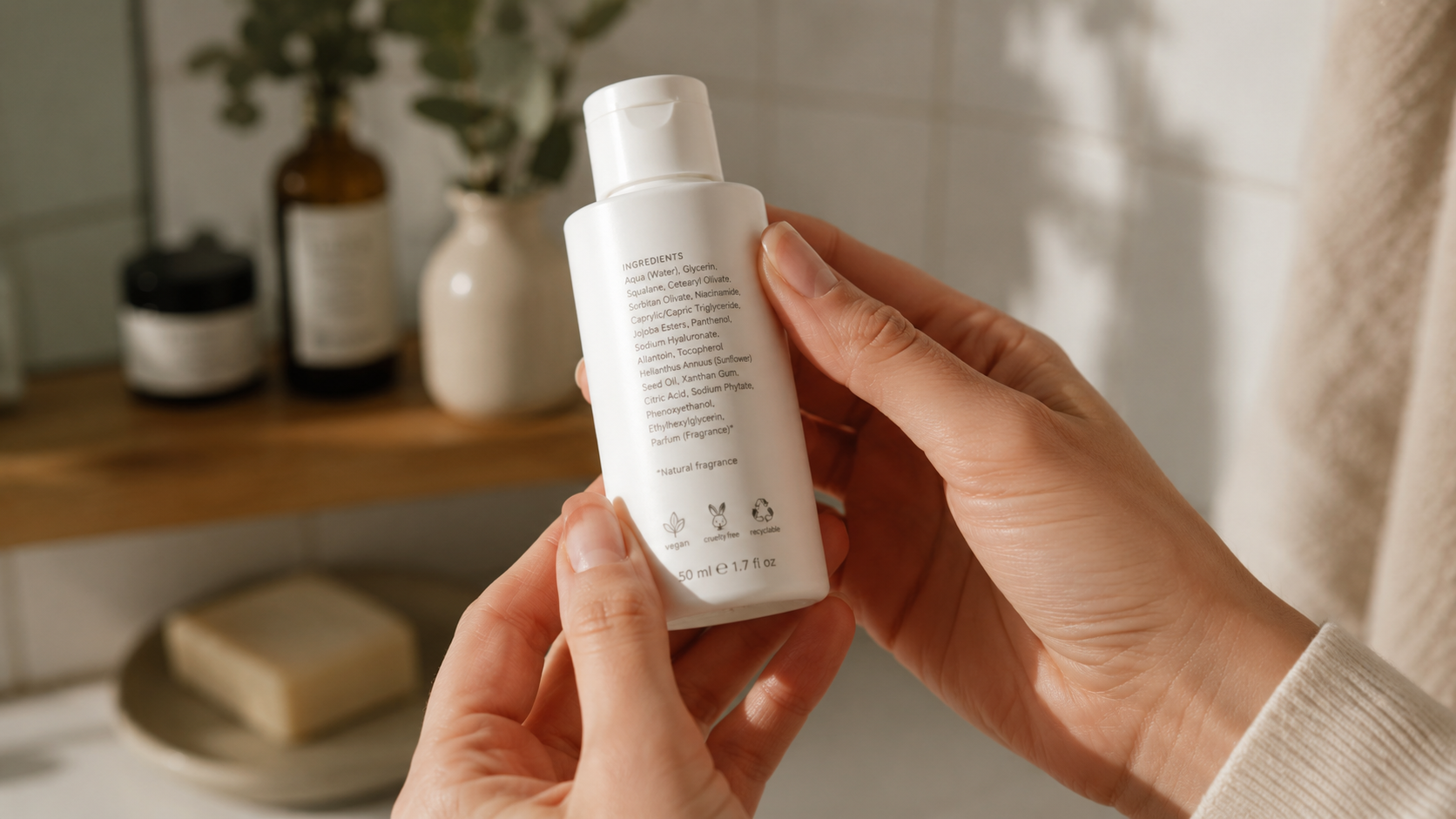
The honest answer is that cosmetics regulation in the UK, while tighter than many countries, still permits a large number of synthetic chemicals that a growing body of research links to hormone disruption, allergic sensitisation, and environmental harm. The brands are not all villains — many are simply using what’s cheapest and most shelf-stable. But “legal” and “something I’d happily rub into my skin every day for thirty years” are not the same thing.
This post is not about perfection. I still use products that contain some of these ingredients. It’s about being informed enough to make intentional choices — and knowing which names to prioritise when you’re trying to swap things out gradually.
Free download
Get the Non‑Toxic Home Audit Checklist
A room‑by‑room checklist to help you spot what’s worth swapping in your home — and what’s not worth worrying about. Join the fortnightly newsletter and it’s yours.
No spam, unsubscribe any time.
| A note on INCI names:Every cosmetic sold in the UK must list ingredients by their INCI (International Nomenclature of Cosmetic Ingredients) name. These are usually Latin or chemical names — which is why “fragrance” might also appear as parfum, and vitamin E as tocopherol. Both common names and INCI names are included below where relevant. |
The ingredients worth knowing about
The table below summarises the main categories. “Avoid” means there is a reasonably strong case for switching; “Aware” means worth knowing and monitoring, but less urgent.
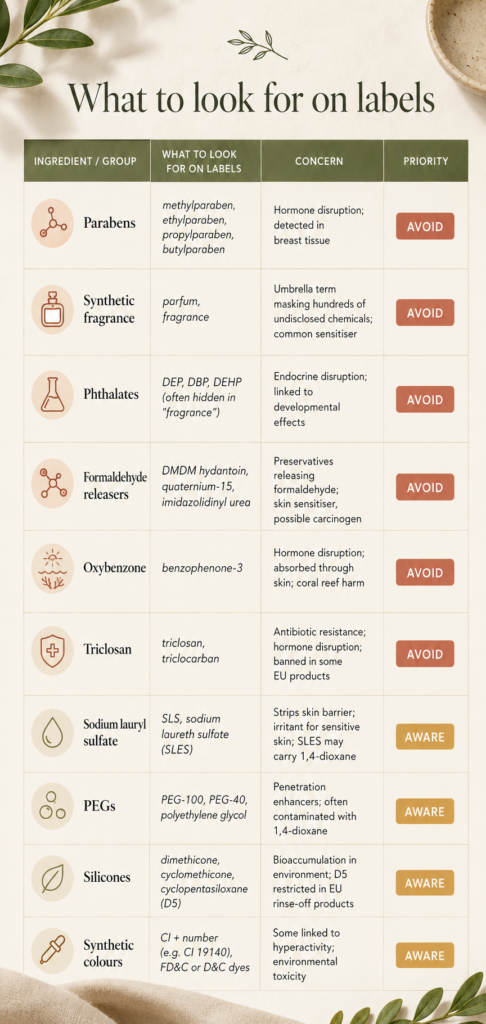
Let me walk through each one
Parabens
Parabens are preservatives that have been used in cosmetics since the 1950s. They’re cheap, effective, and stable — which is why they’re still in roughly half the products on the average bathroom shelf. The concern is their ability to mimic oestrogen in the body. A 2004 study by Dr Philippa Darbre at the University of Reading detected parabens in human breast tissue, and while a causal link to cancer has not been established, the precautionary case for avoiding them is strong — especially in products used daily on large skin areas such as body lotions and deodorants.
In practice, parabens are one of the easier swaps. Most natural and “clean” beauty brands have removed them, and there are plenty of effective alternatives. Switching body moisturisers and shampoos first makes sense, since those are high-volume daily-use products.
Synthetic fragrance (parfum)
This is the one worth feeling most strongly about. The word “parfum” or “fragrance” on an ingredient list is a legal loophole that can conceal up to several hundred distinct chemicals under a single term — because fragrance formulas are protected as trade secrets.
Fragrance ingredients commonly include phthalates (see below), musks that bioaccumulate in the environment, and a range of allergens. The EU has been tightening fragrance allergen disclosure rules since 2023, but the “parfum” umbrella still hides a great deal.
| “The word ‘parfum’ on an ingredient list can legally conceal hundreds of individual chemicals. It is one of the most important things to look for.” |
Phthalates
Phthalates are plasticising chemicals used to make fragrance last longer on skin. They’re rarely listed by name — they’re typically hidden within “parfum.” The ones of most concern in cosmetics are DEP (diethyl phthalate) and DBP (dibutyl phthalate), both of which are classified as endocrine disruptors under EU regulation. DBP is now restricted in cosmetics sold in the UK and EU, but DEP remains permitted. Reducing synthetic fragrance overall is the most effective way to reduce phthalate exposure.
Formaldehyde releasers
These are preservatives that work by slowly releasing small amounts of formaldehyde over the product’s shelf life. Formaldehyde is a known human carcinogen at occupational exposure levels and a common skin sensitiser even at lower concentrations. The names are obscure and varied — DMDM hydantoin and quaternium-15 are the most common in UK products.
Oxybenzone (benzophenone-3)
This is one to look for specifically in sunscreens. Oxybenzone is a chemical UV filter that has been shown to absorb through the skin into the bloodstream in measurable quantities. It is also one of the most environmentally damaging ingredients in cosmetics — it contributes to coral bleaching and is banned in sunscreens in Hawaii and several other US states. UK-available mineral sunscreens using zinc oxide or titanium dioxide are a straightforward alternative.
Sodium lauryl sulfate (SLS and SLES)
SLS and SLES are the foaming agents in most shampoos, shower gels, and toothpastes. They’re not endocrine disruptors and evidence of serious harm is limited, but they do strip the skin’s natural moisture barrier — a problem for anyone with dry, sensitive, or eczema-prone skin. SLES can also be contaminated with 1,4-dioxane, a probable carcinogen, as a manufacturing by-product. If you or your children have sensitive skin, switching to SLS-free products is one of the most straightforwardly beneficial changes you can make.
PEGs (polyethylene glycols)
PEGs are used as emulsifiers, thickeners, and — importantly — penetration enhancers. That last function means they help other ingredients absorb more deeply through the skin barrier. Like SLES, they can carry 1,4-dioxane contamination from manufacturing.
Silicones (particularly D5)
Silicones are what makes hair products leave a glossy finish and moisturisers feel silky. Most are considered low-risk from a human health perspective. The concern is environmental: cyclopentasiloxane (D5) bioaccumulates in aquatic organisms and has been restricted in rinse-off products in the EU since 2020. Choosing silicone-free formulas reduces the load of a persistent synthetic compound entering waterways.
Triclosan
Triclosan is an antibacterial agent that was widespread in hand washes and toothpastes. It is now banned in rinse-off cosmetics in the EU and UK following evidence of antibiotic resistance and hormone disruption. However, it can still appear in some leave-on products and imported items. Worth checking, particularly in antibacterial hand sanitisers and older product formulations.
How to read a label quickly in the shop
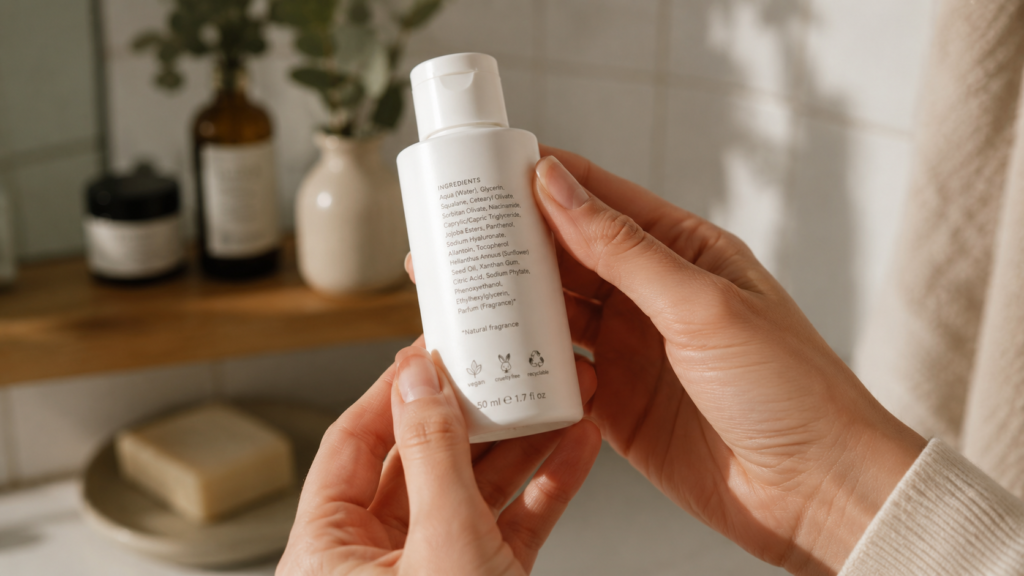
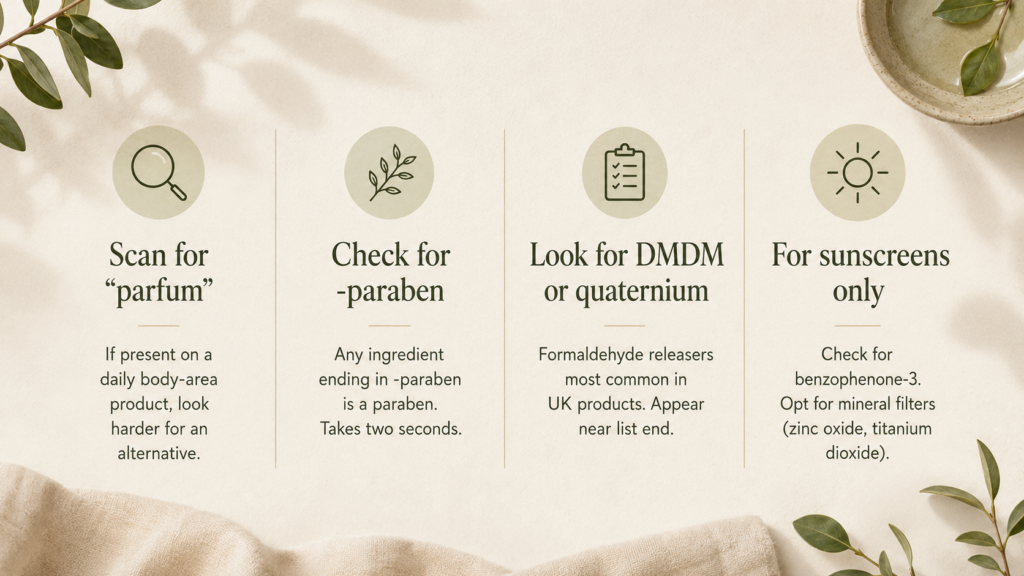
Ingredients are listed in descending order of concentration. Ingredients present at under 1% can be listed in any order, which is why preservatives and fragrance chemicals often appear at the end of a long list despite still being biologically active.
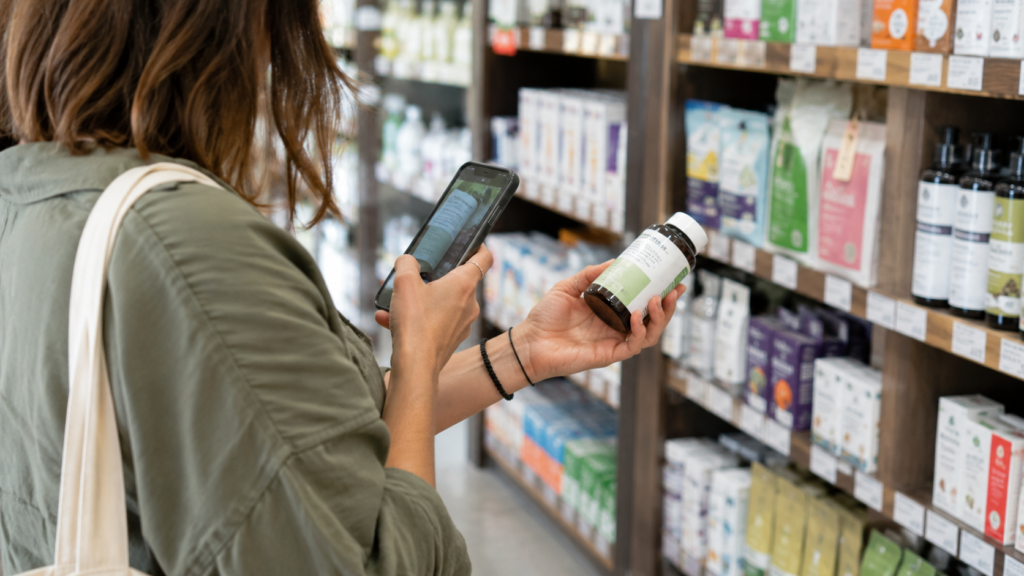
Here is a four-point scan for when you’re in a shop:
Some UK brands worth knowing
Faith in Nature is a Scottish brand with a long track record — paraben-free, SLS-free, genuinely cruelty-free, widely available in supermarkets and health food shops. Their shampoos and body washes are a good starting point.
Green People produces one of the few high-street sunscreen ranges using only mineral UV filters. They also have a good children’s range. Available in Holland & Barrett and online.
Pai Skincare is a British brand designed specifically for sensitive and reactive skin, formulated without the most common allergens and irritants. Higher price point, but rigorous about ingredients.
Weleda is Swiss-German but has been distributed in the UK for decades and is widely available. Their products use certified organic ingredients and avoid parabens, synthetic fragrance, and PEGs across the range.
For checking any specific product’s ingredient list before you buy, INCI Decoder (incidecoder.com) is the most useful free tool available — it translates every INCI name into plain language with a risk rating.
| Coming up in the Non-Toxic Home series: What’s actually in your household cleaning products · Safer food storage: moving away from plastic · DIY natural cleaning recipes that actually work · Air quality at home: indoor plants, ventilation, and avoiding hidden toxins |
A final word on progress over perfection
When I started paying attention to beauty ingredients, I went through a phase of wanting to replace everything at once and feeling guilty about every product that didn’t pass the test. That’s not a sustainable approach — in any sense of the word.
What actually works is replacing products as they run out, starting with the ones you use most often in the largest quantities. A body lotion you apply head to toe every day matters more than a nail polish you wear occasionally. Daily shampoo matters more than a weekly face mask.
The goal isn’t a perfectly curated bathroom. It’s a gradual reduction in the total chemical load — and the confidence of knowing what you’re putting on your skin, and your children’s skin, every day.
Free Download
Get the Non-Toxic Home Audit Checklist — free
A room-by-room PDF guide for UK households, with red, amber & green ratings for the most common household products. No overwhelm — just practical swaps, at your own pace.
- Kitchen — cookware, food storage, cleaning products
- Bathroom — personal care, razors, toothpaste
- Laundry — detergents, fabric softener, dryer sheets
- Children’s items — wipes, bath toys, bedding
- General home — candles, paint, air quality
No spam, ever. Unsubscribe any time. Your details are kept private.