Beyond “Drive Less”: Sustainable Transport That Actually Fits UK Life
As an Amazon Associate I earn from qualifying purchases and sometimes recommend products from other sellers at no extra cost you. For more details see my disclosure policy and privacy policy.
Every eco-living checklist tells you to drive less. Fair enough — transport is one of the biggest contributors to a household’s carbon footprint, and for most of us in the UK, the car is still the default. But “drive less” isn’t a plan, it’s a wish. What’s actually helped us cut down isn’t guilt — it’s knowing which alternatives genuinely work where we live, and using them without turning it into a personality.

Here’s what that looks like in practice, from someone who still owns a car and isn’t apologising for it.
Public transport: cheaper and easier than most people assume
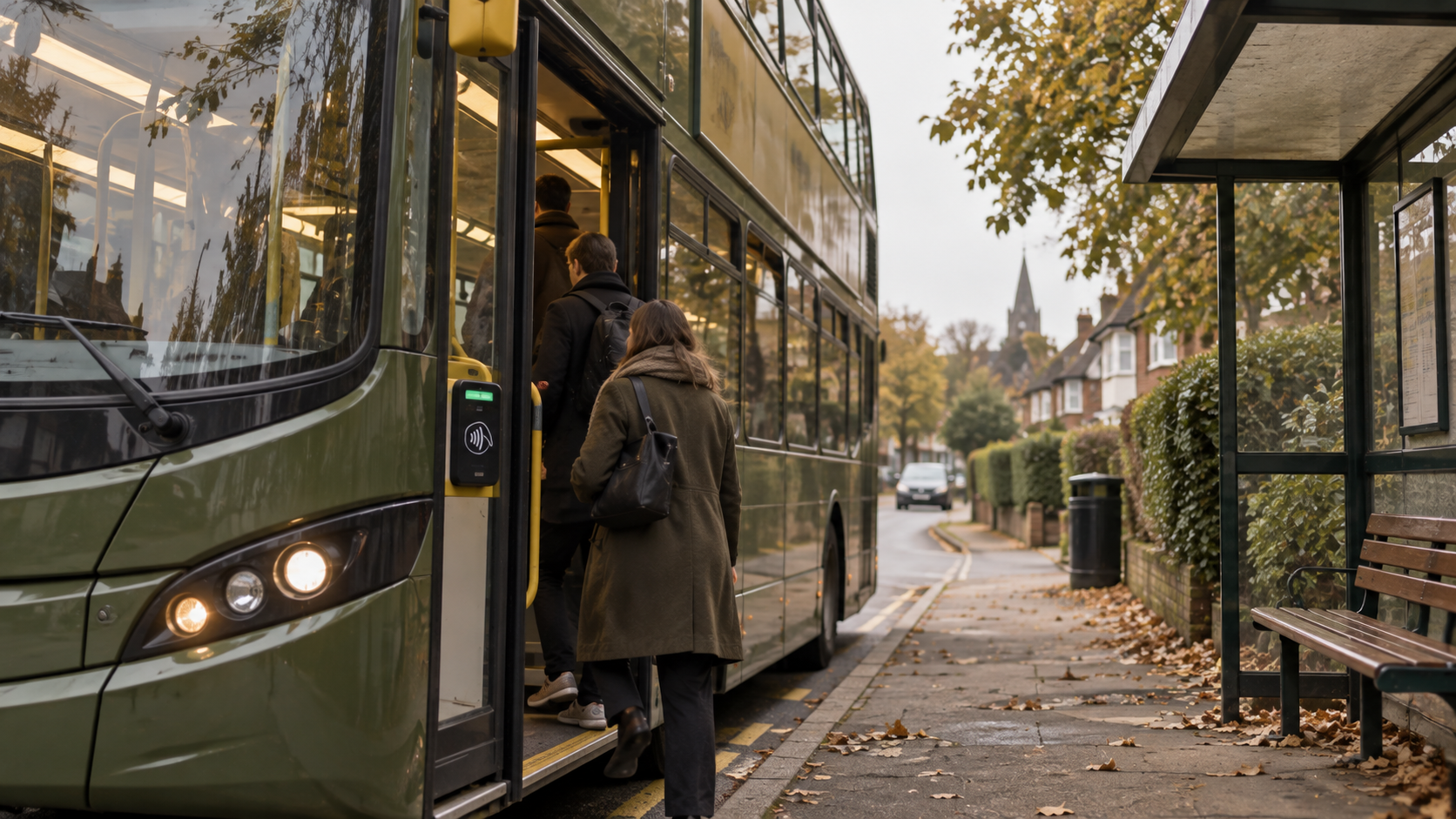
Buses and trains produce a fraction of the emissions per passenger that a solo car journey does, and in the UK the infrastructure is better than its reputation suggests — even outside London. Contactless pay-as-you-go capping now works on buses and trains in most major cities, so you’re not stuck buying tickets in advance, and a 16–25 Railcard or Disabled Persons Railcard can cut a third off standard rail fares.
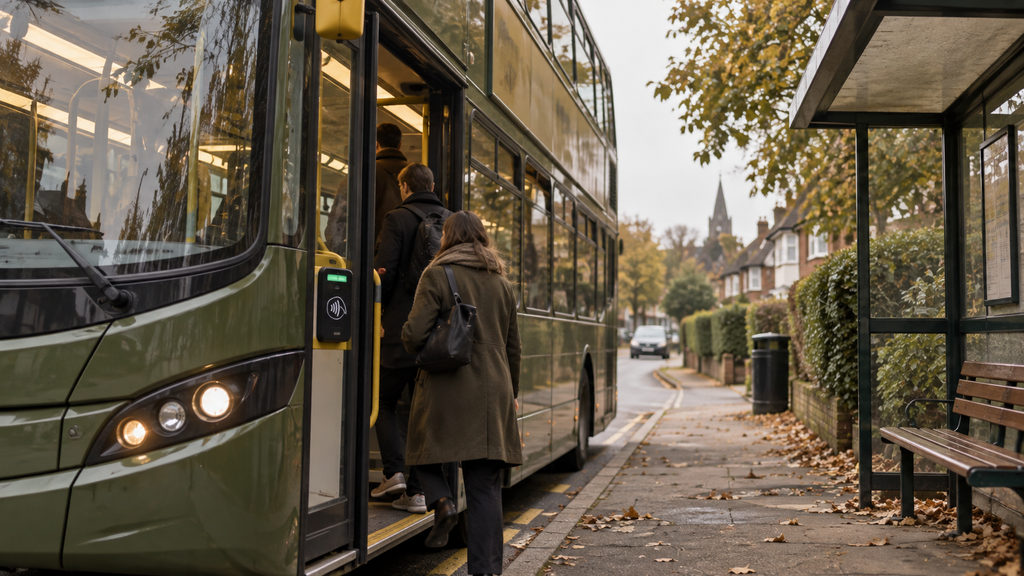
The bigger shift for us wasn’t the big commute — it was the short, “I’ll just take the car” trips. The school run, the supermarket run, the trip into town. Those are exactly the journeys public transport handles best, and they’re the ones that add up fastest over a year.
Free download
Get the Non‑Toxic Home Audit Checklist
A room‑by‑room checklist to help you spot what’s worth swapping in your home — and what’s not worth worrying about. Join the fortnightly newsletter and it’s yours.
No spam, unsubscribe any time.
Mindful Consumption: Breaking the Cycle of Impulse Buying
Cycling and walking: the boring, brilliant option
For anything under a couple of miles, cycling or walking beats the car on cost, health, and stress every time. Regular cycling and walking are linked to better cardiovascular health, lower risk of chronic disease, and — the bit nobody puts on the leaflet — noticeably better mood on the days you do it.
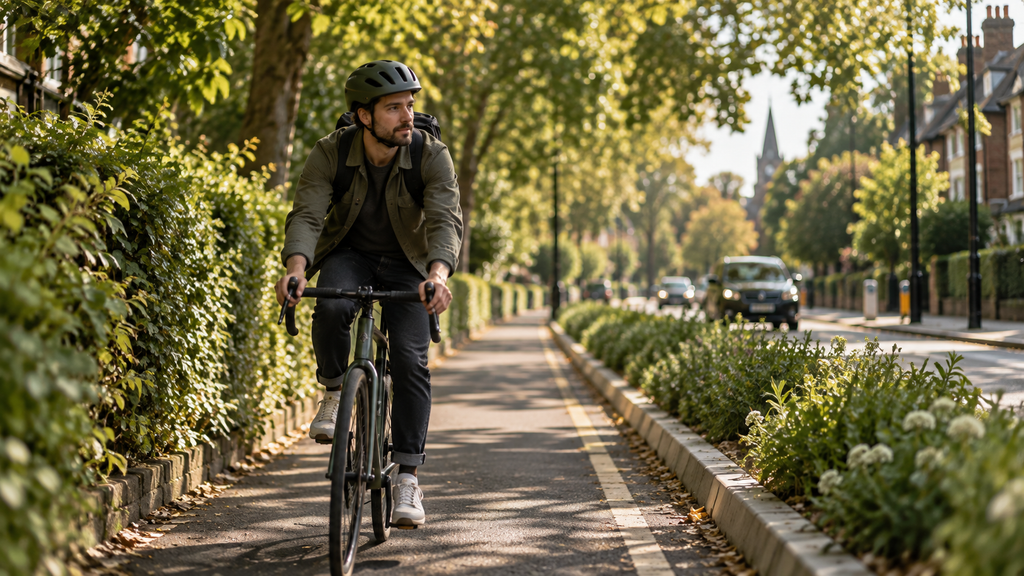
It’s also gotten easier to start. The Cycle to Work scheme lets you buy a bike through salary sacrifice, spreading the cost and saving on tax and National Insurance. Most UK cities have expanded protected bike lanes and bike-share schemes (Santander Cycles in London, Beryl bikes in several regional cities), and the National Cycle Network now covers over 12,600 miles of routes if you want to build confidence somewhere away from traffic.
An e-bike removes the “hills and sweat” objection that stops a lot of people trying — worth considering if that’s what’s holding you back.
Electric vehicles: worth it if you’re driving anyway
If you do need a car, an EV is the lower-carbon choice — zero tailpipe emissions, and running costs that are usually well below a petrol or diesel equivalent once you’re charging at home overnight on a cheap tariff. Second-hand EV prices have dropped considerably, which matters, because most of us aren’t buying new.
A few UK-specific things worth checking before you switch: whether you’re driving into a Clean Air Zone or ULEZ regularly (EVs are exempt from the charges), whether your council offers a residential charge-point grant if you don’t have a driveway, and what your actual home charging cost looks like on an EV-specific electricity tariff versus public rapid chargers, which are far more expensive per mile.
An EV isn’t a free pass on emissions — manufacturing has its own footprint — but for a car you’re already planning to replace, it’s the more sustainable version of the same decision.
Ride-sharing and car clubs: the option people forget
Car clubs like Zipcar and Enterprise Car Club let you pay by the hour or mile without owning a car at all — useful if you only need one occasionally. For longer journeys, lift-sharing platforms such as BlaBlaCar and Liftshare connect you with someone already making the trip, splitting both the cost and the emissions.
In rural areas without much public transport, community car schemes (often run by local councils or volunteer groups) are worth searching for — they’re quietly one of the most useful and least-advertised options going.
High-speed and long-distance rail: skip the flight where you can
For journeys under about 4–5 hours, rail is almost always the lower-carbon and often the more relaxing choice over flying — no security queues, no airport transfers eating into your travel time, and city centre to city centre rather than out-of-town airports. Eurostar makes this an easy swap for trips to Paris, Brussels, or Amsterdam, and UK operators like LNER and Avanti West Coast cover most of the country’s long-distance routes.

Booking early and using a Railcard makes a genuine difference to cost, which is usually the real reason people default to driving or flying instead.
The honest conclusion
None of this requires giving up your car or becoming someone who cycles in all weathers by choice. It’s about noticing which of your regular journeys have a realistic, better alternative — and using it, imperfectly, most of the time. Progress over perfection, applied to how you get around rather than what’s in your fridge.