Reduce Food Waste at Home: What Actually Works in a UK Kitchen
As an Amazon Associate I earn from qualifying purchases and sometimes recommend products from other sellers at no extra cost you. For more details see my disclosure policy and privacy policy.
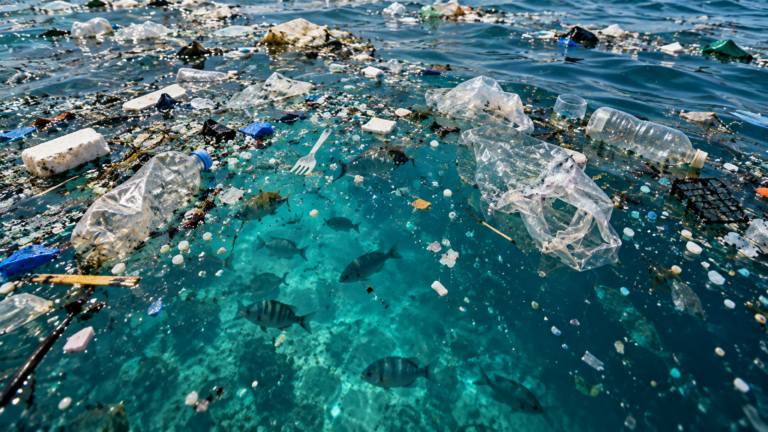
I used to think I was reasonably good about food waste, until I actually started weighing what went in the caddy each week. It was a lot. Wilted spinach, half a loaf gone mouldy, a tub of something unidentifiable from the back of the fridge. WRAP estimates UK households throw away around 6.4 million tonnes of food a year — most of it perfectly edible when it was binned. Once I started paying attention, cutting that down turned out to be less about willpower and more about a handful of small system changes. Here’s what’s actually worked in our kitchen.
Plan meals around what you already have
The single biggest shift for us wasn’t a clever app or a new gadget — it was ten minutes on a Sunday evening with the fridge door open, working out what needed using up before I wrote a shopping list. Meal planning only reduces waste if it starts from what’s already there, not from a Pinterest board of recipes you fancy.
We now do a rough plan for the week — enough structure to know what to buy, loose enough to swap things around if the courgettes need using up faster than planned. One big shop, rather than three small “just popping in” trips, also makes a genuine difference: those top-up trips are where impulse buys and duplicate items creep in.
The takeaway: a meal plan that starts with what’s already in your kitchen prevents more waste than one built purely around what you fancy eating.
Free download
Get the Non‑Toxic Home Audit Checklist
A room‑by‑room checklist to help you spot what’s worth swapping in your home — and what’s not worth worrying about. Join the fortnightly newsletter and it’s yours.
No spam, unsubscribe any time.
Shop your fridge and store cupboard before the shop, not after
This sounds obvious written down, but it’s the step most people skip. Before we make a list, we have a proper look — not just a glance — through the fridge, the freezer drawer, and the back of the cupboard. It takes five minutes and regularly turns up something we’d forgotten and would otherwise have doubled up on.
It also surfaces the things on their way out. If there’s cream nearing its date, that becomes Tuesday’s dinner, not something quietly binned on Thursday.
Write an actual list, with quantities
A list stops the “oh, we might need that” impulse buys that end up half-used in the salad drawer. We’ve started writing down amounts rather than vague quantities — “200g mushrooms” rather than “mushrooms” — because it’s the vague guesses that tend to end up wasted. Where we can, we go to the greengrocer or a local farm shop rather than buying pre-packed supermarket quantities we don’t need.
Buy in bulk only when you have a plan for it
Bulk buying saves money, but only if you actually use what you buy before it spoils. We buy dried goods — pasta, rice, lentils, oats — in bulk without a second thought, because they’ll keep. Fresh produce is a different matter: we only buy in bulk when there’s a specific plan for it, usually a batch of soup or a preserving session at the weekend. Buying three kilos of tomatoes “because they were cheap” is only a saving if they don’t end up in the bin.
Store food properly — it matters more than you’d think
This was the one that surprised me most. Simply moving things to the right part of the fridge extended how long they lasted, sometimes by several days. Dairy and meat go on the bottom shelf, where it’s coldest. Cooked leftovers go higher up. Condiments and anything shelf-stable-ish go in the door, where the temperature fluctuates most.
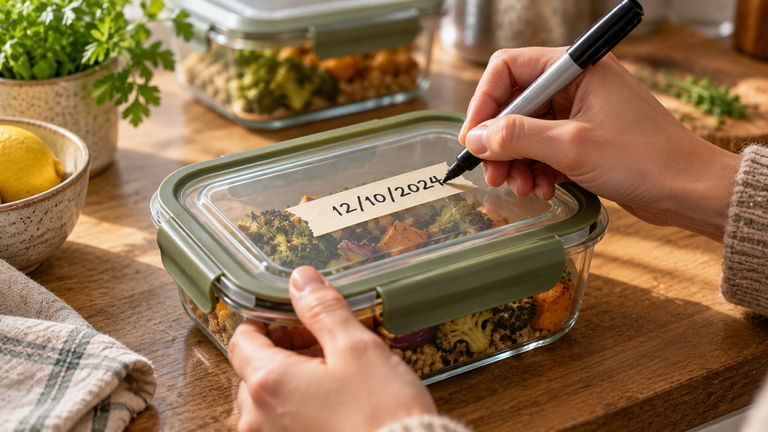
Labelling containers with the date they went in — a habit that took about a week to stick — means nothing quietly goes off unnoticed at the back. It’s a small thing, but it’s probably saved us more food than any other single change on this list.
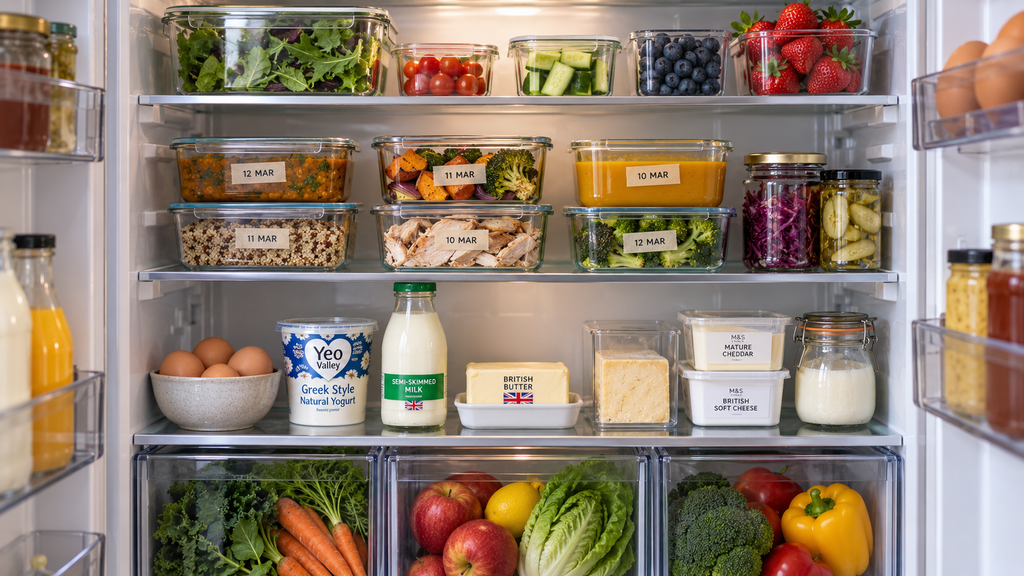
We keep our herbs and veg fresher for longer using some of the swaps we cover in our non-toxic food storage guide — moving away from cling film and single-use plastic doesn’t just cut plastic waste, it tends to keep food fresher too.
Pass on what you won’t use
Not everything gets eaten in time, and that’s fine — it doesn’t have to end up in the bin. Apps like Olio connect neighbours who have surplus food with people nearby who’ll use it, and most UK towns have a local food bank that will take unopened, in-date items. If you’re growing your own and get a glut — courgettes are the classic offender — offering it round the street or a local Facebook group usually finds it a home within the hour.
Compost what’s genuinely finished
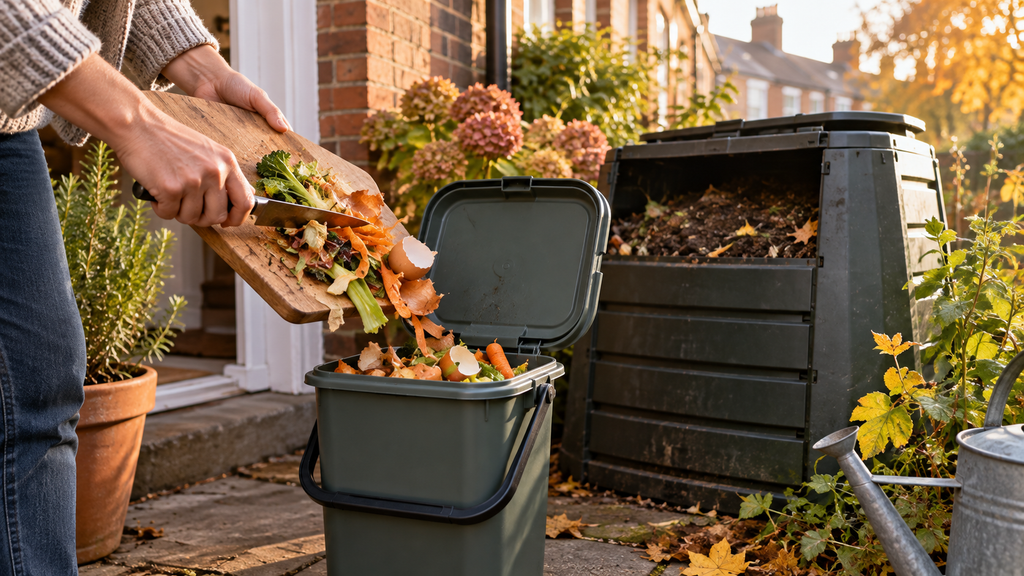
Peelings, eggshells, tea bags, the last bit of a wilted lettuce — this is where composting earns its keep. We’ve written a fuller How to Make Your Own Compost guide if you’re starting from scratch, but even a small council-provided caddy for food waste collection (most UK local authorities now offer one) keeps genuine scraps out of landfill, where food waste breaks down anaerobically and produces methane rather than simply rotting down harmlessly.
Feed safe scraps to pets, carefully
Some kitchen scraps make a fine addition to a pet’s diet — plain cooked vegetables, small amounts of unseasoned meat, or fish. Others are genuinely dangerous: onions, grapes, raisins and anything seasoned or containing garlic should never go near a dog or cat. If you’re ever unsure, your vet is the person to ask, not a Facebook group.
Make stock instead of binning vegetable trimmings
Onion skins, carrot tops, celery ends, and any bones left from a roast go straight into a bag in the freezer until there’s enough for a stock pot. Simmered for a few hours with water, it turns kitchen scraps that would otherwise be binned into something genuinely useful — and it costs nothing beyond the gas to simmer it. Homemade stock also tends to have far less salt than anything shop-bought, which is a decent side benefit.
Turn leftovers into their own meal, not an afterthought
The mental shift that helped most here was treating leftovers as an ingredient, not a sad reheated plate. Roast vegetables become a frittata filling. Extra rice becomes fried rice with whatever’s left in the fridge. A bit of leftover roast chicken goes into a pie or a curry rather than sitting untouched in the fridge until it’s binned on principle. Once “what can I make with this” became a habit rather than a chore, leftovers stopped being the thing that went off unused.
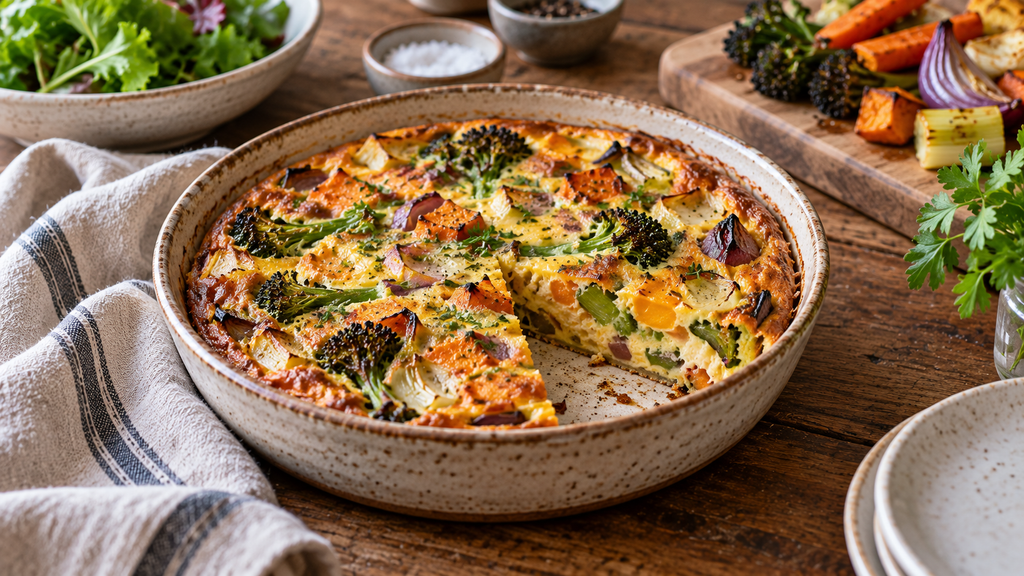
The takeaway: treating leftovers as the starting point for a new meal, rather than a lesser version of the original one, is what actually stops them being wasted.
Progress over perfection
None of this needs to be done perfectly to make a difference — and it’s worth saying that plainly, because a lot of eco content sets an unrealistic bar and then makes people feel bad for not clearing it. We still occasionally find something furry at the back of the fridge. The point isn’t a zero-waste kitchen; it’s a kitchen that wastes noticeably less than it used to, without turning meal planning into another chore on top of everything else.
If you’re working through this alongside growing your own food on a budget, food waste reduction and home growing reinforce each other nicely — using up what you grow is its own kind of waste prevention, and it tends to make the cost-per-meal maths look even better.