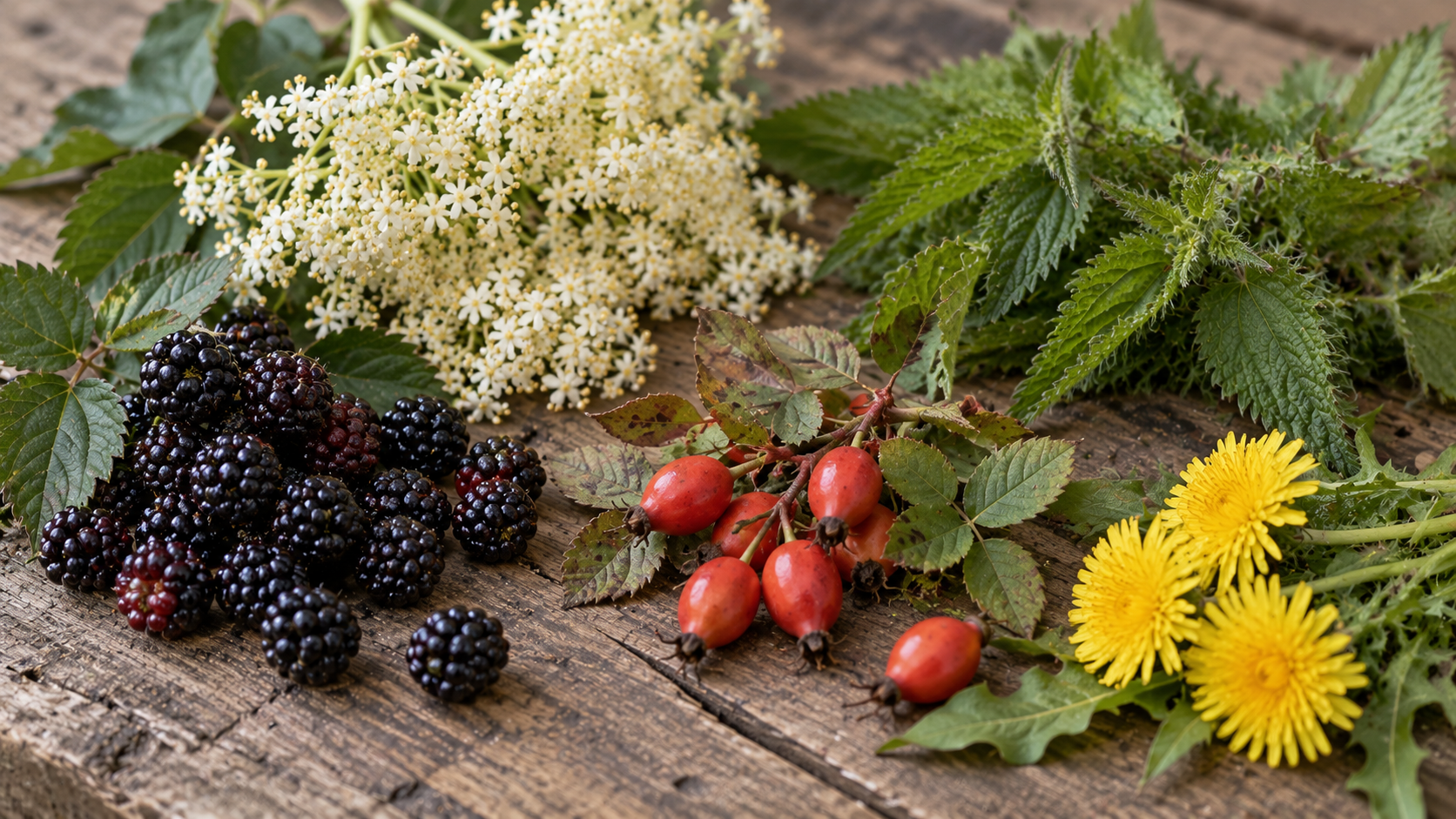
The Beginner’s Guide to Foraging in the UK: What to Pick, When, and How to Stay Safe
As an Amazon Associate I earn from qualifying purchases and sometimes recommend products from other sellers at no extra cost you. For more details see my disclosure policy and privacy policy.
There’s a particular kind of quiet satisfaction in coming home with a handful of elderflower heads or a punnet of wild blackberries you found on a Tuesday afternoon walk. I started foraging almost by accident — a neighbour pointed out a hedge full of sloes I’d walked past a hundred times without noticing — and it’s since become one of the things that anchors our family to the seasons more than almost anything else we do.
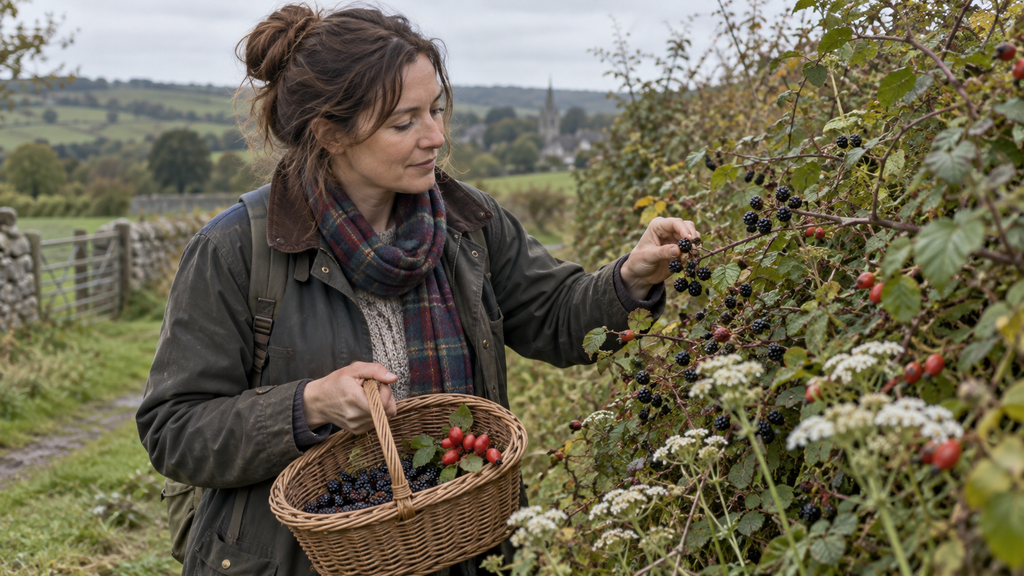
But foraging in the UK comes with real questions people rarely get straight answers to: what’s actually legal to pick, how do you avoid the plants that can make you seriously ill, and where do you even start if you’ve never done this before? This guide covers all three, plus a full seasonal calendar so you always know what’s worth looking for.
Key takeaway: Foraging in the UK is legal for personal use on public land and with landowner permission, but it comes with real safety responsibilities — never eat anything you can’t identify with total confidence.
Is Foraging Legal in the UK?
Yes, with conditions. Under the Theft Act 1968 and the Wildlife and Countryside Act 1981, you’re allowed to pick the “four F’s” — fruit, foliage, fungi, and flowers — from wild plants growing on public land, provided it’s for personal, non-commercial use and you’re not uprooting the whole plant.
Free download
Get the Non‑Toxic Home Audit Checklist
A room‑by‑room checklist to help you spot what’s worth swapping in your home — and what’s not worth worrying about. Join the fortnightly newsletter and it’s yours.
No spam, unsubscribe any time.
A few rules matter more than people expect:
- You need permission on private land. If a hedgerow or wood is privately owned, foraging without consent is technically trespass, even if the plant itself is fair game.
- Uprooting is not allowed anywhere, even on public land, unless you own the land or have explicit permission. Picking is fine; digging up the whole plant isn’t.
- Nature reserves and SSSIs (Sites of Special Scientific Interest) often have their own rules, and some protected species can’t be picked at all, no matter where they’re growing. Always check local signage.
- Selling foraged food commercially involves a different set of food safety and business regulations entirely — this guide is written for personal foraging only.
For the full legal detail, the what can you legally forage in the uk post goes through rights of way and land access in more depth. Gov.uk’s guidance on the Countryside Code is also worth a read before your first trip out.
Key takeaway: Stick to public land or land you have permission to be on, take only what you need, and never dig up the whole plant.
Safety First: The Rules That Actually Matter
This is the part of foraging that deserves more attention than it usually gets. The UK has a small number of genuinely dangerous plants that closely resemble edible ones, and every year people end up in hospital — sometimes worse — because of a mistaken identification.
The core safety rules
- Never eat anything you’re not 100% certain about. Not 90% certain. If there’s any doubt, leave it.
- Use more than one source to confirm identification. A good field guide, a reputable app, and — ideally — someone experienced to check your first few finds in person.
- Learn the dangerous look-alikes for whatever you’re picking, not just the plant itself. Wild garlic looks similar to lily of the valley and autumn crocus, both toxic. Elderflower has a poisonous look-alike in young hemlock foliage before it flowers.
- Avoid foraging near busy roads, industrial sites, or land that may have been sprayed with pesticides or treated with weedkiller.
- Wash everything thoroughly before eating, and introduce new foraged foods to your diet in small amounts first in case of individual sensitivities.
- When it comes to fungi, the rules tighten further. Mushroom identification has the highest margin for serious error of any category of foraging, and several UK species are lethal in small quantities. If you’re new to foraging, treat fungi as an advanced category to come back to once you’re confident with plants — and even then, verify finds with an expert before eating.
The Woodland Trust and the Food Standards Agency both publish reliable, UK-specific identification and safety resources, and are worth bookmarking before your first outing.
Our foraging safely common identification mistakes post goes deeper into the specific look-alikes worth learning first.
Key takeaway: The goal isn’t to memorise every plant in the hedgerow — it’s to be confidently, verifiably certain about the handful you do pick.
What You’ll Need to Get Started
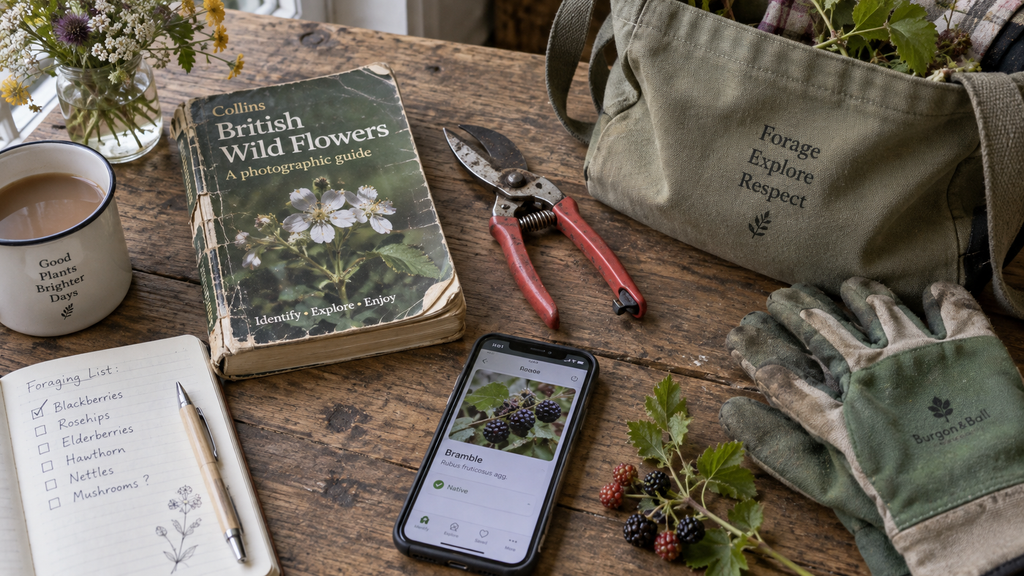
Foraging has a low barrier to entry, which is part of its appeal. A basic kit is enough for almost everything on this list:
- A good UK-specific field guide (avoid American ones — plant ranges and look-alikes differ)
- A basket or open bag, rather than a sealed plastic one, so foraged finds don’t sweat and spoil
- Scissors or secateurs for a clean cut rather than tearing
- Gloves for anything with thorns (blackberries, sloes, rosehips)
- A foraging app as a second opinion — never a sole source of identification
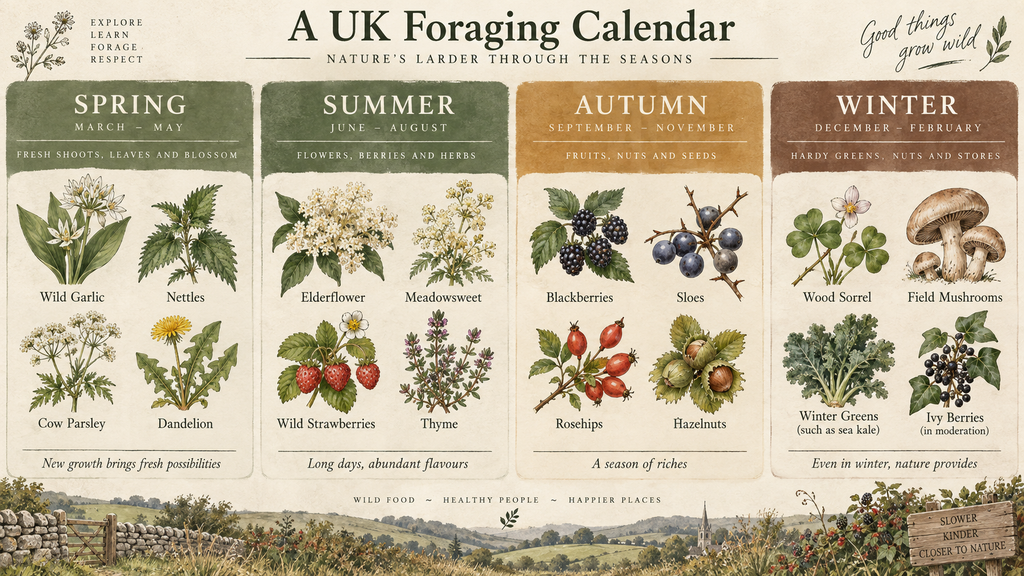
A Season-by-Season UK Foraging Calendar
Foraging is fundamentally a seasonal activity, and knowing roughly what to expect each month takes most of the guesswork out of getting started.
Spring (March–May)
Spring foraging centres on young leaves and early flowers, before growth toughens up.
- Wild garlic — broad leaves with a strong garlic smell, found in shady woodland from March
- Nettles — young spring growth is best for soup and tea; older nettles turn bitter and gritty
- Hawthorn leaves and buds — sometimes called “bread and cheese,” mild and nutty
- Dandelion — leaves, flowers, and roots are all usable, and it grows almost everywhere
Our foraging in spring what to look for post covers this window in more detail, including the specific look-alikes to watch for with wild garlic.
Summer (June–August)
Summer is when foraging becomes most obviously rewarding, with flowers giving way to the first fruits.
- Elderflower — creamy white clusters, ready for cordial from late May into June
- Wild strawberries — small, intensely flavoured, found on woodland edges
- Meadowsweet — fragrant flowers used in cordials and teas
- Early blackberries — the first ripe berries usually appear from late July in a warm year
See foraging in summer berries flowers leaves for the full summer list and picking tips.
Autumn (September–November)
This is peak foraging season in the UK, and the one most people associate with the activity.
- Blackberries — abundant in hedgerows through September
- Elderberries — dark clusters ready from September, always cooked before eating
- Sloes — the classic gin ingredient, best picked after the first frost softens them
- Hazelnuts — a race against squirrels most years
- Fungi — the richest season, but the one requiring the most caution and expertise
Our dedicated foraging in autumn fungi sloes elderberries guide covers this season’s full range.
Winter (December–February)
Winter foraging is quieter but not empty.
- Rosehips — bright red hips left on wild roses after the flowers fade, rich in vitamin C
- Sweet chestnuts — often still findable into early winter in a mild year
- Winter greens — some wild leaves like chickweed persist through mild UK winters
Our foraging in winter uk hedgerows post has the specifics for the leaner months.
Key takeaway: There’s something to forage in the UK in every month of the year — it’s simply a matter of knowing where to look and what’s actually in season.
Top 5 Beginner-Friendly Plants to Start With
If you’re foraging for the first time, start with plants that are easy to identify with confidence and have few dangerous look-alikes:
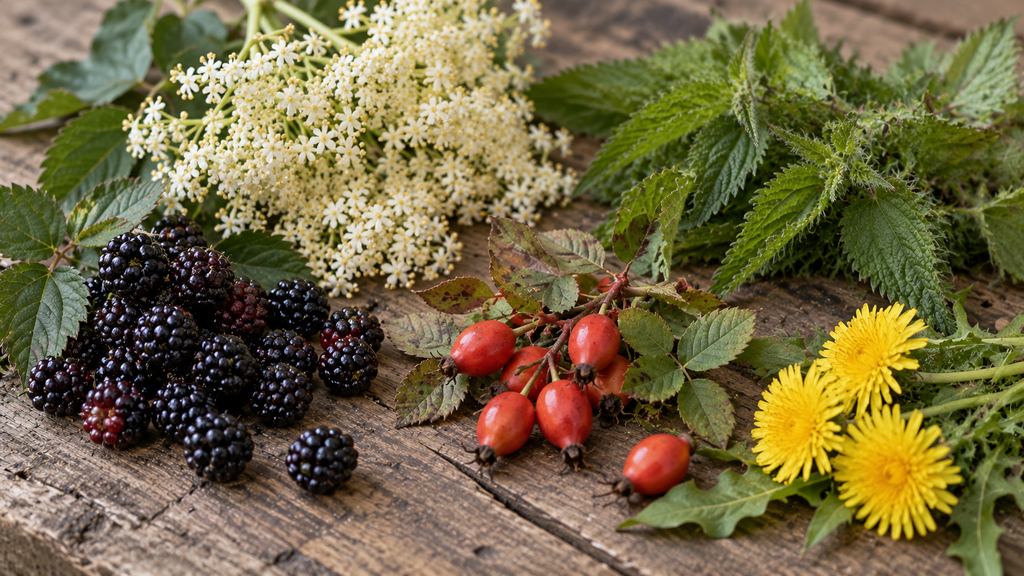
- Blackberries — unmistakable and abundant from late summer
- Elderflower — distinctive smell and appearance, though worth learning the young-hemlock caution
- Nettles — easy to identify by touch alone (carefully) and widely available
- Rosehips — bright, obvious, and found on recognisable wild rose bushes
- Dandelion — one of the most recognisable plants in the UK, and entirely edible root to flower
For a full breakdown of technique and use, see our top 10 beginner friendly plants guide.
From Hedgerow to Table
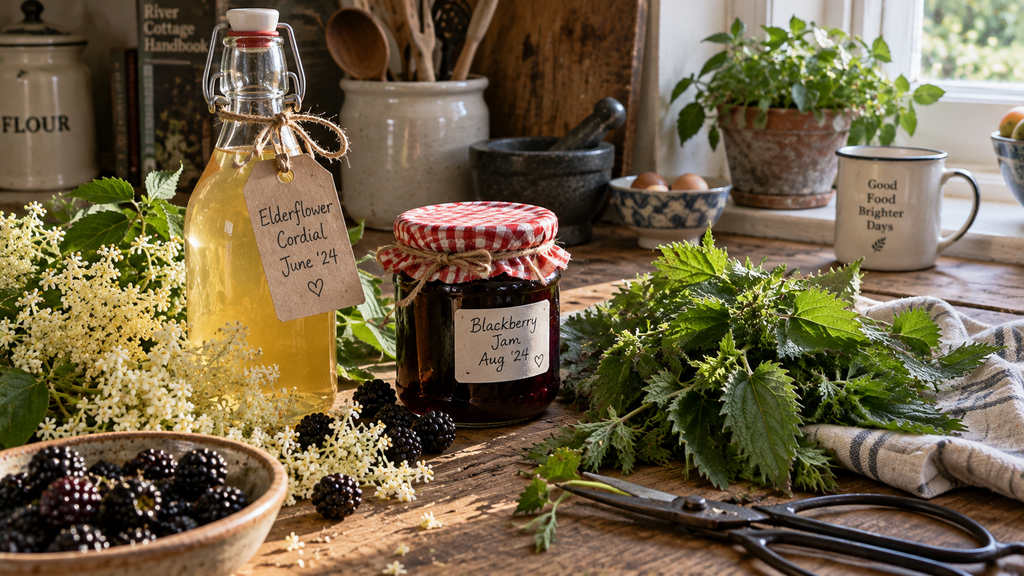
Foraging only really earns its place in a weekly routine once you know what to do with what you’ve picked. Elderflower becomes cordial, blackberries become jam, sloes become gin left to steep until Christmas, and nettles make a genuinely good soup once you’ve got past the idea of eating something that stings.
Our turning foraged ingredients into recipes post has starting recipes for each of these, and if you’re foraging with young children, foraging with children safe activities covers how to make it an age-appropriate family activity rather than a stressful one.
A Final Word on Foraging Well
Foraging responsibly means taking a little and leaving plenty — for wildlife, for regrowth, and for the next person walking the same path. Never strip a hedgerow bare, never take more than you’ll actually use, and always leave a plant able to recover and seed again next year.
Key takeaway: Good foraging etiquette is as much a part of doing this well as correct plant identification — take a little, leave the rest, and the hedgerows will keep giving year after year.