Container Veg Growing for Renters and Flat Dwellers
As an Amazon Associate I earn from qualifying purchases and sometimes recommend products from other sellers at no extra cost you. For more details see my disclosure policy and privacy policy.
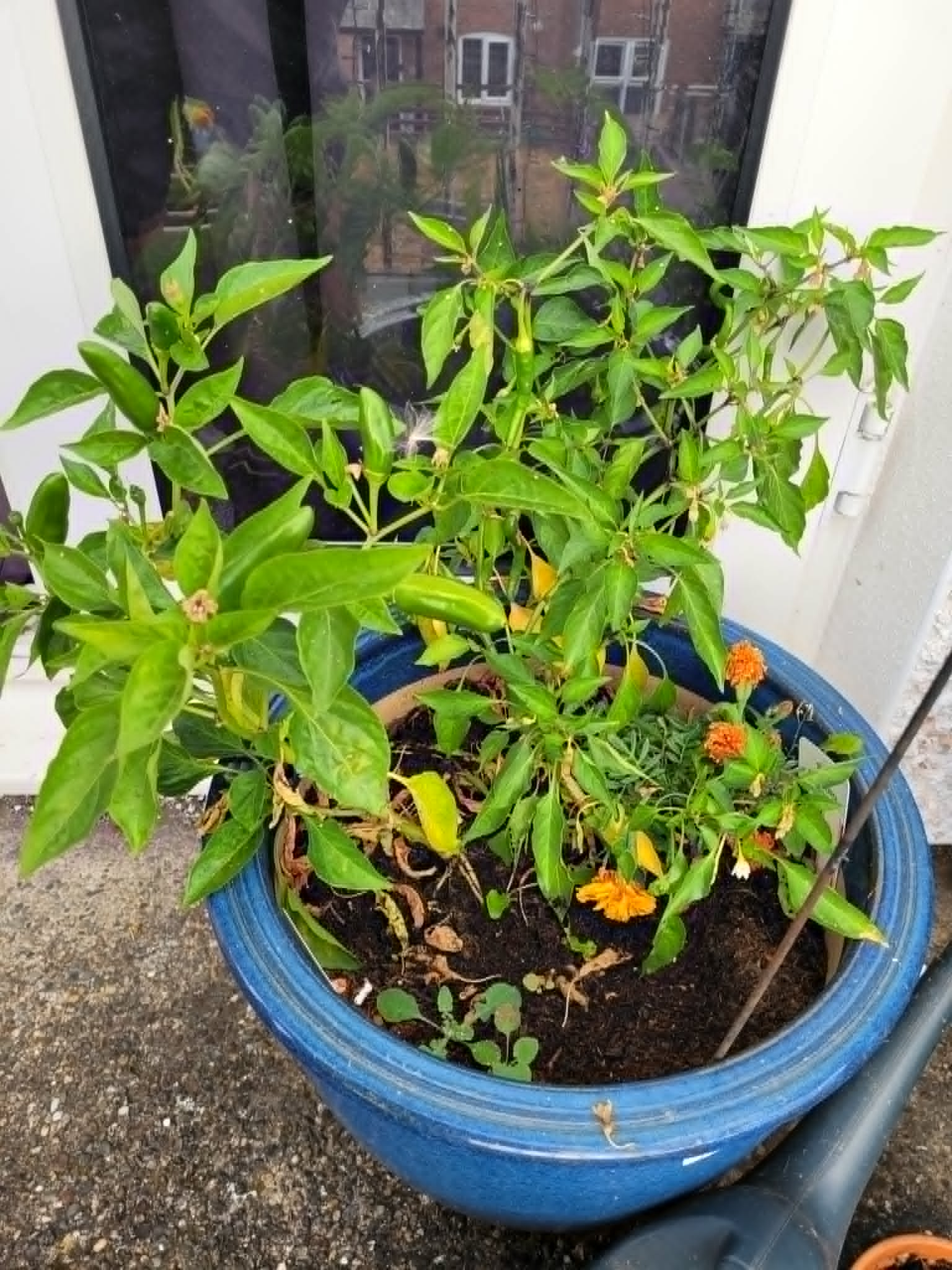
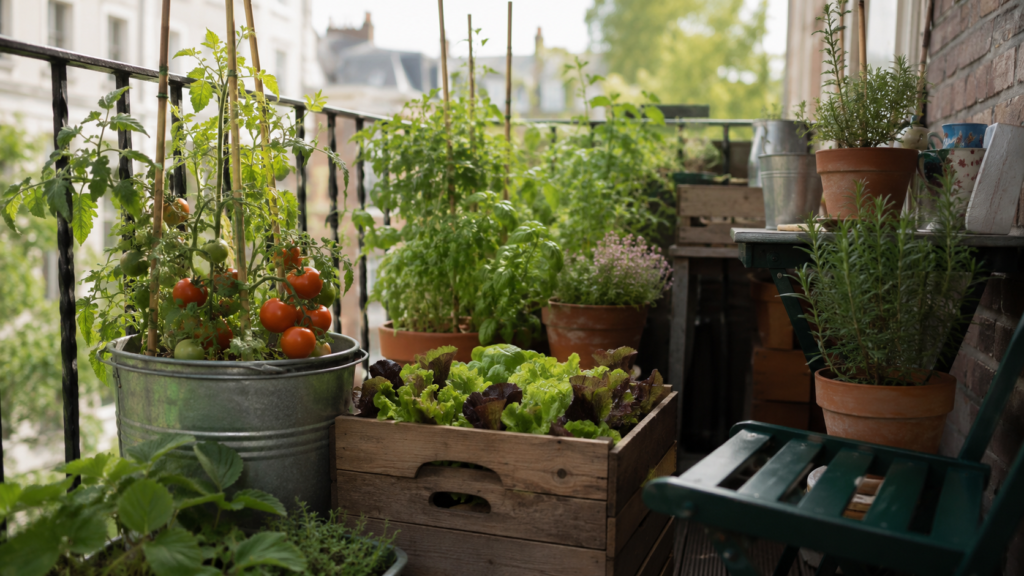
You don’t need a garden to grow your own food. You don’t even need a balcony, technically — a sunny windowsill and the right container will get you a surprising amount of veg. As a renter, I’ve grown tomatoes on a fourth-floor balcony, potatoes in a bin bag, and salad leaves on a kitchen windowsill, and none of it required permission from a landlord or a single hole dug in the ground.
Everything here is designed to move when you do.
In short: container growing lets renters grow real, harvestable food without altering the property, without a garden, and without a long-term commitment to any one flat.
Why container growing works for renters
Containers solve the two problems that put most renters off growing food altogether: permanence and permission.
Free download
Get the Non‑Toxic Home Audit Checklist
A room‑by‑room checklist to help you spot what’s worth swapping in your home — and what’s not worth worrying about. Join the fortnightly newsletter and it’s yours.
No spam, unsubscribe any time.
Nothing here gets fixed to a wall, dug into a border, or left behind for the next tenant. If your tenancy agreement is silent on gardening (most are, because most assume you have no garden to garden in), container growing on a balcony or patio you already have access to generally sits outside anything a landlord needs to approve — you’re not altering the structure, just placing pots on a surface. It’s still worth a quick, friendly message to your landlord or letting agent before you start, particularly if you’re planning anything heavier than a few pots (more on weight below), or if the space is a shared communal area rather than private to your flat.
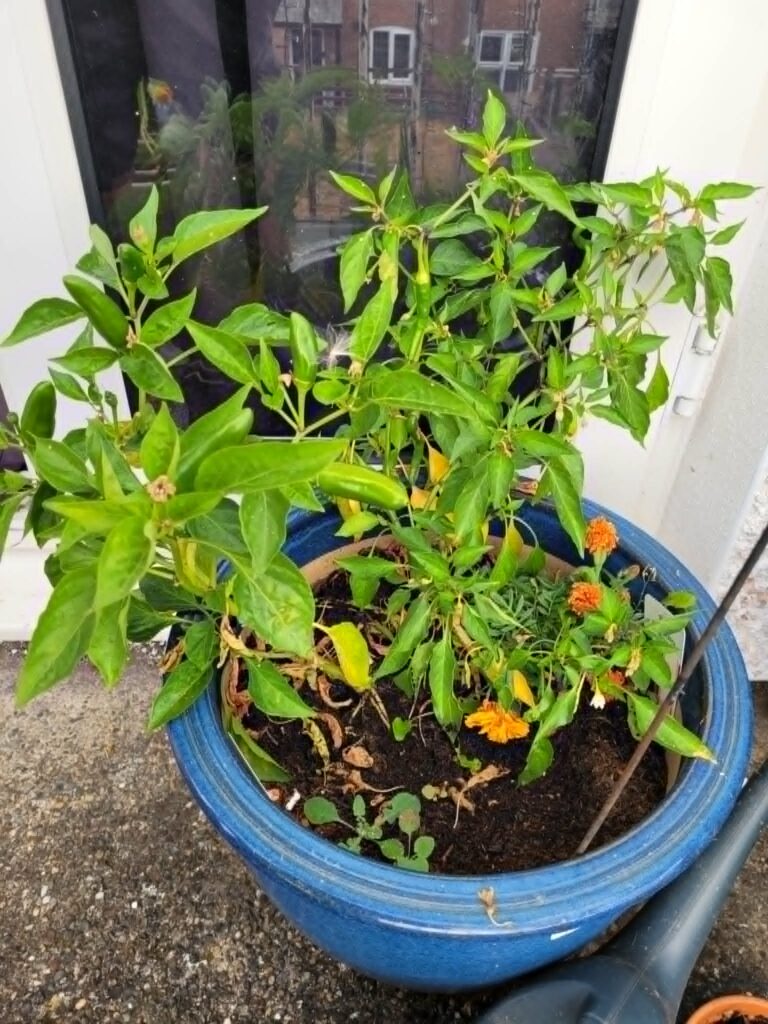
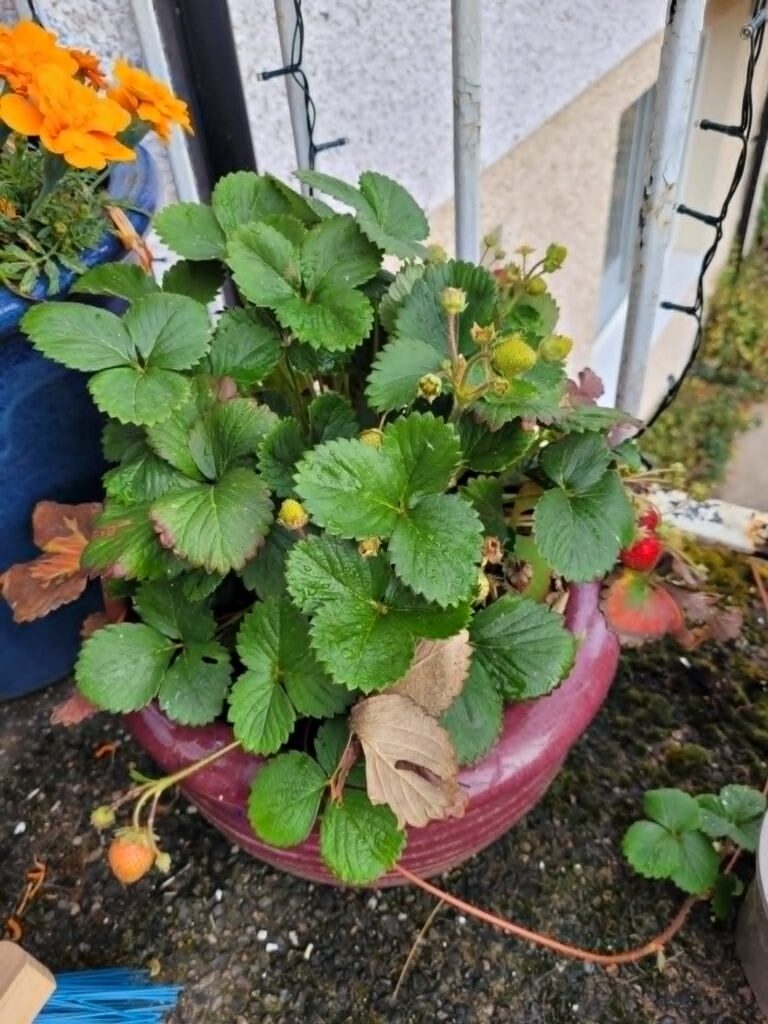
The second advantage is portability. Everything in this guide is designed to survive a house move. When my sister relocated flats last spring, her entire kitchen garden — twelve pots, a grow bag of potatoes, and a wormery — moved with her in the back of a hired van in under an hour.
Check before you start: the things renters often miss
A few practical checks before you buy a single bag of compost:
- Balcony weight limits. Wet compost is heavy — a full 40cm pot can weigh 15–20kg once watered. Most UK balconies are rated for domestic use, but if you’re planning more than eight or ten decent-sized containers, it’s worth checking your building’s documentation or asking the freeholder/management company, especially in older conversions.
- Drainage and your downstairs neighbours. Always use a saucer or tray under every pot. Excess water dripping onto a neighbour’s balcony below is the single most common source of friction for balcony gardeners in flats.
- Wind exposure. Balconies above the second or third floor get considerably more wind than a ground-floor patio. Taller plants (tomatoes, climbing beans) will need firm staking or they’ll simply blow over.
- South-facing isn’t everything. A bright west-facing spot with a few hours of direct sun can still grow a huge amount — don’t rule yourself out because you’re not south-facing.
What actually grows well in pots
Not every vegetable thrives in a container, so it’s worth focusing your first season on the high performers rather than fighting crops that really want an open bed. Based on several seasons of trial and error on balconies with no more than four square metres of space, these are the ones that consistently deliver:
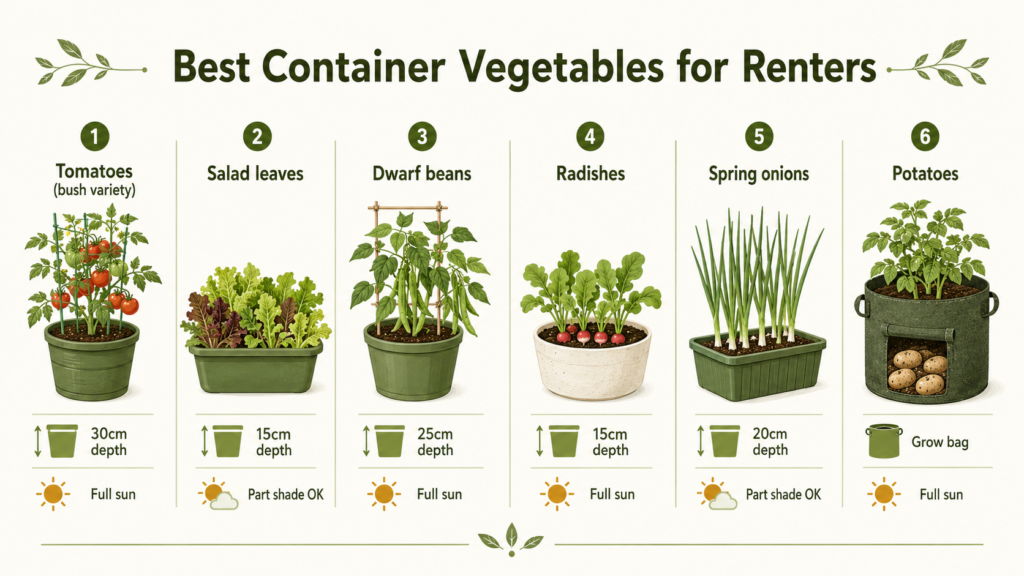
- Bush tomatoes (not cordon/vine varieties — they need too much support and space). Look for “bush” or “patio” on the seed packet.
- Salad leaves — cut-and-come-again mixes are the single best return-on-space crop for a renter; a 30cm trough can produce salad for months.
- Dwarf beans — no canes or elaborate support needed, unlike climbing beans.
- Radishes — ready in as little as four weeks, ideal if you’re renting short-term or just want quick wins.
- Spring onions — tolerant of partial shade, useful if your space isn’t full sun all day.
- Potatoes — grown in a bin bag, dustbin, or purpose-made grow bag rather than open soil.
- Herbs — not technically veg, but a windowsill of basil, mint, and parsley earns its keep faster than almost anything else on this list.
If you’re weighing up which crops are actually worth the compost and container space, this ties directly into 10 most cost-effective vegetables to grow in a UK garden — several of the top performers on that list are also well suited to containers.
In short: stick to bush varieties, shallow-rooting crops, and fast growers in your first season — climbing, deep-rooted, and slow-maturing vegetables are harder to get right in a pot.
Choosing containers on a renter’s budget
You don’t need matching terracotta pots from a garden centre. Some of the best-performing containers I’ve used cost nothing:
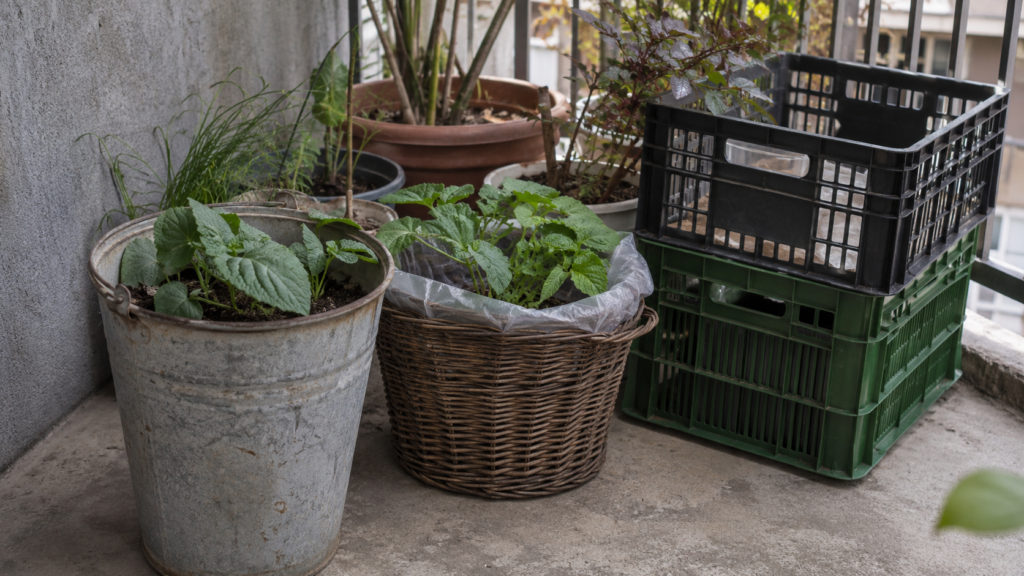
- Reclaimed buckets (ask a local café or chip shop for empty catering buckets — they’re often given away)
- Old baskets lined with heavy-duty plastic
- Stacking crates from a market or wholesaler
- Bin bags for potatoes, rolled down as the plants grow
- Window boxes for herbs and salad, ideal if you have no outdoor space at all beyond a sill
Whatever you use, drainage holes are non-negotiable — drill or puncture the base if there aren’t any, and always sit the container on feet or a tray to let water escape rather than pool.
A £3–4 bag of multipurpose compost from most UK supermarkets or garden centres will comfortably fill a medium container. For anything you’ll grow in for a full season (tomatoes, potatoes), a peat-free compost with a slow-release feed mixed in gives the best results without extra products to buy.
Light, water, and the realities of balcony growing
South- or west-facing spots get the most reliable sun, but even a bright east-facing balcony with a few hours of morning light will grow salad, herbs, and radishes well.
The trade-off with containers is that they dry out far faster than open ground — expect to water daily in warm weather, sometimes twice on a hot, windy balcony. A saucer under each pot helps retain some moisture at the roots. If daily watering isn’t realistic around a work schedule, self-watering containers (with a built-in reservoir) or a simple drip-tray system are worth the extra cost.
Feeding matters more in containers than in open soil too, since nutrients wash out with each watering. A liquid seaweed or tomato feed, applied every one to two weeks once plants are established, makes a noticeable difference to yield.
If you’re short on time in spring, this is where Starting seeds indoors: the cheapest way to get a full growing season becomes useful — starting seeds indoors on a windowsill buys your plants several extra weeks of growing time before they go outside to fend for themselves against the wind and weather.
Dealing with pests in a small space
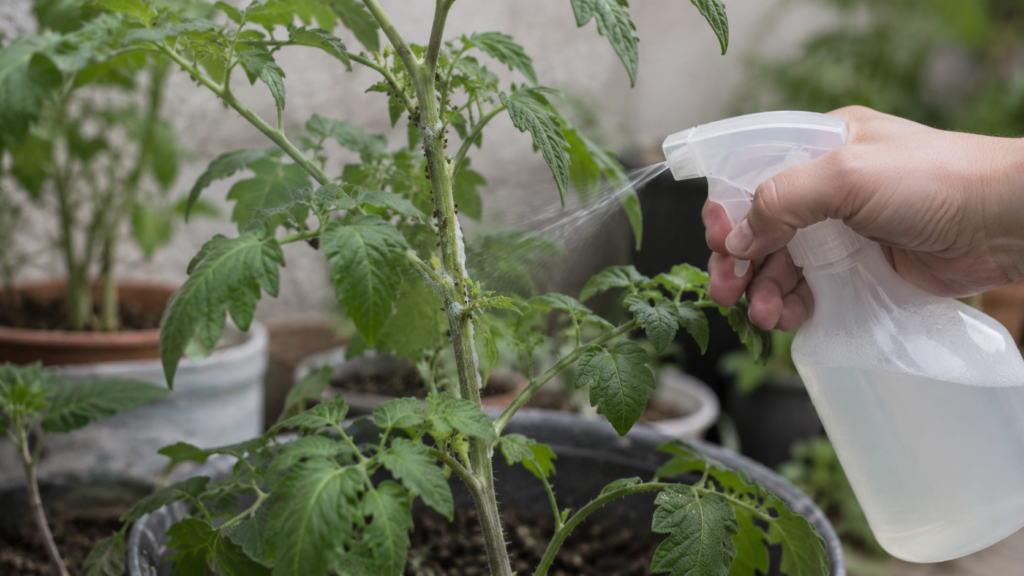
Container growing doesn’t make you immune to pests, but it does make them easier to manage. Slugs and snails are less of a problem several floors up, though ground-floor patios still see them. Aphids on beans and tomatoes are the most common issue on balconies — a strong jet of water or a diluted washing-up liquid spray deals with most infestations without resorting to anything harsher. Keeping containers a little further apart, rather than crowded together, also reduces how quickly problems spread from one pot to the next.
Getting more from a small space
Pairing plants that support each other rather than compete for light, water, and nutrients is especially important in containers, where root space is tight and there’s no room for mistakes. Basil planted alongside tomatoes, for instance, is a classic pairing that also happens to taste good together on a plate. See Companion planting: grow more by spending less for combinations that genuinely work in small spaces, rather than the folklore that doesn’t.
Succession planting — sowing a small batch of fast crops like radishes or salad every two to three weeks rather than all at once — is another way to get more from limited containers over a full season, keeping something usable coming rather than one large glut followed by empty pots.
What it actually saves you
A single 30cm trough of cut-and-come-again salad leaves, sown from a £2 seed packet, will comfortably produce the equivalent of £15–20 of bagged supermarket salad over a season. A grow bag of potatoes (roughly £5 in compost and seed potatoes) typically yields 2–3kg — comparable to £4–6 at UK supermarket prices, with noticeably better flavour. None of this will replace a weekly shop, but it reliably takes the edge off it, and the herbs alone are usually worth the windowsill space on cost per use.
When it’s time to move
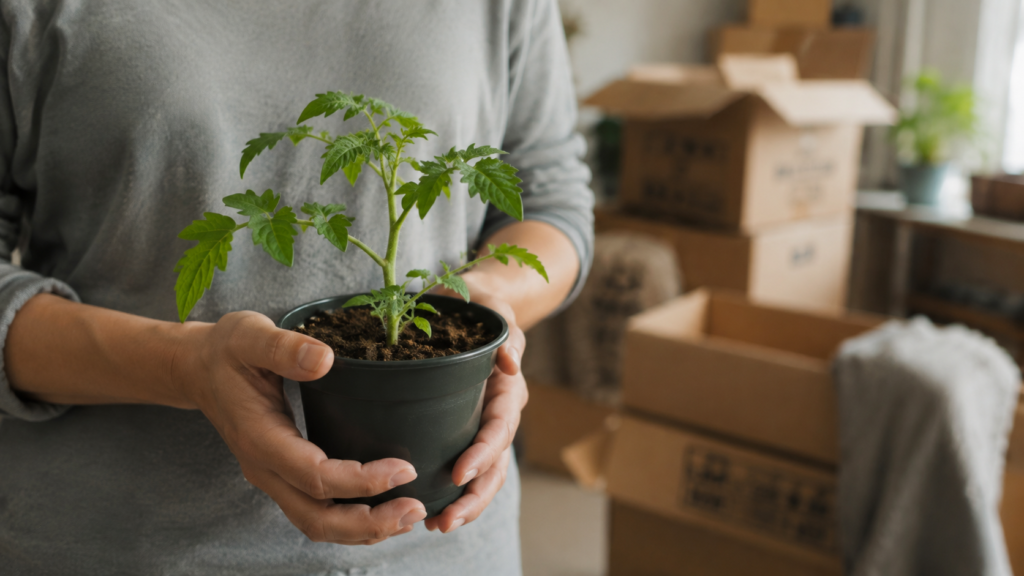
Every container gardener in rented accommodation eventually faces a flat move, so it’s worth planning for it from the start rather than treating it as a crisis when it happens:
- Choose containers light enough to lift and carry when full, not just when empty.
- Avoid anything so large it won’t fit through a standard doorway or down a stairwell.
- Time any repotting or dividing for early spring or autumn, when plants handle root disturbance best — moving house in the middle of summer with tomatoes in full fruit is possible, but it’s not gentle on the plants.
- A short covered journey (even in the back of a car) is usually fine for a few hours; longer moves are easier on plants if you water them well the night before rather than en route.
A final word
Container growing on a rental balcony won’t feed a family of four, but it will get you fresher tomatoes than the supermarket, a windowsill of herbs you’ll actually use, and the quiet satisfaction of growing something with your own hands — no garden, no landlord dispute, and no permanence required. Start small, with two or three pots of the forgiving crops above, and expand as you work out what your particular light, wind, and time allow.
For further guidance on choosing UK-suitable varieties and sowing times, the Royal Horticultural Society’s container gardening advice is a reliable external reference.