Growing Tomatoes in the UK: My Complete Guide from Seed to Harvest
As an Amazon Associate I earn from qualifying purchases and sometimes recommend products from other sellers at no extra cost you. For more details see my disclosure policy and privacy policy.
I’ve grown tomatoes in neat raised beds, in slightly wonky grow bags, and once in a cracked old trough I refused to throw away. And here’s what those years have taught me: growing tomatoes in the UK is entirely doable — even in our short, unreliable summers — but it rewards people who work with the British climate rather than against it.
The “perfect tomato” isn’t luck. It’s a string of small decisions made well, starting long before the first flower appears. This guide covers everything I do from February seed-sowing through to the last green fruit ripening on the windowsill in October — plus the bit most guides skip: what it actually costs, and what you save.
In short: sow indoors from late February, plant out after the last frost in May, choose varieties bred for British summers, water consistently, and one healthy plant will repay you several times over what you spent on it.
When to Grow Tomatoes in the UK: The Month-by-Month Timeline
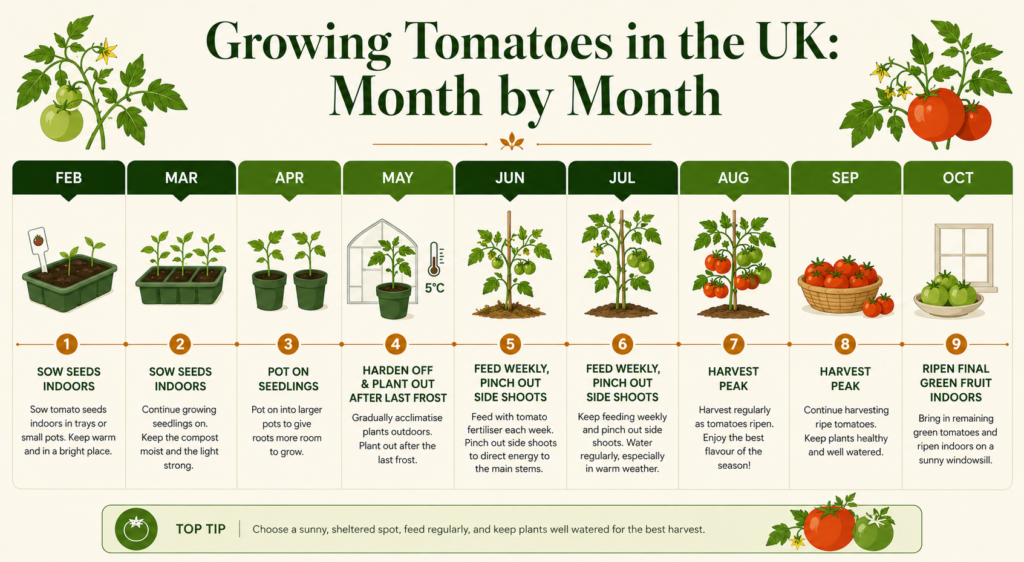
Timing matters more in the UK than almost anywhere, because our growing season is short and our last frosts are late. Here’s the calendar I work to (adjust a couple of weeks later if you’re in Scotland or the north, earlier if you’re in the mild south-west):
Free download
Get the Non‑Toxic Home Audit Checklist
A room‑by‑room checklist to help you spot what’s worth swapping in your home — and what’s not worth worrying about. Join the fortnightly newsletter and it’s yours.
No spam, unsubscribe any time.
- Late February – March: Sow seeds indoors, on a warm windowsill or in a heated propagator.
- April: Pot seedlings on into individual pots as they grow.
- Early–mid May: Harden plants off gradually over 7–10 days.
- Mid–late May: Plant out after your last frost date (check yours — frost in mid-May is still common in much of the UK).
- June – July: Feed, tie in, and pinch out side shoots weekly.
- August – September: Peak harvest.
- October: Pick remaining green fruit before the first frost and ripen indoors.
If you’ve missed the sowing window, don’t write the year off — garden centres sell young plants from late April, and they’ll still crop well. You’ll just pay £2–4 per plant instead of pennies per seed.
The Best Tomato Varieties for the UK
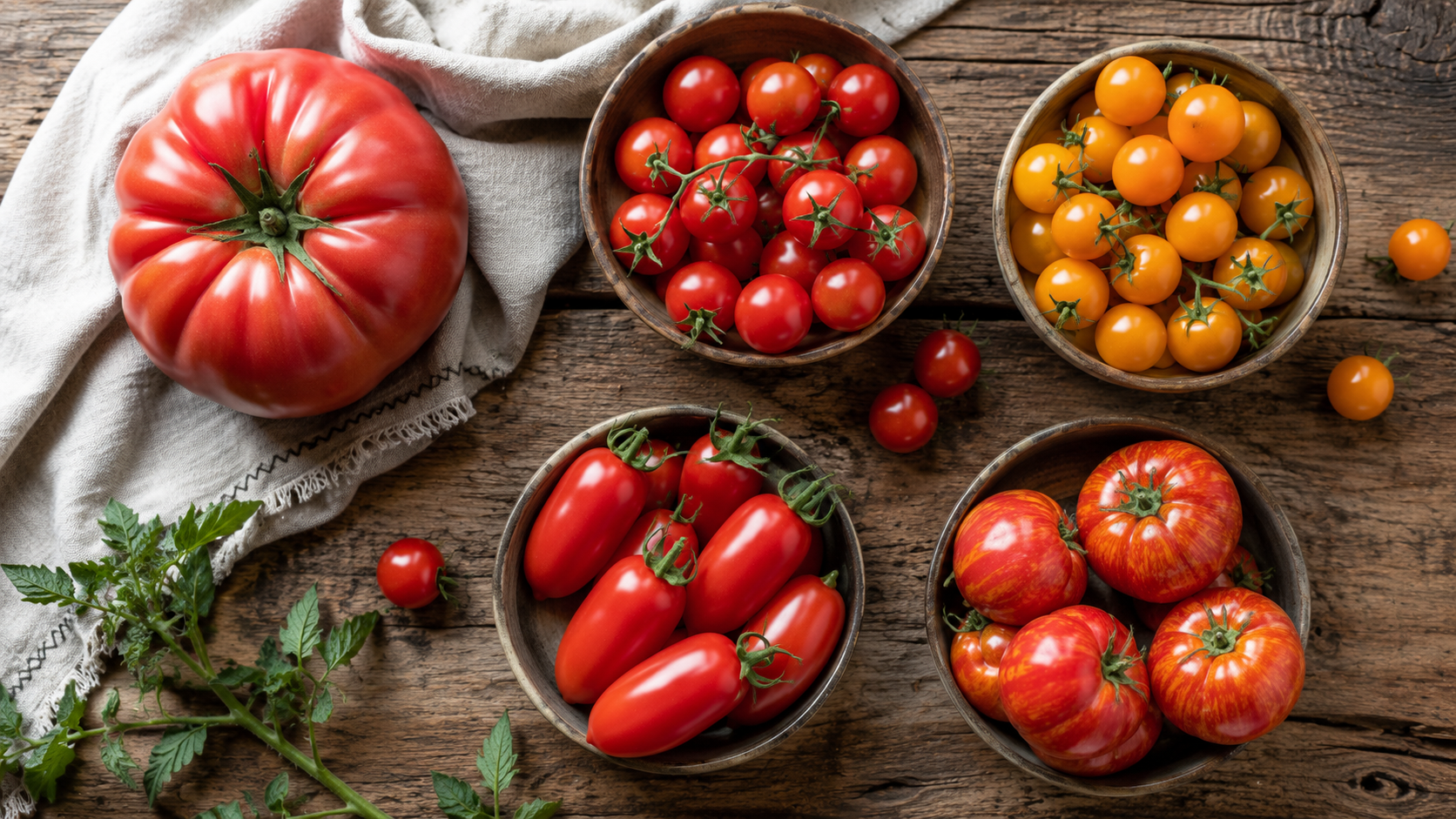
This is where most generic growing guides fall down: half the varieties recommended online are bred for Californian or Mediterranean summers and will sulk through a grey British July. These are the ones that have actually performed for me and reliably ripen in a UK season:
- Gardener’s Delight — the classic British cherry tomato for good reason. Reliable outdoors, heavy cropping, proper tomato flavour.
- Sungold — orange cherry tomatoes so sweet they rarely make it back to the kitchen. Best flavour-to-effort ratio of anything I grow.
- Shirley — a dependable medium-sized greenhouse variety that shrugs off cooler spells. If your summers are unpredictable, this is your safety net.
- Tumbling Tom — bred for hanging baskets and containers. Perfect if you’re growing on a balcony or patio.
- Crimson Crush — bred specifically for blight resistance, which makes it the sensible choice for outdoor growing in wetter parts of the country.
A packet of seed for any of these costs around £3 and contains enough seeds for several years of growing.
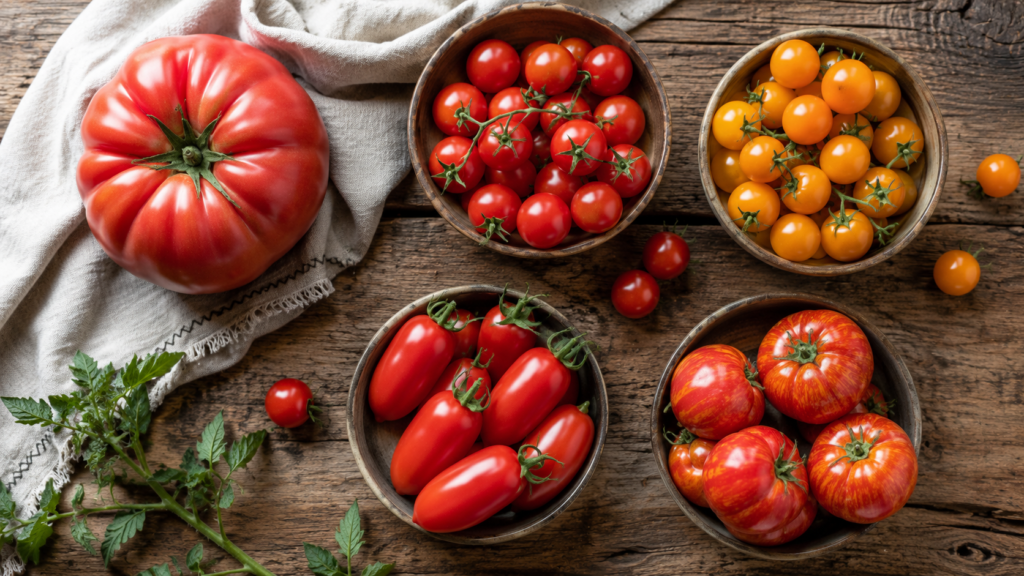
Cordon or bush? Know which you’re growing
One piece of jargon worth learning before you buy: cordon (indeterminate) varieties grow as a single tall stem and need staking and side-shoot pruning — Gardener’s Delight, Sungold, and Shirley are all cordons. Bush (determinate) varieties like Tumbling Tom stay compact and need almost no pruning. Everything in the pruning section below depends on which type you have, and it’ll say on the seed packet.
Start Strong: Sowing Seeds and Early Growth
Healthy plants begin with steady, controlled growth — not a race.
Sow seeds 6–8 weeks before your last frost date — for most of the UK, that means late February to the end of March. Use a light, fine seed compost and keep temperatures around 18–22°C for reliable germination. A sunny windowsill above a radiator does the job; you don’t need a heated propagator, though it speeds things up.
Once seedlings appear, move them to your brightest window. Leggy, stretched seedlings are almost always a light problem, not a feeding problem — this is the most common early mistake in UK homes, where late-winter light is weak.
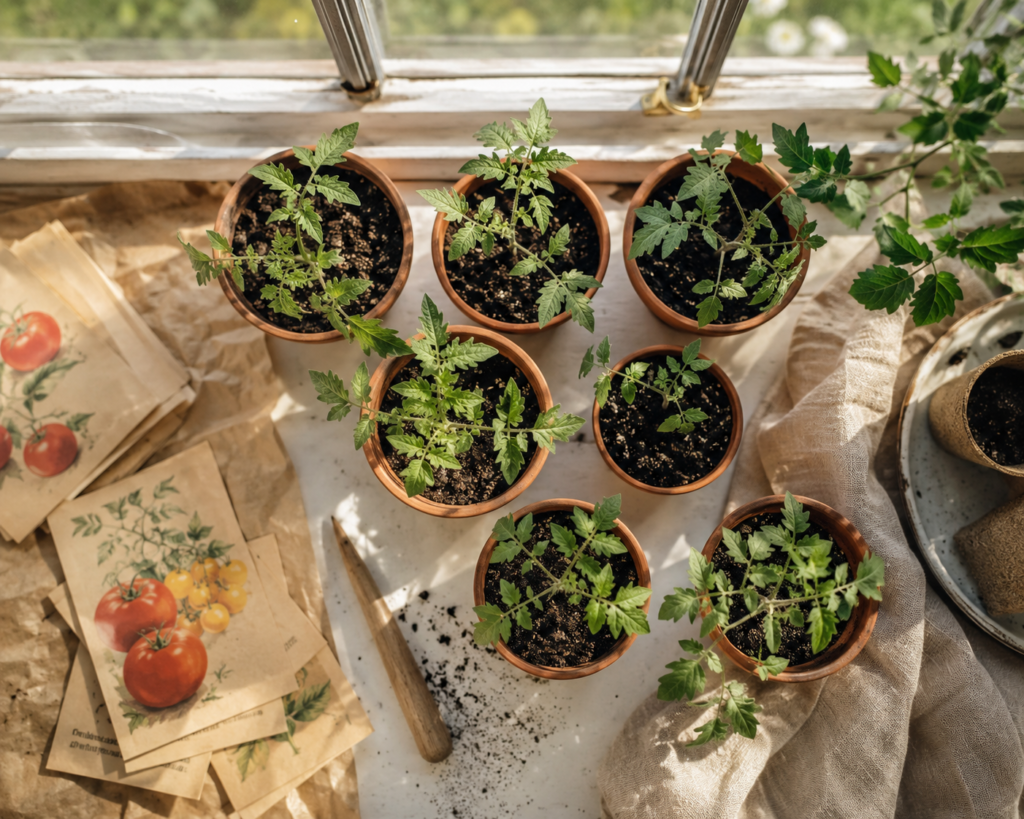
When potting on, bury the stem deeper than it was growing. Tomatoes form roots along the buried stem, which gives you a stronger root system and a sturdier plant.
Before planting outside, harden them off gradually over 7–10 days — stand them out during the day and bring them in at night, extending the time outdoors each day. Skipping this step is the classic May mistake, and it often stalls growth for weeks.
Planting for Maximum Productivity
Tomatoes are hungry and thirsty — plan for it.
Choose the sunniest spot you have; 6–8 hours of direct sun is the goal, and in the UK that usually means a south- or west-facing position. Mix well-rotted compost into the soil before planting — homemade is free and ideal. See How to Make Your Own Compost
If you’re growing in containers, use a good peat-free compost and choose pots at least 30cm wide. Grow bags work too — I get better results standing them upright as deep planters rather than laying them flat. Renting, or gardening on a balcony? Tomatoes are one of the best-value container crops there is.
Plant deeply. I usually strip the lower leaves and bury two-thirds of the stem. More roots means more stability and better fruiting.
Water thoroughly at planting, then consistently thereafter. Irregular watering is the number one cause of split fruit and blossom-end rot — more British tomato crops are ruined by feast-and-famine watering than by anything the weather does.
Support Options: Keeping Plants Upright
Different tomato types need different support.
Cane or stake. Ideal for cordon varieties. Push a sturdy cane in at planting time and tie the plant loosely with soft twine as it grows. Keep ties snug but not tight.
Tomato cages. Best for bush varieties. Cages support lateral growth and stop fruit resting on the soil.
String trellis. The greenhouse favourite: attach strong twine overhead and wind the main stem around it as it grows. Great airflow, easy harvesting.
Choose one system early and stick with it — changing support mid-season stresses the plant. A bamboo cane costs about £1 and lasts years, so there’s no need for anything fancier.
Pruning: Less Can Be More
If you’re growing cordon tomatoes, remove side shoots — the small shoots that appear in the joint between the main stem and each leaf branch. Pinch them out with your fingers while they’re small. This channels energy into fruit rather than excess foliage.
For bush varieties, pruning is minimal. Remove only damaged or yellowing leaves.
Later in the season, remove the lower leaves beneath ripening trusses to improve airflow. This reduces fungal problems and speeds ripening — particularly worthwhile in a damp British August.
Around late August, pinch out the growing tip of cordon plants. In the UK, any flower that opens after this point won’t produce ripe fruit before the season ends, so this tells the plant to concentrate on ripening what it already has. Outdoors I stop plants at four or five trusses; in a greenhouse you can let them run to six or seven.
Feeding for Flavour
Once the first flowers set fruit, switch to a high-potash feed (sold as tomato feed in any UK garden centre — a £5 bottle lasts the whole season). Feed weekly in containers, slightly less often in rich soil.
Too much nitrogen gives you lush leaves and few tomatoes. If your plant looks like a jungle but has little fruit, feed less, not more.
If you want to skip bought feed entirely, comfrey tea is the traditional free alternative — messy and pungent, but it works.
Blight: The UK Grower’s Biggest Enemy
Every country’s tomato growers have their nemesis; ours is late blight. It thrives in exactly the warm, wet spells a British summer specialises in, and it can take an outdoor crop from healthy to collapsed in under a week.
What genuinely helps:
- Water at the base, never over the leaves.
- Space plants properly for airflow.
- Remove lower leaves touching the soil.
- Mulch with straw or compost to stop soil splash, which spreads fungal spores.
- Rotate where you grow tomatoes (and potatoes — same disease) each year.
- If blight hits your area most summers, grow resistant varieties like Crimson Crush outdoors, or grow under cover — greenhouse and polytunnel plants largely escape it.
If you see dark blotches spreading on leaves and stems in warm, humid weather, remove infected plants promptly. Don’t compost blighted material.
Prevention is easier than cure — and in the UK, blight prevention starts with variety choice and watering habits, not sprays.
Harvesting at the Right Moment
Let tomatoes ripen on the vine when possible. Flavour develops fully with sunlight and time.
Pick when the fruit is fully coloured but still firm. When the first cold nights arrive — usually late September or October — harvest all remaining mature green fruit and ripen it indoors. A windowsill works; a drawer with a ripe banana works faster (the banana releases ethylene, which triggers ripening).
Don’t refrigerate freshly picked tomatoes — it dulls the flavour you spent five months building.
And when the inevitable glut arrives in August, that’s not a problem, it’s a bonus: roasted and frozen, turned into passata, or made into chutney, homegrown tomatoes carry summer well into winter. [INTERNAL LINK → preserving the harvest: freezing, pickling, and fermentation basics]
What Does Growing Tomatoes Actually Save You?
Because this blog is about sustainable living that doesn’t cost the earth in either sense, here’s the honest maths from my own growing.
A £3 packet of cherry tomato seed sows a dozen plants this year and more next year. Add compost, a few canes, and a bottle of feed, and a container setup costs roughly £15–20 to run for a season — much less if you already garden and make your own compost.
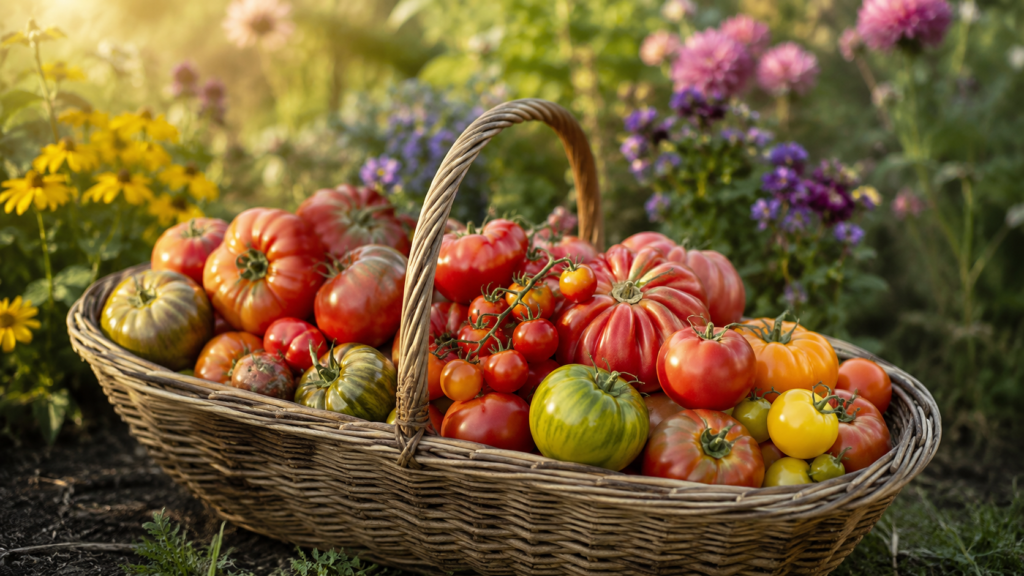
A single healthy cordon plant, grown well, produces roughly 2–4kg of fruit across the season. Cherry tomatoes routinely cost £4–6 per kilo in UK supermarkets, so even three or four plants can return £30–60 worth of fruit — and homegrown cherry tomatoes taste like a different food from the supermarket version. Tomatoes are consistently one of the best-value crops you can grow in this country. [INTERNAL LINK → Grow Your Own Food on a Budget pillar post]
The honest summary: growing tomatoes in the UK won’t make you rich, but it pays for itself several times over, cuts plastic punnets out of your weekly shop, and gives you fruit that supermarkets simply can’t sell.
Small Details That Make a Big Difference
- Gently shake flowering trusses in greenhouses to aid pollination.
- Keep watering consistent during fruiting — little and often beats drought-then-deluge.
- Remove any cracked fruit promptly to prevent pest problems.
- Taste as you grow: different varieties peak at slightly different stages.
Growing tomatoes well isn’t complicated, but it does reward attention. A healthy plant should feel balanced — sturdy stem, good leaf colour, steady flower production, and fruit forming in neat trusses.
When you slice into that first perfectly ripe tomato and it smells like summer before you even taste it, all the small steps along the way feel worth it.
Growing in pots on a patio or balcony? My guide to container veg for renters covers everything beyond tomatoes. And if this is your first year growing food, start with the full guide to growing your own food on a budget — it covers which crops give the best return for UK households.