How to start a wildlife-friendly garden from scratch — for complete beginners
As an Amazon Associate I earn from qualifying purchases and sometimes recommend products from other sellers at no extra cost you. For more details see my disclosure policy and privacy policy.
You don’t need a large garden, a big budget, or years of experience. Here’s what I did — and what actually worked.
| Transparency note: This post contains some affiliate links. If you buy through them, I earn a small commission at no extra cost to you. I only ever recommend things I’ve genuinely used or researched carefully. |
When I first stood in my new back garden three years ago, I saw a neat rectangle of patchy grass, a couple of overgrown shrubs, and precisely zero signs of wildlife. No bees, no butterflies, no frogs. Just a lot of potential and a vague sense of guilt about it.
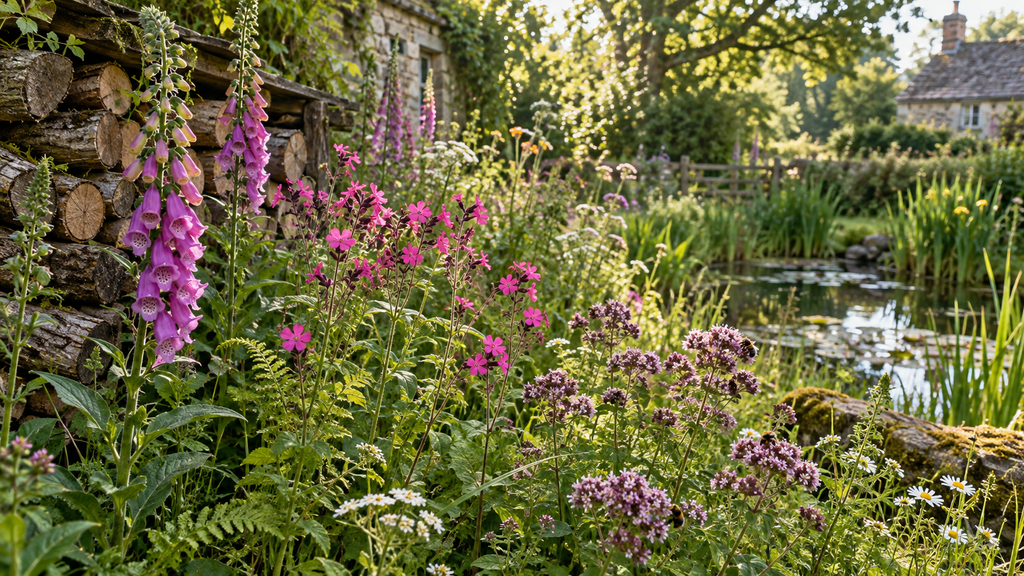
I didn’t know where to start. Every article I found seemed to assume I either had a half-acre meadow or was prepared to spend a fortune on a professional rewilding scheme. I had neither. What I had was a 40-foot urban garden, a limited budget, and a toddler who needed somewhere to play.
What follows is what actually worked — the changes that brought in bumblebees, hedgehogs, frogs, and a genuinely astonishing number of birds within a single growing season. This is a beginner’s guide, written honestly, without the eco-perfectionism that puts most people off before they’ve even started.
Free download
Get the Non‑Toxic Home Audit Checklist
A room‑by‑room checklist to help you spot what’s worth swapping in your home — and what’s not worth worrying about. Join the fortnightly newsletter and it’s yours.
No spam, unsubscribe any time.
A wildlife-friendly garden isn’t about letting everything go wild. It’s about making deliberate choices that leave room for other creatures to share the space.
Why a wildlife-friendly garden matters — and why yours can make a difference
The UK has lost around 50% of its biodiversity since 1970, according to the RSPB’s State of Nature report. Hedgehog numbers have fallen by over a third in rural areas since 2000. Many of our most familiar bumblebee species are in serious decline.
The encouraging news is that private gardens collectively cover more land in England than all the National Nature Reserves combined. That’s a significant opportunity. Gardens that provide food, water, shelter, and safe corridors between green spaces can genuinely support local wildlife populations — and you don’t need a perfect garden to contribute meaningfully.
| QUICK REALITY CHECK A wildlife-friendly garden does not mean an untidy garden. Many of the most effective changes are invisible — what’s underneath the surface, what you stop doing, and where you make small deliberate additions. Your neighbours don’t need to notice a thing. |
Step one: honestly assess what you’re working with
Before you do anything else, spend an afternoon in your garden just watching. Sit with a cup of tea and look at where the light falls, where water collects after rain, which corners stay dry, where the existing insects are (if any), and what your soil is like.
In the UK, most gardens fall into one of four categories from a wildlife perspective:
- The close-cut lawn — mostly grass, probably treated, low in wildflower diversity, but with genuine potential once you stop mowing quite so short and so often.
- The paved or decked garden — harder to work with, but even here a few well-placed containers, a pond, and some climbers can transform what’s on offer.
- The planted-but-exotic garden — full of shrubs and flowers, but mostly non-native varieties that offer little to UK pollinators. Relatively easy to improve over time.
- The semi-wild garden — already has some native plants, perhaps old trees or hedging. The best starting point; you’re building on existing momentum.
My garden was the first category — a close-cut lawn with a concrete path down one side and a fence on all boundaries. Not promising, but it turned out to be plenty to work with.
Water first: why every wildlife garden needs a pond
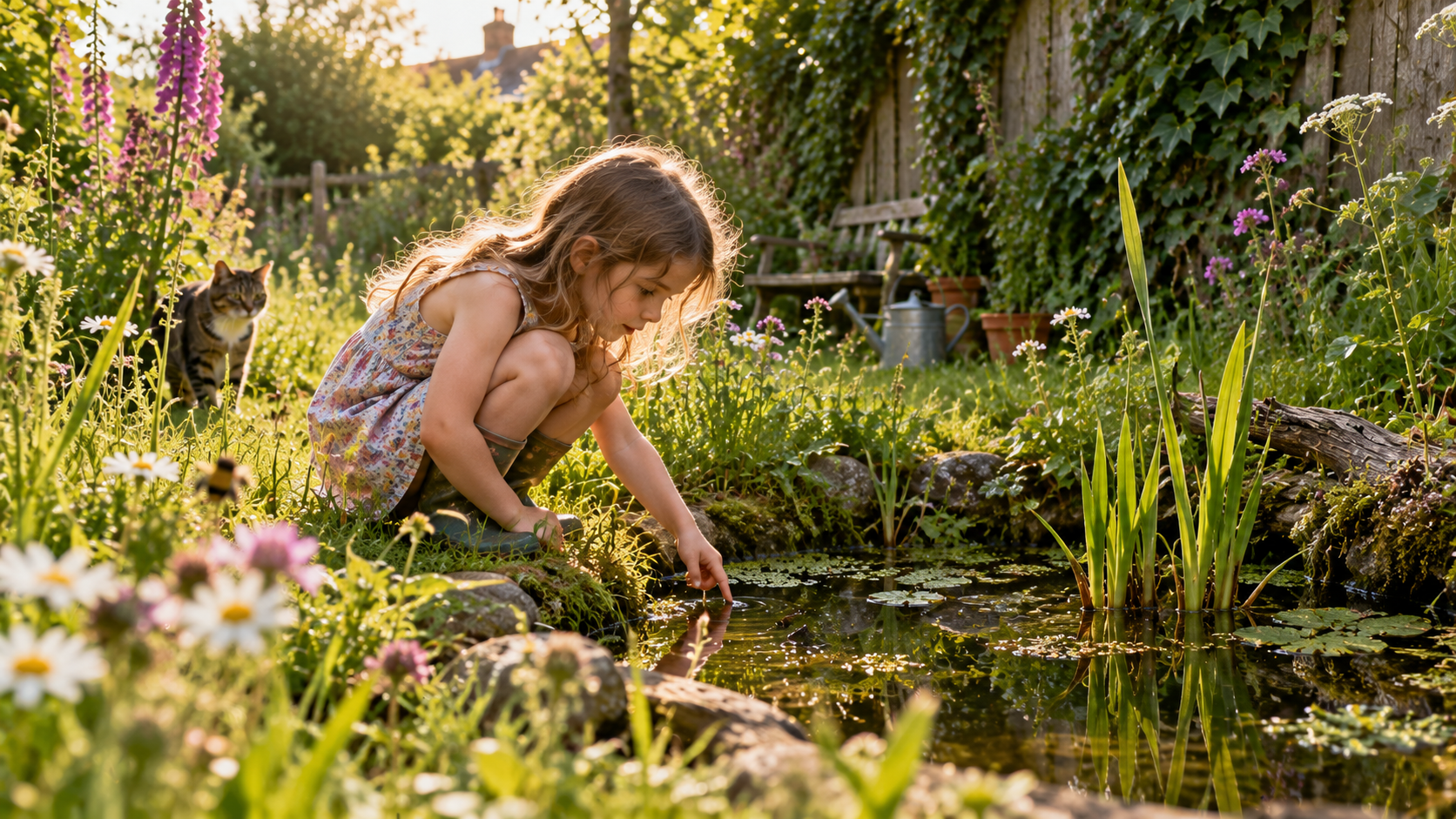
If I could give one single piece of advice to someone starting a wildlife garden, it would be this: put in water. A pond — even a very small one — is the single most effective thing you can do for urban wildlife.
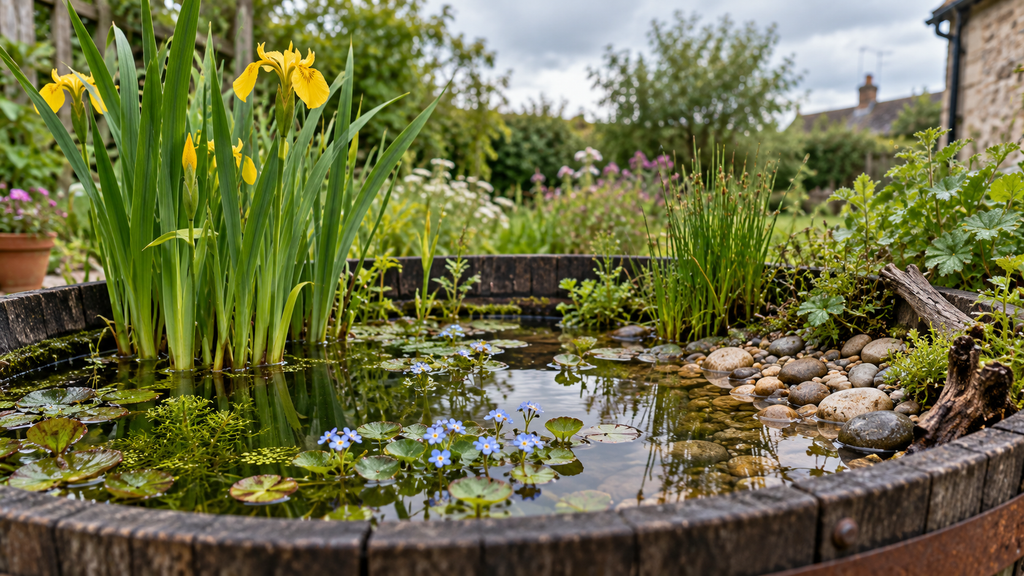
I was sceptical at first. We had a toddler, limited space, and no experience building ponds. But after reading the research and talking to the Wildlife Trusts’ guidance, I gave it a go with a half-barrel pond in year one.
Within three weeks of filling the half-barrel with rainwater and adding a handful of native aquatic plants, we had water boatmen. Within six weeks, a common frog had found it. By the following spring, we had frog spawn.
What makes a good wildlife pond
- Sloping sides or a ramp — Animals need to be able to get in and out. A pond with sheer sides will trap hedgehogs and small mammals. Line one edge with a pebble beach or add a simple plank of wood.
- Different depths — Shallow margins (5–15cm) warm up quickly and suit insects and amphibians; a deeper central section (ideally 60cm or more) prevents it freezing solid in winter.
- Native aquatic plants — Purple loosestrife, water forget-me-not, brooklime, and yellow flag iris are all excellent for UK wildlife ponds.
- Rainwater, not tap water — Tap water contains chlorine and phosphates that promote algae growth. Fill your pond with rainwater and top up from a water butt.
- No fish — Fish eat frog spawn, tadpoles, and aquatic invertebrates. For a wildlife pond specifically, fish are counterproductive.
| ✦ RECOMMENDED A half-barrel pond kit from Thompson & Morgan is a genuinely useful starting point — it comes with the barrel, liner, and a selection of native aquatic plants. Around £45–60 depending on the variant, and you can have it set up in an afternoon. See: thompson-morgan.com |
Native plants: the backbone of a wildlife-friendly garden
Not all plants are equal from a wildlife perspective. A garden full of bedding plants and exotic cultivars can look beautiful and still be almost completely useless to UK pollinators.
A single oak tree supports over 280 species of insect in the UK. A native hawthorn supports around 150. A non-native ornamental cherry — a staple of UK front gardens — might support four or five.
The aim is to gradually introduce more native plants alongside whatever you have, and to replace non-native plants when they need replacing with native equivalents.
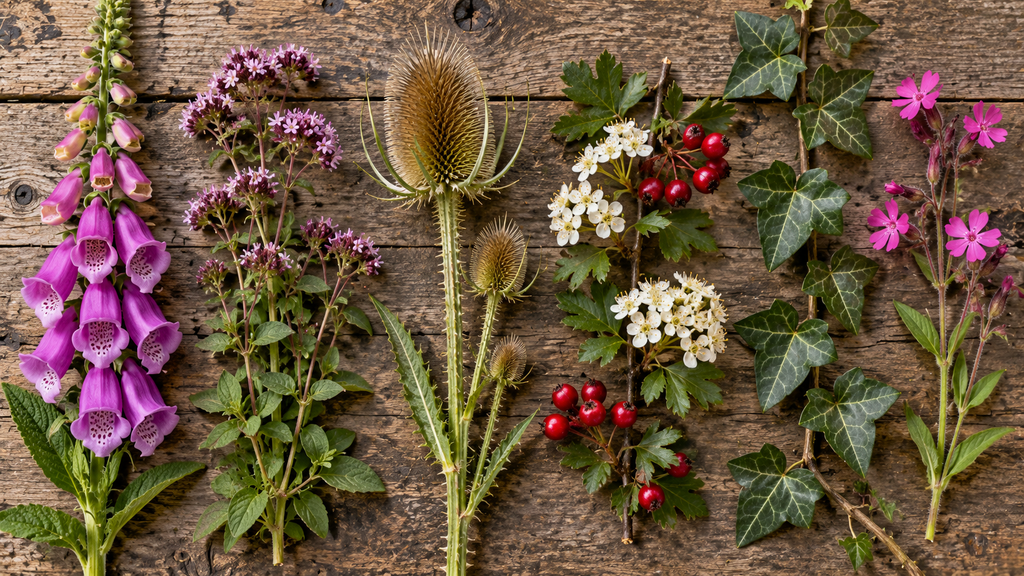
The best native plants for beginners
| Foxglove Digitalis purpurea Long-tongued bumblebees love foxgloves. Biennial, so plant this year for flowers next year. Self-seeds readily.Pollinators | Wild marjoram Origanum vulgare One of the best plants for butterflies and bees in the UK. Drought-tolerant, long-flowering.Butterflies & bees | Teasel Dipsacus fullonum Structural and architectural. Beloved by goldfinches feeding on seeds in autumn and winter.Birds |
| Hawthorn Crataegus monogyna Exceptional for wildlife. Spring blossom, winter berries, thorny nesting structure. Ideal as hedging.Year-round | Ivy Hedera helix Chronically underrated. Late nectar for bees, berries for birds in winter, nesting cover all year.Year-round | Red campion Silene dioica One of the prettiest British wildflowers. Does well in semi-shade, seeds freely, flowers April–October.Pollinators |
All of these are available from reputable UK native plant nurseries. Sarah Raven stocks a good range of native wildflower seeds and plug plants. The Wildflower Shop is excellent for native seeds in bulk.
The lawn: the easiest win in the entire garden
If you have a lawn, you have a significant opportunity — because the single most impactful change you can make requires you to do less, not more.
Stop mowing for a month. That’s it. That’s the beginning.
No Mow May — popularised by Plantlife and now widely supported by the RHS — is based on solid research showing that even a single month of reduced mowing allows lawns to produce more flowers, support more bees, and generate more insects. Plantlife’s research found that lawns left unmown in May produced an average of ten times more nectar than regularly mown grass.
After May, you have options. You could return to normal mowing. Or you could mow paths through the longer sections, creating a managed aesthetic while leaving the wilder patches in place.
Adding wildflowers to your lawn
If you want to go further, you can introduce wildflowers into your existing lawn without completely digging it up. Most UK wildflowers prefer poor soil — they’ve evolved in conditions where vigorous grass doesn’t outcompete them.
Yellow rattle (Rhinanthus minor) is the classic solution. It’s a semi-parasitic wildflower that weakens grass by feeding on its roots, opening up space for other wildflowers. Sow yellow rattle in September (it needs a cold period to germinate) and expect to see results the following spring.
Habitat features: what to add and where
Beyond plants and water, physical habitat structures make an enormous difference. Here’s an honest assessment of what works:
| Feature | Wildlife benefit | DIY or buy | Difficulty |
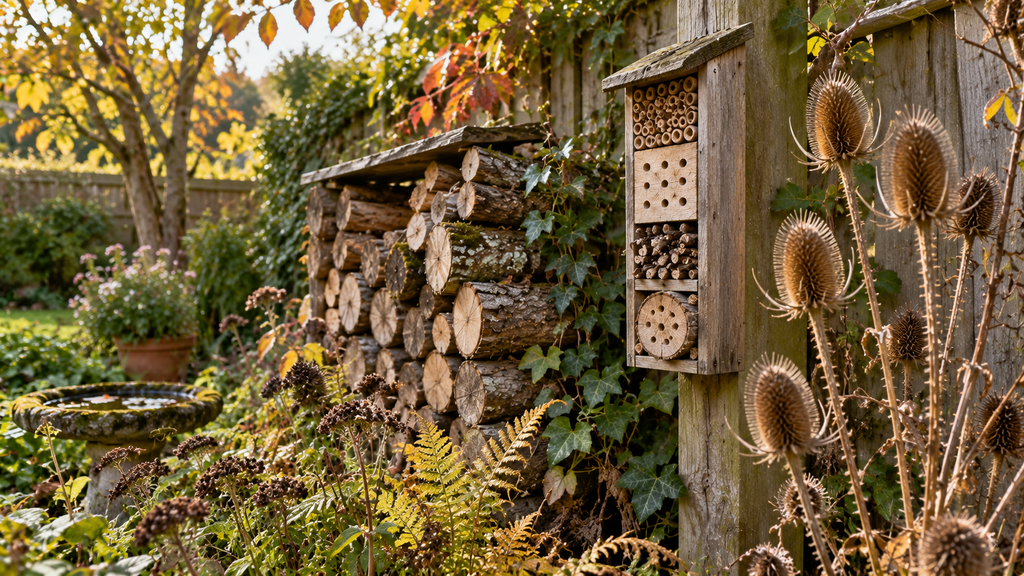
| Log pile | Beetles, woodlice, slow worms, hedgehog hibernation | DIY — any old logs in shade | Easy |
| Hedgehog hole | Hedgehog access between gardens | DIY — 13x13cm gap in fence | Easy |
| Bird nest box | Blue tits, great tits, sparrows | Buy or DIY — face north or east | Easy |
| Compost heap | Slow worms, beetles, hedgehogs in winter | DIY — open-bottomed heap in corner | Easy |
| Bee hotel | Solitary bees (mason bees, leafcutters) | DIY or buy — correct bamboo diameter | Medium |
| Wildlife pond | Frogs, toads, newts, dragonflies, invertebrates | DIY with liner or use half-barrel | Medium |
| Leaf pile | Hedgehog hibernation, overwintering insects | DIY — leaves in a quiet corner | Easy |
A note on bee hotels: the commercial ones are often poorly designed, with bamboo tubes that are too wide, too short, or sealed in ways that trap moisture and cause mould. If you want to support solitary bees effectively, drill holes of 6–8mm diameter into a block of untreated hardwood — oak or ash is ideal — to a depth of at least 15cm.
Boundaries: the hedgehog highway problem
Hedgehogs need to travel to survive. A single hedgehog needs to cover 1–2km per night to find enough food. In a garden surrounded by solid fencing, a hedgehog is effectively trapped.
The solution is a hedgehog hole — a 13cm x 13cm gap at the base of your fence or wall. This is small enough to exclude foxes, large enough for hedgehogs. The Hedgehog Street campaign (hedgehogstreet.org) has a free map where you can record your garden as part of the connected network.
When my neighbours and I created a run of connected holes along our shared back fence line, we started seeing hedgehog footprints in our garden within a fortnight.
The hedgehog holes cost me thirty minutes with a jigsaw and a conversation with my neighbours. It might be the most useful thing I’ve done in the garden.
What to stop doing: the chemical question
This is the section most gardening guides bury, but it’s arguably the most important. A garden with native plants, a pond, and a log pile will still fail wildlife if it’s treated with pesticides, herbicides, and slug pellets.
Pesticides — including products marketed as ‘safe’ — kill the invertebrates that birds, hedgehogs, and frogs depend on. A garden with no insects has no food chain.
Traditional metaldehyde slug pellets are banned in the UK as of 2022, but ferric phosphate pellets have also been shown to harm earthworms and soil invertebrates. Focus instead on physical barriers, encouraging natural predators, and accepting that some of your hostas will be eaten.
Peat-based compost is worth replacing. Peat bogs are one of the most significant carbon stores in the UK, and extracting peat destroys habitat at source. Peat-free alternatives have improved substantially — Melcourt Sylvagrow, available at many UK garden centres, has produced consistently good results.
Thinking in seasons: a beginner’s year in the wildlife garden
Wildlife gardening isn’t something you set up once and forget about. It’s a rhythm of small, seasonal actions. Here’s how that looks across a UK year:
| SPRING (MAR–MAY)→ Put up bird nest boxes before nesting season→ Sow native annual wildflowers from seed→ Stop mowing for No Mow May→ Top up pond with rainwater | SUMMER (JUN–AUG)→ Keep pond topped up — evaporation is rapid→ Leave seed heads on flowering plants→ Avoid pesticides when bees are most active→ Mow paths but leave wild patches |
| AUTUMN (SEP–NOV)→ Sow yellow rattle seed in September→ Build or top up log pile for hedgehog hibernation→ Leave fallen leaves in a quiet corner→ Plant new native shrubs and hedging | WINTER (DEC–FEB)→ Keep bird feeders topped up→ Avoid disturbing log piles or leaf heaps→ Plan next year’s plant additions→ Clean and repair bird boxes |
Where to start: the three-week plan for a complete beginner
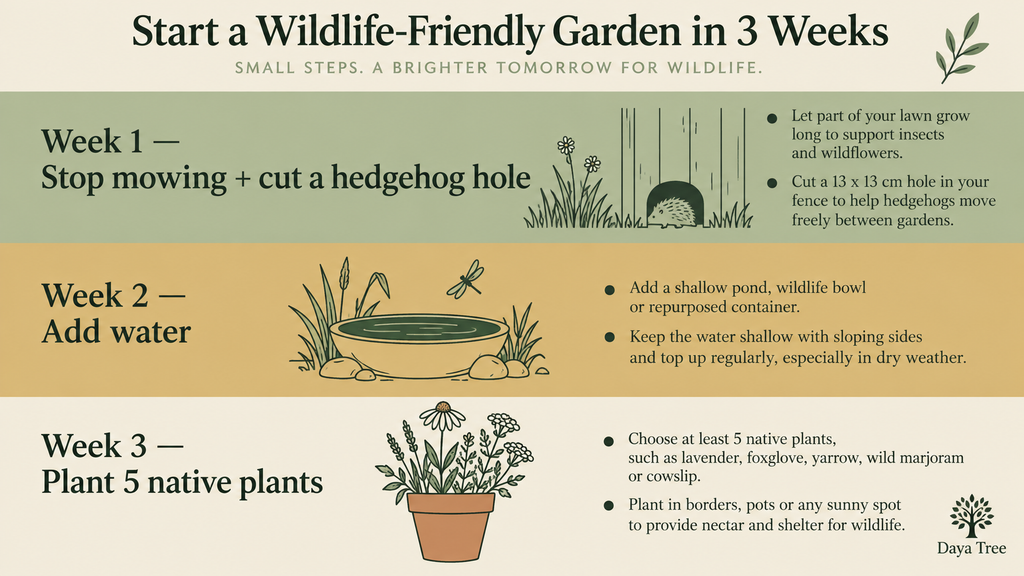
If all of this feels overwhelming, start here. These are the three things that will have the greatest impact in the shortest time, with the smallest budget:
| What to remember from this guide✓ A wildlife-friendly garden is about making space, not achieving perfection✓ Water is the single most effective addition — even a small pond makes a significant difference✓ Native plants support far more wildlife than ornamental cultivars, even at the same price✓ Stopping things (mowing, pesticides, tidying in autumn) is as important as starting new ones✓ Hedgehog holes and connected gardens matter more than most people realise✓ You don’t need a large garden — even a balcony can meaningfully support urban pollinators |
Three years on from that bare patch of lawn, my garden is — and I say this without exaggeration — alive. Last summer I counted fifteen species of bee in a single afternoon. We had five frogs in the pond at once. A pair of wrens nested in the ivy on the back wall. My daughter learned to identify a small tortoiseshell butterfly before her fourth birthday.
None of this required expertise I didn’t have, money I couldn’t spare, or a garden I didn’t have. It required mostly deciding to stop doing certain things, and adding a few new ones deliberately.
The Complete Guide to Rewilding Your UK Garden (2026 / Wildlife Pond in a Small Garden: How to Do It Affordably / UK Native Plants for Pollinators: A Species-by-Species Guide
If you’re just starting out, the most useful thing I can tell you is this: don’t wait until you have the perfect plan. Make the hedgehog hole this weekend. You can refine everything else later.
Free Download
Get the Non-Toxic Home Audit Checklist — free
A room-by-room PDF guide for UK households, with red, amber & green ratings for the most common household products. No overwhelm — just practical swaps, at your own pace.
- Kitchen — cookware, food storage, cleaning products
- Bathroom — personal care, razors, toothpaste
- Laundry — detergents, fabric softener, dryer sheets
- Children’s items — wipes, bath toys, bedding
- General home — candles, paint, air quality
No spam, ever. Unsubscribe any time. Your details are kept private.