How to Store Leftovers Properly: A UK Household’s Guide to Wasting Less
As an Amazon Associate I earn from qualifying purchases and sometimes recommend products from other sellers at no extra cost you. For more details see my disclosure policy and privacy policy.
I used to think I was fairly good at not wasting food. Then I went through a month of actually checking what went in the bin before collection day, and it was a proper wake-up call — half a lasagne gone grey at the back of the fridge, a bag of salad turned to soup, three separate containers of “mystery soup” nobody could identify. According to WRAP, UK households throw away around 4.4 million tonnes of edible food every year, worth roughly £1,000 for a family of four. Most of that isn’t dramatic waste. It’s small, boring storage mistakes, repeated weekly.
The good news is that fixing it doesn’t take a system overhaul. It takes a handful of habits and the right containers. Here’s what actually moved the needle in our kitchen — and a few things I got wrong for years before I sorted them out.
Store food in airtight containers (and choose the material carefully)
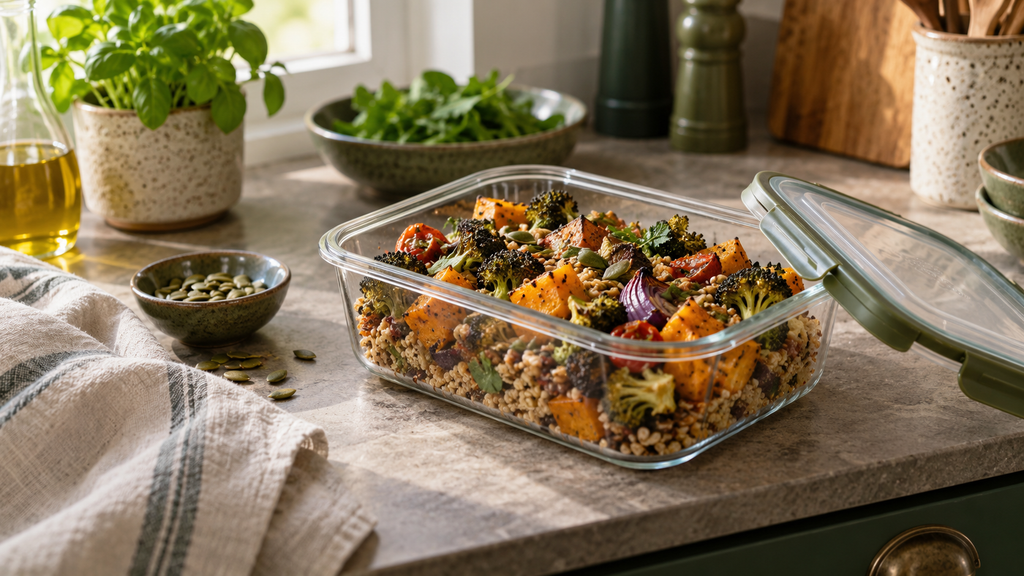
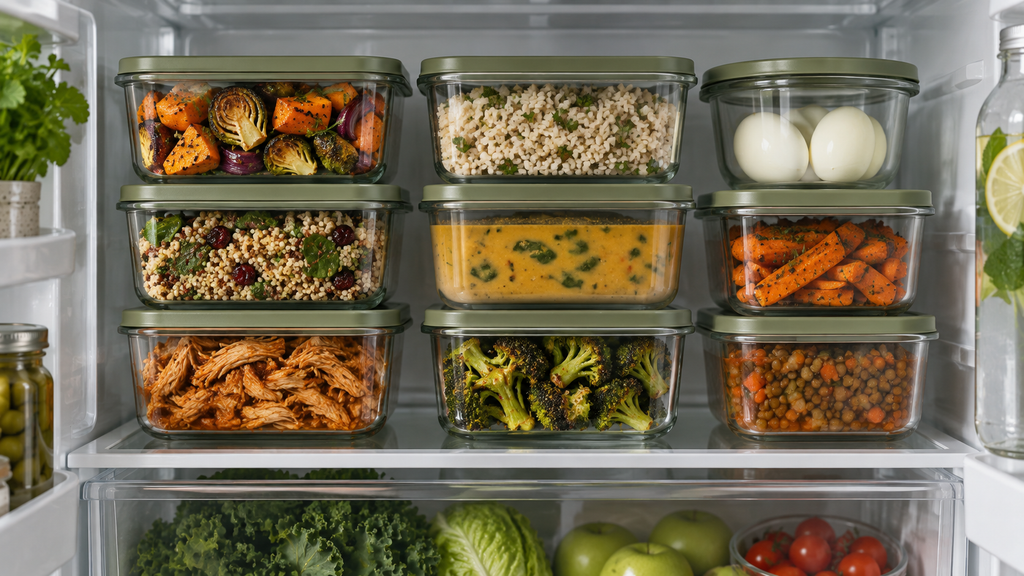
Airtight containers are the single biggest lever for leftovers lasting longer. Keeping air and moisture out slows the bacterial and mould growth that spoils food early, and it protects flavour and texture too — nobody wants fridge-scented rice.
Where I’d add some nuance to the usual advice: not all containers are equal, and this is worth pairing with a read of our safer food storage guide for UK households if plastic is still doing most of the work in your kitchen. Acidic leftovers — tomato sauces, citrus, vinegar-based dressings — can leach compounds from certain plastics over time, so glass or stainless steel is the safer long-term choice, and it also means one less thing heading to landfill when a lid finally cracks.
Free download
Get the Non‑Toxic Home Audit Checklist
A room‑by‑room checklist to help you spot what’s worth swapping in your home — and what’s not worth worrying about. Join the fortnightly newsletter and it’s yours.
No spam, unsubscribe any time.
Skip the clingfilm — cover food properly instead
Plastic wrap and foil will create an airtight seal in a pinch, and if that’s genuinely all you have, use enough of it that there are no gaps — a half-hearted cover is worse than no cover, because it traps just enough moisture to encourage mould without actually sealing anything out.
But this is exactly the kind of daily habit worth swapping out rather than optimising. Beeswax wraps, silicone lids, or simply decanting into a container with a proper lid all do the job without the single-use plastic. If you’re building a non-toxic kitchen from scratch, this is one of the cheapest, fastest wins — a beeswax wrap costs a few pounds and lasts a year with basic care.
Label and date everything — even when you’re sure you’ll remember
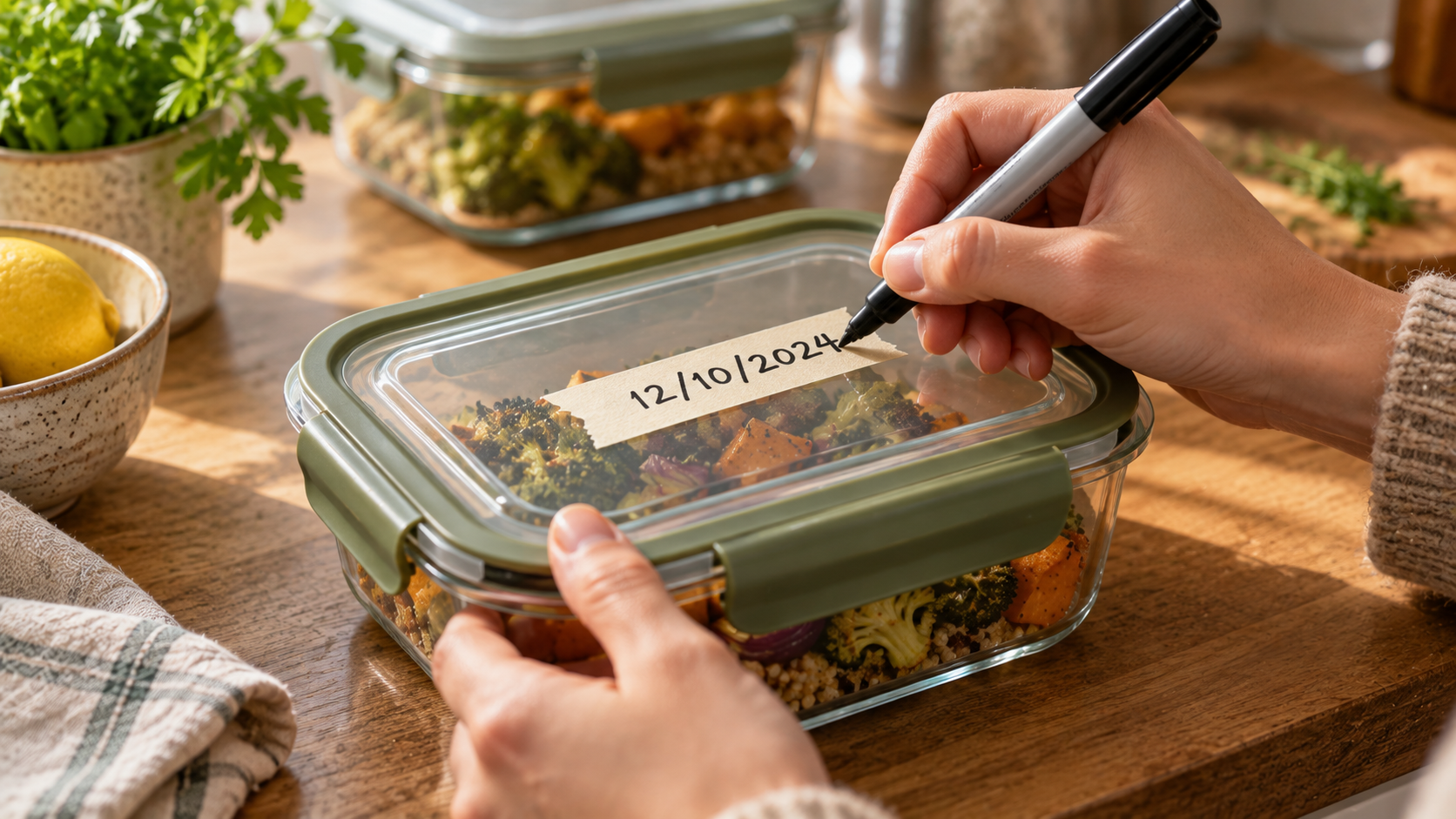
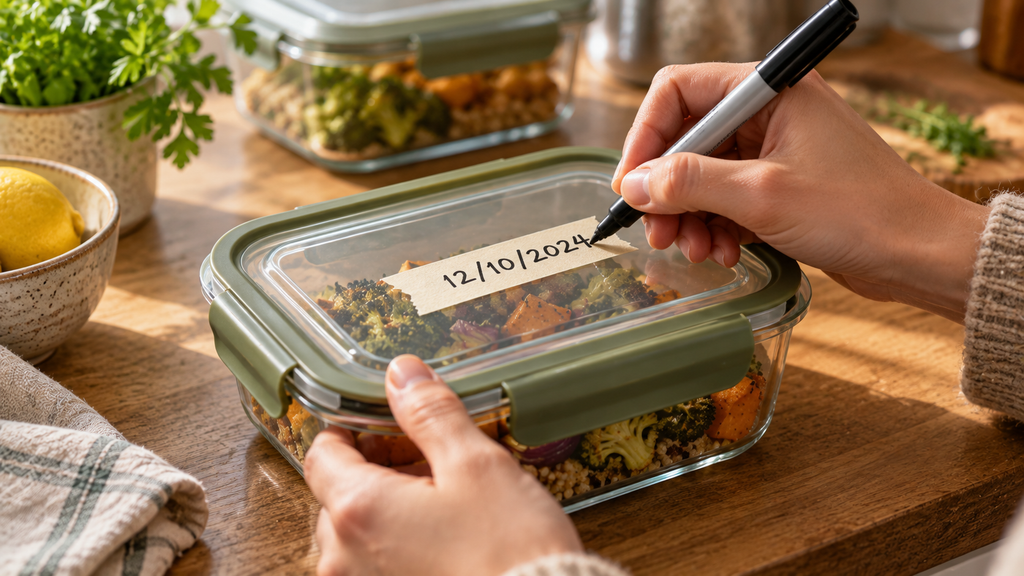
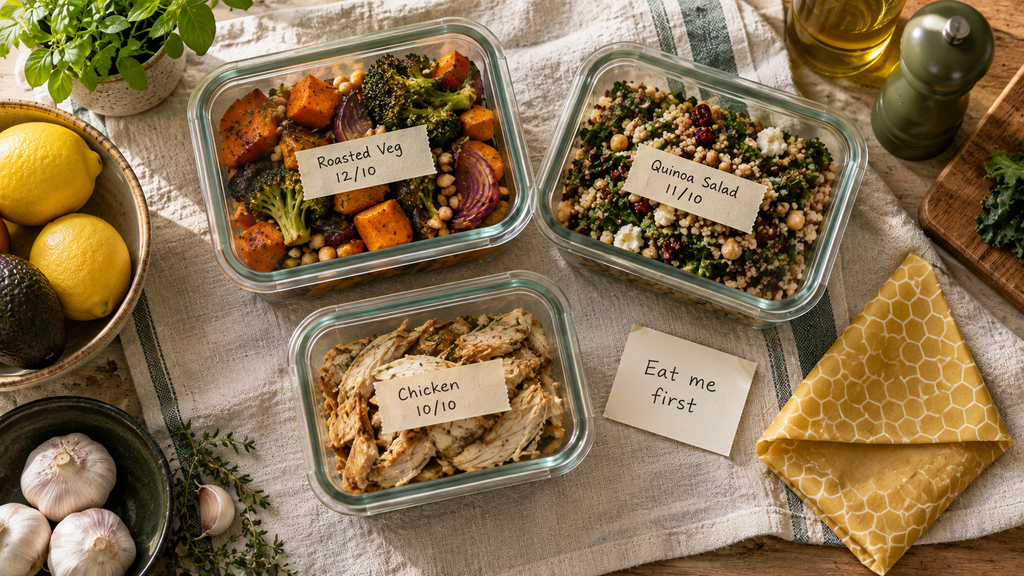
I promise you will not remember. Writing the date and contents on masking tape takes ten seconds and saves you from either binning something perfectly good out of uncertainty, or eating something you shouldn’t. It’s also the single easiest habit to teach kids and partners, which matters if you’re not the only person opening the fridge.
Don’t leave food out at room temperature too long
This one is genuinely about safety, not just waste. Bacteria multiply fastest in food sitting between roughly 8°C and 60°C, so the UK Food Standards Agency’s advice is to get leftovers into the fridge within two hours of cooking — and sooner in a warm kitchen or during a heatwave. If you’re portioning a big batch to freeze, splitting it into smaller containers before it goes in the fridge helps it cool faster, which matters more than people think.
Keep acidic food out of metal containers
Tomato-based sauces, citrus, and vinegar-heavy dishes can react with certain metals, particularly aluminium and copper, giving food a metallic taste and, in some cases, leaching more metal into your meal than you’d want. Glass or good-quality plastic-free options sidestep the problem entirely — another small reason to build toward a non-toxic home, room by room rather than trying to fix everything at once.
Don’t overfill your fridge
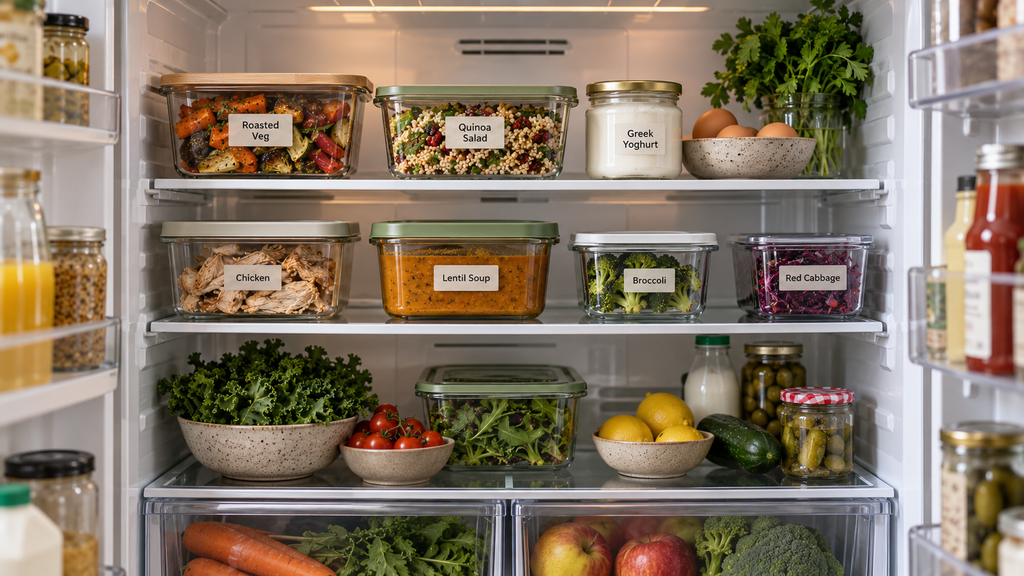
A packed fridge can’t circulate cold air properly, which means uneven cooling, food spoiling faster than it should, and — ironically — more waste, not less. It also makes it much harder to actually see what you’ve got, which is how good food quietly turns into a science experiment at the back of the shelf. Leaving gaps, and doing a proper “eat this first” shelf, does more for food waste than almost any other single change.
Turn this into a habit, not a one-off tidy-up
None of this needs to be perfect. The households that waste the least food aren’t the ones with the most beautiful matching container sets — they’re the ones with a quick weekly routine: a fridge check before the big shop, a “use it up” shelf, and containers that are actually easy to reach for. If you’re also growing or preserving your own food, this pairs naturally with preserving a glut through freezing, pickling and fermenting — the same “don’t let it go to waste” instinct, just applied earlier in the process.
Preserving the Harvest: Freezing, Pickling, and Fermentation Basics
Small changes, kept up consistently, are what actually move a household’s food waste numbers — not one dramatic decluttering weekend. Start with airtight containers and dating your leftovers this week, and layer in the rest as it becomes habit.