Rainwater Harvesting in the UK: Save Money on Your Water Bill and Be Kind to Your Garden
As an Amazon Associate I earn from qualifying purchases and sometimes recommend products from other sellers at no extra cost you. For more details see my disclosure policy and privacy policy.
UK water bills rose by 26% in April 2025 and have gone up a further 5.4% in April 2026, taking the average household to around £639 a year. That figure will keep climbing. I set up my first water butt three years ago after one particularly dry summer when I watched my hosepipe cheerfully spend the equivalent of a small holiday watering my tomatoes. It was the nudge I needed.
Rainwater harvesting sounds technical. It isn’t. At its simplest, it means putting a barrel under your drainpipe and using what falls from the sky instead of what comes out of the tap. Here is everything you need to know — what it actually saves you, how to get started, and which equipment is worth buying in the UK in 2026.
| The quick summary A typical UK garden can use over 5,000 litres of mains water a month in a dry summer. A basic water butt (100–200 litres, from around £25) can pay for itself in one season if your garden is metered. Rainwater is also slightly better for plants than tap water — lower pH, free of chlorine, and the way plants evolved to drink. How much water does a UK garden actually use? This was the number that made me take rainwater seriously. According to RHS guidance, a vegetable garden needs around 30 to 50 litres per square metre per week during a dry summer. A typical 30 square metre lawn needs up to 750 litres a week in dry weather. Add flower borders and you can hit 5,400 litres a month for a medium garden. A garden sprinkler running for one hour uses approximately 1,000 litres — more than twice the daily indoor water use of a four-person household. Even a hosepipe running for 15 minutes delivers 90 to 150 litres per session. At the current UK average water rate, those summer watering sessions add up fast. The UK does get a reasonable amount of rainfall — roughly 885mm a year on average — but summer is when gardens need water most and rain is least reliable. In the 2018 drought, parts of England saw no rainfall for over 30 consecutive days. In 1976, some areas went 45 days without rain. Water butts bridge that gap cheaply. |
What does rainwater harvesting actually save you?
The honest answer: it depends on whether your home is metered, how large your garden is, and how dry your summers run. Here is a realistic estimate for a metered household with a medium garden in England:
| Setup | Water saved (summer) | Estimated saving |
|---|---|---|
| 1 x 200L butt, small garden | 2,000–4,000L | £3–£6 |
| 2 x 200L butts, medium garden | 6,000–10,000L | £9–£15 |
| Linked butts (500L+), large garden | 15,000–25,000L | £22–£37 |
Those numbers look modest, but the water butt itself costs £25 to £50 and lasts decades. The payback period is one to two seasons on a metered property. If you are on an unmetered tariff and pay a flat rate regardless of use, you will not see a direct bill reduction — but you will still be using a free resource instead of treated drinking water for your courgettes, which feels like the right call anyway.
Free download
Get the Non‑Toxic Home Audit Checklist
A room‑by‑room checklist to help you spot what’s worth swapping in your home — and what’s not worth worrying about. Join the fortnightly newsletter and it’s yours.
No spam, unsubscribe any time.
The bigger saving is environmental rather than financial. Using harvested rainwater for garden irrigation takes pressure off reservoirs and water treatment infrastructure — particularly important in the drier south and east of England where demand is highest in summer.
Why plants prefer rainwater
I noticed this in my first season: the tomatoes watered from the butt seemed to do better than those watered from the hosepipe. There is actually a straightforward reason for this.
Tap water in the UK is treated with chlorine and, in hard water areas, contains dissolved calcium and magnesium carbonate. Over time, alkaline tap water raises soil pH — which can affect the availability of certain nutrients, particularly for acid-loving plants like blueberries, rhododendrons, and heathers. Rainwater is naturally slightly acidic (around pH 5.6 to 6.5 in the UK), free of chlorine, and contains a small amount of dissolved nitrogen from the atmosphere — essentially a very dilute, natural foliar feed.
For most vegetables, fruit, and ornamentals, the difference is subtle. For acid-loving plants, it can be significant. If you have ericaceous beds or blueberries in containers, rainwater is genuinely preferable to tap water.
Getting started: what to buy and how to set it up
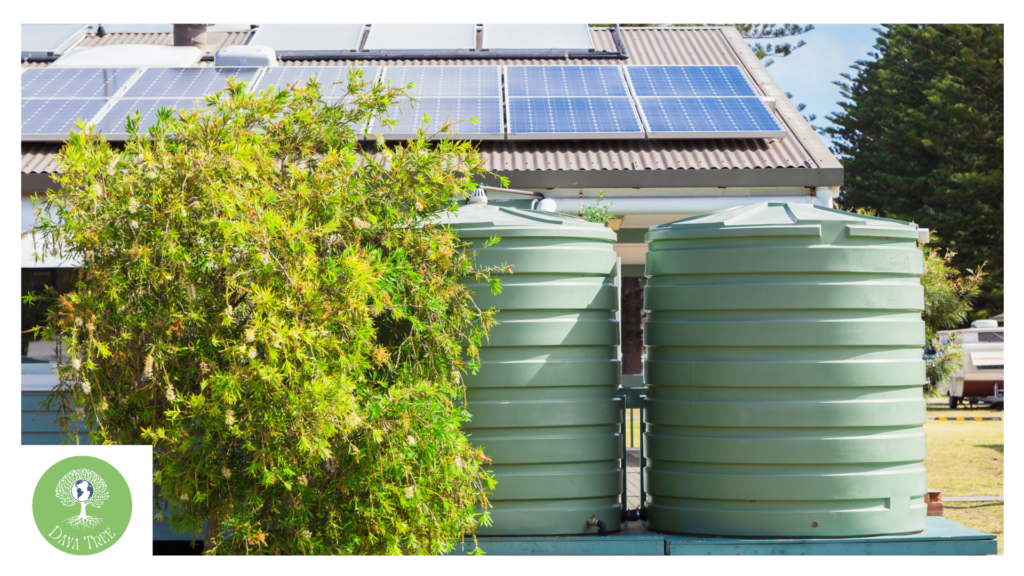
The standard setup for a UK garden is a water butt connected to a downpipe from your roof. Rain falls on the roof, runs into the guttering, diverts into the butt, and sits there until you need it. A tap at the base lets you fill a watering can or attach a hose.
Choosing the right size
The UK rains roughly once every three days on average, but summer dry spells vary. For most gardens, the calculation is simple: work out how much you use in a typical watering session, then decide how many dry days you want to cover.
- Small garden or mainly containers: 100L butt is sufficient for 6 to 10 days of light watering
- Medium garden with veg beds: 200L to 250L, or two butts linked together
- Large garden or polytunnel: 500L+ tank, or multiple linked butts
Recommended water butts (UK, 2026)
These are the options I’d actually point someone toward:
Harcostar 227L Water Butt Kit
Made in the UK from recycled plastic. Comes with a diverter, child-safe lid, and tap. One of the most durable options available. Available from most garden centres and online. Roughly £35 to £55 depending on where you buy.
Edena 100L Slimline Butt
A good choice for small gardens, tight spots, or anyone who wants something unobtrusive. Fits against a fence or wall. Around £25 to £35.
Linking kits for multiple butts
If your garden needs more than one butt, linking kits allow two or more to connect so they fill simultaneously. Far cheaper than buying a large tank. A linking kit typically costs £5 to £15.
Installation: simpler than it sounds
I installed mine in about 20 minutes the first time. Here is what you need to do:
- Choose a downpipe — any external drainpipe connected to a gutter will work. Garage and shed downpipes are often overlooked and perfectly good.
- Fit the diverter kit — this replaces a section of the downpipe with a T-junction. When the butt is full, water bypasses back into the drainpipe automatically.
- Elevate the butt on a stand — the stand that comes with most kits raises the butt 30 to 40cm, giving you enough clearance to fit a watering can under the tap comfortably.
- Check the overflow — make sure the overflow pipe leads somewhere sensible (back to the drainpipe or away from the house foundations).
In Wales and Scotland, rainfall is frequent enough that a 200L butt will fill within a few days of fitting. In the south of England, you may need to wait for the first decent rain after installation.
Keeping your water butt healthy
Harvested rainwater can develop algae in warm weather, particularly if the butt is in direct sunlight. A few simple steps keep it in good order:
- Keep the lid on — this prevents light reaching the water (algae need light to grow) and stops mosquitoes breeding
- Use it regularly — water that circulates stays cleaner than water that sits for weeks
- Add a water butt treatment tablet — Hozelock and others make non-toxic tablets that prevent slime and algae; they’re inexpensive and genuinely useful in summer
- Clean it out once a year — drain it at the end of autumn, rinse with a dilute bleach solution, and rinse again before spring
A note on edible plants: rainwater can pick up contaminants from roof surfaces (moss, bird droppings, dust). It is perfectly fine for watering soil around vegetables, but avoid using it as a direct foliar spray on leaves or fruit you are about to eat. Watering at the base of the plant avoids this entirely.
Beyond the garden: other uses for harvested rainwater
Garden watering is the obvious use, but harvested rainwater works equally well for:
- Washing the car — no limescale spotting, and no detergent runs into the water table if you use an eco wash product
- Cleaning garden tools, pots, and greenhouses
- Topping up ponds and water features — rainwater is far better for wildlife ponds than chlorinated tap water
- Filling paddling pools — in summer, a large butt or linked system can often fill a small paddling pool without touching the mains
More advanced systems — those plumbed into household toilet cisterns or washing machines — are also available in the UK, but these require professional installation and planning permission in some cases. For most people, the simple butt-and-tap approach delivers the most benefit for the least effort and cost.
| The bottom line Rainwater harvesting is one of the lowest-effort, lowest-cost changes you can make to a UK garden. A basic setup costs less than a bag of compost and starts paying back immediately. It is not going to revolutionise your water bill on its own — but it will reduce your dependence on treated mains water, give your plants a better drink than your tap can offer, and slot naturally into a more sustainable garden routine. Start with one butt. It genuinely is that simple. |
Sources and further reading
- Water UK — Annual average bill changes 2025–2026: water.org.uk
- Royal Horticultural Society — Garden watering guidance: rhs.org.uk
- BBC Gardeners’ World — Best water butts 2025: gardenersworld.com
- Ofwat — Water bill projections 2025–2030: ofwat.gov.uk
You might also enjoy: Rewilding Your UK Garden · Growing Your Own Vegetables on a Budget · Composting for Beginners