Foraging in Autumn: Fungi, Sloes, Elderberries, and Hazelnuts
As an Amazon Associate I earn from qualifying purchases and sometimes recommend products from other sellers at no extra cost you. For more details see my disclosure policy and privacy policy.
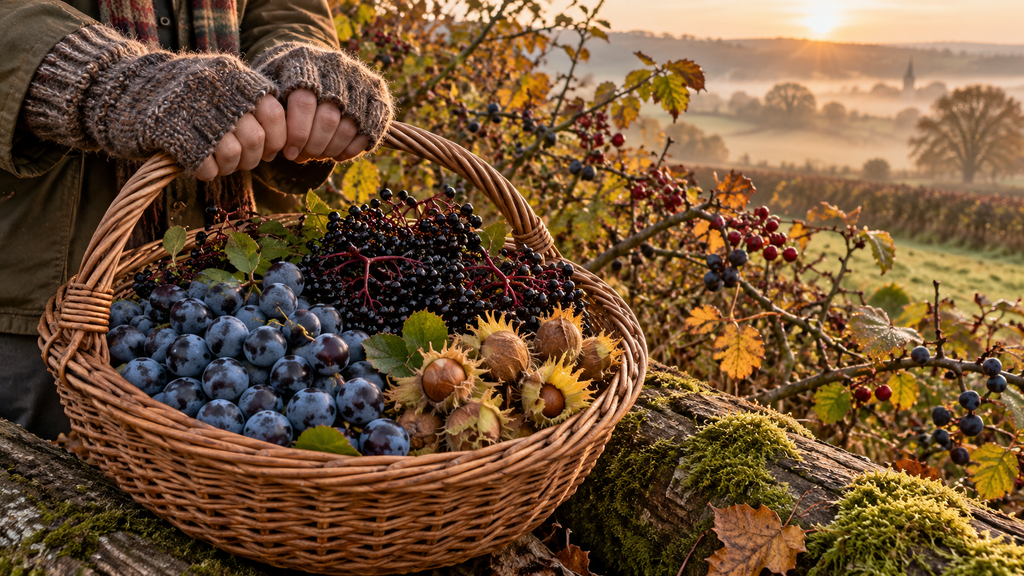
If spring foraging is about tender greens, autumn foraging in the UK is about abundance. From mid-September to the end of November, hedgerows sag with sloes and elderberries, hazel trees drop their nuts, and woodland floors erupt with fungi. It’s the season most of us picture when we think of foraging: a basket on your arm, cold fingers, and something purple-stained to show for it.
This guide covers the four autumn finds people ask me about most: fungi, sloes, elderberries and hazelnuts. For each one you’ll learn when to pick, how to identify it, what to watch out for, and what to make with it. If you’re brand new to this, start with my beginner’s guide to foraging in the UK and come back here once you’ve got the basics.
What to forage in autumn in the UK: a quick overview
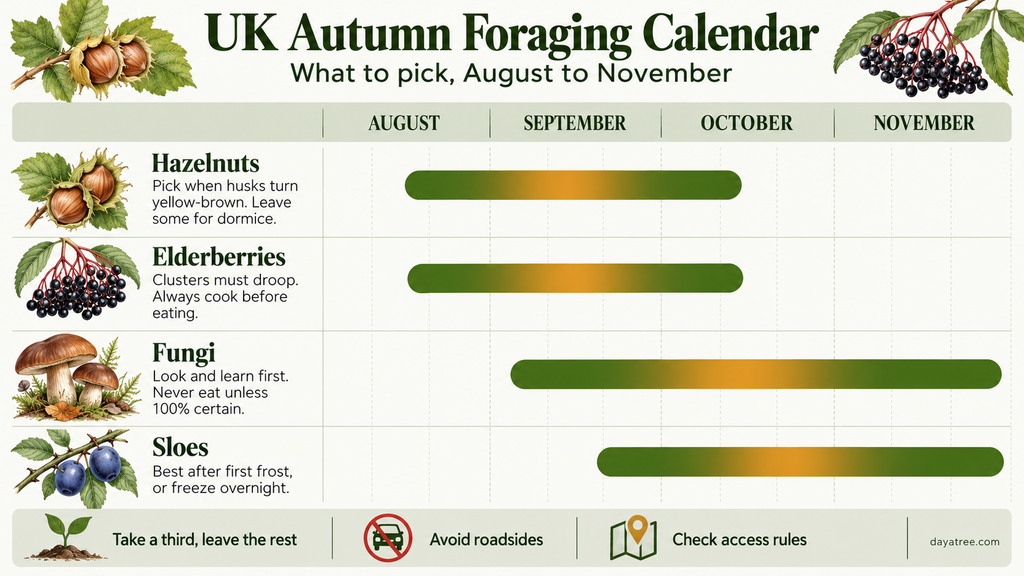
Autumn is the UK’s peak foraging season because hedgerow fruit, nuts and fungi all ripen in the same short window. Here’s roughly when each of this guide’s four finds is at its best:
- Hazelnuts: late August to early October (beat the squirrels)
- Elderberries: late August to early October
- Fungi: September to November, peaking after rain in October
- Sloes: late September to November, ideally after the first frost
Timing shifts by a week or two depending on where you live. Southern England and coastal areas tend to ripen earlier than upland Wales, northern England and Scotland.
Free download
Get the Non‑Toxic Home Audit Checklist
A room‑by‑room checklist to help you spot what’s worth swapping in your home — and what’s not worth worrying about. Join the fortnightly newsletter and it’s yours.
No spam, unsubscribe any time.
Before you go: the autumn foraging rules I always follow
Good foraging takes a little and leaves plenty. Autumn fruit and nuts are winter fuel for birds, dormice and other wildlife, so how you pick matters as much as what you pick.
- Know the law where you are. In general you can pick fruit, nuts and fungi for personal use on public rights of way and open access land, but uprooting any wild plant without the landowner’s permission is illegal. Some sites, including many nature reserves and SSSIs, ban picking altogether. My guide to what you can legally forage covers this in detail.
- Be 100% certain of your identification. If there’s any doubt, leave it.
- Take only what you’ll use. I stick to roughly a third of what’s on a bush, and less if it’s sparse. It’s the same principle as mindful consumption at home: buy (or pick) for need, not because it’s there.
- Avoid polluted spots. Skip busy roadsides, sprayed field margins and anything at dog height.
- Follow the Countryside Code. Close gates, stay on paths, and don’t damage the hedge to reach the best fruit.
Foraging sloes
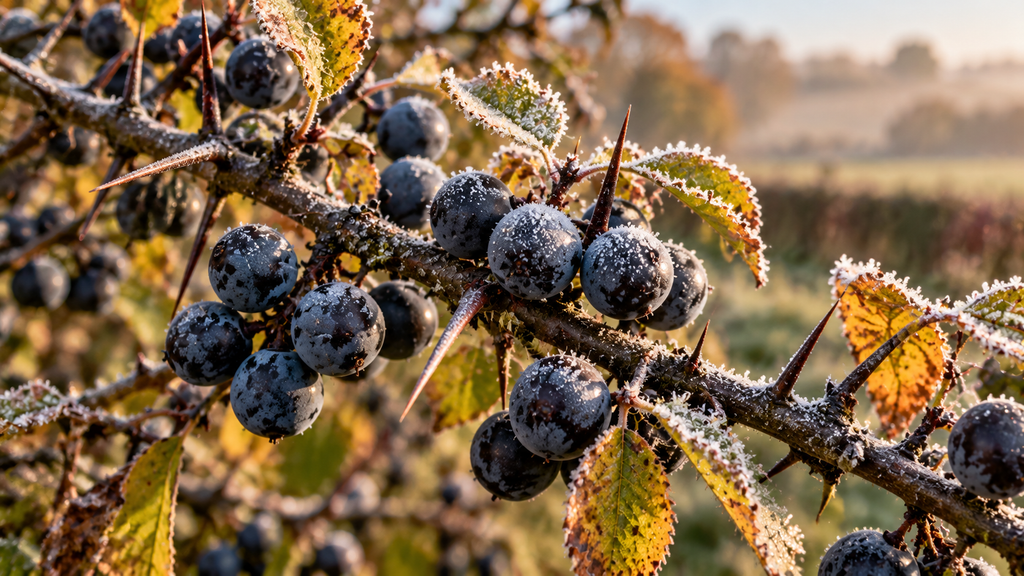
Sloes are the fruit of blackthorn (Prunus spinosa), a thorny native shrub found in hedgerows across the UK. They look like tiny dusty-blue plums and are one of the easiest autumn finds for beginners to identify.
When to pick sloes
Sloes are usually ready from late September through November. Tradition says to wait until after the first frost, which splits the skins and softens the sharpness. In practice, you can pick them when they give slightly to a squeeze and freeze them overnight for the same effect. Waiting too long risks losing them to birds and weather.
How to identify blackthorn and sloes
- Dark, almost black bark with long, sharp thorns
- Small oval leaves with finely toothed edges
- Round blue-black fruit, 1–1.5cm across, with a pale waxy bloom that rubs off
- One hard stone inside each fruit
Wild plums and bullaces look similar but are larger and grow on less thorny trees. They’re edible too, so a mix-up isn’t dangerous. Wear thick gloves: blackthorn scratches easily become sore.
What to make with sloes
Sloes are far too astringent to eat raw, but they’re brilliant infused. Sloe gin is the classic: prick or freeze 450g of sloes, put them in a 1-litre jar with 225g of sugar, top up with 70cl of gin, and shake every few days for the first week, then weekly. It’s ready in about three months, so October picking gives you a Christmas bottle. Sloe vodka, sloe jelly (mixed with apple for pectin) and sloe syrup are good alternatives.
Don’t crush or grind the stones. Like cherry and plum stones, they contain compounds that release cyanide when damaged; whole stones in an infusion are fine.
If you’d like blackthorn on your own doorstep, it’s one of the best shrubs for native hedging. Its early white blossom is also a vital nectar source, which is why it features in my guide to native plants for pollinators.
Picking elderberries in the UK
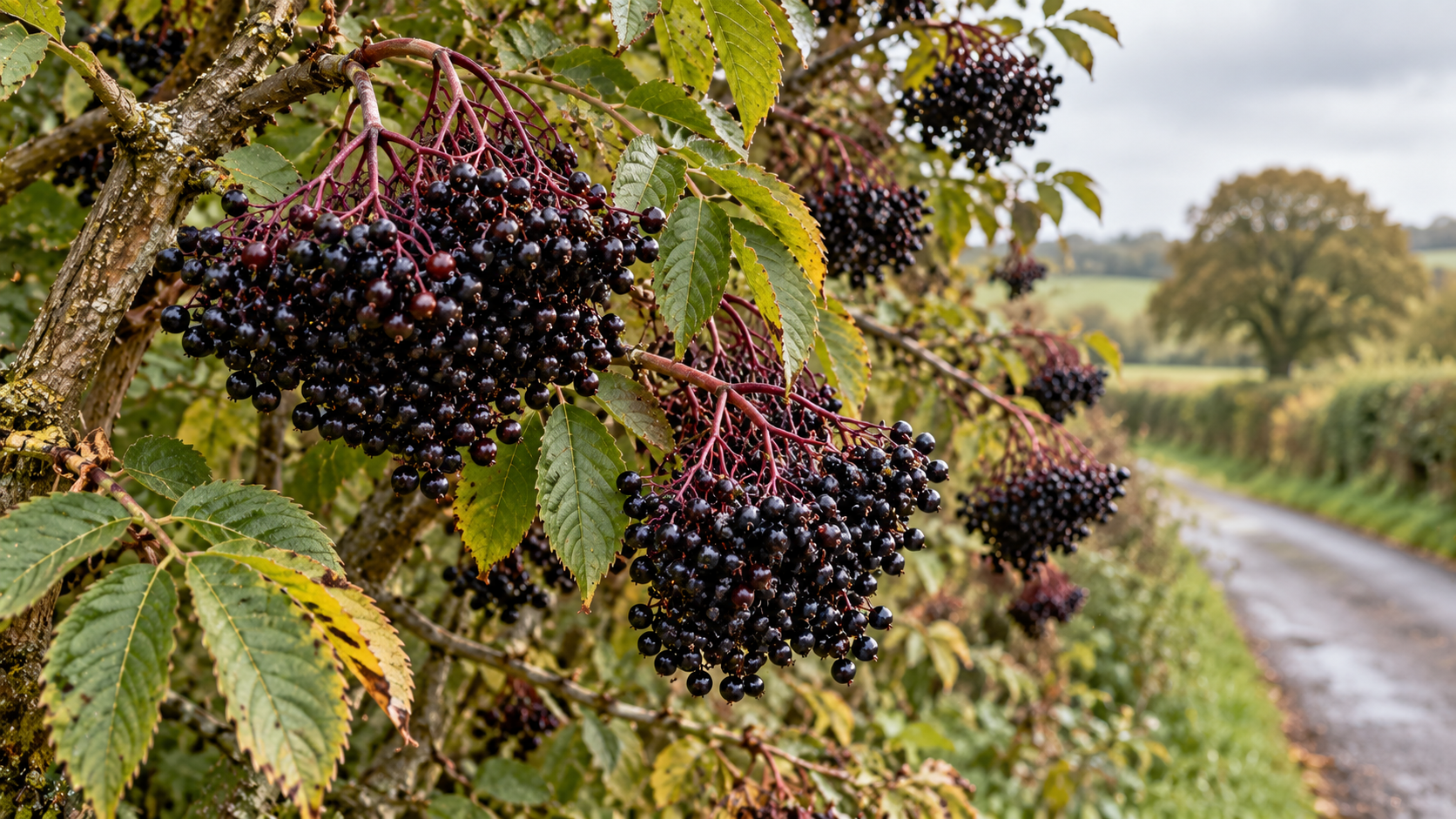
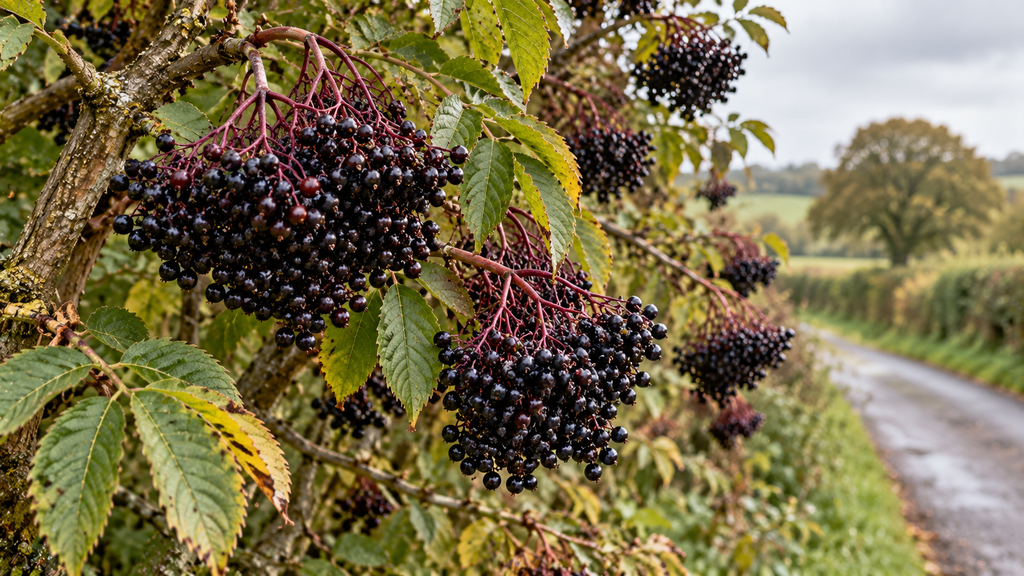
Elder (Sambucus nigra) is the same shrub that gives us elderflower in June. By late summer those flat flowerheads have become drooping clusters of tiny glossy black berries.
When to pick elderberries
Pick from late August to early October, when the berries are fully black and the clusters hang down under their own weight. Avoid clusters with lots of green or red berries still in them.
How to identify elder (and the lookalike to avoid)
- A shrub or small tree, often scruffy, with corky, ridged grey-brown bark
- Leaves made of five to seven toothed leaflets
- Berries in flat, umbrella-shaped clusters that droop downwards when ripe
The one to watch for is dwarf elder (Sambucus ebulus), which is toxic. It’s a non-woody plant that dies back each winter, rarely grows above waist height, and holds its berry clusters upright. If the plant isn’t woody, leave it.
Elderberry safety: always cook them
Raw elderberries, along with the stems, leaves and unripe berries, contain compounds that can cause nausea and vomiting. Cooking breaks these down, so never eat elderberries raw. Strip the berries from the stalks with a fork (freezing the clusters first makes this much easier), and remove as much green stem as you can.
What to make with elderberries
Elderberry syrup is the most popular use: simmer berries with water and a little spice (cloves, cinnamon, ginger), strain, then sweeten. Elderberries also add depth to crumbles and hedgerow jams, and work well paired with apples or blackberries. Freeze the syrup in ice-cube trays to keep it through winter.
Foraging hazelnuts
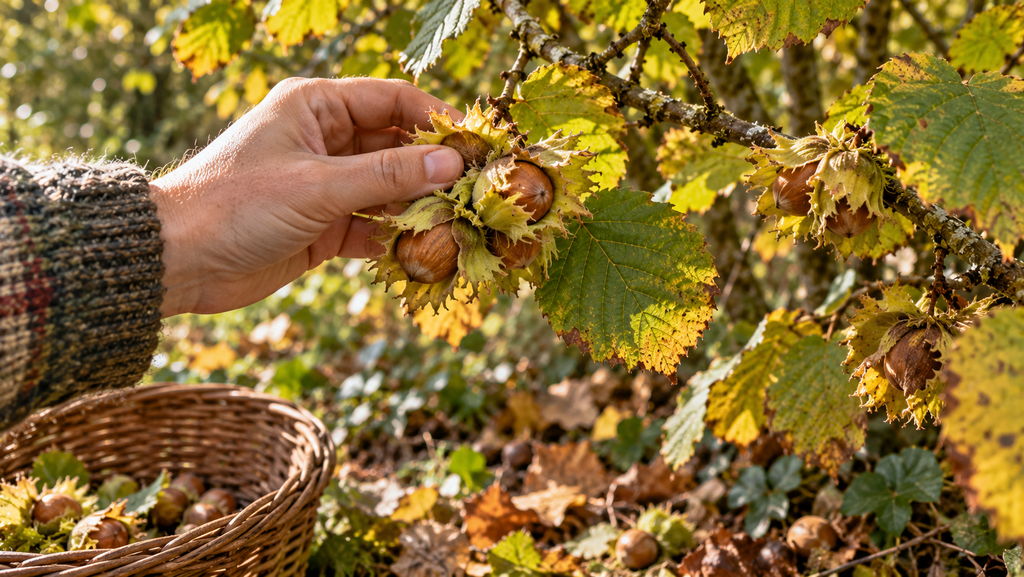
Hazel (Corylus avellana) is a common native tree in hedgerows and woodland edges. Wild hazelnuts are smaller than shop-bought ones but noticeably sweeter, especially fresh.
When to pick hazelnuts
The honest answer is “before the squirrels do”. Grey squirrels often strip trees while the nuts are still green in August. Aim for late August to early October, picking when the leafy husks start turning yellow-brown and the nuts come away with a gentle twist. Nuts on the ground are fine to gather if they’re whole and feel heavy.
How to identify hazel
- Multi-stemmed shrub or small tree, often coppiced
- Round, soft, slightly hairy leaves with a pointed tip and double-toothed edge
- Nuts in clusters of one to four, each wrapped in a frilly green husk
Leave some for the dormice
Hazel dormice are a protected species and rely on hazelnuts to fatten up before hibernation. If you find shells with a neat, smooth-edged round hole, that’s a dormouse sign. Pick lightly in any wood where you spot them.
Storing and using hazelnuts
Spread nuts in a single layer somewhere dry and airy for two to three weeks so they cure properly. Store them in their shells in a breathable bag or a jar with the lid ajar; my guide to plastic-free food storage has more options. Roast shelled hazelnuts at 180°C for 10–12 minutes, then rub off the skins in a tea towel. They’re lovely in granola, crumble toppings and homemade nut butter.
Mushroom foraging in the UK: start by looking, not eating
Fungi are the most exciting part of autumn foraging and by far the most dangerous. The UK has thousands of fungus species, and some of the deadliest, including the death cap and destroying angel, grow in ordinary woodland and parkland. Some lethal species look similar to edible ones, and symptoms can take a day or more to appear.
That’s why this section is about learning rather than picking. My advice for your first season:
- Join a guided foray. Local fungus groups, Wildlife Trusts and the British Mycological Society run walks every autumn. Learning in the field from an expert is the single best thing you can do.
- Photograph, don’t pick. Note the cap, gills or pores, stem, ring, base, smell, and what it’s growing on or near. Build a record before you ever eat anything.
- Use two or more trusted field guides. Never rely on an app or a social media post for an edibility decision.
- Respect local rules. Some places, including parts of Epping Forest and the New Forest, restrict or ban fungi collection.
- If in doubt, throw it out. No mushroom is worth the risk.
If you think someone has eaten a poisonous mushroom, contact NHS 111 or call 999 if they’re seriously unwell. Take a sample of the mushroom with you if you can.
Other autumn foraging finds worth knowing
Once you’re comfortable with the four above, a few more hedgerow finds are easy to add to your autumn round:
- Blackberries: best in August and September; folklore says don’t pick after Michaelmas (29 September).
- Rosehips: rich in vitamin C, great for syrup, but strain out the irritant hairs carefully.
- Haws: hawthorn berries, good for ketchup and jelly; remove the stones.
- Crab apples: high in pectin and perfect for setting hedgerow jellies.
- Sweet chestnuts: spiky-cased and edible when cooked; don’t confuse them with conkers (horse chestnuts), which are toxic.
Preserving your autumn haul
Autumn foraging is a short window, so preserving is how you make it last. Freeze sloes and elderberries whole, cure and store hazelnuts, and turn surplus fruit into jams, jellies, syrups and infused spirits. My full guide to preserving your harvest walks through freezing, bottling and fermenting step by step.
Bring the hedgerow home
You don’t need a woodland on your doorstep to forage. Elder, hazel and blackthorn all grow happily in an ordinary garden hedge, and they feed wildlife as well as you. If you like that idea, take a look at my guides to growing a foraging garden and rewilding your UK garden.
Autumn foraging FAQs
What can you forage in October in the UK? October is prime time for sloes, late elderberries, rosehips, haws, crab apples, sweet chestnuts and many fungi. Hazelnuts are mostly gone by mid-October.
Do you have to wait for frost to pick sloes? No. Pick them when ripe and freeze them overnight, which splits the skins just like a frost.
Are elderberries poisonous? Raw elderberries, stems and leaves can make you ill. Ripe berries are safe once cooked.
Is it legal to pick mushrooms in the UK? Picking small amounts for personal use is generally allowed where you have access, but some sites ban it and commercial picking without permission is not allowed.
What should I take autumn foraging? A basket or cloth bag, thick gloves for blackthorn, a small knife, a field guide, and containers to keep different finds separate.
The takeaway
Autumn foraging in the UK rewards patience and care. Start with the easy, safe hedgerow finds such as sloes, elderberries and hazelnuts. Treat fungi as a long-term learning project, and always leave plenty behind for wildlife. A single October afternoon can fill your cupboards with sloe gin, elderberry syrup and roasted hazelnuts to see you through winter.