How to Reduce Food Waste at Home: A UK Guide That Actually Works
As an Amazon Associate I earn from qualifying purchases and sometimes recommend products from other sellers at no extra cost you. For more details see my disclosure policy and privacy policy.
Every week in the UK, households throw away millions of tonnes of food that was perfectly edible when we bought it — most of it quietly, in small amounts, without us really noticing. WRAP’s UK research consistently shows that the average household could save several hundred pounds a year just by wasting less. That’s not a guilt trip. It’s a genuinely useful bit of maths, because reducing food waste is one of the few sustainable habits that pays you back immediately, in cash, not just in good intentions.
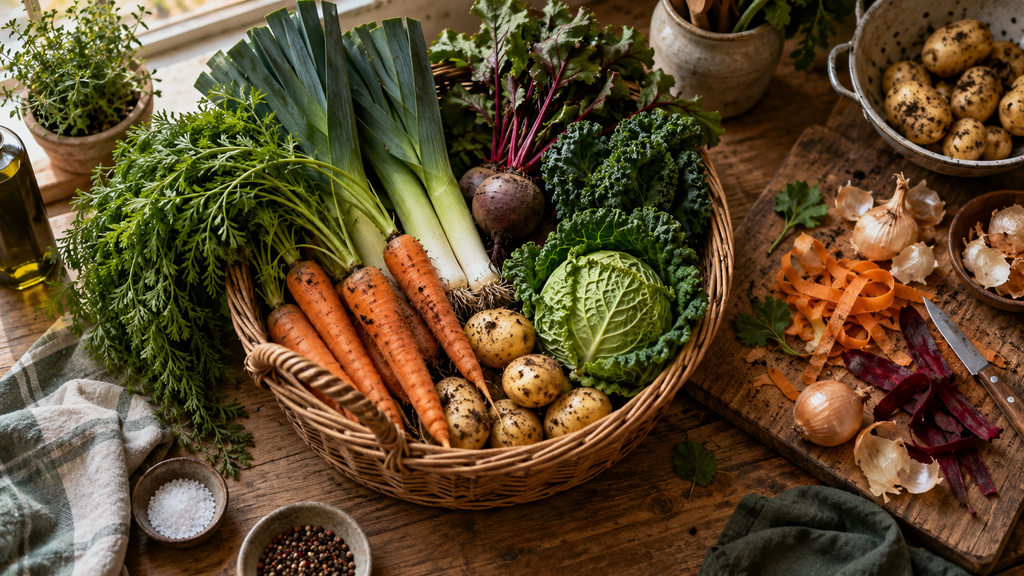
I’ve spent the last few years slowly rebuilding how our kitchen works — not through a dramatic zero-waste overhaul, but through a handful of small, repeatable habits. None of them are glamorous. All of them stuck. Here’s what’s actually worked, and how to start this week.
Why Food Waste Is Worth Your Attention
Wasted food isn’t just wasted money. It’s the water, energy, packaging and land that went into growing, processing and transporting it — all thrown away alongside the food itself. And when it ends up in landfill rather than being composted, it breaks down anaerobically and releases methane, a far more potent greenhouse gas than CO2.
None of this requires perfection to matter. Cutting your household’s food waste by even a third makes a measurable difference, and it’s one of the few climate-friendly habits that saves you money rather than costing you more.
Free download
Get the Non‑Toxic Home Audit Checklist
A room‑by‑room checklist to help you spot what’s worth swapping in your home — and what’s not worth worrying about. Join the fortnightly newsletter and it’s yours.
No spam, unsubscribe any time.
Plan Ahead and Shop Smart
This is the single highest-impact habit, and it costs nothing to start.
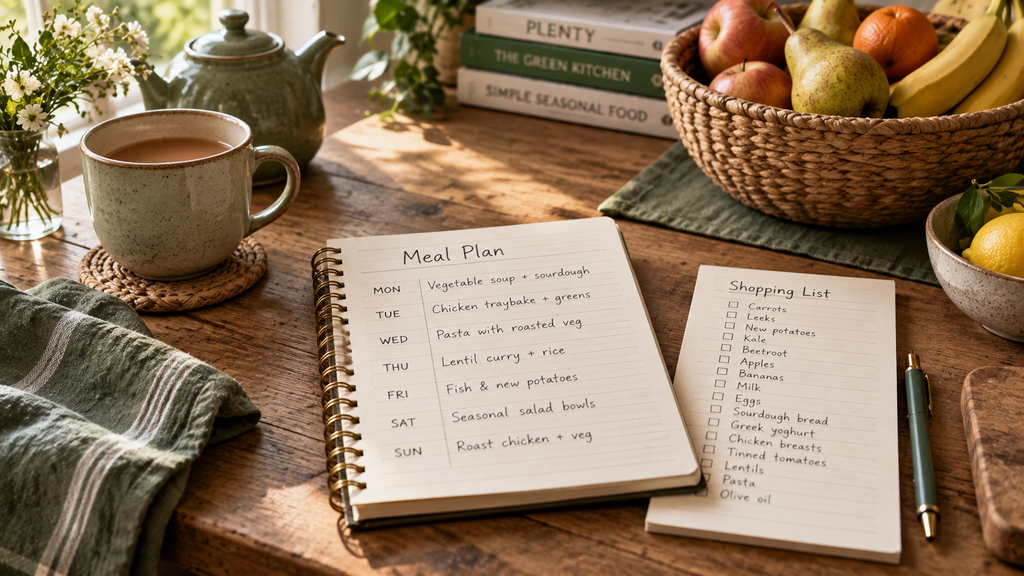
Before you shop, do a genuine ten-minute audit of your fridge, freezer and cupboards — not a glance, an actual look — and build your meal plan around what’s already there and close to its date. Only then write a list for what’s missing, and try to shop from it rather than around it.
A few things that have made the biggest difference for us:
- Meal planning around what needs using, not what sounds nice that day
- Checking the freezer before every shop — it’s usually where the forgotten food lives
- Being wary of “buy one get one free” on perishables unless there’s a genuine plan to use both, or a way to freeze the extra
- Using an app like Too Good To Go or OLIO to pick up surplus food from local shops and neighbours at a fraction of the price
Buying in bulk only saves money if the food gets eaten. If it goes in the bin, the “deal” was never a deal.
How to Calculate Meal Portion Sizes (and Cut Down on Food Waste)
Store Your Food Properly
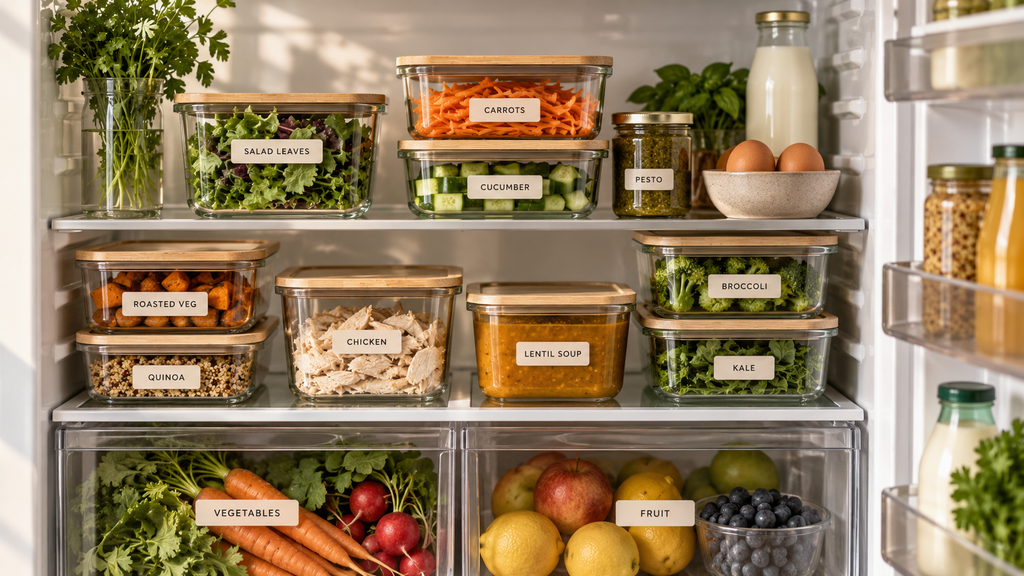
A huge amount of avoidable waste comes down to storage, not spoilage from time alone. Getting this right adds days, sometimes weeks, to how long food stays good.
The basics worth getting right: keep your fridge at or below 5°C (a cheap fridge thermometer sorts this out in seconds), store raw meat on the bottom shelf away from anything ready to eat, and move leftovers into airtight containers — glass ones last far longer than plastic and don’t take on smells or stains. Most fruit and veg also last longer loose in the fridge drawer than sealed in their original bag, which traps moisture and speeds up rot.
Use Every Part of Your Food
This is the habit that took the longest to build, and the one that’s changed our kitchen the most.
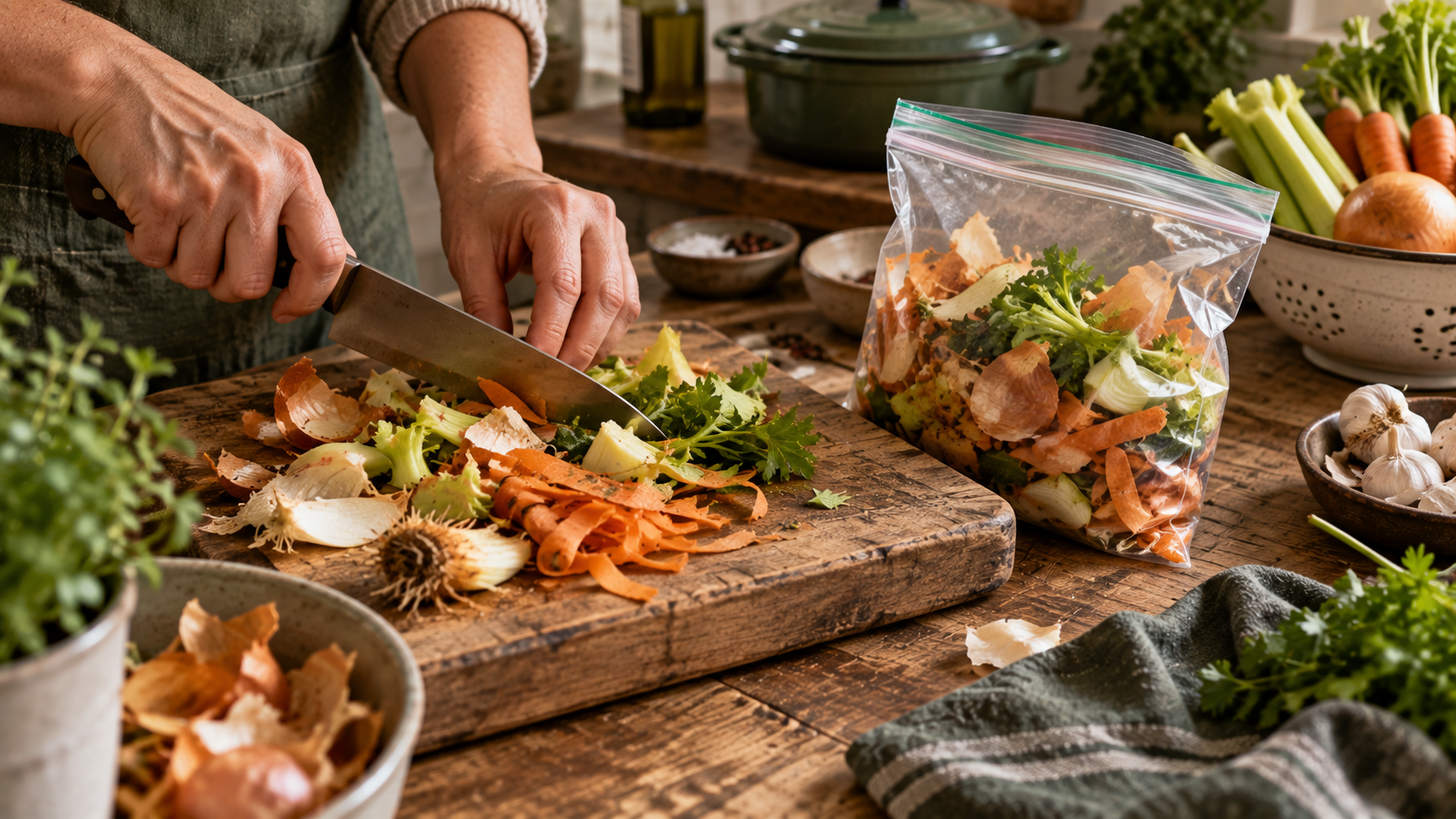
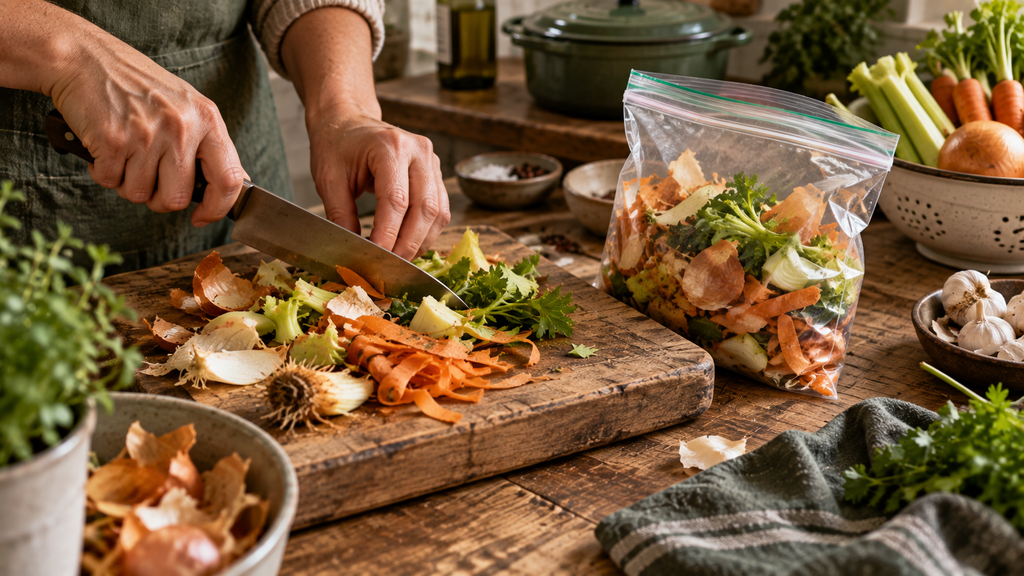
Vegetable peelings, stalks and trimmings can go straight into a stock bag in the freezer, topped up as you cook, then simmered into stock once it’s full. Broccoli stalks, chard stems and cauliflower leaves are all edible and good roasted or stir-fried, not just the florets. Stale bread makes breadcrumbs or croutons instead of a trip to the bin. Even citrus peel has uses, from zesting into baking to infusing into cleaning vinegar.
None of this needs to be precious or time-consuming. It’s mostly a habit of pausing for two seconds before something goes in the bin and asking whether it actually has to.
Compost What You Genuinely Can’t Use
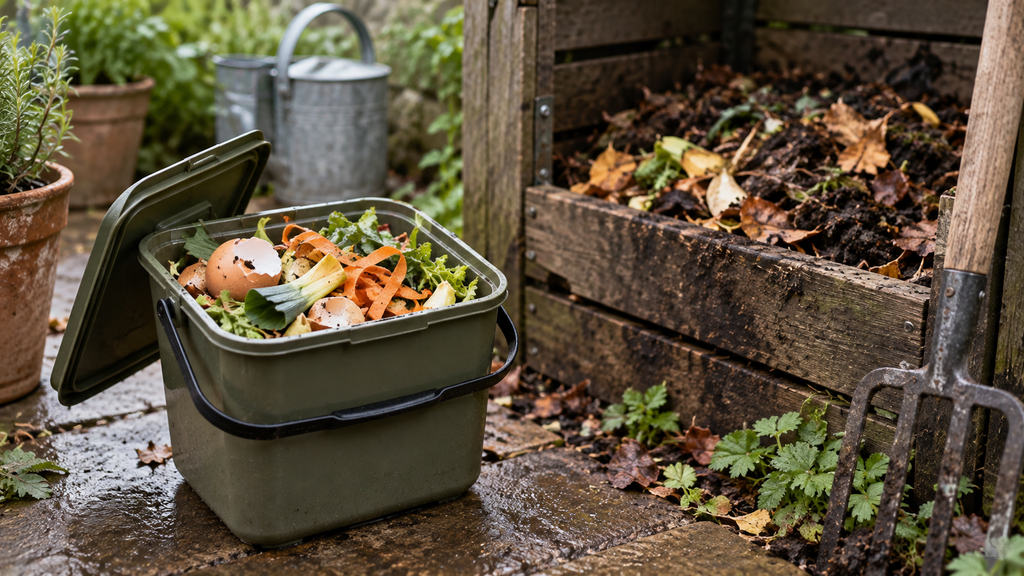
Whatever’s left after all that — the true scraps — doesn’t need to go to landfill. A small kitchen caddy for peelings, teabags and eggshells, emptied into a garden compost bin or your council’s food waste collection, turns unavoidable waste into something useful rather than something wasted twice over.
If you’re new to this and want a proper walkthrough, our guide to composting for beginners covers what can and can’t go in, how long it takes, and what to do if it starts smelling (it shouldn’t, if it’s done right).
The Science of Food Storage: Why Your Produce Goes Bad
Give What You Won’t Use
Sometimes the most sustainable option isn’t using food yourself — it’s making sure it reaches someone who will. Local food banks, including those run through the Trussell Trust network, rely on donations of unopened, in-date non-perishables, and most supermarkets now have a collection point at the entrance. Community fridges and OLIO are worth checking too, particularly for the odd items that don’t fit neatly into a shopping list — the extra loaf, the tin you bought twice.
Talk About It
The most underrated step is simply mentioning it. Waste habits are often invisible to us until someone else points them out, gently. Share what’s worked in your own kitchen, ask friends and family what they do, and if your area has a community composting scheme or food-sharing group, it’s worth knowing it exists before you need it.
The Bottom Line
Reducing food waste at home doesn’t require a dramatic lifestyle change. It’s plan a little, store it properly, use more of what you buy, compost the rest, and pass on what you won’t get to. Pick one habit from this list and give it a fortnight — that’s usually enough to see whether it sticks, and enough to notice the difference in your bin and your bank balance.