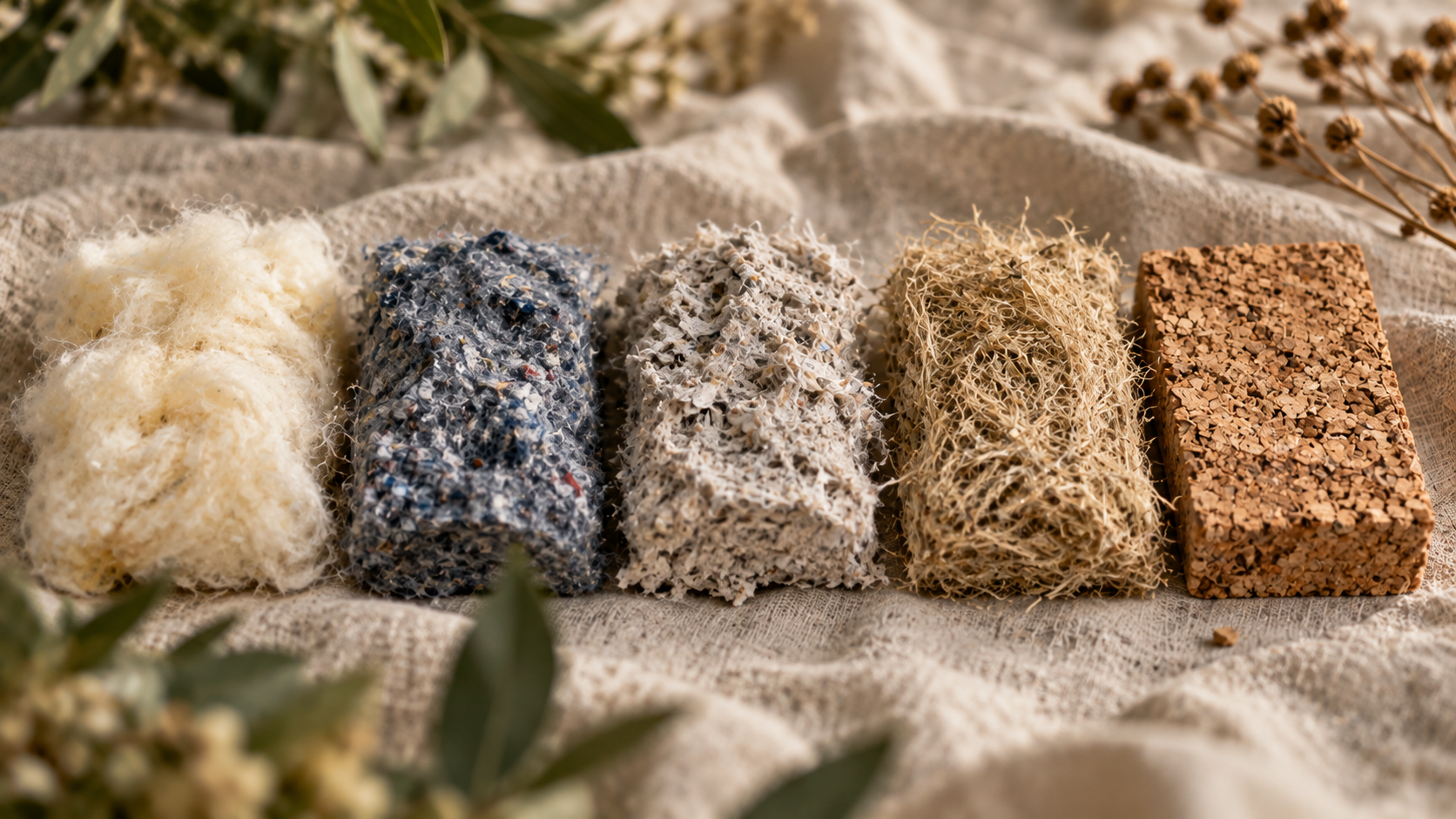
The Sustainable Insulation Guide: Warmer Rooms, Lower Bills, No Nasty Chemicals (UK Edition)
As an Amazon Associate I earn from qualifying purchases and sometimes recommend products from other sellers at no extra cost you. For more details see my disclosure policy and privacy policy.
Last winter I finally did what I’d been putting off for two years: I properly insulated our loft. The result wasn’t dramatic on the outside, but our heating came on noticeably less, and the spare room stopped feeling like a walk-in fridge. If you’ve been eyeing up your energy bills and wondering whether insulation is worth the fuss, here’s everything I wish I’d known before I started — including where the “eco” insulation claims are genuinely true, and where they’re marketing spin.
Why insulation matters more than most home upgrades
The short version: insulation is one of the few home improvements that pays you back in comfort and money, every single winter, for decades.
Lower bills. The Energy Saving Trust estimates that a well-insulated loft and cavity walls can knock a meaningful chunk off a typical UK household’s heating costs — often the single biggest saving available short of switching your heating system entirely.
A smaller footprint. Heating is one of the largest sources of household carbon emissions in the UK. Every degree you don’t need to generate is fuel you haven’t burned.
Free download
Get the Non‑Toxic Home Audit Checklist
A room‑by‑room checklist to help you spot what’s worth swapping in your home — and what’s not worth worrying about. Join the fortnightly newsletter and it’s yours.
No spam, unsubscribe any time.
A genuinely more comfortable home. No more sitting three feet from the radiator in a jumper while the far end of the room stays freezing. Good insulation evens out the temperature across a room, not just around the heat source.

The Best Indoor Plants for Purifying Indoor Air
Types of sustainable insulation materials
Not all insulation is created equal, and “eco” gets used loosely in this industry. Here’s what’s actually worth your money.
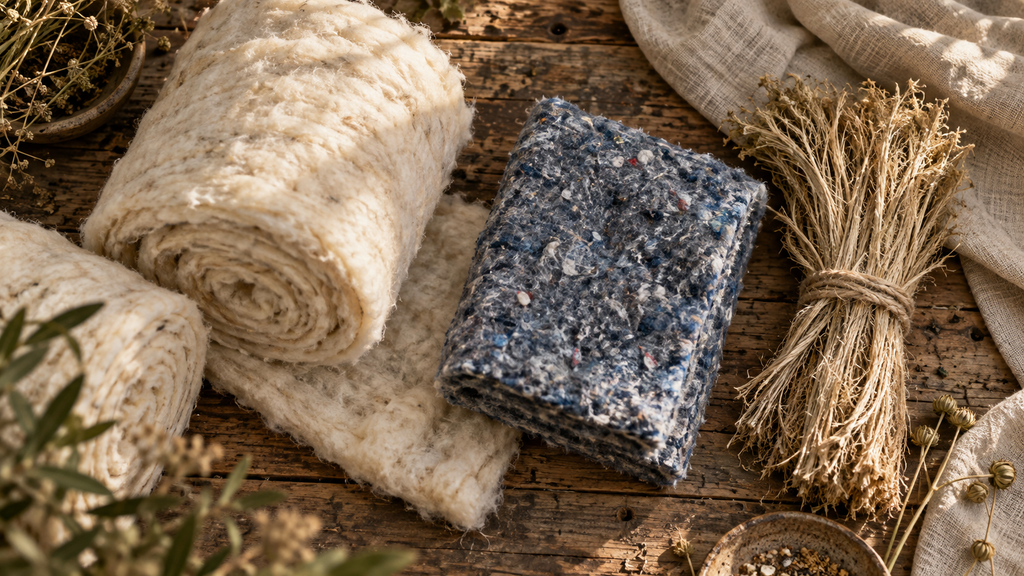
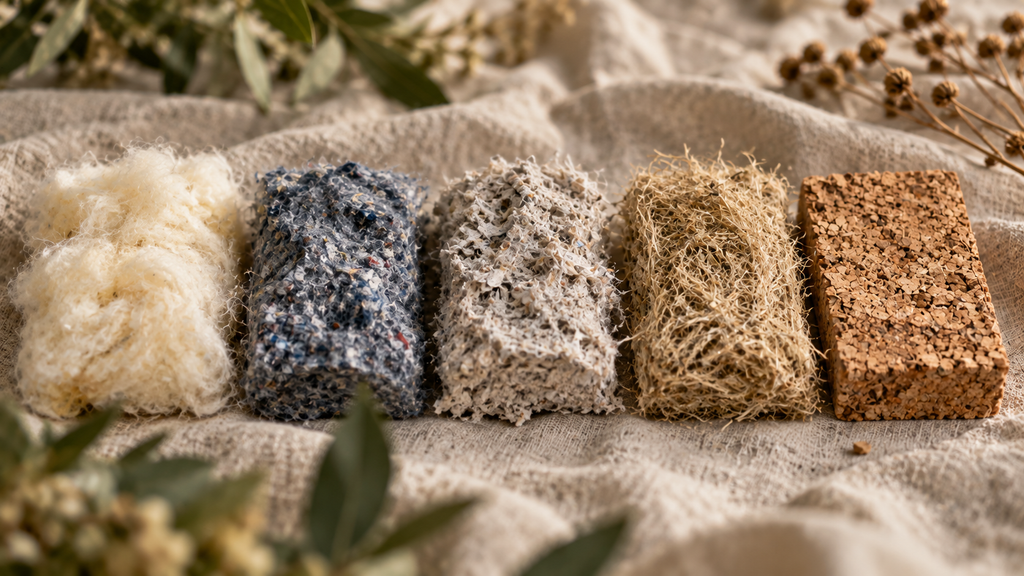
Sheep’s wool
Naturally renewable, biodegradable, and it manages moisture without losing its insulating power — useful in Britain’s damp climate. It’s naturally fire-resistant and does a decent job of muffling sound between floors. It costs more than synthetic options, but it lasts.
Recycled denim and cotton
Made from offcuts and old clothing, this is a genuinely circular product with strong thermal performance and excellent soundproofing — good news if you’re on a terraced street with thin party walls. It’s treated to be safe to handle, unlike the loose fibreglass many of us remember from childhood lofts.
Cellulose
Recycled newspaper, treated with non-toxic fire retardant. It’s dense, so it’s good at filling odd-shaped gaps and stopping draughts other materials miss. One of the more affordable natural options.
Hemp and wood fibre
Hemp insulation resists mould and performs well thermally; wood fibre boards are breathable, which matters in older UK properties where trapping moisture in solid walls causes damp problems rather than solving them.
Cork and straw
Cork is renewable, fire-resistant and holds up well acoustically. Straw is cheap and easy to work with if you’re doing a self-build or major renovation, though it’s less common for a standard retrofit.
A note on fibreglass: modern fibreglass insulation increasingly uses recycled glass, and it remains the cheapest option by a wide margin. It’s not the villain it once was — but if avoiding synthetic materials matters to you, it’s the one on this list I’d put last.
DIY insulation fixes you can do this weekend
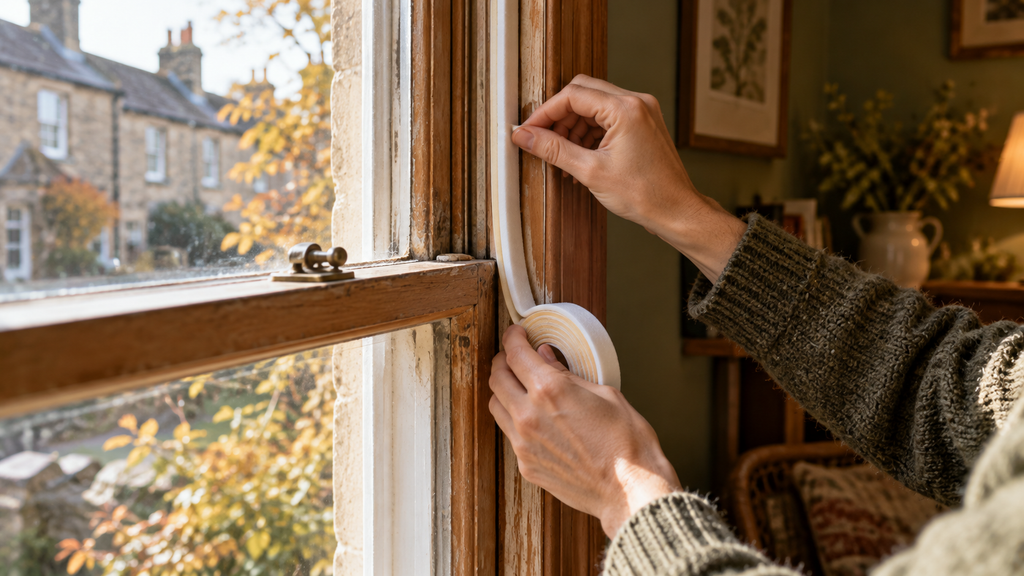
Not ready for a full loft job? Start here — all three of these are draught-proofing, not “insulation” in the technical sense, but they matter more than people think.
- Weatherstrip your windows and doors. Adhesive foam strip or a V-strip along the frame stops the draughts you can actually feel. It’s a £10–£20 job that takes an afternoon.
- Seal gaps in the loft and around pipes. Most heat loss happens through gaps you can’t see — around loft hatches, pipework, and electrical fittings. A caulk gun and an hour up there makes a real difference.
- Fit thermal-backed curtains. A good thick curtain, closed at dusk, works as a second layer of insulation on your windows — your least efficient surface in most homes.
Making it affordable: grants and cost-effective upgrades
UK grants worth checking before you spend a penny: the Great British Insulation Scheme and the ECO4 scheme both offer support toward loft, cavity wall and other insulation upgrades depending on your home and circumstances — check your eligibility on GOV.UK before assuming it’s out of reach.
Budget-friendly materials first. Recycled denim and cellulose tend to offer the best performance-per-pound of the natural options, and both are widely available from UK builders’ merchants.
Buy for the job, not for the ideal. DIY loft insulation between joists is genuinely achievable for most people; cavity wall and internal wall insulation on older solid-wall houses is a job for a professional, both for safety and because getting it wrong can trap damp inside your walls.

Mindful Consumption: Breaking the Cycle of Impulse Buying
The bottom line
Insulation won’t transform your home overnight, and it’s not the glamorous end of sustainable living. But it’s one of the few changes where “better for the planet” and “better for your bank balance” point in exactly the same direction, every winter, for years. Start with draught-proofing this weekend, then plan your loft for spring.