Eco-Friendly Pet Care: A UK Guide to Reducing Your Pet’s Environmental Footprint
As an Amazon Associate I earn from qualifying purchases and sometimes recommend products from other sellers at no extra cost you. For more details see my disclosure policy and privacy policy.
Our pets bring us an enormous amount of joy — but from the food in their bowls to the toys scattered across the floor, they also carry a real environmental footprint. Food production, packaging, plastic toys, and waste disposal all add up. The good news is that reducing that footprint doesn’t mean loving your pet any less. It just means making a few thoughtful swaps, one at a time. Here’s how to bring “progress over perfection” thinking into pet care.
Choose Sustainable Pet Food
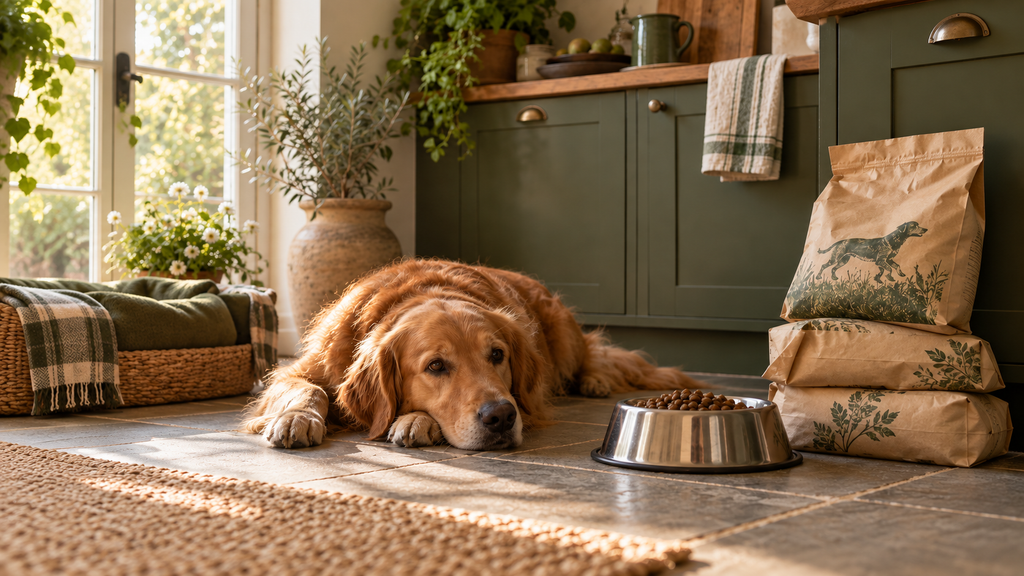
Diet is usually the biggest single factor in a pet’s carbon footprint, so it’s the best place to start.
Look for UK eco-conscious brands. Several UK pet food companies now prioritise sustainability — insect-based proteins, responsibly sourced meat, and recyclable or compostable packaging. Brands like Yora and Beco have built their whole offering around lower-impact ingredients, which is worth comparing against what’s currently in your cupboard.
Buy in bulk to cut packaging waste. Larger bags mean fewer trips and less packaging per kilo of food. Just store it properly — an airtight container keeps it fresh and away from damp, which matters more than people think in a typical UK kitchen or utility room.
Free download
Get the Non‑Toxic Home Audit Checklist
A room‑by‑room checklist to help you spot what’s worth swapping in your home — and what’s not worth worrying about. Join the fortnightly newsletter and it’s yours.
No spam, unsubscribe any time.
Consider a plant-based diet, with veterinary guidance. For dogs specifically, a well-balanced plant-based diet can work for some animals. It’s not right for every dog, and cats have entirely different nutritional needs, so this is a conversation to have with your vet rather than a DIY decision.
Sustainable Pet Toys and Bedding
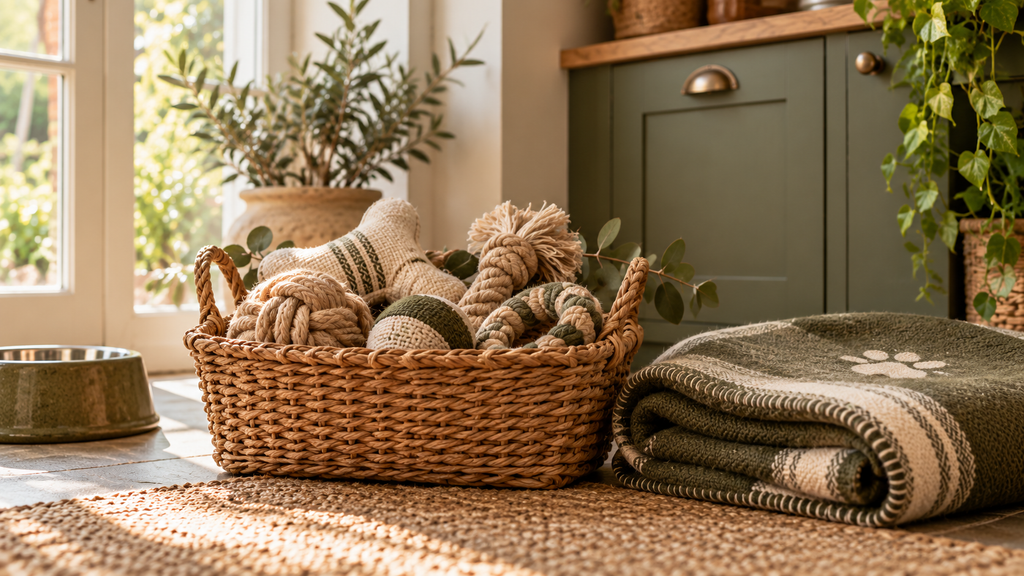
Choose natural materials over plastic. Toys made from hemp, organic cotton, or natural rubber avoid the microplastic shedding and landfill legacy of cheap plastic toys — and they’re often gentler if your pet is a determined chewer. If you want to go deeper on why this matters beyond pets, our piece on ditching single-use plastics covers the bigger picture.
Make your own toys. An old t-shirt knotted into a tug toy, a sock stuffed with another sock, a cardboard box with holes cut in it — pets are rarely as fussy about “proper” toys as the marketing suggests.
Choose eco-friendly bedding. Organic cotton or recycled-fibre bedding is widely available now, and repurposing an old towel or blanket works just as well for many pets.
Green Grooming for Pets
Use natural grooming products. Look for pet shampoos and conditioners without synthetic fragrances or harsh detergents — the same instinct that leads people to check their own household cleaning products applies here too, since a lot of what goes down the plughole ends up in UK waterways either way.
Conserve water when bathing. Bathe less often (most pets don’t need it as frequently as owners assume), use a water-saving nozzle, and where possible, bathe outdoors so the runoff waters the lawn instead of going straight down the drain.
Responsible Pet Waste Disposal
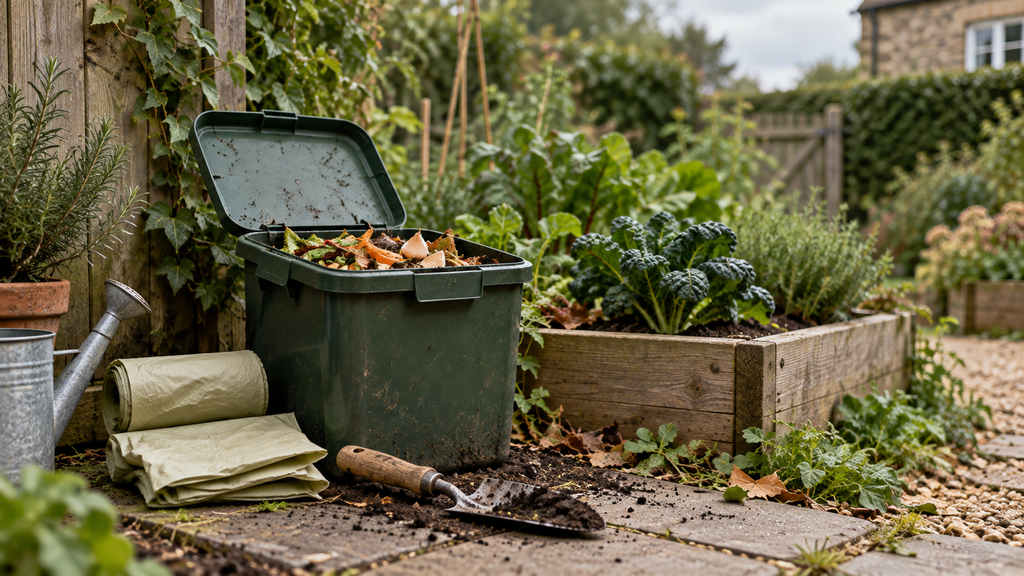
Switch to biodegradable waste bags. They break down considerably faster than standard plastic and are widely stocked in UK pet shops and supermarkets now.
Compost where appropriate. Dog waste shouldn’t go anywhere near a food-growing compost system, but a dedicated pet waste composter is a genuinely good option — it works on the same small-space composting principles as food waste, just kept entirely separate.
Choose eco-friendly cat litter. Recycled paper or wood-based litters avoid the strip-mining associated with clay litter, and most cats adjust to the switch faster than owners expect.
Adopt, Don’t Shop
Adopting from a UK rescue — RSPCA, Battersea, Dogs Trust, or a local shelter — reduces demand for mass breeding operations and gives an animal in need a home. It’s one of the most meaningful environmental and welfare choices a new pet owner can make, and shelters can usually tell you a lot about a rescue animal’s temperament before you commit.
Energy-Efficient Pet Care
Use LED pet accessories. LED collars and light-up toys are more efficient and longer-lasting than older battery-hungry alternatives.
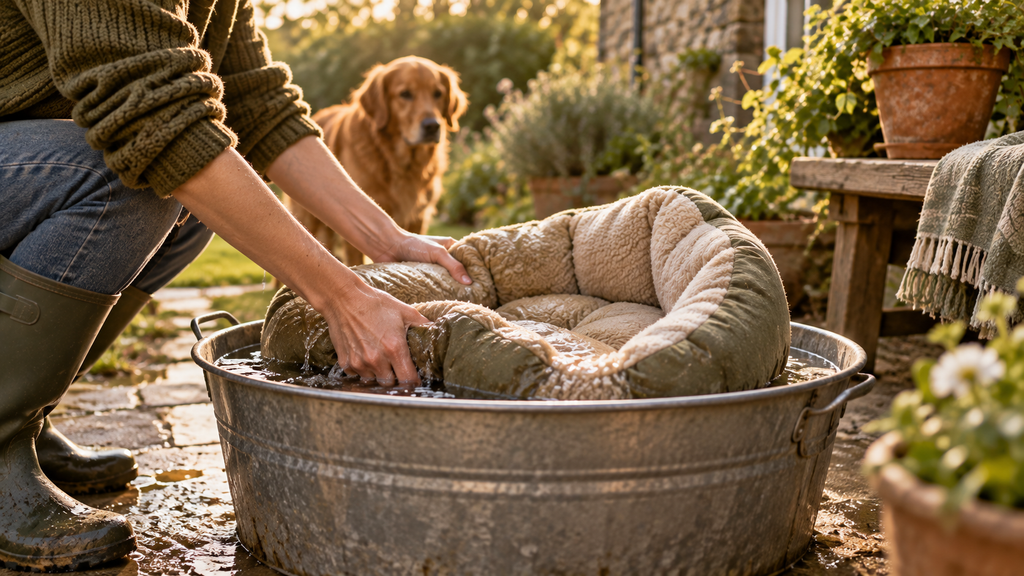
Wash pet bedding in cold water. A cold wash gets bedding and soft toys clean without the energy draw of a hot cycle — the same logic behind most non-toxic laundry swaps for human washing.
Share what you can. Grooming tools, carriers, and toys are often barely used — borrowing or passing them on between friends and neighbours cuts down on new purchases and keeps good kit out of landfill.
A Lighter Footprint, One Swap at a Time
None of this requires an overnight overhaul, and it doesn’t need to be perfect to be worthwhile. Small, consistent changes — better food, fewer plastic toys, responsible waste disposal — add up over the life of a pet. If you’re already thinking this way about the rest of your home, it’s worth looking at where else mindful consumption can quietly reduce what you buy and throw away. Every swap helps, for your pet and for the planet you both share.