Urban Gardening in the UK: How to Turn a Small Space Into a Green, Wildlife-Friendly Garden
As an Amazon Associate I earn from qualifying purchases and sometimes recommend products from other sellers at no extra cost you. For more details see my disclosure policy and privacy policy.
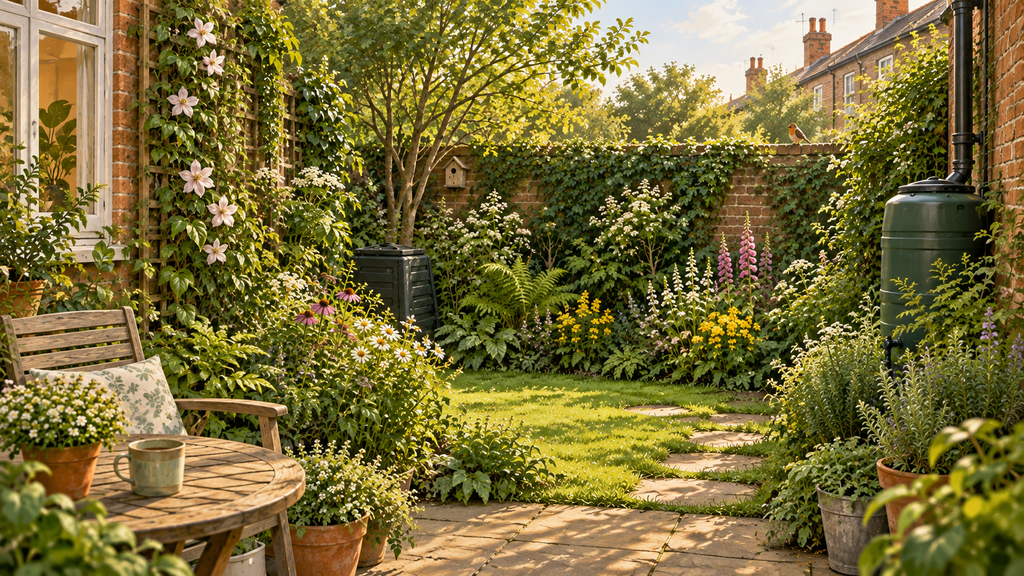
Urban gardening is one of the most practical things any of us can do in the fight against climate change. Done well, it delivers real benefits — for the environment, for our neighbourhoods, and for our own wellbeing. But “urban garden” doesn’t automatically mean “green garden,” and the difference matters more than most people realise.
Here’s the bit that surprised me when I first looked into it properly: not all urban gardens pull their weight. A garden dominated by paving, decking, and hard standing for cars does very little for climate or biodiversity, no matter how tidy it looks. A green garden — one with a high proportion of planting that mimics a natural habitat — is a different story entirely.
In short: it’s not “do you have a garden,” it’s “how much of it is actually alive.”
What makes a garden truly “green”?
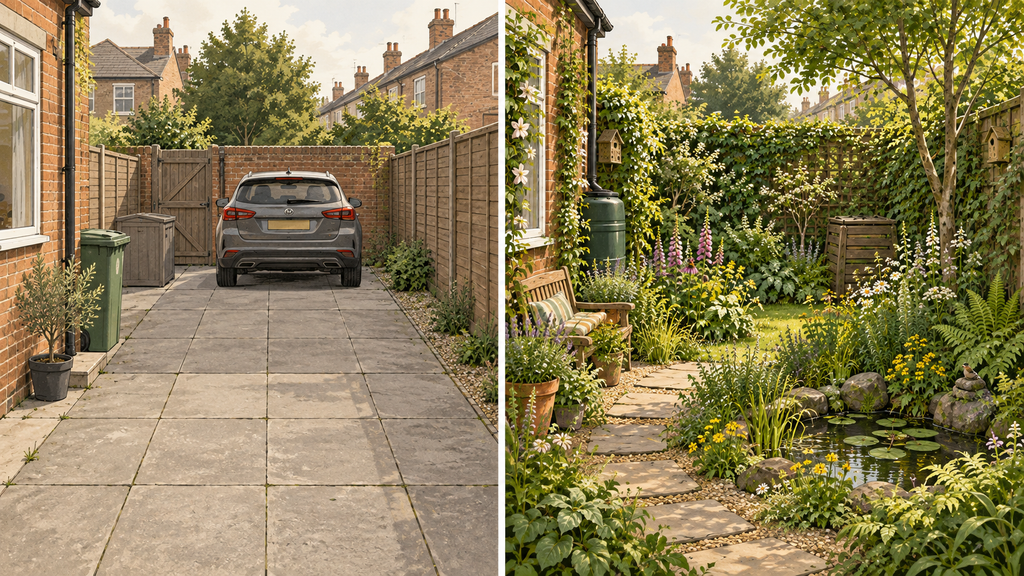
A green garden has enough vegetation, layered planting, and variety to function a bit like a mini natural habitat, rather than just a patch of ground between the house and the fence. These gardens maximise what’s known as urban ecosystem services: they provide habitat for wildlife, improve local air quality, help households grow some of their own food, and even reduce energy bills by insulating homes against summer heat and winter cold.
Free download
Get the Non‑Toxic Home Audit Checklist
A room‑by‑room checklist to help you spot what’s worth swapping in your home — and what’s not worth worrying about. Join the fortnightly newsletter and it’s yours.
No spam, unsubscribe any time.
A garden that’s mostly concrete, decking, or gravel doesn’t offer any of this — even if there’s a pot or two of bedding plants dotted around the edges.
If you’re gardening in a UK town or city and want your outdoor space — however small — to actually count, here’s where I’d start.
1. Choose native plants suited to your local conditions
Native plants have evolved alongside UK pollinators and wildlife, so they typically need less watering, less feeding, and less fuss than imported ornamentals — which makes for a genuinely lower-maintenance garden, not just a “sustainable-sounding” one. Start with what already does well nearby: hedgerow species, cottage-garden perennials, and anything the UK native plants for pollinators: a species-by-species guide recommends for your soil type.
Quotable takeaway: native planting isn’t just an ethical choice — it’s usually the lowest-effort option too.
2. Make the most of vertical space
Most urban plots are short on width, not height. Climbing plants and a set of trellises let you grow upward instead of outward — sweet peas, climbing beans, clematis, or even a trained fruit tree against a sunny wall. This is exactly the approach I’d recommend if you’re working with a courtyard, balcony, or rented flat with barely a strip of soil to work with — see Container veg growing for renters and flat dwellers for a full breakdown.
3. Start composting
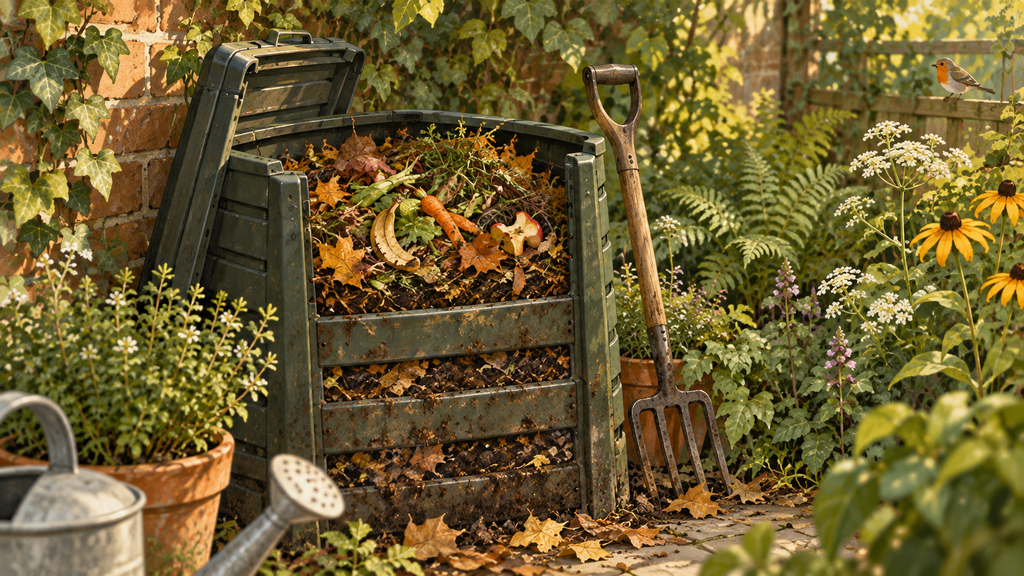
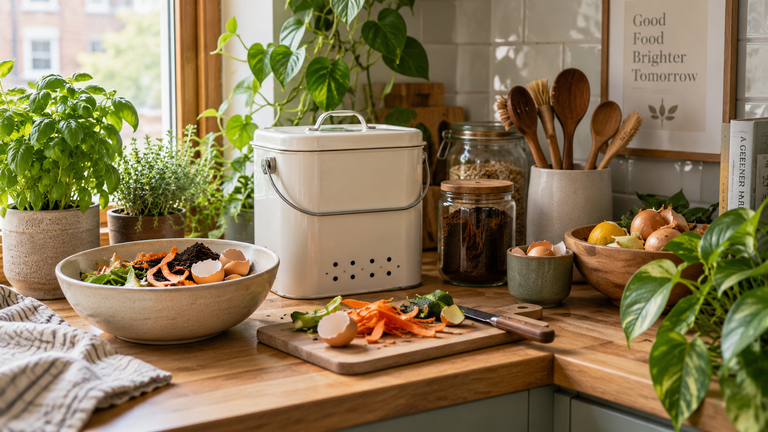
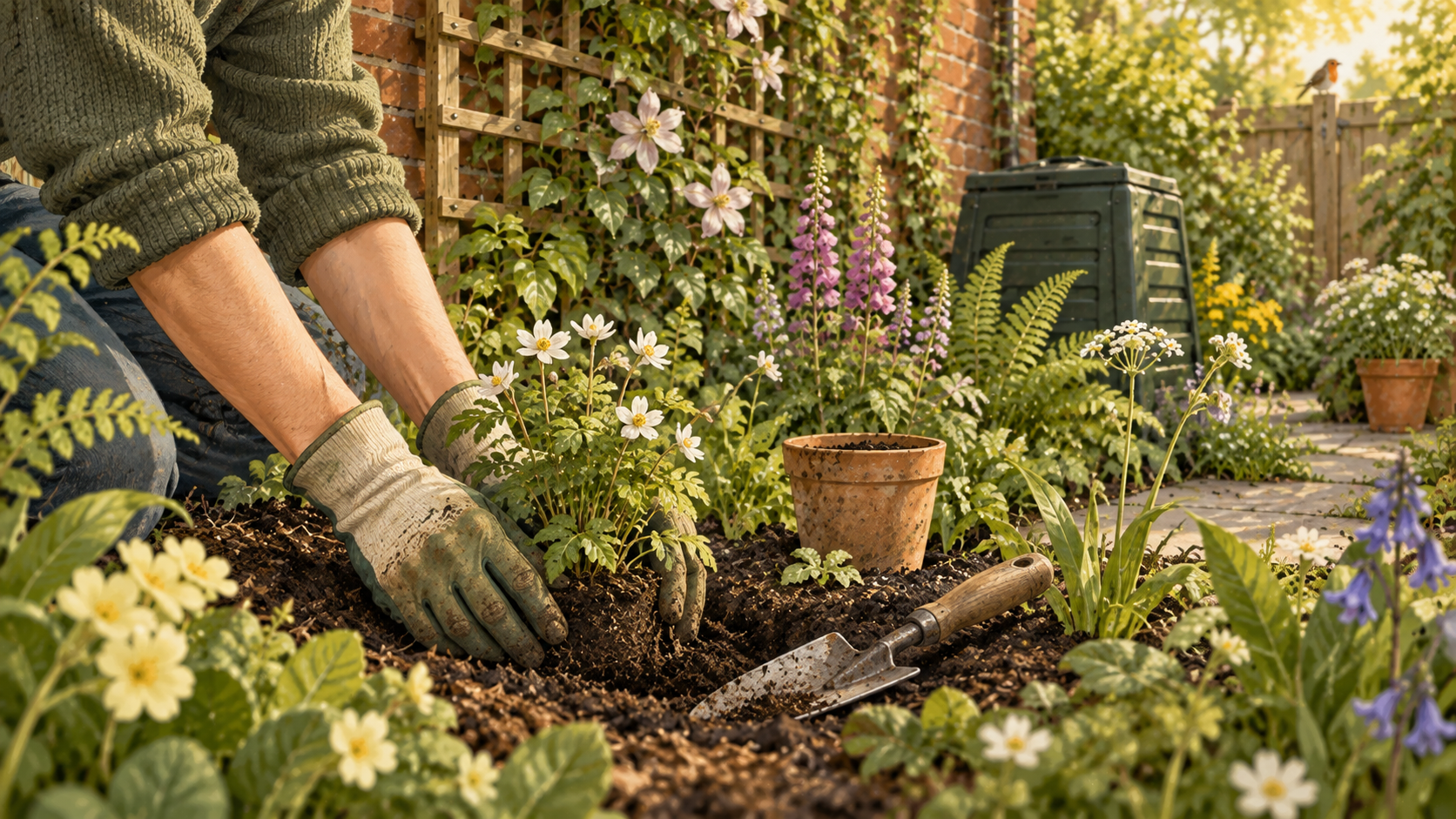
Composting does two jobs at once: it cuts down what you’re sending to landfill, and it feeds your soil for free. You don’t need a large garden or a fancy setup — a small kitchen caddy and a modest outdoor bin is enough to get started. If you’re new to it, Composting for beginners walks through exactly what can and can’t go in, and how long it actually takes.
4. Collect and conserve water
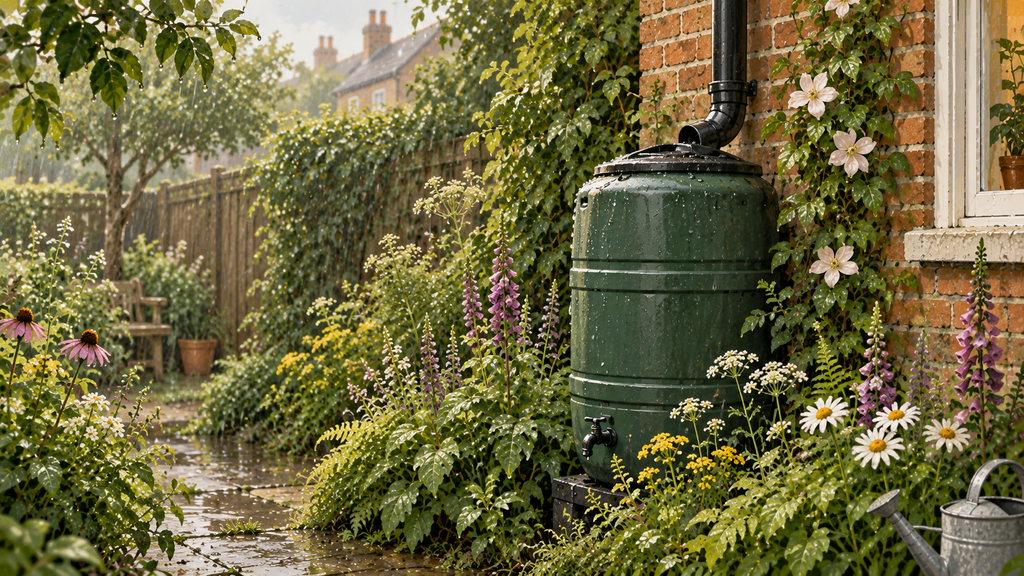
UK summers are getting drier and hosepipe bans more common, so rain barrels or another water-butt setup are worth having even in a small space. Beyond the environmental case, there’s a straightforward cost-saving one too — see The benefits of rainwater harvesting for the numbers on what this can actually save on a UK water bill.
5. Get involved locally
Community gardens and urban farming projects are everywhere in the UK now, and they’re one of the fastest ways to learn — you pick up more from an afternoon alongside someone who’s grown food in your local soil for years than from a dozen articles. It’s also, frankly, one of the more sociable forms of gardening, which counts for something. This ties closely into what we mean by slow living on this site — doing less, but doing it with people, and noticing more along the way.
Quick wins for a greener urban garden this month
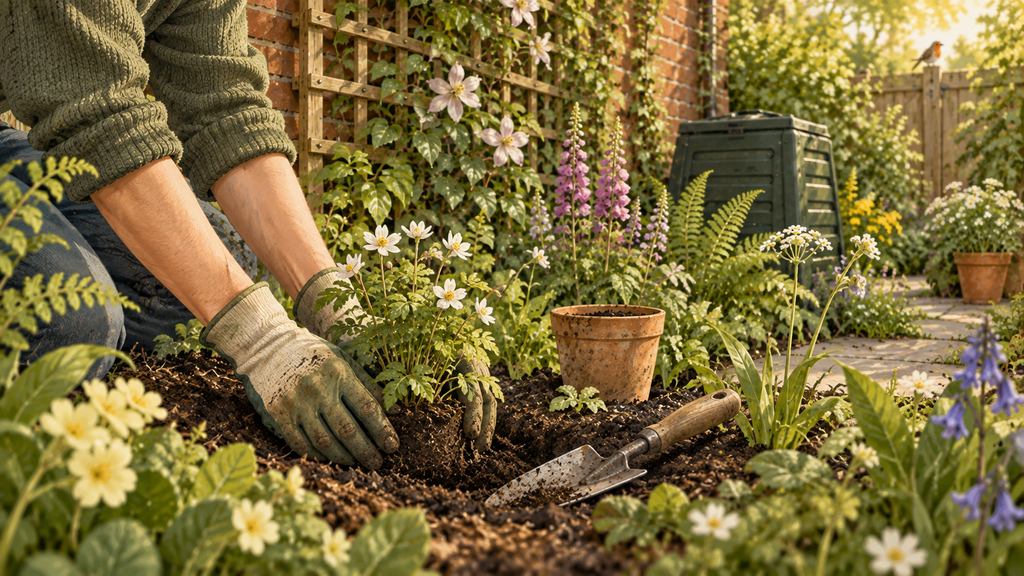
You don’t need to overhaul everything at once — progress over perfection applies here as much as anywhere. Pick one thing from the list above, do it properly, and build from there. A single native plant border, one compost bin, or a water butt under the downpipe is a real start, not a token gesture.
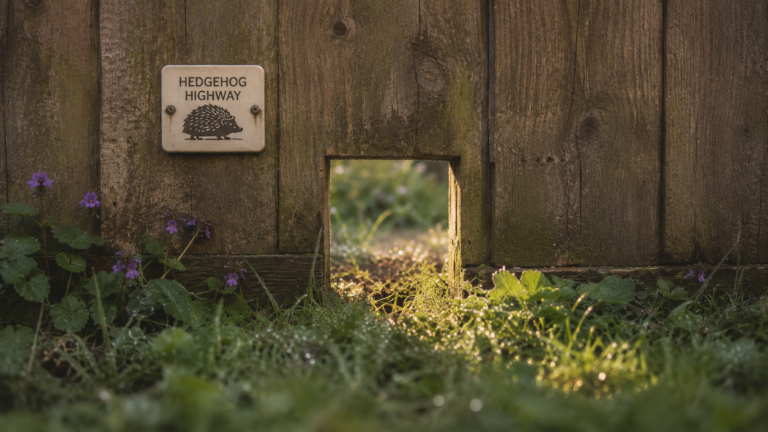
If you want the fuller picture — from No-Mow May to Building a hedgehog highway — the rest of our rewilding series digs into how to take a small urban plot further, one manageable step at a time.