
Solar Panels for UK Homes: What They Actually Cost, Save and Give Back
As an Amazon Associate I earn from qualifying purchases and sometimes recommend products from other sellers at no extra cost you. For more details see my disclosure policy and privacy policy.
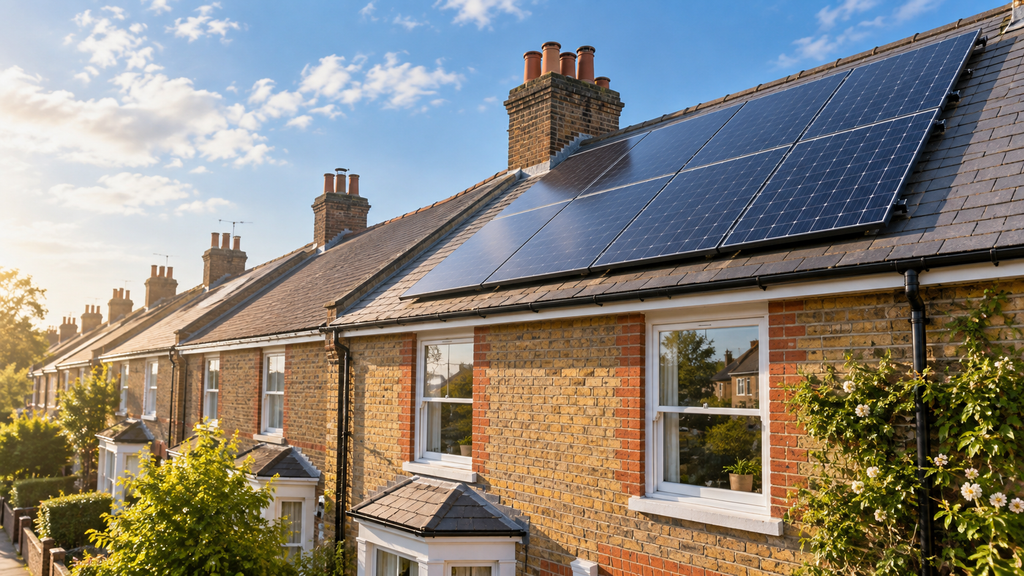
Since I started properly costing out our own move toward renewable energy, solar has come up again and again — not because it’s trendy, but because it’s one of the few upgrades that actually pays you back. Here’s what I’ve learned, minus the sales pitch.
What solar panels actually do for your carbon footprint
The core appeal of solar is simple: you generate your own electricity from sunlight, with nothing burned and nothing emitted. That’s a genuine cut to your household’s carbon footprint, not just an offset on paper.
There’s a financial case too. Once panels are installed, the electricity they generate is essentially free, which chips away at your energy bill for as long as the system runs — often 25 years or more. In the UK, new-build and retrofit solar installations currently benefit from 0% VAT (a government incentive introduced to speed up the switch to renewables), and any surplus power you don’t use can be sold back to the grid through the Smart Export Guarantee (SEG). It’s worth comparing SEG rates across suppliers, as they vary more than people expect.
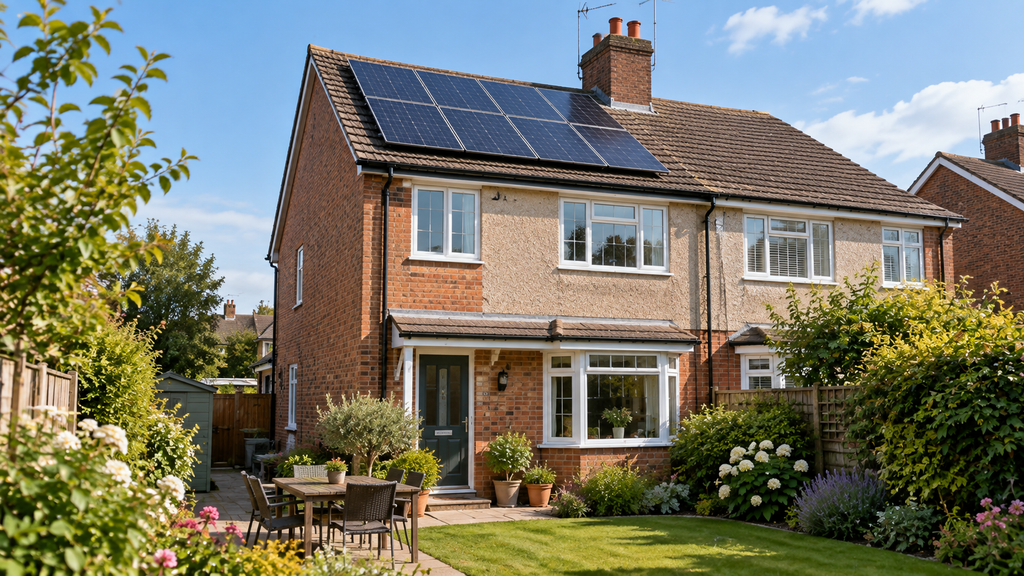
If you’re weighing this up alongside other changes, it’s worth reading it alongside our budget-friendly ways to cut household costs guide — solar is a bigger investment than most swaps on that list, but it works on the same logic: pay a bit more upfront, spend far less over time.
Free download
Get the Non‑Toxic Home Audit Checklist
A room‑by‑room checklist to help you spot what’s worth swapping in your home — and what’s not worth worrying about. Join the fortnightly newsletter and it’s yours.
No spam, unsubscribe any time.
The honest drawbacks
I’d rather tell you the unglamorous bits than let you find out later. The upfront cost is real — a typical UK home system runs into several thousand pounds, and depending on your usage and local sunlight, it can take years before the savings catch up with the outlay. Panels aren’t maintenance-free either: inverters generally need replacing partway through the system’s life, and panels should be checked periodically for damage or reduced efficiency.
Location matters more than most guides admit. Homes in shadier spots, or in parts of the UK that get less consistent sun, will see a smaller return — and it’s worth getting a proper site assessment (an MCS-certified installer will do this as standard) before committing, rather than relying on a generic online calculator.
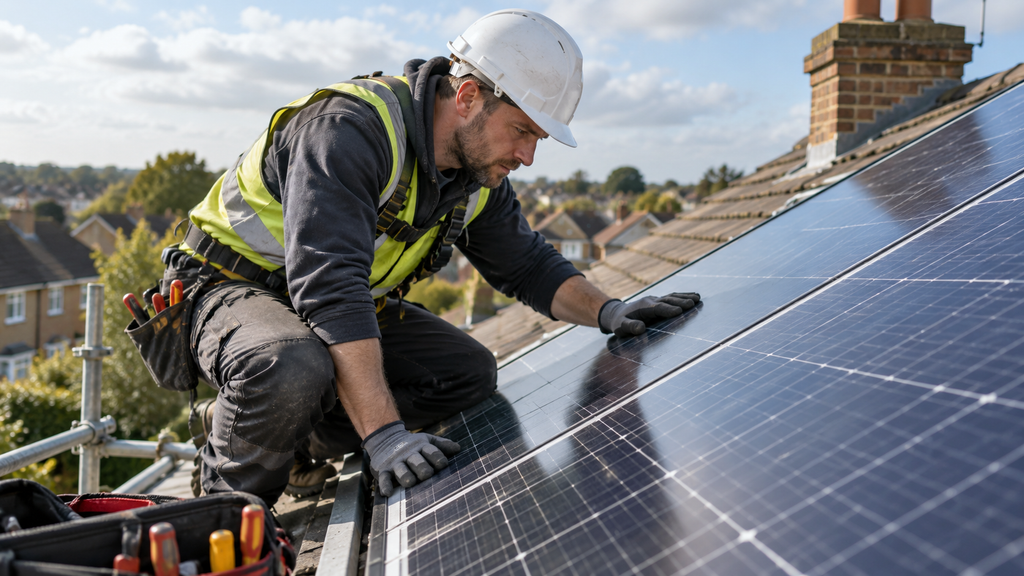
Getting more out of the system you already have
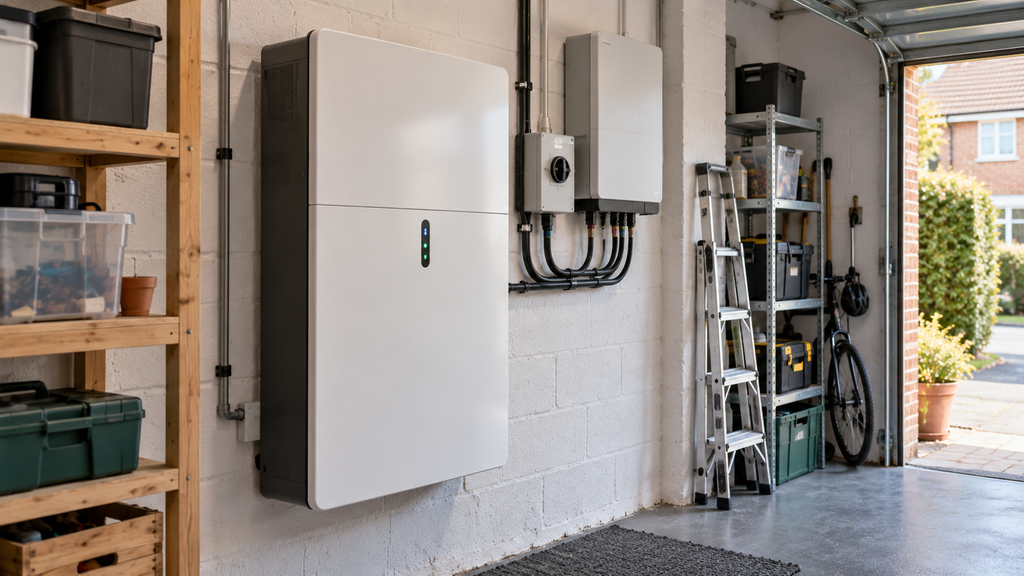
Most of the “hidden” value in solar comes after installation, not from the panels themselves. A home battery storage system lets you store the electricity you generate during the day and use it in the evening, instead of exporting it at a lower rate and buying it back later at a higher one. It’s one of the more worthwhile upgrades if your budget stretches to it.
If you’re interested in going further, pairing solar with other renewable sources — a small wind turbine in the right spot, or ground-source heat pumps where feasible — can round out a household’s energy mix. These aren’t right for most UK gardens, but they’re worth knowing about if you’re planning long-term. For the low-cost, no-new-hardware version of the same idea, our guide to seasonal rhythms and lower-impact living covers the everyday habits that reduce demand in the first place, which matters just as much as how you generate power.
Is it worth it?
For most UK households, yes — with the caveat that “worth it” depends on your roof, your usage, and how long you plan to stay in the house. Solar won’t work miracles on a shaded north-facing roof, and it won’t pay for itself overnight. But as a genuine, ongoing cut to both emissions and bills, it’s one of the few sustainable upgrades where the environmental case and the financial case point the same direction.
If you’re weighing this up as part of a bigger household audit, our non-toxic home audit checklist is a useful next step — it’s free, and it’ll flag other easy wins while you’re already in “improve the house” mode.