Foraging in winter: what’s still available in the UK hedgerows
As an Amazon Associate I earn from qualifying purchases and sometimes recommend products from other sellers at no extra cost you. For more details see my disclosure policy and privacy policy.
Most people hang up their foraging basket once the last blackberries turn mushy in October. I used to as well. But winter foraging in the UK is quieter, not empty: the hedgerows still hold rosehips, haws and frost-softened sloes, and the first wild greens start pushing through long before spring officially arrives.
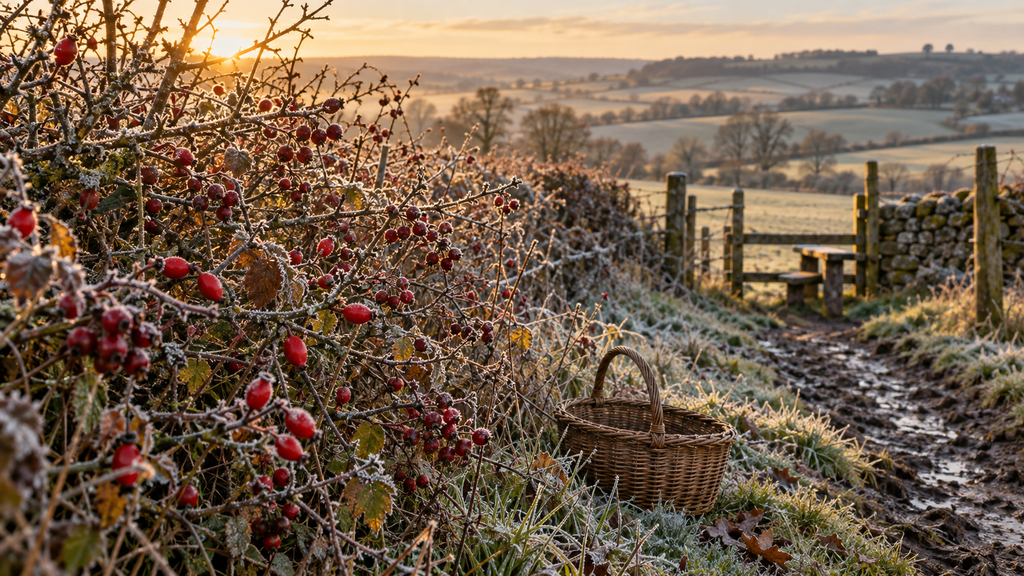
Winter is also, honestly, my favourite time to forage. The leaves are down, so the hedges are easier to read. There are fewer people about, fewer lookalikes in flower, and every find feels earned.
This guide covers what you can realistically still find from December to February, how to pick it responsibly, and two simple recipes to use it up. If you’re brand new to foraging, start with my beginner’s guide to foraging in the UK first, then come back here.
In short: UK winter foraging is mostly hedgerow fruit early in the season (rosehips, haws, sloes, crab apples) and hardy greens later on (chickweed, hairy bittercress, navelwort, then the first nettles and wild garlic in late February).
Free download
Get the Non‑Toxic Home Audit Checklist
A room‑by‑room checklist to help you spot what’s worth swapping in your home — and what’s not worth worrying about. Join the fortnightly newsletter and it’s yours.
No spam, unsubscribe any time.
Before you go: four winter foraging rules
1. Know the law
In England and Wales, picking wild fruit, flowers, foliage and fungi for your own use isn’t theft under the Theft Act 1968 — but you need lawful access to the land, and selling what you pick changes things. Uprooting any wild plant without the landowner’s permission is an offence under the Wildlife and Countryside Act 1981. Nature reserves and SSSIs often have their own byelaws, so check signs. I’ve covered the detail in what you can legally forage in the UK.
2. Leave most of it for the birds
Winter berries are survival food. Redwings, fieldfares, blackbirds and thrushes rely on hawthorn and rose hips when the ground is frozen. My rule is to take no more than a small handful from any one bush and to never strip a hedge. If a branch looks picked over, walk on.
3. Expect flailed hedges
Hedge-cutting season on farmland runs through autumn and winter, so a hedge heavy with haws in November can be bare by January. Field-edge hedges on public footpaths, green lanes and old laid hedges tend to keep more fruit.
4. Be 100% sure, every time
Winter brings fewer flowers, and flowers are often the easiest ID feature. Lean on leaves, stems, smell and habitat, and cross-check with a good UK field guide. If you’re not certain, don’t eat it.
The takeaway: winter foraging is legal for personal use on land you can access, but take little, leave plenty for wildlife and never guess an ID.
Winter hedgerow fruits and berries
Early winter is fruit season’s last act. Frost actually helps here: it softens skins and mellows sharp flavours, so several hedgerow fruits taste better in December than in October.
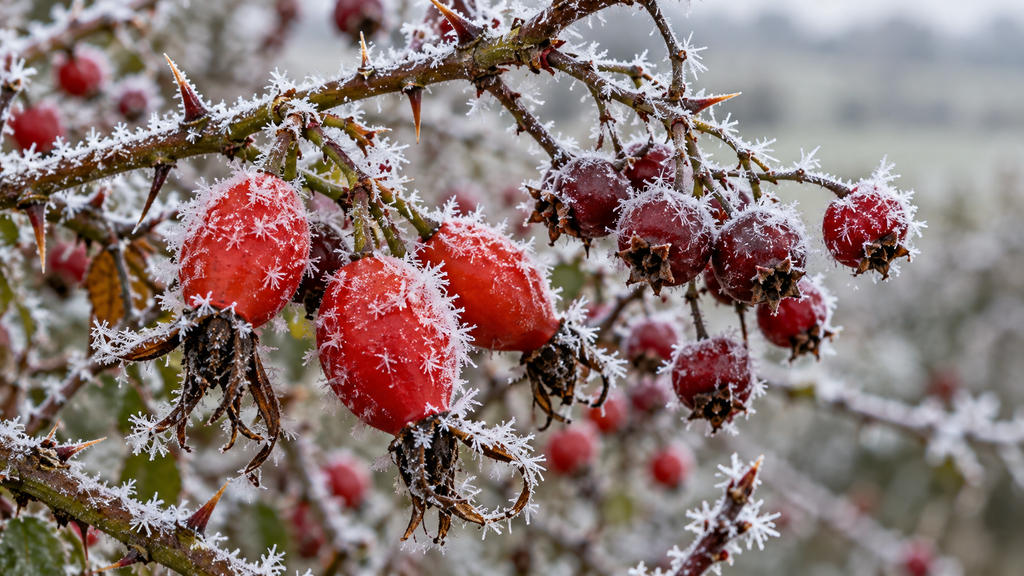
Rosehips (dog rose)
The bright red, oval hips of the dog rose hang on well into January. After a frost they go soft and squashy, which makes them easier to process. They’re famously rich in vitamin C — during the Second World War, volunteers collected them by the tonne for rosehip syrup.
Watch out for: the fine hairs around the seeds inside. They irritate the mouth and gut, so always strain rosehip preparations through a jelly bag or double layer of muslin. Never eat them raw from the bush.
Haws (hawthorn)
Hawthorn is the backbone of most British hedgerows, and its dark red haws often outlast everything else. The flesh is mealy and mild, a bit like a floury apple. Haws make a surprisingly good ketchup (recipe below) and a ruby-coloured jelly.
Watch out for: the seeds, which contain compounds that release cyanide when crushed. Cook the haws and sieve the seeds out.
Sloes (blackthorn)
If you missed sloes in autumn, look again in December. Many bushes still carry fruit, and the old advice to pick after the first frost exists for a reason — it takes the edge off their astringency. Sloe gin made now will be ready by next winter. Wear gloves: blackthorn spines are vicious and wounds can get infected.
Crab apples
Windfall crab apples often lie under trees into December. They’re too sour to eat raw, but they’re packed with pectin, which makes them the perfect partner for low-pectin fruits like rosehips and haws in a hedgerow jelly. If you’re planting for next year, crab apple is one of the best trees for growing a foraging garden at home.
Rowan berries
Rowan berries are often stripped by birds before midwinter, but in colder upland areas some hang on. Never eat them raw — they contain parasorbic acid, which upsets the stomach. Cooking breaks it down, and rowan jelly is a traditional partner for game.
The takeaway: rosehips, haws, sloes, crab apples and rowan are the main winter hedgerow fruits — all need cooking or straining, and all are better after a frost.
Winter greens and flowers you can still find
Wild greens don’t disappear in winter — they just get smaller and hug the ground. In mild spells, especially in the south and west, there’s more green about than you’d expect.
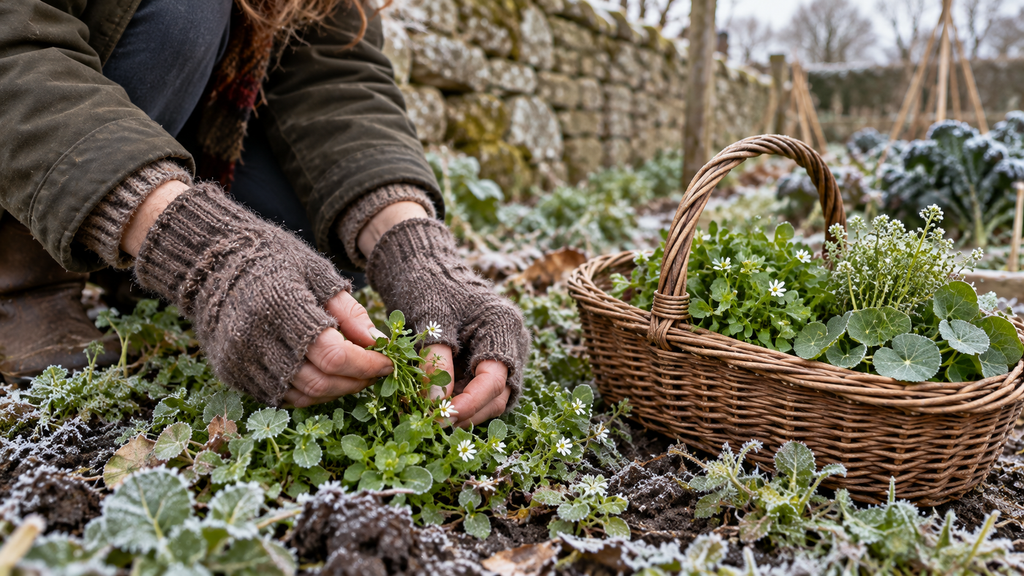
Chickweed
Chickweed grows almost year-round in gardens, allotments and field edges, forming soft, bright green mats. It tastes like mild pea shoots and is lovely raw in salads or stirred into soup at the last minute. Look for the single line of fine hairs running up one side of the stem — it’s the easiest way to tell it from the toxic scarlet pimpernel, which has square, hairless stems.
Hairy bittercress
You’ve probably weeded this out of plant pots. Hairy bittercress forms small rosettes of round leaflets and tastes peppery, like watercress. Pick the whole rosette by snipping above the root.
Navelwort (pennywort)
Navelwort grows out of old stone walls, rocks and hedge banks, mostly in the west of Britain. Its round, fleshy leaves have a dimple in the middle, like a belly button. They’re juicy and cucumber-crisp — good raw in a winter salad.
Alexanders
Along the coast and in hedges near the sea, alexanders stays glossy green right through winter. The young stems can be cooked like asparagus and the leaves have a celery-parsley flavour. Beginners take care: alexanders belongs to the carrot family, which includes deadly hemlock and hemlock water dropwort. Only pick it once you can ID it confidently, ideally after being shown in person.
Three-cornered leek
In the south-west especially, three-cornered leek starts sending up leaves from December. It has triangular stems and a mild garlicky taste. It’s an invasive non-native species, so picking leaves is helpful — but never dig up bulbs or move them, as it’s an offence to cause it to spread in the wild.
Gorse flowers
There’s an old saying that when gorse is out of bloom, kissing’s out of fashion — because some gorse is flowering in almost every month. The yellow flowers smell of coconut and can be steeped for a tea or a cordial. Wear gloves and pick a few from each bush.
The takeaway: chickweed, hairy bittercress, navelwort and gorse flowers are the easiest winter wild foods for beginners; leave alexanders until your ID skills are solid.
Late winter: the first green shoots of the year
By mid to late February, the foraging year quietly restarts. Timing depends on where you live — Cornwall can be weeks ahead of the Pennines — so treat these as “keep an eye out” rather than fixed dates.
Stinging nettles
The first nettle tips appear in sheltered spots from late February. Pick just the top four to six leaves with gloves on; cooking or blanching removes the sting. Nettle soup is the classic, but they’re also good wilted like spinach.
Cleavers (sticky willy)
Cleavers grows fast at the base of hedges in late winter. The young tips can be steeped in cold water overnight for a fresh, grassy drink, or lightly cooked. Pick before it gets tough and stringy.
Wild garlic (ramsons)
In mild years, the first wild garlic leaves push up in damp woodland by late February. This is the big safety one. Young lords-and-ladies (cuckoo pint) leaves come up in the same places at the same time and are toxic; later on, lily of the valley can look similar too. Crush each leaf and smell it — but wash your hands between leaves, because garlic smell lingers on your fingers and can fool you.
Jack-by-the-hedge (garlic mustard)
The heart-shaped, slightly crinkled leaves of jack-by-the-hedge appear along shady hedge bases. They taste of mild garlic with a mustardy kick, and work well in pesto with a little wild garlic.
Dandelion leaves
Young dandelion leaves are at their least bitter in late winter, before the plant flowers. Pick from the centre of the rosette. If you want a reliable supply close to home, leave a patch of your lawn unmown — it’s one of the simplest first steps in rewilding your garden.
The takeaway: late February brings nettles, cleavers, jack-by-the-hedge and the first wild garlic — but check every wild garlic leaf individually for lords-and-ladies.
Winter fungi and conifer needles (proceed with care)
A few fungi fruit happily in cold, damp weather, and evergreen trees offer a fragrant tea. Both come with real risks, so read this section properly before you pick anything.
Jelly ear
Jelly ear is one of the most common winter fungi in the UK. It grows in brown, rubbery, ear-shaped clusters, almost always on dead or dying elder branches in the hedge. It has no dangerous UK lookalikes on elder, which is why it’s often recommended as a first fungus — but it must be cooked thoroughly, and it’s more about texture than flavour (think hot and sour soup).
Velvet shank — for experienced foragers only
Velvet shank grows in orange-brown clumps on dead wood and can survive being frozen. It’s a genuine winter edible, but it has a deadly lookalike, the funeral bell, which grows in similar places. If you’re interested in winter mushrooms, go on a guided foray with an experienced local group before picking anything. I’d never recommend fungi from a photo or a blog post alone, including this one.
Pine and spruce needles
Fresh Scots pine or spruce needles steeped in hot water make a citrusy, resinous tea. Never confuse them with yew. Yew has flat, dark, glossy needles and is deadly poisonous in almost every part. Avoid conifer teas if you’re pregnant, and only pick from trees you have identified with certainty.
The takeaway: jelly ear on elder is the one winter fungus most beginners can learn safely; leave velvet shank and other mushrooms until you’ve foraged with an expert.
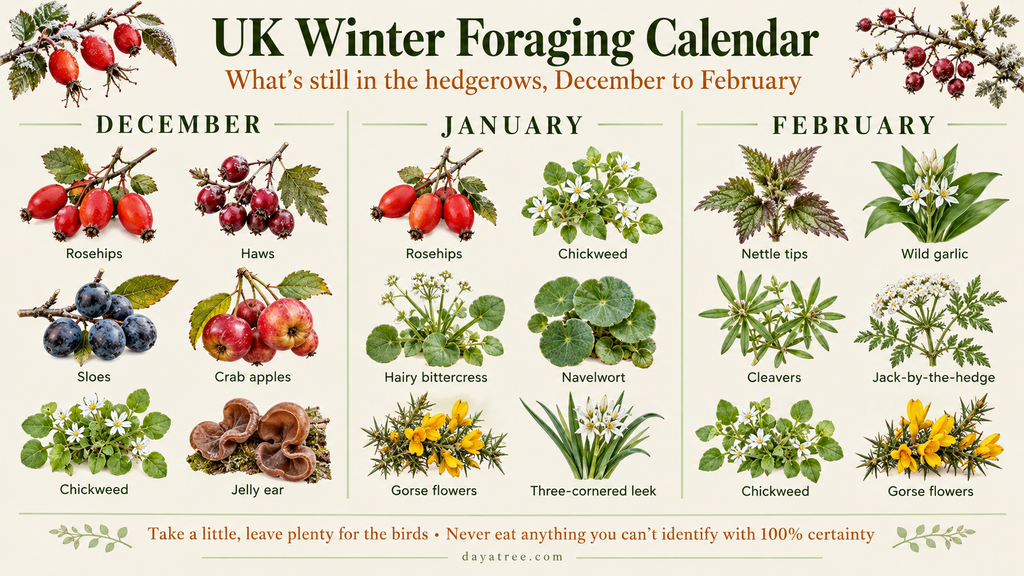
UK winter foraging calendar: December to February
Use this as a rough guide — a mild winter in the south-west runs weeks ahead of a cold one in the north.
Two simple winter hedgerow recipes
Both recipes use small quantities, so you won’t need to strip a single hedge. For storing what you make, my guide to preserving the harvest covers sterilising jars and bottles.
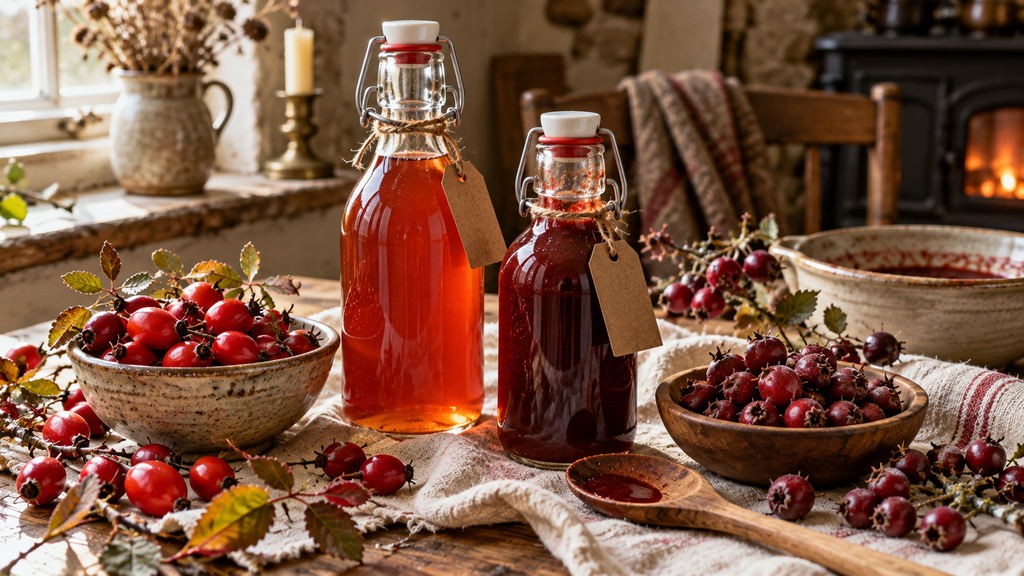
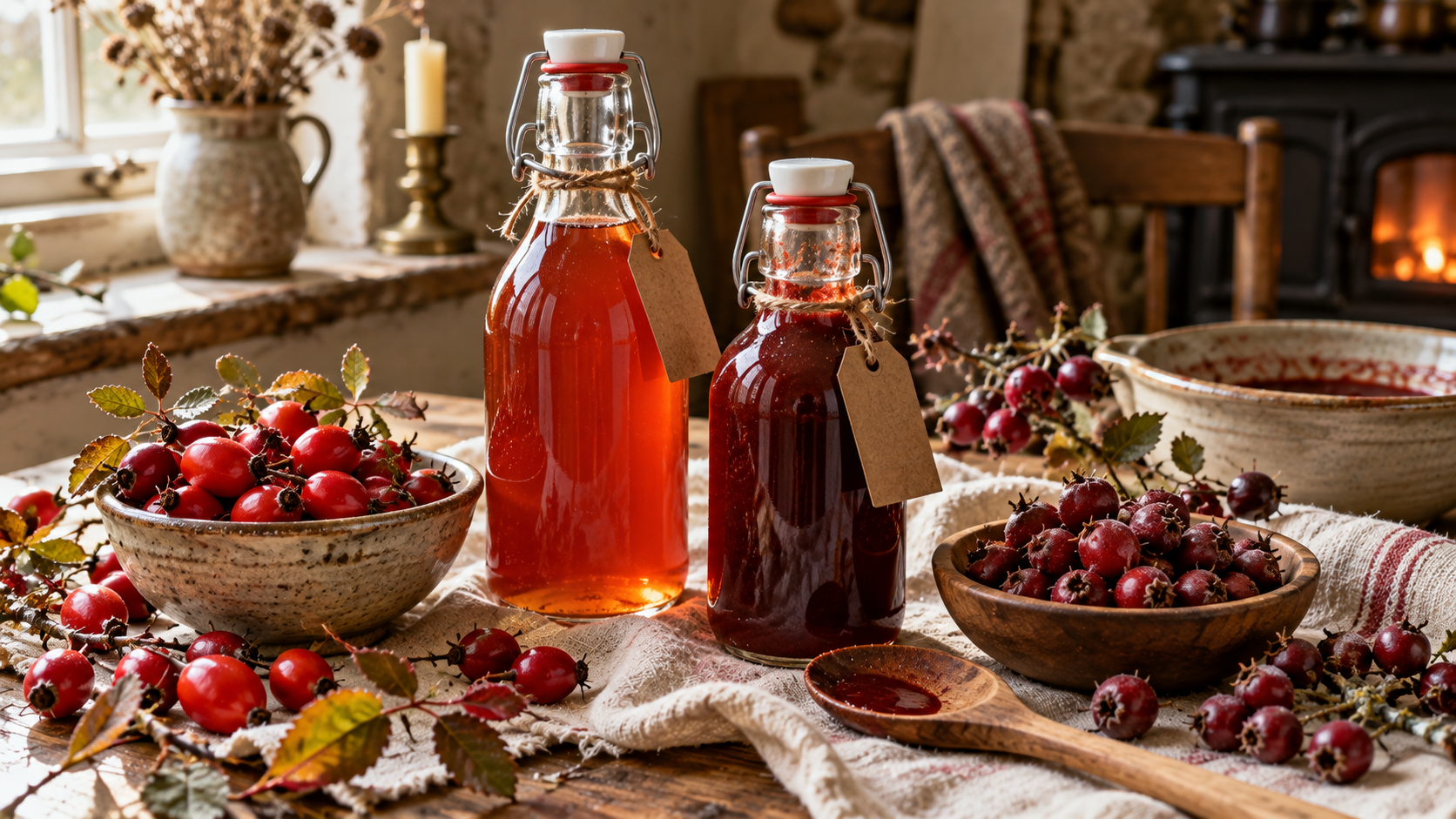
Rosehip syrup
You’ll need: 500g rosehips, 1.5 litres water, 250g sugar, a jelly bag or muslin, sterilised bottles.
- Bring 1 litre of water to the boil. Roughly chop the rosehips (a food processor is fine) and add them straight in.
- Return to the boil, then take off the heat and leave for 15 minutes.
- Pour through a jelly bag and let it drip. Put the pulp back in the pan with the remaining 500ml water, boil, rest for 10 minutes and strain again.
- Strain the combined liquid a second time through clean muslin to catch every last hair.
- Simmer until reduced to about 600ml, stir in the sugar until dissolved, boil for 2 minutes and bottle while hot.
Keep it in the fridge once opened. It’s lovely over porridge or yoghurt, or diluted as a winter cordial.
Haw ketchup
You’ll need: 500g haws (stalks removed), 300ml cider vinegar, 300ml water, 170g sugar, a pinch of salt and black pepper.
- Simmer the haws in the vinegar and water for about 30 minutes, until the skins split.
- Push everything through a sieve with the back of a spoon. This removes the seeds and skins — don’t skip it.
- Return the purée to the pan with the sugar, salt and pepper, and simmer gently until it thickens to ketchup consistency.
- Pour into sterilised bottles.
It tastes a bit like a fruity brown sauce and is excellent with cheese or sausages.
Winter foraging UK: frequently asked questions
Can you forage in winter in the UK?
Yes. December is still good for hedgerow fruit like rosehips, haws and sloes, and hardy greens such as chickweed, hairy bittercress and navelwort grow through most of the winter. By late February, nettles and wild garlic begin to appear.
What wild food can I find in January?
January is the leanest month. Expect the last rosehips, chickweed, hairy bittercress, navelwort, alexanders near the coast, three-cornered leek in the south-west, gorse flowers and jelly ear fungus on elder.
Are berries still safe to eat after a frost?
Frost doesn’t make edible fruit unsafe — it often improves sloes and rosehips. Skip anything mouldy, fermented or sitting in roadside spray, and pick well away from busy roads.
Is it legal to pick berries from hedgerows in the UK?
In England and Wales, picking wild fruit for personal use from land you have a right to be on is generally allowed. Uprooting plants, picking on private land without permission, and foraging to sell are where you can get into trouble.
How much should I leave for wildlife?
Most of it. Take a small handful per bush and never strip a branch — winter berries can be the difference between survival and starvation for birds during a hard freeze.
Slow down and see what’s still there
Winter foraging won’t fill your larder, and it isn’t meant to. It’s an excuse to get outside on a grey day, learn a hedge properly and come home with something small and good — a bottle of syrup, a handful of greens for soup. That idea of taking only what you’ll use sits at the heart of mindful consumption, and foraging is one of the gentlest ways to practise it.
If you’d like more winter fruit closer to home, consider planting rosehips and hawthorn yourself — my guide to native hedging vs. fencing explains how to plant a hedge that feeds both you and the birds.