Sustainable Decluttering: A Practical UK Guide to Owning Less and Wasting Less
As an Amazon Associate I earn from qualifying purchases and sometimes recommend products from other sellers at no extra cost you. For more details see my disclosure policy and privacy policy.
We live fast, and most of us accumulate faster than we realise. Every drawer, cupboard and garage corner in my house had become a small monument to things I’d bought “for later” and never used. Simplifying that — properly, not just shoving it into a box for the loft — turned out to be one of the better things I did for both my headspace and my carbon footprint.
This isn’t a minimalist manifesto. It’s a practical, UK-specific guide to decluttering in a way that actually reduces waste, rather than just moving it from your house to a landfill. Progress over perfection, always.
Start With One Area, Not the Whole House
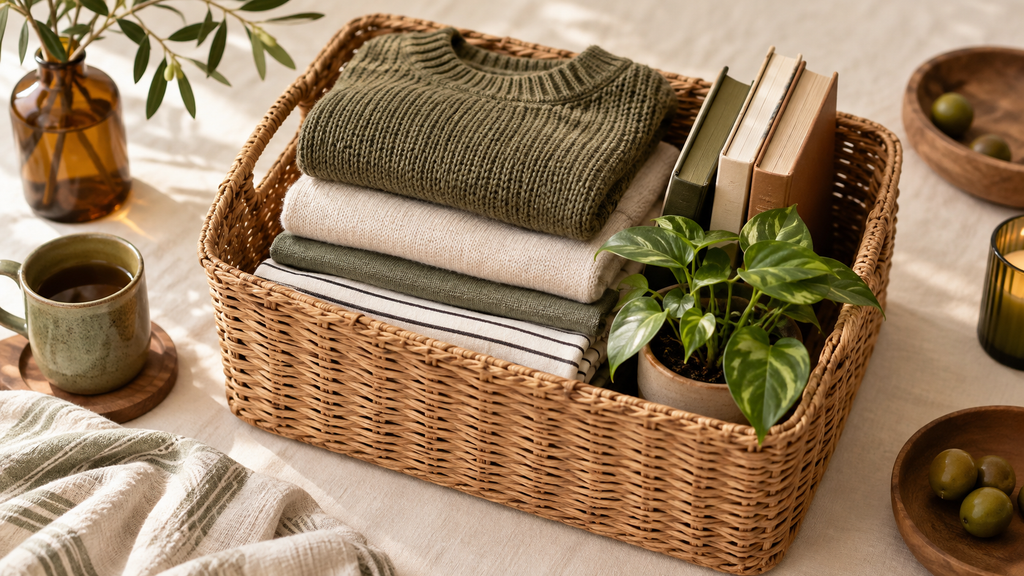
Trying to declutter an entire home in a weekend is how most people give up by Sunday lunchtime. Pick a single drawer, shelf, or cupboard and finish it completely before moving to the next. I started with the kitchen “junk drawer” — twenty minutes, one bin bag, done — and that small win was what got me through the rest of the house over the following month.
Takeaway: small, finished areas beat an ambitious pile of half-sorted rooms every time.
Free download
Get the Non‑Toxic Home Audit Checklist
A room‑by‑room checklist to help you spot what’s worth swapping in your home — and what’s not worth worrying about. Join the fortnightly newsletter and it’s yours.
No spam, unsubscribe any time.
Donate What You No Longer Need — Where It Actually Gets Reused in the UK
Once you’ve got a pile of things you no longer need, where they go matters. Charity shops (British Heart Foundation, Oxfam, your local hospice shop) will take most clothing, books, and homeware in good condition. For furniture and electricals, look for a local Reuse Network member or Freecycle/Freegle group — these keep usable items entirely out of the waste stream by matching them directly with someone who needs them, rather than routing everything through a shop.

Takeaway: the closer you can get an item to someone who’ll use it directly, the less energy and transport waste is involved in “donating.”
Make Your Own Bath and Beauty Products
Commercial bath and beauty products are one of the quietest sources of plastic waste in a UK bathroom — bottles within bottles, most of them not recyclable through kerbside collection. I started making a simple oat-and-honey scrub and a coconut-oil-based moisturiser at home, and beyond the waste reduction, it’s genuinely cheaper per use than most high-street equivalents.
Takeaway: homemade doesn’t mean complicated — most DIY beauty recipes use three or four pantry ingredients.
Reading Beauty Product Labels: The Ingredients to Avoid in 2026
Upcycle Instead of Binning It
Before anything goes to landfill, ask whether it has a second life in a different form. Old wine bottles become vases or candle holders; a wobbly ladder becomes a blanket rack; worn bedsheets become drop cloths or garden ties. None of this needs to be Pinterest-perfect — it just needs to keep something useful out of the bin.
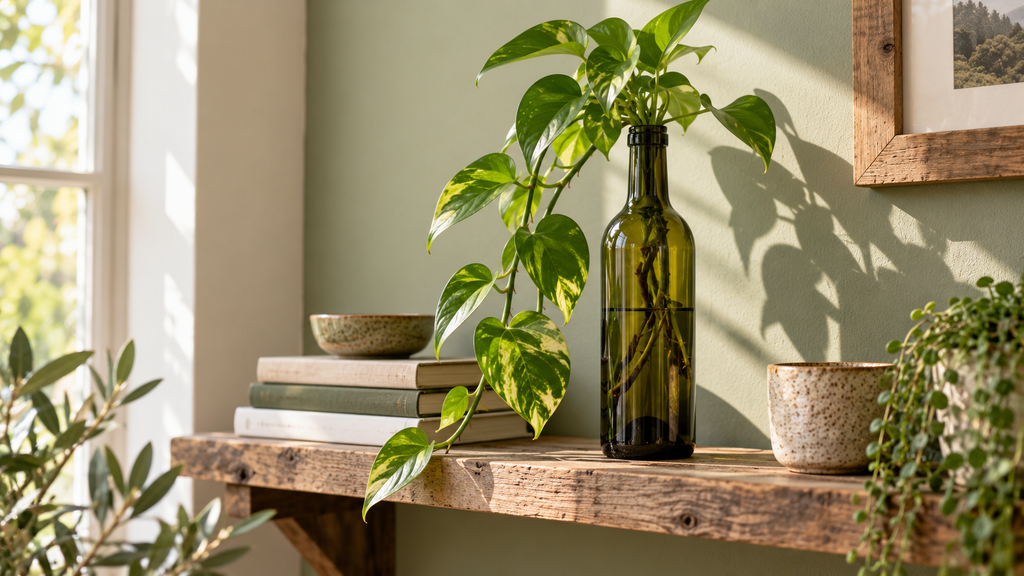
Takeaway: upcycling isn’t about crafting skill, it’s about asking “does this still have a job to do?” before you throw it away.
Repair and Reuse Before You Replace
The UK’s Repair Directive has made it easier (and often cheaper) to fix rather than replace certain appliances, and it’s changed how I think about anything that breaks in the house. A snapped shoelace, a wobbly chair leg, a coat with a popped button — these are usually a ten-minute fix, not a reason to buy new.
Takeaway: before you replace something, ask what it would take to fix it — the answer is often “less than you think.”
Sell What You Don’t Need
Not everything needs to be given away — some of it can fund the next stage of your decluttering, or just put a bit of money back in your pocket. Vinted and eBay work well for clothing and small goods; Facebook Marketplace is usually fastest for furniture, given you’re not paying for postage.

Takeaway: selling works best for anything with real resale value — for everything else, donating is faster and still keeps it out of landfill.
Go Digital: Photos, Books and Paperwork
Boxes of old photographs, paperwork, and books are some of the heaviest, most space-consuming clutter — and most of it can be digitised. A flatbed scanner or even a phone scanning app handles photos and documents in an afternoon; e-readers hold a library’s worth of books in one device.

Takeaway: you don’t have to lose the memory to lose the clutter — digitising keeps the content and frees the space.
The Bigger Picture: Progress, Not Perfection
None of this needs to happen in a weekend, and none of it needs to be done flawlessly. Every item donated instead of binned, every repair instead of a replacement purchase, is a small redirection away from landfill and towards a slower, more deliberate way of living with what you own.