Eco-Friendly Dish Washing: A UK Guide to Washing Up Without the Waste
As an Amazon Associate I earn from qualifying purchases and sometimes recommend products from other sellers at no extra cost you. For more details see my disclosure policy and privacy policy.
Washing-up is one of those daily chores nobody thinks twice about — until you start adding up the hot water, the plastic bottles, and the chemicals going down the drain every single day. The good news is that greener dish washing doesn’t mean more effort or a worse clean. A few small changes to how you wash, and what you wash with, can cut your water and energy use noticeably without leaving a single greasy pan behind.
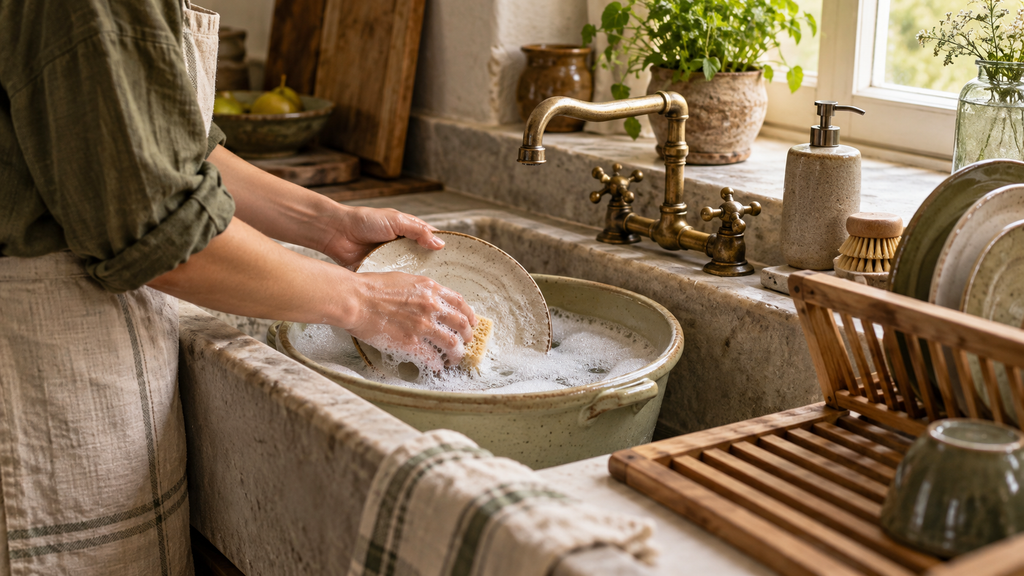
Here’s what I’ve learned from switching over our own kitchen sink — what actually works, what’s worth buying, and what you can skip.
Why Eco-Friendly Dish Washing Actually Matters
Two things happen every time you do the washing-up: you use hot water (which takes energy to heat), and you rinse chemicals from your soap straight into the water system. Neither is disastrous on its own, but multiplied across a household doing this two or three times a day, it adds up — in your energy bill as much as your footprint.
Being more eco-conscious about dishwashing isn’t really about buying a fancier bottle of soap. It’s about two habits: using less water and energy per wash, and choosing cleaning products that are biodegradable rather than synthetic. Get those two right and everything else is a bonus.
Free download
Get the Non‑Toxic Home Audit Checklist
A room‑by‑room checklist to help you spot what’s worth swapping in your home — and what’s not worth worrying about. Join the fortnightly newsletter and it’s yours.
No spam, unsubscribe any time.
How to Wash Dishes the Eco-Friendly Way
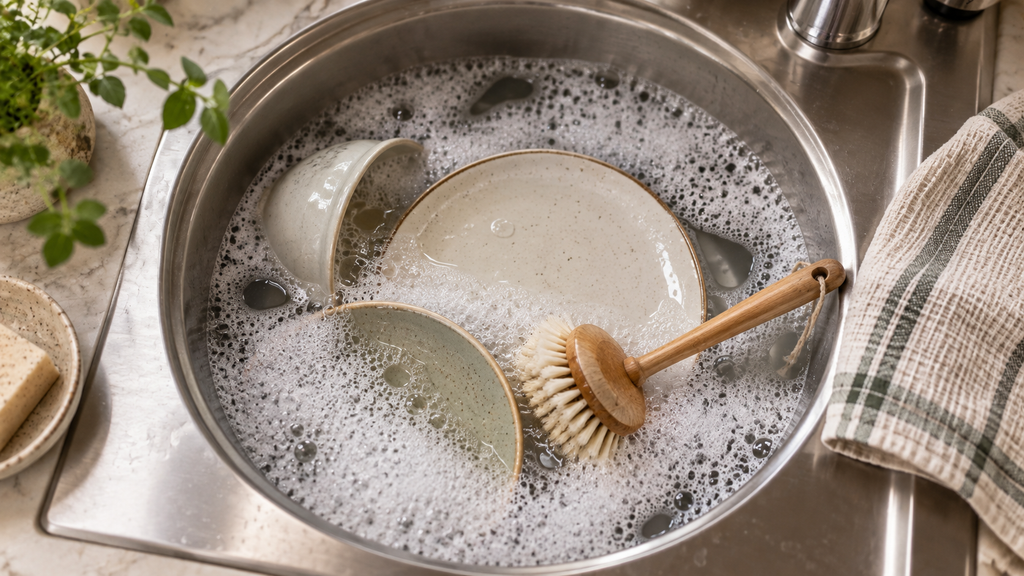
Wash by hand, in a basin, not under a running tap. Running the tap while you scrub can use several litres a minute — a filled basin uses a fraction of that. Use the hottest water you can comfortably handle with a biodegradable washing-up liquid, and you’ll cut through grease just as well as a running tap would.
Skip the second rinse where you can. If your basin water is clean, a quick dip is usually enough — you don’t need a second full rinse under the tap for most items.
Air-dry instead of using the tumble setting. A rack or an old tea towel does the job for free. It also means fewer streaks on glassware than a dishwasher’s heated dry cycle.
Rethink your dishwasher — but don’t assume it’s automatically worse. An older dishwasher with no eco cycle can use more hot water than washing up by hand. A newer, A-rated machine run only when full is often more water-efficient than hand washing, particularly for a full household load. The rule of thumb: only run it full, and always use the eco or economy setting.
Why Skip the Harsh Chemical Cleaners
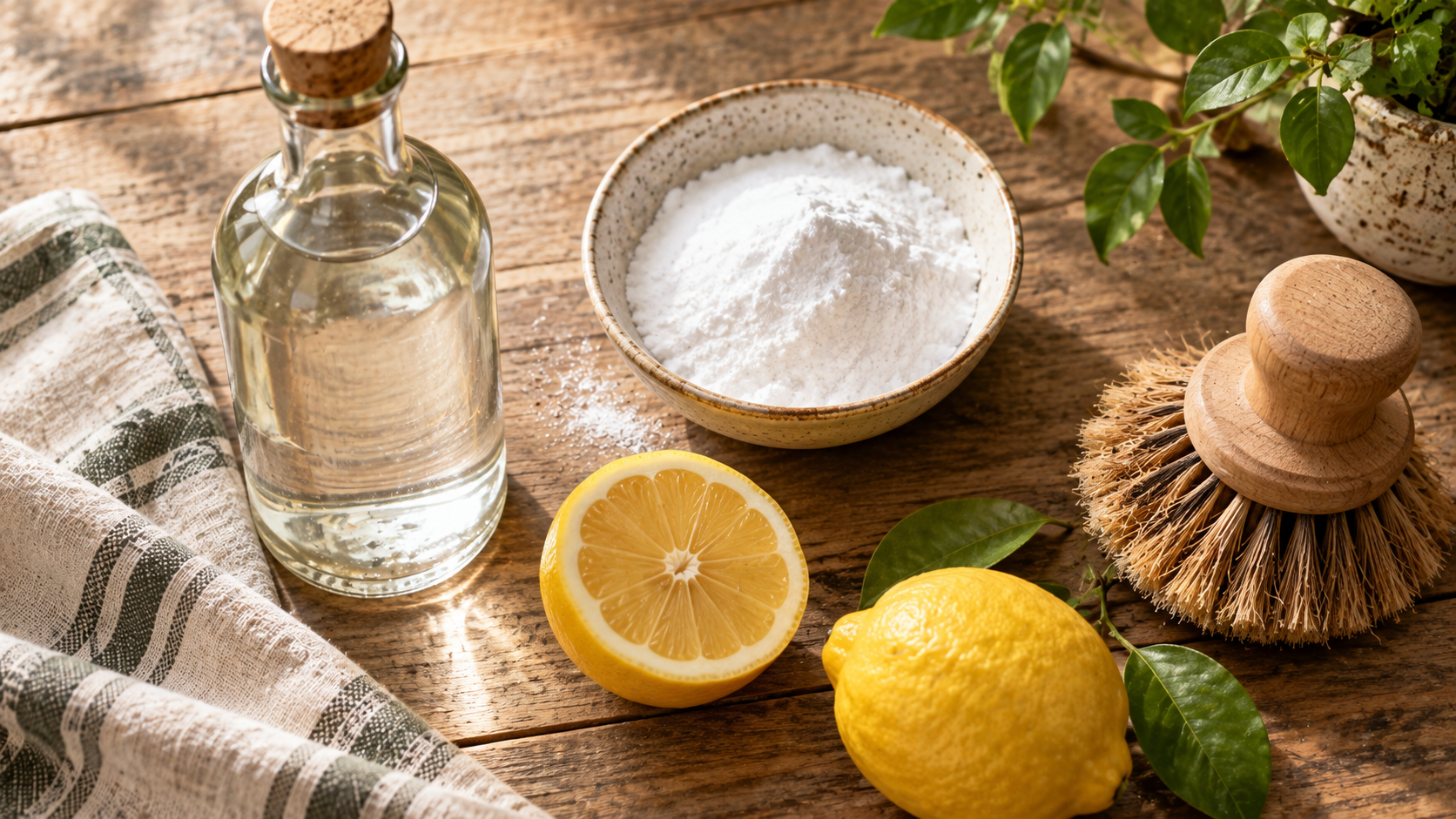
Most conventional washing-up liquids rely on synthetic surfactants and fragrances that aren’t kind to your skin or to waterways once they’re rinsed away. Natural alternatives — vinegar, lemon juice, bicarbonate of soda — cut through grease and limescale just as effectively for everyday jobs, without leaving the same chemical residue behind.
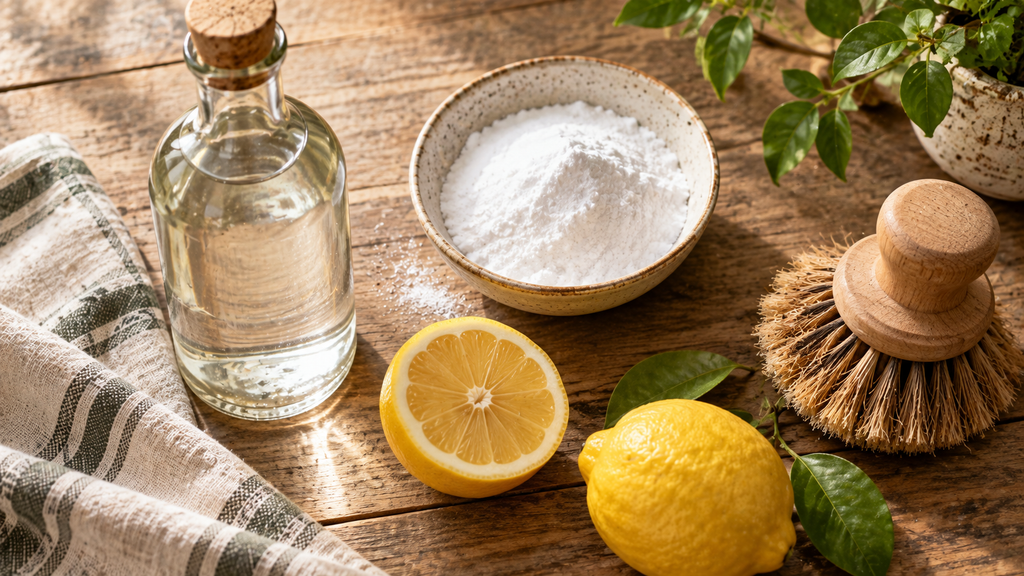
Going eco-friendly here is less about buying “green” branded products and more about using less, and choosing biodegradable formulas when you do buy. A full sink only needs a full dishwasher’s worth of thought, not a full bottle of soap.
How Eco-Friendly Habits Save You Money
This is the part that makes the swap worth doing even if you don’t care about the environmental angle: a shorter hot-water cycle and a full basin instead of a running tap directly cuts your water heating costs, which for many UK households is one of the larger controllable bits of the energy bill.
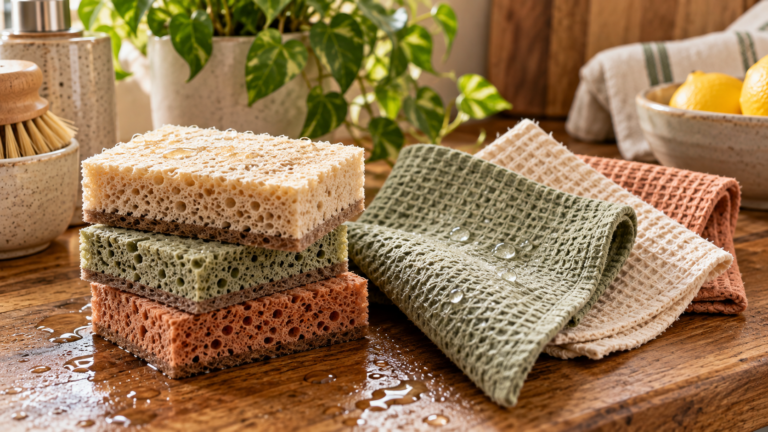
A simple routine: fill a sink with hot water and a few drops of biodegradable washing-up liquid, use a natural jute, loofah, or cotton scourer instead of a synthetic sponge (which sheds microplastic fibres over time), and rinse briefly in cold water before air-drying. It costs nothing extra and takes no more time than the way you’re probably washing up already.
Grow Your Own Food on a Budget: A UK Beginner’s Guide to Getting the Best Return
Getting a Proper Clean Without Harsh Chemicals
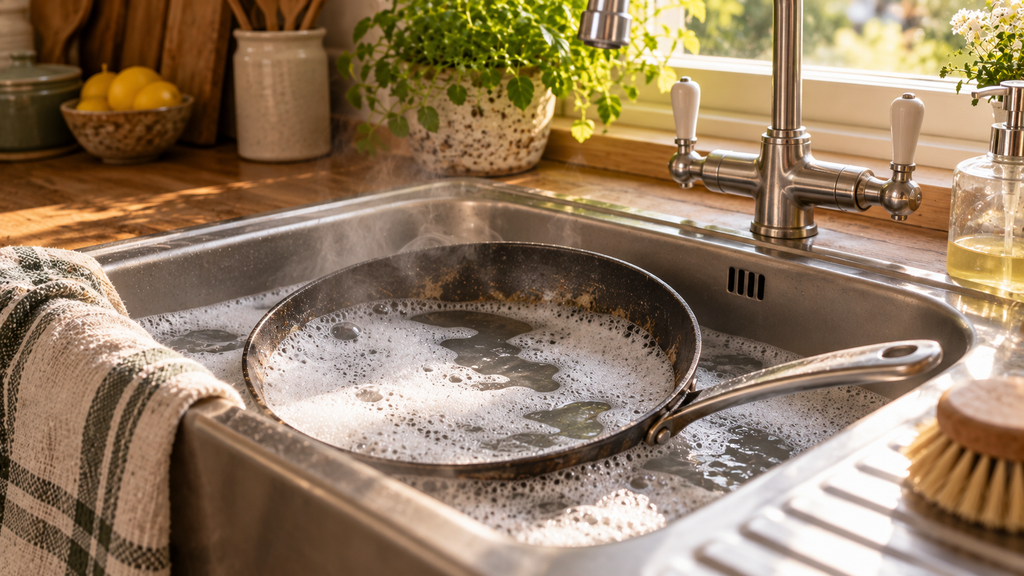
A clean plate doesn’t require a chemical-heavy formula. Rinse first in hot water to loosen anything stuck on, then use a simple mix of equal parts white vinegar and water for grease, baked-on food, and general residue — no heavy scrubbing required. For stubborn pans, add a small amount of washing-up liquid, give it a scrub with a brush, and let it soak while you get on with something else. Ten minutes of soaking does most of the work for you.
The Best Eco-Friendly Washing-Up Liquids Available in the UK
There’s no shortage of genuinely biodegradable options on UK supermarket and health-shop shelves now. A few worth trying:
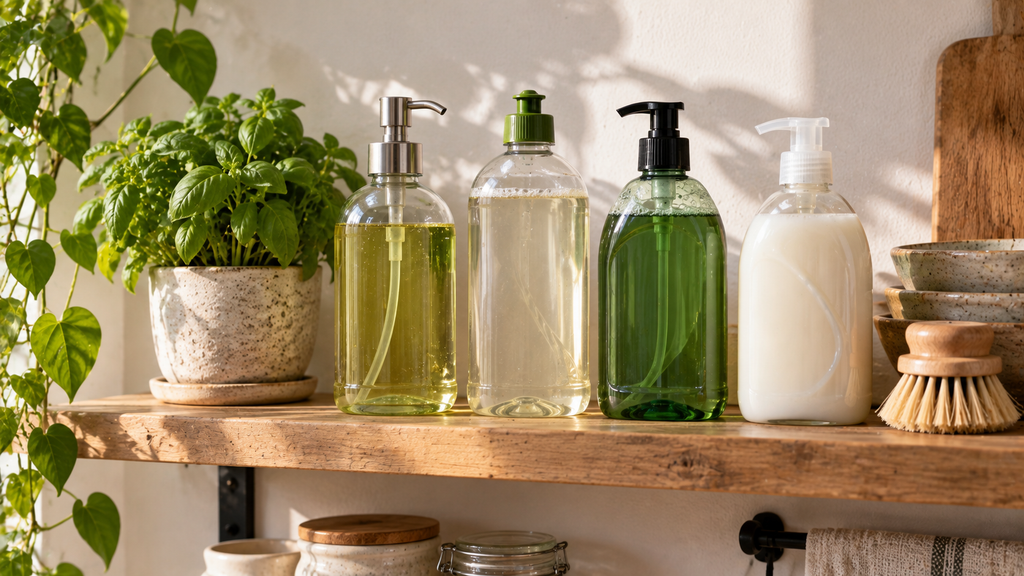
- Ecover Washing-Up Liquid — plant-based, widely available in UK supermarkets, and one of the longest-standing names in the space. A dependable everyday choice.
- Faith in Nature Washing-Up Liquid — naturally derived, unscented and scented options, in refillable packaging in some UK health shops.
- Bio-D Washing Up Liquid — fragrance-free formula, a good option if you or anyone in the household has sensitive skin.
- Delphis Eco Washing-Up Liquid — concentrated, so a bottle lasts considerably longer than most, which also means less plastic overall.
- Method Dish Soap — plant-based formula with a pleasant scent, easy to find in UK supermarkets.
None of these need a marketing pitch to work — the honest test is whether they cut grease on a real pan, and each of these does.
The Non-Toxic Home Guide: Room-by-Room Swaps for UK Households
The Bottom Line
Eco-friendly dish washing isn’t a big lifestyle overhaul — it’s a basin instead of a running tap, a biodegradable soap instead of a synthetic one, and letting things air-dry instead of reaching for the dryer setting. Small changes, done every single day, add up to a genuinely lower footprint and a lower water bill.
What’s your go-to washing-up routine — have you found a UK brand that beats the ones above? I’d love to hear about it.