
Energy Saving Tips for UK Homes: What Actually Cuts Your Bills
As an Amazon Associate I earn from qualifying purchases and sometimes recommend products from other sellers at no extra cost you. For more details see my disclosure policy and privacy policy.
I used to think “saving energy” meant turning the thermostat down a degree and feeling smug about it. Then I actually sat down with a year of energy bills, a smart meter app, and a very patient Energy Saving Trust advisor on the phone, and realised most of what I was doing was guesswork. This is what I changed, in order of how much difference it actually made — not the generic “10 tips” list you’ve read a hundred times before.

None of this requires solar panels, a heat pump, or a five-figure retrofit. It’s the stuff that’s realistic for a normal UK household, in a normal UK winter, on a normal UK budget.
Start With a Proper Home Energy Audit
Before you change anything, find out where the energy is actually going — otherwise you’re just guessing, and I wasted a full year guessing.
A few places to start:
Free download
Get the Non‑Toxic Home Audit Checklist
A room‑by‑room checklist to help you spot what’s worth swapping in your home — and what’s not worth worrying about. Join the fortnightly newsletter and it’s yours.
No spam, unsubscribe any time.
- Check your EPC rating. Every UK home has one (or can get one free via gov.uk) — it tells you exactly where your insulation, glazing, and heating system are weakest.
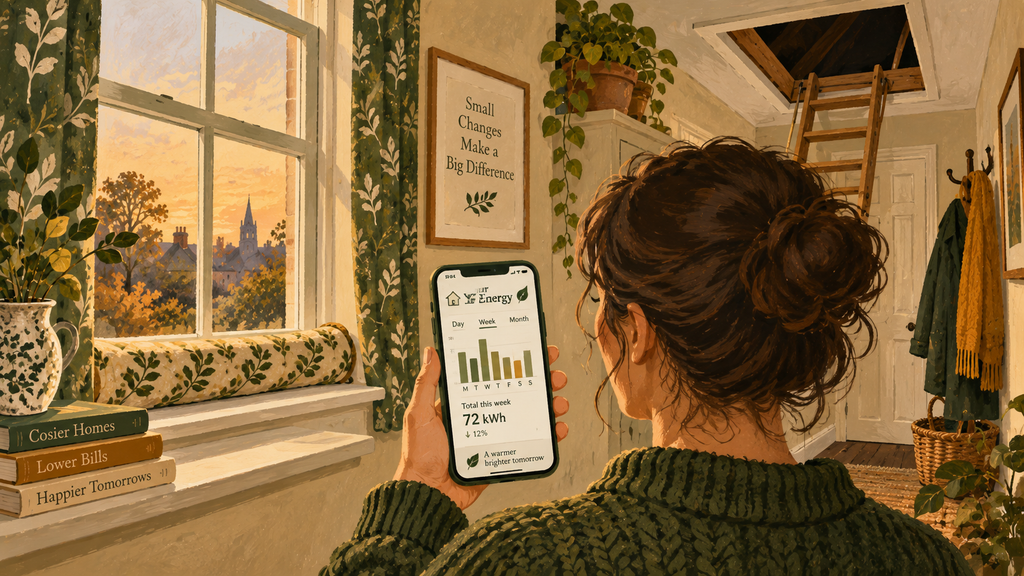
- Get a smart meter, if you haven’t. Every major supplier (Octopus, British Gas, E.ON) will fit one free. Watching real-time usage is the fastest way to spot the appliance quietly costing you money.
- Feel for draughts. Doors, letterboxes, and old sash windows are the usual culprits. A £15 tube of draught excluder sealant sorted more of my heat loss than I expected.
- Check your insulation. Loft and cavity wall insulation still qualify for grants under the Great British Insulation Scheme for many households — worth five minutes checking eligibility.
This single audit step is where most of my actual savings came from — not the small daily habits everyone talks about first.
The Non-Toxic Home Guide: Room-by-Room Swaps for UK Households
Heating and Cooling Without the Guesswork
Heating is the biggest single cost in most UK homes, and it’s also where people make the most expensive mistakes.

- Turn the thermostat down by one degree, not the heating off entirely. One degree lower can cut heating costs noticeably over a winter, without you noticing the difference on your skin.
- Use radiator valves properly. Rooms you’re not using (spare rooms, box rooms) don’t need to be heated to the same temperature as your living room.
- Bleed your radiators before autumn. Trapped air means your boiler works harder for a lukewarm result — this takes ten minutes and a radiator key.
- Layer up before you turn the dial up. It sounds obvious, but a jumper and a blanket on the sofa genuinely outperforms an extra degree on the thermostat, both financially and environmentally.
- In summer, use ventilation before air conditioning. Most UK homes don’t need mechanical cooling if windows, blinds, and airflow are managed properly through the day.
Lighting That Doesn’t Cost the Earth (or Your Bill)
This is the easiest, cheapest fix on this whole list, and the one with the fastest payback.
- Swap remaining old bulbs for LEDs. LED lightbulbs use a fraction of the electricity and last years longer — if you’ve got any incandescent or halogen bulbs left, they’re the first thing to replace.
- Make the most of daylight before switching anything on. Light walls, open curtains, and furniture positioned near windows all reduce how much artificial lighting you need through the day.
- Use task lighting instead of lighting a whole room. A desk lamp uses a fraction of the electricity of an overhead fitting.
Appliances: Small Habits, Real Savings
Appliances are where good intentions quietly leak money if the habits around them aren’t right.
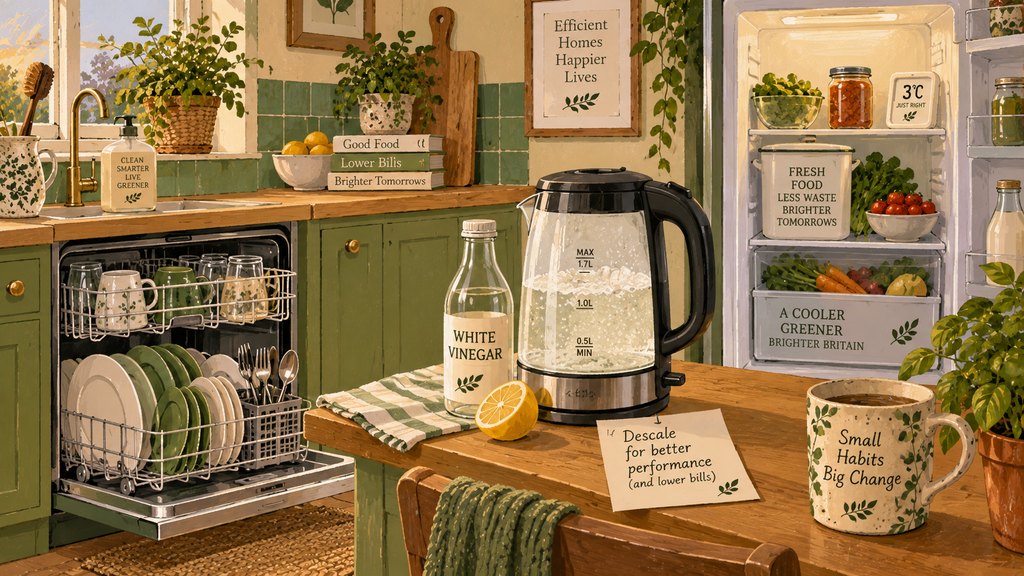
- Only run the dishwasher and washing machine on full loads. Half-loading either wastes water and electricity for no extra benefit.
- Wash on a cold or 30°C cycle where you can. Most modern detergents are formulated for this, and heating water is the actual energy cost in a laundry cycle — not the machine itself.
- Defrost food in the fridge, not the microwave or under a hot tap. It’s free, and better for food safety too.
- Descale kettles and clean dryer vents regularly. A scaled kettle or blocked dryer takes longer to do its job, which means more electricity for the same result.
- Check fridge and freezer temperatures. Most people run them colder than necessary — the recommended settings (around 4°C for fridges, -18°C for freezers) are enough.
Daily Habits That Actually Add Up
These won’t transform your bill on their own, but stacked together over a year, they matter.
- Shorter showers. Heating water is expensive — a few minutes off your shower time adds up faster than most people expect.
- Unplug what you’re not using, or put things on a power strip you can switch off at the wall. Standby power on multiple devices adds up quietly across a year.
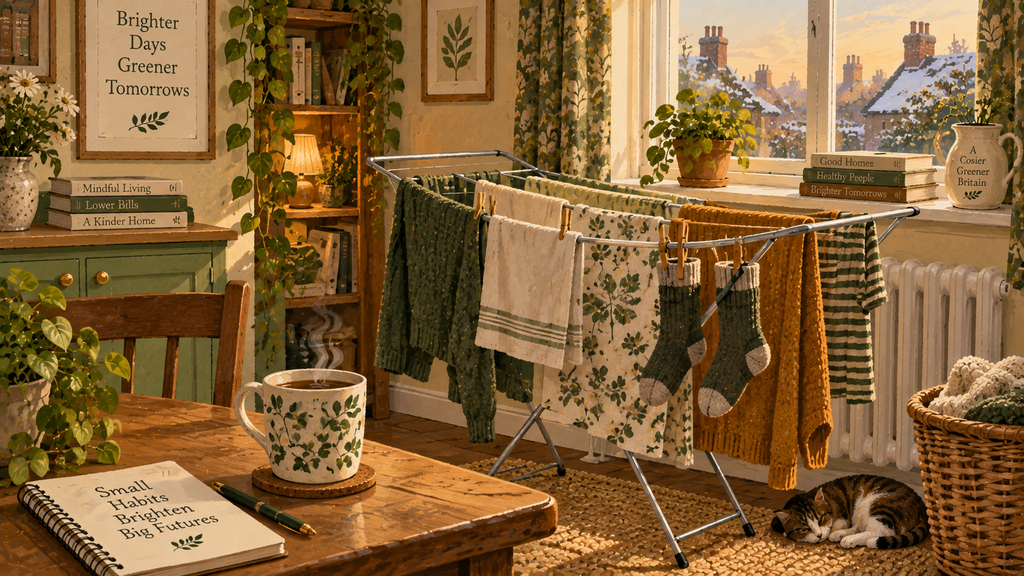
- Line-dry or use an airer when you can, even indoors — UK weather doesn’t always cooperate, but every load that skips the tumble dryer is a meaningful saving.
- Choose reusable over disposable where it’s realistic for your household — not as a zero-waste purity test, just as one more small swap that adds up.
For more of this “small, realistic, no guilt-trip” approach to sustainable living, Mindful Consumption: Breaking the Cycle of Impulse Buying goes further into the mindset behind it.
The Bottom Line
You don’t need to overhaul your home to meaningfully cut your energy bill. Find out where your energy is actually going, fix the heating habits first, and let the small daily swaps do the rest. Progress over perfection — every one of these changes is optional, and every one adds up.