The Science of Food Storage: Why Your Produce Goes Bad
As an Amazon Associate I earn from qualifying purchases and sometimes recommend products from other sellers at no extra cost you. For more details see my disclosure policy and privacy policy.
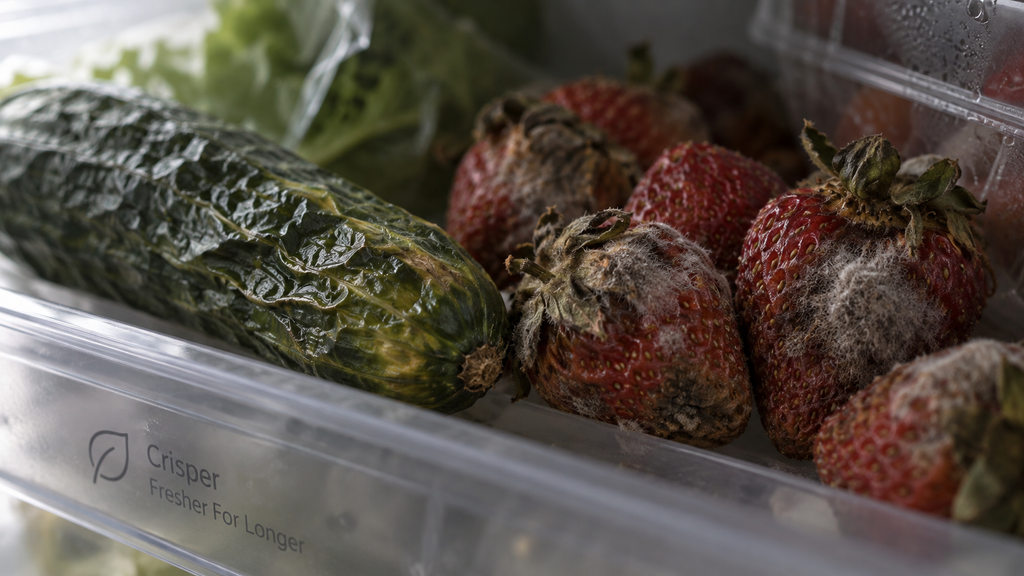
Have you ever wondered why that forgotten cucumber turned to mush in your crisper drawer, or why those strawberries developed fuzzy patches seemingly overnight? The science behind food spoilage is fascinating, and understanding food storage can help you keep your produce fresh longer – saving money and reducing food waste in the process.
The Biology of Food Spoilage
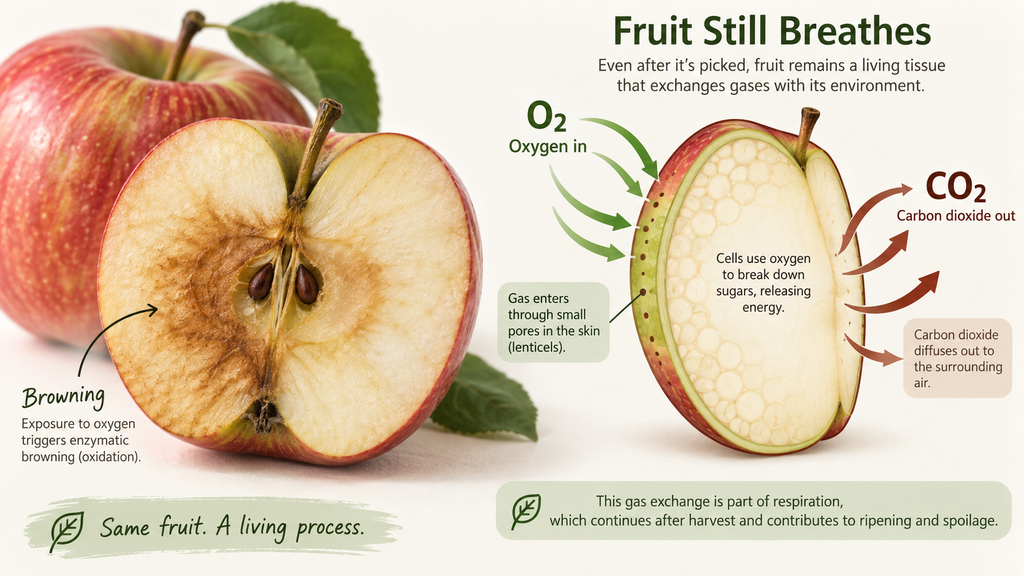
Fresh fruits and vegetables are living organisms that continue to undergo biological processes even after harvest. These processes, combined with external factors, contribute to their eventual deterioration:
Respiration
Just like humans, produce “breathes” – taking in oxygen and releasing carbon dioxide through a process called respiration. This natural process continues after harvest, using up stored energy and gradually leading to tissue breakdown. Some fruits, like apples and bananas, are “climacteric,” meaning they continue to ripen after picking due to increased respiration and ethylene production.
Enzymatic Activity
Enzymes within the produce continue working after harvest, breaking down cell walls and converting complex molecules into simpler ones. This is why an apple turns brown when cut – enzymes react with oxygen, creating melanin compounds that cause discoloration.
Free download
Get the Non‑Toxic Home Audit Checklist
A room‑by‑room checklist to help you spot what’s worth swapping in your home — and what’s not worth worrying about. Join the fortnightly newsletter and it’s yours.
No spam, unsubscribe any time.
Microbial Growth
Bacteria, yeasts, and molds are naturally present on produce surfaces. Given the right conditions (moisture, temperature, and nutrients), these microorganisms multiply rapidly, causing visible spoilage and potentially harmful contamination.
Environmental Factors Affecting Produce Longevity
Temperature
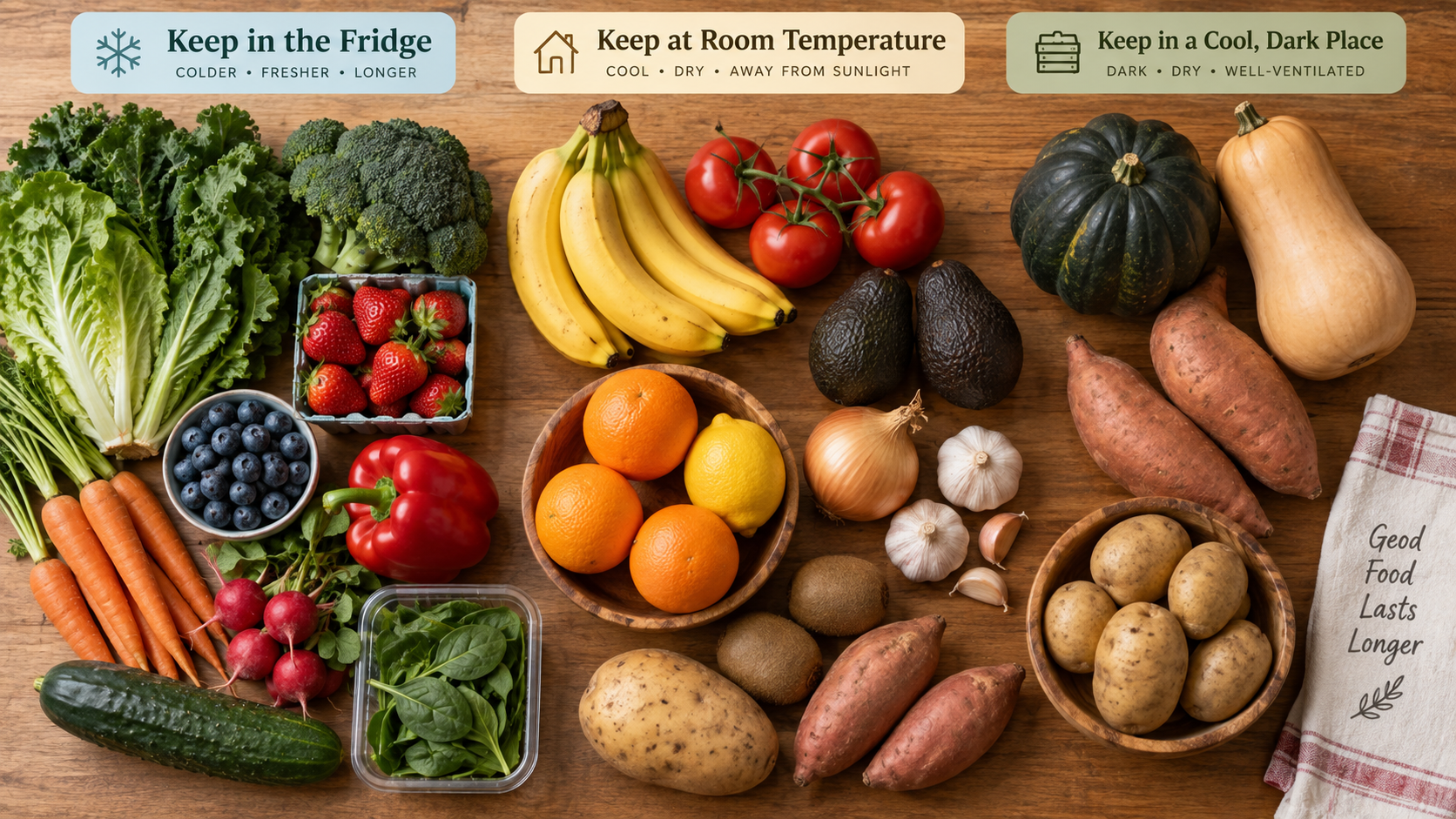
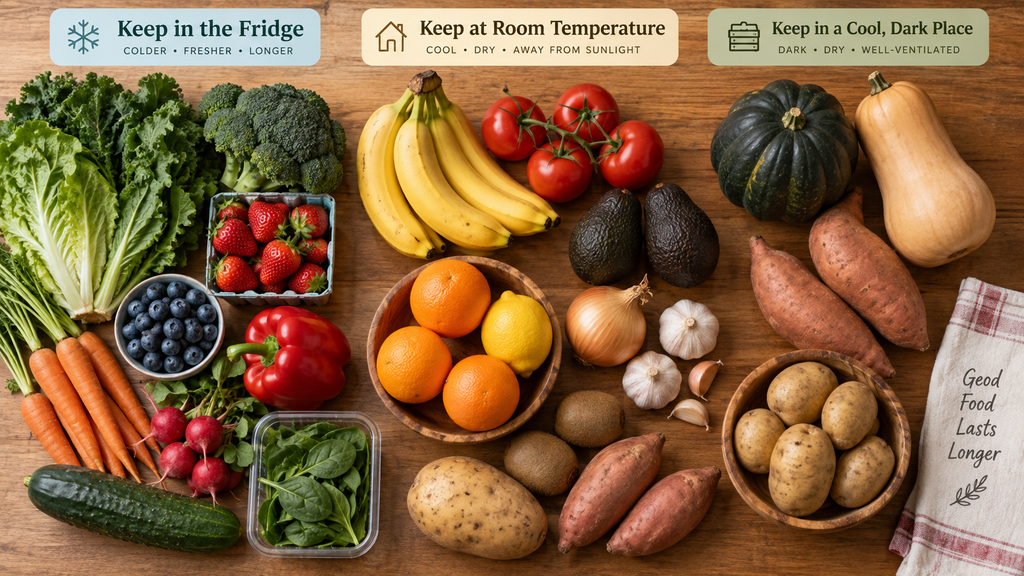
Temperature is perhaps the most critical factor in produce storage. Higher temperatures accelerate respiration rates and enzyme activity, while lower temperatures slow these processes down. However, each type of produce has an optimal storage temperature:
- Cold-sensitive produce (bananas, tomatoes): 55-60°F (13-16°C)
- Cool-storage produce (citrus, pineapples): 45-50°F (7-10°C)
- Cold-storage produce (leafy greens, berries): 32-40°F (0-4°C)
Humidity
Moisture loss through transpiration causes wilting and shriveling. However, excess moisture promotes microbial growth. Different produce types require different humidity levels:
- High humidity (85-95%): Leafy greens, root vegetables
- Moderate humidity (60-75%): Onions, garlic
- Low humidity (below 60%): Dried goods
Ethylene Gas
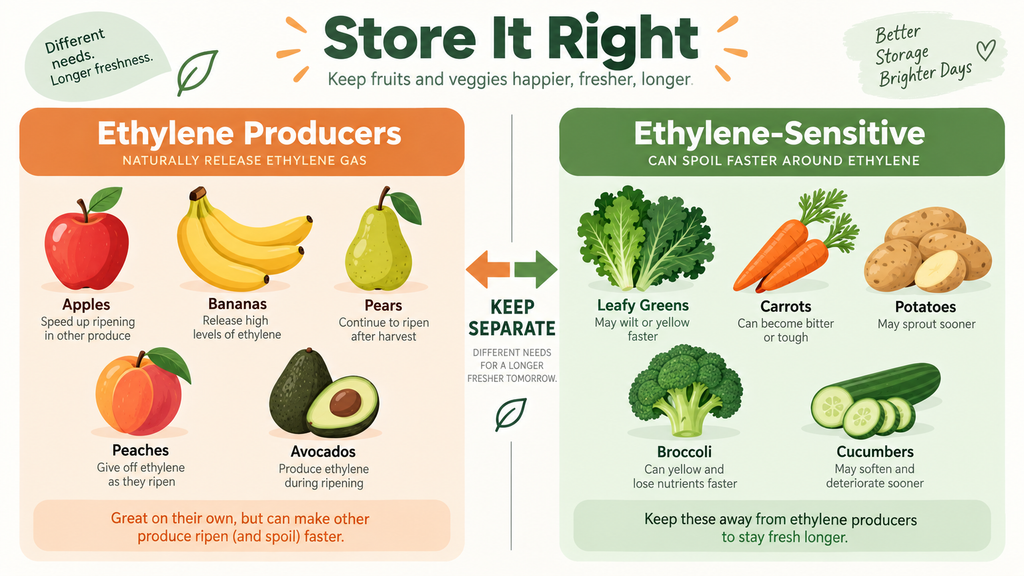
This natural plant hormone promotes ripening in many fruits. Some produce (apples, bananas, pears) produces high levels of ethylene, while others are particularly sensitive to it. Understanding these relationships is crucial for proper storage.
Evidence-Based Storage Methods
Strategic Separation
Research shows that keeping ethylene-producing fruits separate from ethylene-sensitive produce can significantly extend shelf life. Store these items separately:
Ethylene producers:
- Apples
- Bananas
- Pears
- Peaches
- Avocados
Ethylene-sensitive items:
- Leafy greens
- Carrots
- Potatoes
- Broccoli
- Cucumbers
Temperature Zoning Your Refrigerator
Modern refrigerators have different temperature zones. Use them strategically:
- Crisper drawers: 32-40°F (0-4°C) with humidity controls
- Middle shelves: 35-38°F (2-3°C)
- Door compartments: 40-42°F (4-6°C)
Proper Packaging
Scientific studies have shown that different packaging materials affect produce longevity:
- Perforated plastic bags: Allow necessary gas exchange while maintaining humidity
- Paper bags: Absorb excess moisture and prevent condensation
- Mesh bags: Provide airflow for items that need to “breathe”
Advanced Storage Techniques
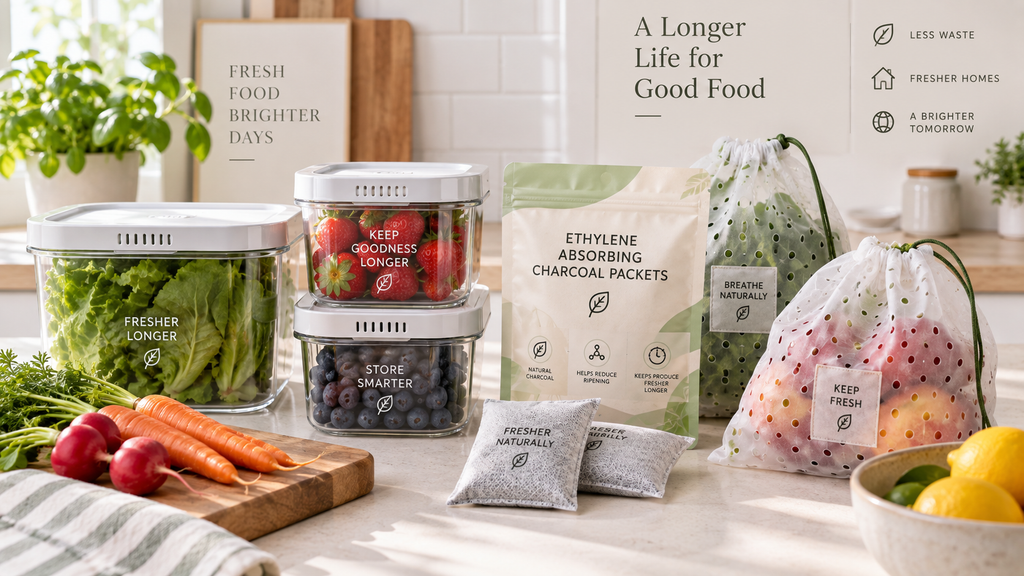
The Science of Ethylene Absorption
Some materials can absorb ethylene gas, extending produce life:
- Activated charcoal packets
- Zeolite-based absorbers
- Commercial ethylene absorption sheets
Modified Atmosphere Packaging
This technique involves creating an optimal gas balance around produce:
- Reduced oxygen levels slow respiration
- Controlled carbon dioxide levels inhibit microbial growth
- Specific gas ratios vary by produce type
Practical Tips Based on Research
- Don’t wash produce before storage unless necessary – moisture promotes bacterial growth
- Remove rubber bands and tight ties that can damage plant tissues
- Trim tops from root vegetables to prevent moisture loss
- Check stored produce regularly and remove any showing signs of decay
- Store herbs like fresh flowers in water, but keep leaves above water level
Signs of Spoilage: When to Let Go
Understanding normal ripening versus spoilage is crucial:
- Normal ripening signs: Color changes, softening, aroma development
- Spoilage indicators: Mold growth, off-odors, unusual texture changes, oozing
By understanding these biological processes and implementing evidence-based storage methods, you can significantly extend the life of your produce. This not only saves money but also helps reduce food waste – a growing environmental concern. Remember that different types of produce have different needs, and taking the time to store them properly pays off in both freshness and longevity.
More from DayaTree: