Zero-Waste Grocery Shopping in the UK: What Package-Free Actually Costs (and Saves)
As an Amazon Associate I earn from qualifying purchases and sometimes recommend products from other sellers at no extra cost you. For more details see my disclosure policy and privacy policy.
I’ll be honest: the first time someone mentioned “zero-waste grocery shopping” to me, I pictured a mason jar of a year’s worth of rubbish and a level of discipline I didn’t have. That image is everywhere online, and it’s put more people off than it’s helped.
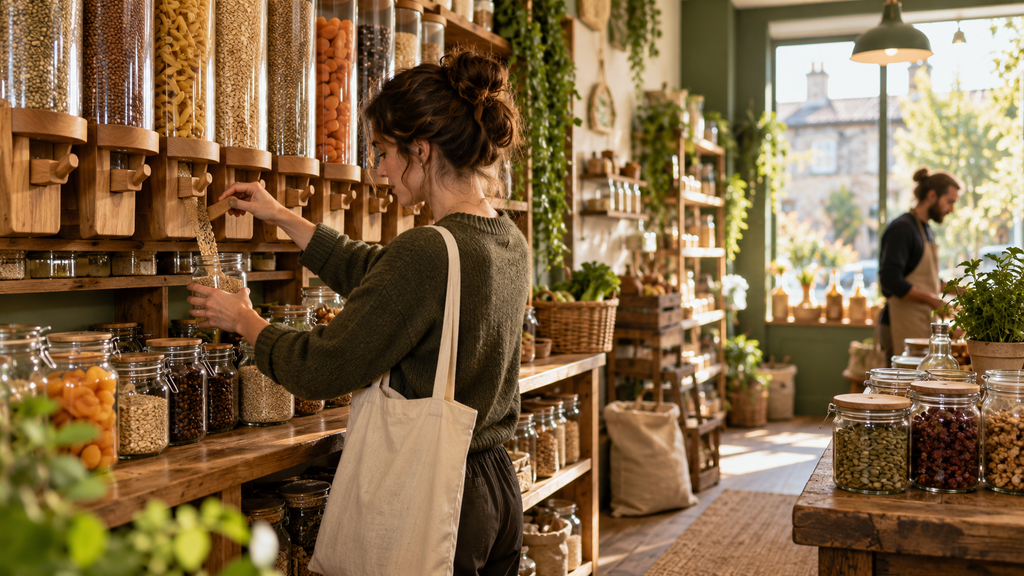
So when I started buying from our local bulk-buy shop three months ago, I went in with a much smaller aim: cut down on the plastic that ends up in our bin every week, and see whether it actually cost more.
Here’s what I found, room by room and receipt by receipt.
What “Zero-Waste” Grocery Shopping Actually Means
Forget the all-or-nothing version. In practice, zero-waste or “package-free” grocery shopping means buying things like grains, pasta, oats, nuts, dried fruit, cleaning products and washing-up liquid from large refill containers, using your own jars, bags or bottles instead of pre-packaged ones.
Free download
Get the Non‑Toxic Home Audit Checklist
A room‑by‑room checklist to help you spot what’s worth swapping in your home — and what’s not worth worrying about. Join the fortnightly newsletter and it’s yours.
No spam, unsubscribe any time.
You don’t need to switch your entire shop over. Most people who do this long-term buy maybe a third to half of their groceries this way and get the rest as normal — that’s still a meaningful cut in packaging, without needing a lifestyle overhaul.
In short: it’s a swap for specific items, not a personality.
How UK Bulk-Buy and Refill Shops Actually Work
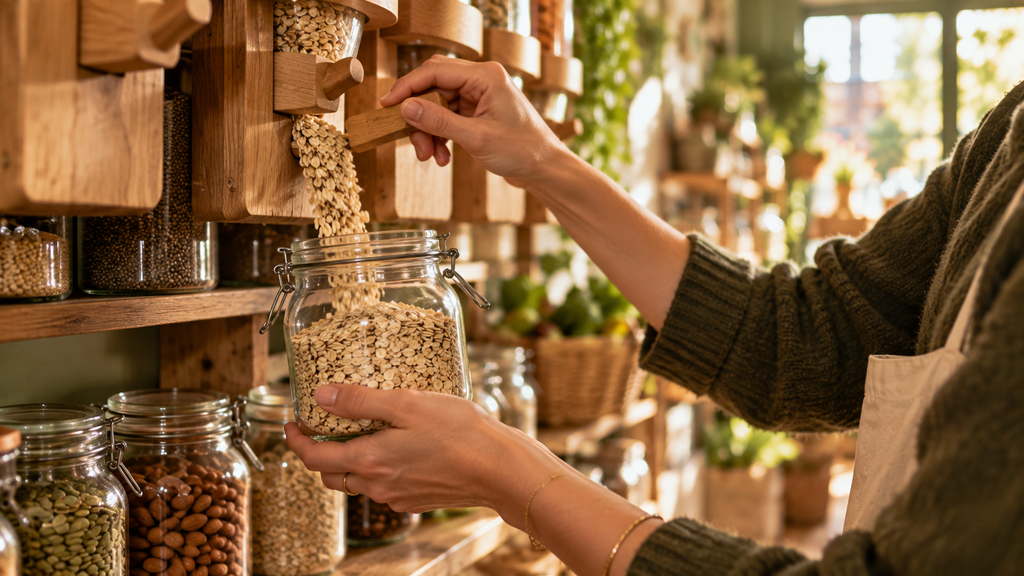
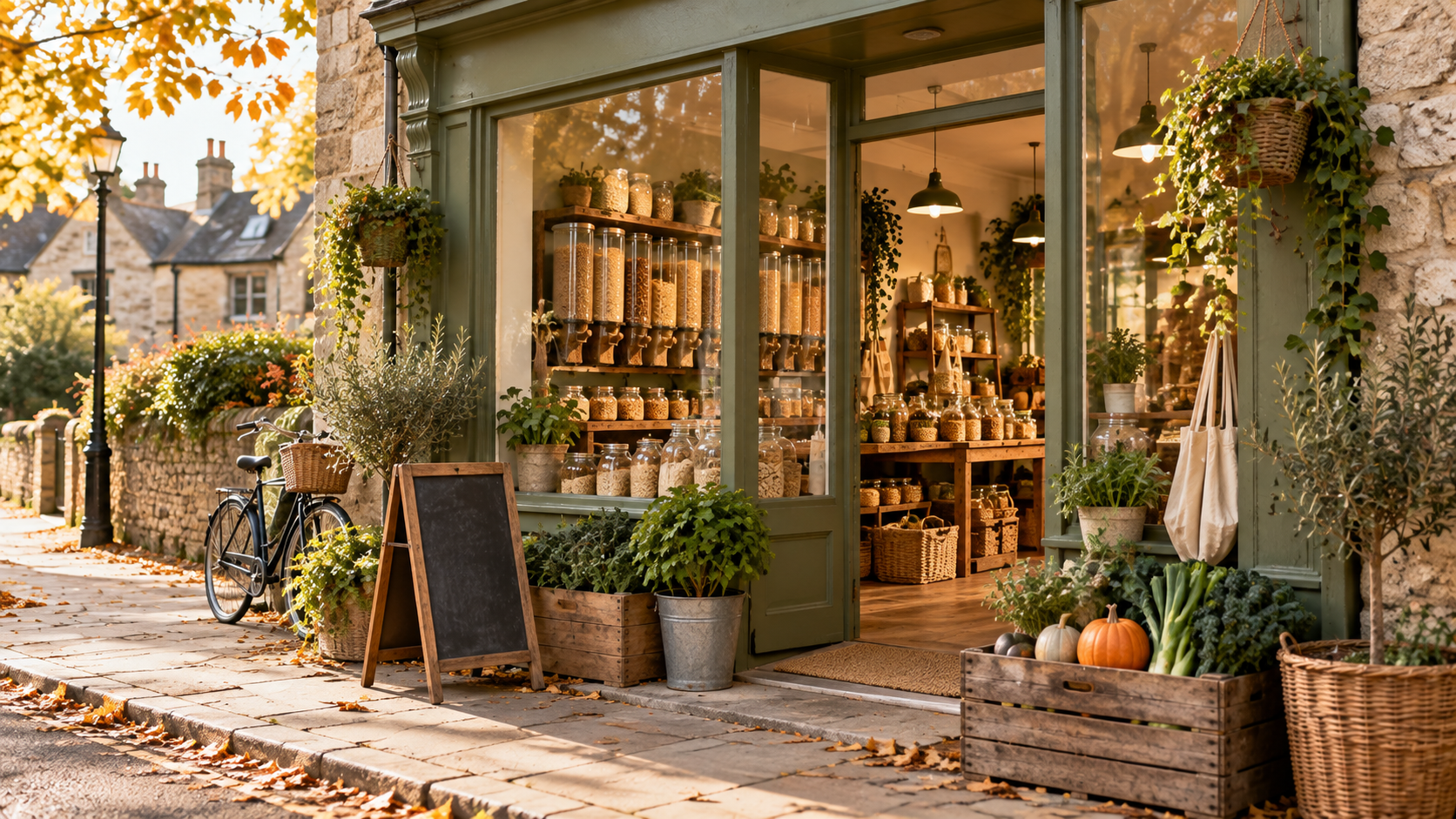
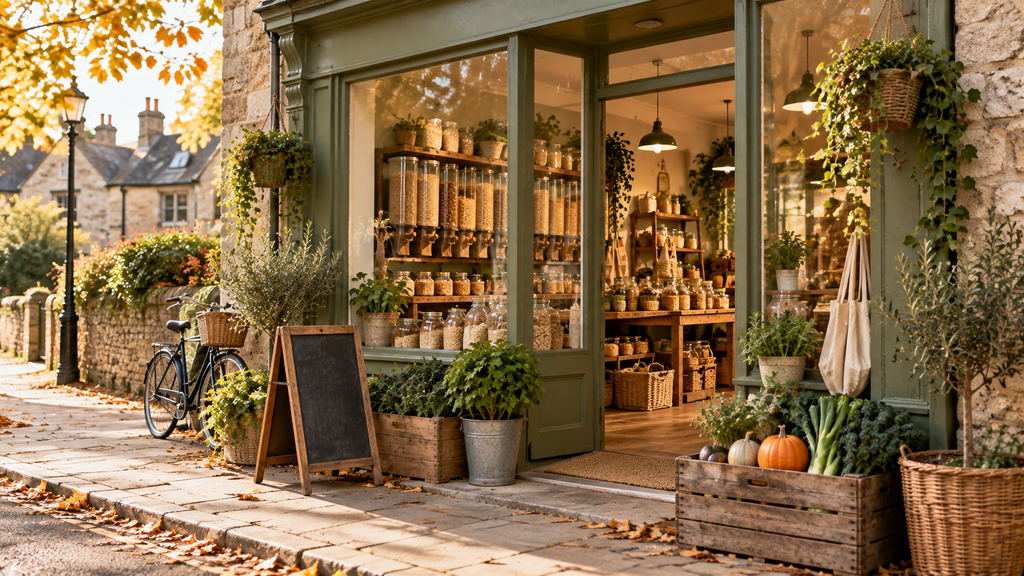
Independent refill shops have opened in most UK towns and cities over the last few years — some are standalone zero-waste shops, others are refill counters inside an existing health-food shop or greengrocer. The system is nearly always the same:
- Products sit in large dispensers or bins — flour, rice, pasta, lentils, cereals, coffee, spices, and often liquids like washing-up liquid, laundry detergent and shampoo.
- You bring your own container (jar, tub, cloth bag) or use paper bags provided in-store.
- You weigh the empty container first (most shops have scales by the door — ask if you’re not sure), fill up, then pay by weight or volume.
The first visit takes longer than a normal shop. After that, it’s genuinely quicker than I expected — I know exactly which jars I need and roughly how much to buy.
What I Actually Saved (and Where It Cost More)
I compared three months of bulk-buy receipts against what the same items would have cost pre-packaged at the supermarket. A few honest findings:
- Staples were cheaper — porridge oats, rice, pasta, lentils and dried herbs consistently came in below the branded supermarket equivalent, because you’re not paying for packaging or a brand name.
- Cleaning refills were roughly the same price, sometimes slightly more per litre — but the container lasts for dozens of refills, so the cost evens out fast.
- It wasn’t automatically cheaper overall, because the upfront cost of jars and containers is real. If you buy everything new, expect to spend more in month one before you see any saving.
The way round that upfront cost: don’t buy new containers at all.
The honest version: refilling is cheaper on staples, roughly break-even on cleaning products, and only pays off overall once you stop buying new jars.
Your Zero-Waste Starter Kit — Without Buying Anything
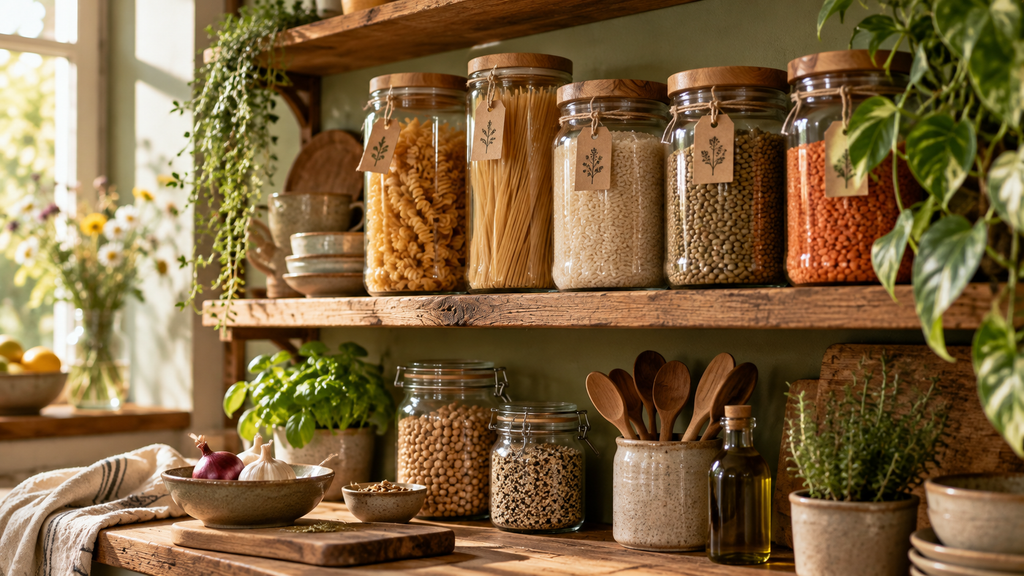
This is the bit most articles skip. You almost certainly already own what you need:
- Empty jam jars, pasta jars, or any glass jar with a lid
- An old ice cream tub or similar for larger dry goods
- Bread bags, if you keep them, work fine for loose fruit and veg
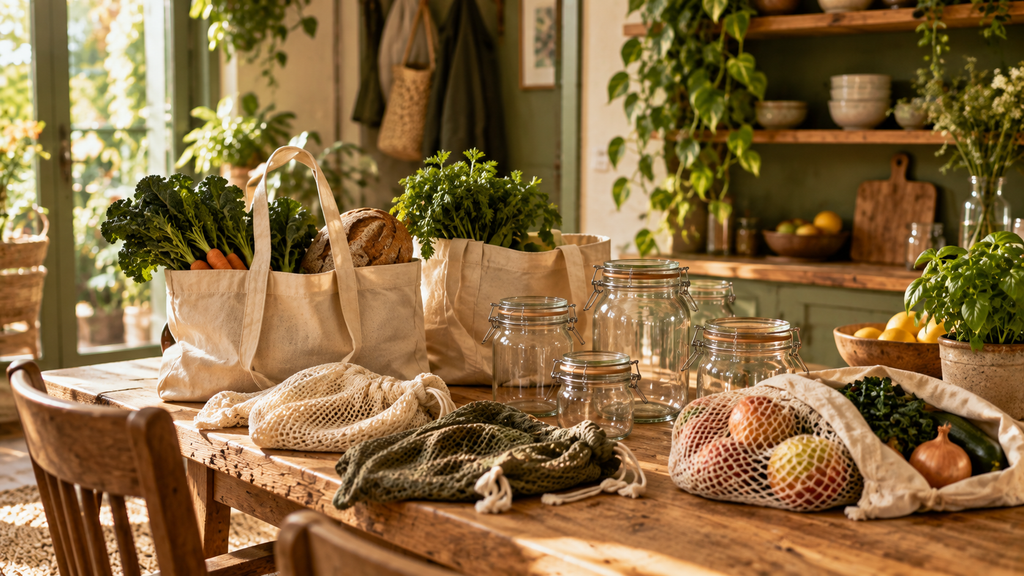
- A couple of cotton tote bags for the shop itself
The only thing worth buying, if anything, is a cheap set of stretchy fabric bags for loose fruit and veg — useful, but not essential for your first visit.
The Non-Toxic Home Guide: Room-by-Room Swaps for UK Households
The Honest Challenges
- Planning ahead matters more. You can’t grab a bulk-buy shop on the way home the way you can a supermarket — most are smaller, with more limited opening hours.
- Range is more limited, especially for processed or branded items. This works best for staples, not a full weekly shop.
- It’s not always the cheapest option per item, particularly for liquids in the short term, so don’t go in expecting every swap to save money immediately.
None of these are reasons not to try it — they’re just worth knowing before your first visit, so you don’t give up after one disappointing trip.
Finding a Package-Free Shop Near You in the UK
Independent refill shops don’t always show up well on Google Maps searches for “zero waste shop,” so it’s worth checking a dedicated directory as well as asking in local Facebook groups — smaller shops rely heavily on word of mouth. Many farm shops and health-food shops also now have a refill counter even if it’s not in the name.
Grow Your Own Food on a Budget: A UK Beginner’s Guide to Getting the Best Return
Should You Bother?
If you’re weighing up whether it’s worth the effort: start with one item. Porridge oats or pasta are the easiest first swap, cost less than the packaged version, and need nothing more than a jar you already own. Build up from there only if it fits your routine — this isn’t a race, and a partial swap that sticks beats a full one that doesn’t survive a busy month.
The takeaway: zero-waste grocery shopping in the UK is cheaper on staples, roughly break-even on cleaning refills, and only worth it once you stop buying new containers — start with one jar, not a whole new kitchen.